Newsletters


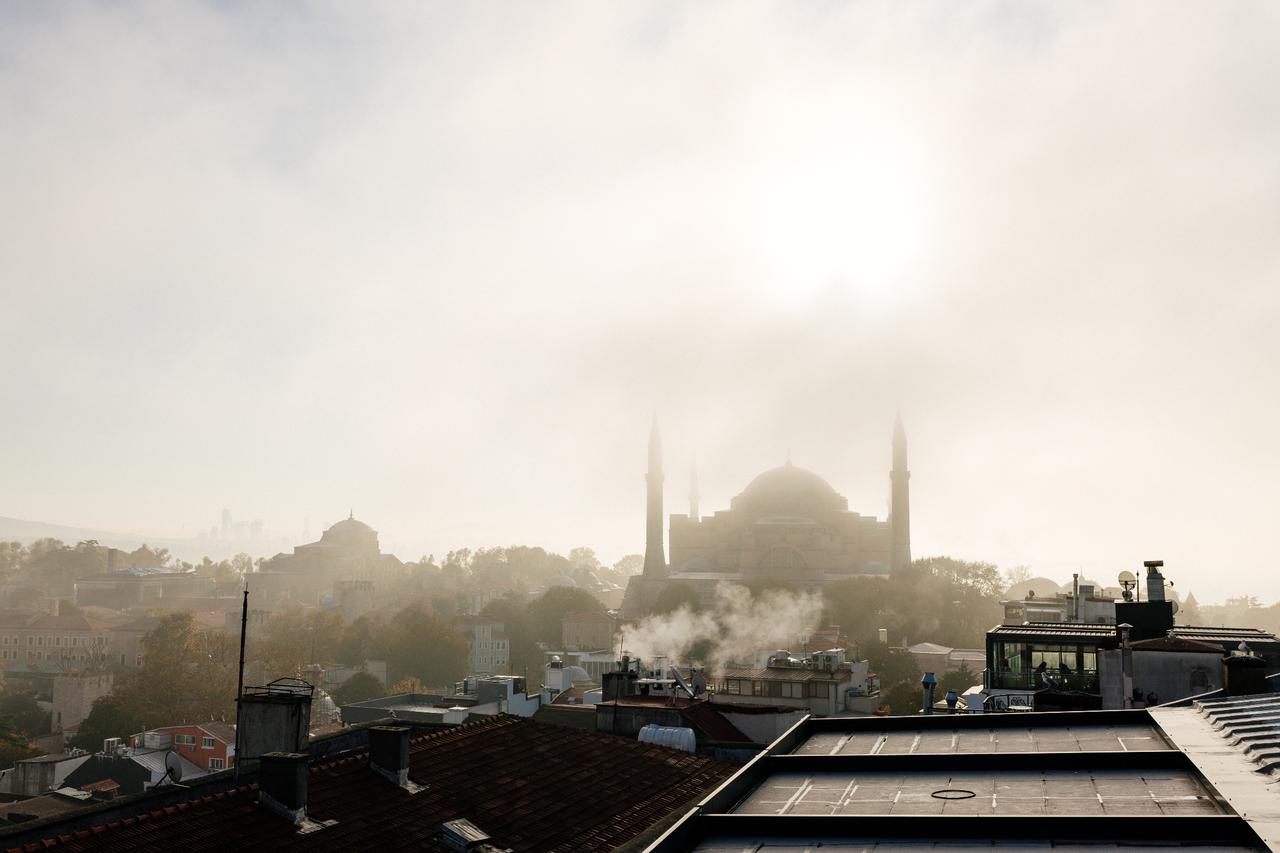


Air pollution in Istanbul rose roughly 9% in February 2026 compared to the same period the previous year, according to research by Istanbul Technical University (ITU), one of Türkiye’s leading engineering and science institutions.
The research was conducted by Professor Huseyin Toros of ITU’s Faculty of Aeronautics and Astronautics, Department of Climate Science and Meteorological Engineering, comparing NO2 concentrations recorded in February 2025 and February 2026.
The study drew on data from air quality monitoring stations operated by Türkiye’s Environment, Urbanization and Climate Change Ministry and the Istanbul Metropolitan Municipality (IBB).
Across the 17 stations, the average NO2 reading was 44.1 micrograms per cubic meter, up from 40.4 micrograms per cubic meter in February 2025.
Besiktas, a densely populated central district on the European side of Istanbul, recorded the highest NO2 reading of any station in February 2026, at 73.5 micrograms per cubic meter, followed by Aksaray, a busy commercial district in central Istanbul, at 62 micrograms per cubic meter, and Yenibosna at 56.6 micrograms per cubic meter.
The lowest reading came from Beylikduzu, an outlying western district, at 16.1 micrograms per cubic meter. Arnavutkoy recorded 26.6 micrograms per cubic meter, and Avcilar recorded 29 micrograms per cubic meter.
Of the 17 stations, 7 recorded lower NO2 levels than in February 2025, and 10 showed increases. The steepest year-over-year decline was at Aksaray, down 16%, followed by Sancaktepe, Selimiye, and Bagcilar, each down 8%. The sharpest rises were at Catladikapi, up 94%, and Sariyer, up 77%.
NO2 levels by station — February 2025 vs. February 2026
| Station | Feb 2025 (µg/m³) | Feb 2026 (µg/m³) | Change |
| Aksaray | 73.7 | 62.0 | -16% |
| Arnavutkoy | 21.0 | 26.6 | +27% |
| Avcilar | 21.1 | 29.0 | +38% |
| Bagcilar | 53.7 | 49.3 | -8% |
| Beylikduzu | 26.3 | 26.1 | -1% |
| Besiktas | 66.8 | 73.5 | +10% |
| Kadikoy | 42.9 | 45.5 | +6% |
| Kartal | 36.5 | 36.1 | -1% |
| Kagithane 1 | 44.1 | 49.3 | +12% |
| Maslak | 27.0 | 32.5 | +20% |
| Sancaktepe | 39.2 | 36.0 | -8% |
| Sariyer | 29.1 | 51.4 | +77% |
| Selimiye | 50.9 | 46.7 | -8% |
| Yenibosna | 40.2 | 56.6 | +41% |
| Catladikapi | 25.7 | 49.9 | +94% |
| Umraniye 1 | 39.0 | 40.0 | +2% |
| Uskudar 1 | 43.9 | 42.9 | -2% |
Speaking to the Anadolu Agency (AA), Toros said air quality data from 37 monitoring points across Istanbul is published on the websites of both the Ministry and the IBB, using a color scale from green to purple and brown so residents can quickly assess conditions in their area.
“We looked at this past February versus last February. There can be data gaps at stations from time to time, but we found that 17 stations had data completeness at or above 75%,” Toros said. “Compared to last February, this February shows roughly a 9% increase. We also compared this February to January and found an 11% increase in air pollution levels.”
Toros stressed that while internal combustion vehicles are a major source of air pollution in large cities, traffic volume, heating demand, and industrial activity did not change notably between February 2025 and February 2026. He said the rise in pollution is largely attributable to meteorological conditions.
“When high-pressure systems dominate, pollutants cannot disperse and accumulate over the city, which can drive up pollution levels,” he said. “When low-pressure systems take over, there tends to be more wind and rain, which helps clean the air. So meteorological conditions directly affect pollution.”
Toros noted that more than 90% of the world’s population breathes polluted air, according to the World Health Organization (WHO), making air pollution one of the most pressing public health challenges globally.
The average person inhales 22 to 33 pounds (10 to 15 kilograms) of air per day, he said, and prolonged exposure carries serious risks for the respiratory system as well as heart, vascular, and brain health.
Beyond health consequences, air pollution also causes workforce losses and high economic costs, Toros said, adding that tackling the problem is a shared responsibility across all segments of society.
Frequent stop-and-go driving, common in heavy urban traffic, is among the biggest contributors to vehicle emissions, he said. “One of the greatest sources of pollution from vehicles is excessive stop-and-go driving. As much as possible, we should brake gradually and accelerate slowly. When we drive in compliance with traffic rules, we both consume less fuel and pollute the air less,” Toros said.
He also called on industrial facilities within city limits to use their resources more efficiently, and said efforts must be made to reduce the pollutants released into the atmosphere from areas where fossil fuels are burned.


 Set as preferred source
 Set as preferred source




 6 min read