Newsletters


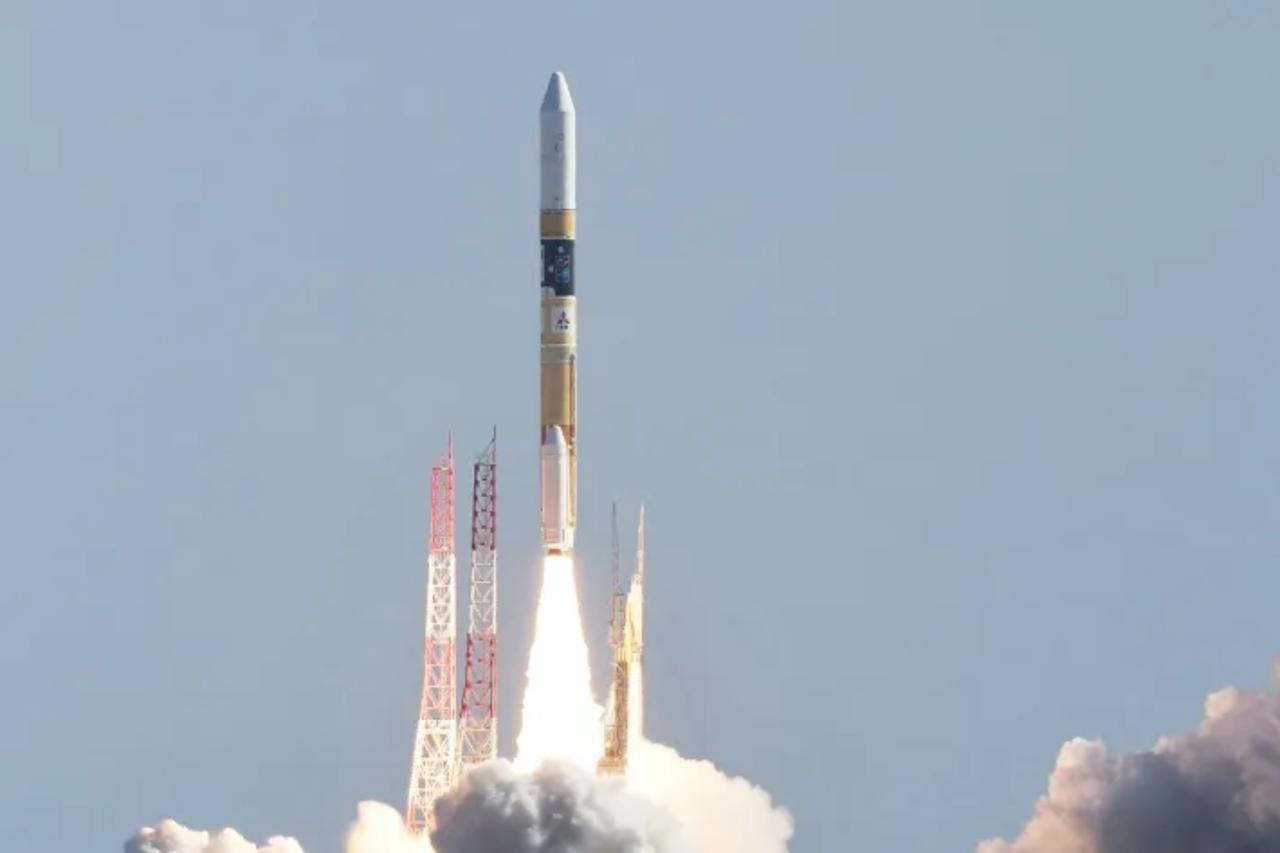


Japan is prioritizing independent access to space and autonomous operations in orbit as global competition intensifies, Japan Aerospace Exploration Agency President Hiroshi Yamakawa said at the 77th International Astronautical Congress in Antalya.
“We’d like to focus on the autonomy regarding space. That means, for example, autonomous access to space and autonomous activity in space,” Yamakawa said.
He said those capabilities are central to Japan’s national space policy in three areas: space security, the space economy and space exploration.
“We would like to further strengthen those technological capabilities to realize national space policies and contribute to our daily life, economy and national security,” he said.
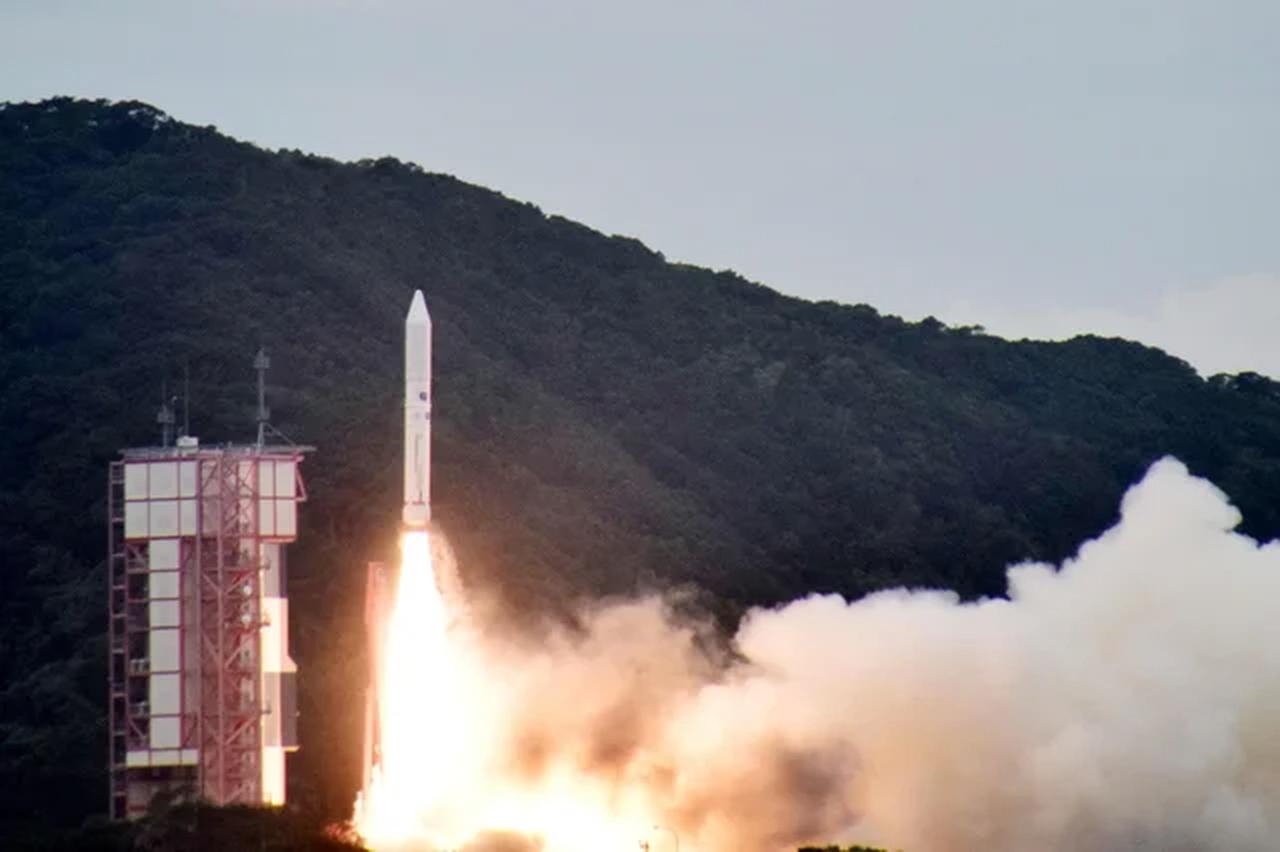
Japan’s space program dates to 1955, when a University of Tokyo team led by engineer Hideo Itokawa test-fired a 23-centimeter experimental rocket known as the “Pencil.”
Japan is expanding operations of its flagship H3 launch vehicle as it seeks to maintain independent launch capabilities in an increasingly competitive commercial space sector.
The H3, developed jointly by JAXA and Mitsubishi Heavy Industries to replace the H-IIA, first launched successfully in early 2024.
“Autonomous access to space is vital for Japanese space activities, and the H3 rocket is at the heart of that endeavor,” Yamakawa said.
He said Japan plans to increase launch frequency to make the H3 a “trusted vehicle” and an internationally competitive rocket.
The 10th H3 launch is scheduled for Oct. 20 from the Tanegashima Space Center and will carry the Martian Moons eXploration, or MMX, spacecraft.

Yamakawa described MMX as a milestone for Japanese planetary exploration.
“It will be the world’s first sample return mission for Martian moon Phobos,” he said.
The spacecraft is designed to study Mars’ moons Phobos and Deimos, land on Phobos, collect at least 10 grams of material and return the samples to Earth in 2031.
NASA, the European Space Agency, France’s CNES and Germany’s DLR are partners in the mission, which also carries a small rover named Idefix.
Scientists hope the samples will help determine whether the two moons are captured asteroids or debris created by a major impact on Mars.
Yamakawa also described MMX as a “transformable robot” because it will change shape and function as it discards different components during the mission.
MMX follows JAXA’s Hayabusa and Hayabusa2 missions, which returned samples from the asteroids Itokawa and Ryugu.
Yamakawa’s remarks came amid growing geopolitical tensions in space.
U.S. Air Force Secretary Troy Meink said in September that the U.S. Space Force has “on-orbit space control weapons,” while China urged Washington to stop expanding its military buildup in space and the Kremlin said space “must be free of any weapon.”
The 1967 Outer Space Treaty bans nuclear weapons and other weapons of mass destruction in orbit but does not explicitly prohibit conventional weapons.
Asked about space security, Yamakawa said Japan’s focus is on ensuring the sustainable use of outer space.
“The biggest issue is the space debris,” he said, warning that collisions with active satellites pose a risk to all space operators.
JAXA tracks debris using ground stations, telescopes and radars to help prevent collisions.
Yamakawa also praised Türkiye’s recent progress in space.
“I think Türkiye has made big progress recently in the space arena,” he said, citing Türkiye’s first human spaceflight mission to the International Space Station in early 2024 and the deployment of its domestically built Turksat 6A telecommunications satellite.
He said Japan and Türkiye already cooperate through satellite activities, including the deployment of Turkish microsatellites from Japan’s Kibo module on the International Space Station and satellite data sharing for disaster management and Earth observation.
“I think space is a promising area for further collaboration,” Yamakawa said, adding that expanding cooperation with Türkiye is one of Japan’s objectives at the congress.


 Set as preferred source
 Set as preferred source


 1 min read

 1 min read