

 Newsletters




A test lab in Japan, shaped like a greenhouse and known as "Ku-An," is illuminated at night using electricity generated from 1,500 wooden boxes of soil and compost.
Designer Satoshi Nakagawa has long battled skeptics, but believes that the technology powering the 800 LEDs has a role to play in solving humanity's energy conundrum. And, failing that, it at least looks nice and gets people thinking.
"As the population moves toward 10 billion, energy issues will become just as critical as food issues," said Nakagawa, chief executive of design firm Tripod Design.
"Even if it's just a small contribution, I want people to be able to produce their own electricity using the soil around them."
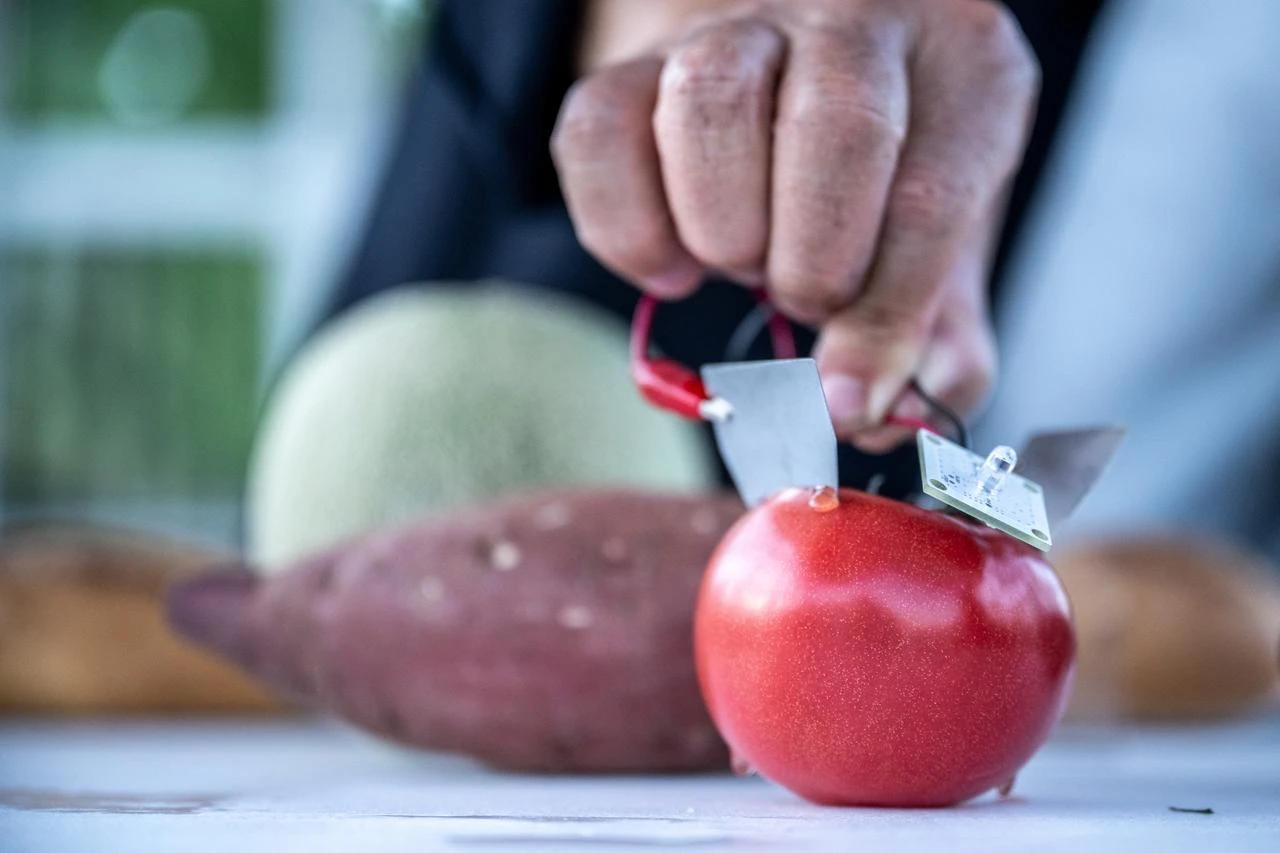
The 72-year-old Japanese product designer and engineer has pioneered "micropower collection (MPC)," a way to source tiny dribbles of electrical current from everything from wine to French bread.
His system uses the same mechanism as the voltaic pile—the world's first electrical battery, giving a continuous current—invented in 1799 by Alessandro Volta.
It involves inserting electrodes made of materials such as zinc and copper into substances that contain moisture or ions, and then collecting the small but steady electrical currents.
Within eyeshot of the glass-covered "Ku-An," which he has rigged up in the remote town of Hitachi-ota, is "Lu-An," which opened last year. "Lu-An" has some 2,000 plastic cylinders of soil and compost to give 100 watts of output, enough to power a rice cooker and other appliances.
Nakagawa said the technology could be applied, for example, in places without power, including after natural disasters. It could also provide enough electricity for off-grid devices requiring little power, such as burglar alarms or sensors to detect landslides, overflowing rivers, and pest damage to farmland.
Once installed, the technology produces no carbon dioxide, and unlike other renewables such as solar or wind power, is not weather-dependent, Nakagawa said.
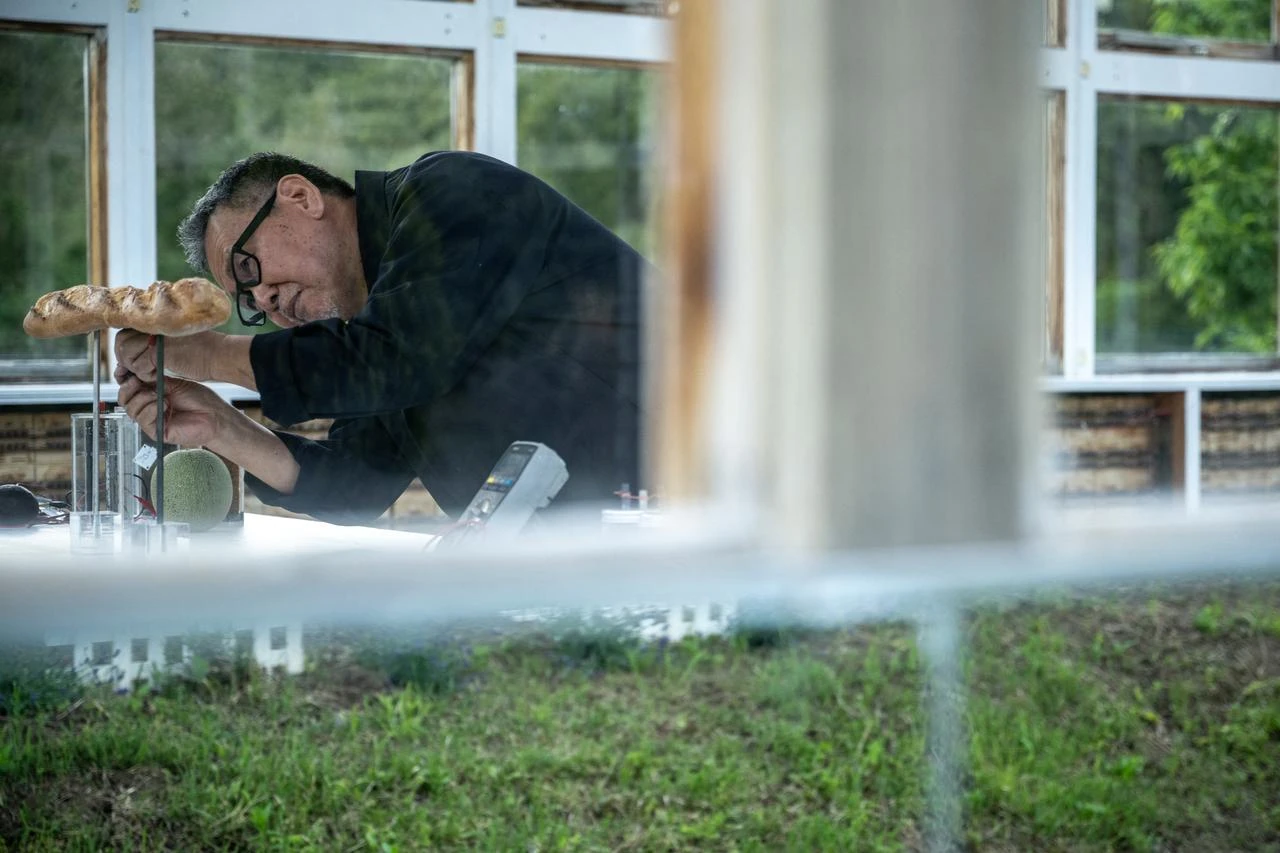

Prototype products include a "stand-alone node," a bollard-like object powered by soil which enables data communication with a satellite. He has also used the technology for art installations with flexible rods that, when speared into the ground, have tips that glow in the dark like fireflies on tall grass.
Professional engineers have said Nakagawa's products can be aesthetically pleasing and thought-provoking, but that his system is not practical. "Its output is significantly inferior compared with regular batteries or car batteries," said Masayuki Nakao, engineering professor emeritus at the University of Tokyo, who has known Nakagawa for years.
"But what is notable about Mr. Nakagawa's works is that the light that he creates has the power to move our emotions. People are moved by it when they see the light. They are beautiful," said Nakao.
Nakagawa has shrugged off his skeptics and said engineers must build new products that benefit from MPC.
"I say it's micro power, so we have to think about what micro power can do," he said. "We should look at the combination of various energy-harvesting technologies as crucial to our overall energy strategy. Possibility is without limit."


 Set as preferred source
 Set as preferred source


 1 min read

 1 min read


