Newsletters


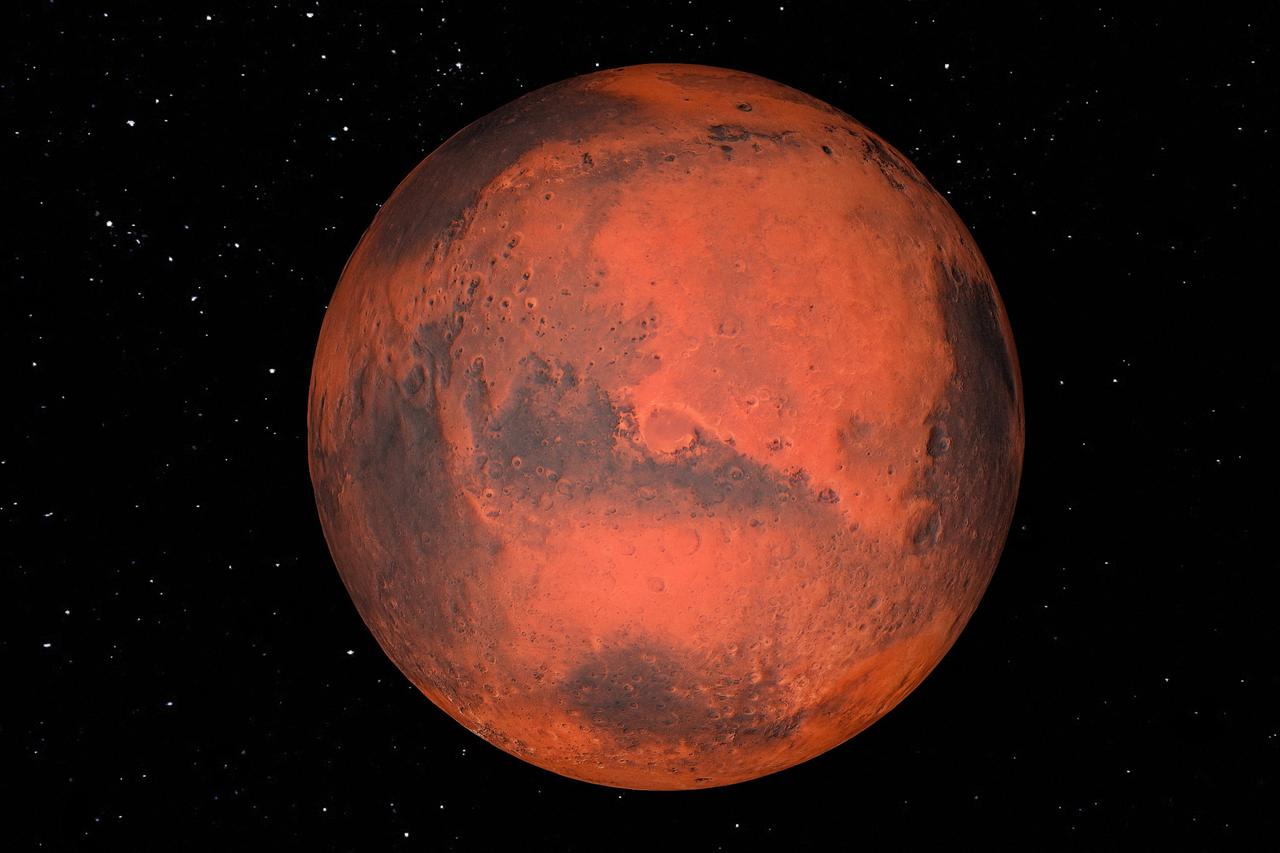


Mars, long considered too distant to affect Earth’s climate, may in fact play a crucial role in shaping the planet’s long-term climate patterns.
The study, published in the Publications of the Astronomical Society of the Pacific, uses advanced international simulations to demonstrate how Mars’ gravitational influence impacts Earth’s orbital variations, known as Milankovitch cycles.
Milankovitch cycles are slow, periodic changes in Earth’s orbit and axial tilt that influence the distribution of solar energy across the planet.
These cycles, which drive ice ages and other long-term climate fluctuations, arise from the combined gravitational interactions of the planets in the Solar System.
Researchers examined how variations in Mars’ mass could affect key elements of Earth’s orbit, including eccentricity, perihelion, ascending node and obliquity.
While the 405,000-year eccentricity cycle, primarily controlled by Venus and Jupiter, remains stable, shorter 100,000-year cycles linked to Mars became longer and more pronounced as Mars’ mass increased, indicating stronger gravitational interactions among the inner planets.
The study also found that the 2.4-million-year “grand eccentricity” cycle disappears when Mars’ mass approaches zero, demonstrating the Red Planet’s direct influence on this long-period climate rhythm.
According to the researchers, these findings highlight Mars’ notable impact on Earth’s climate-forcing cycles. They also suggest that detecting similar orbital patterns on Earth-like planets could help scientists estimate the masses of nearby worlds.


 Set as preferred source
 Set as preferred source



 1 min read