Newsletters


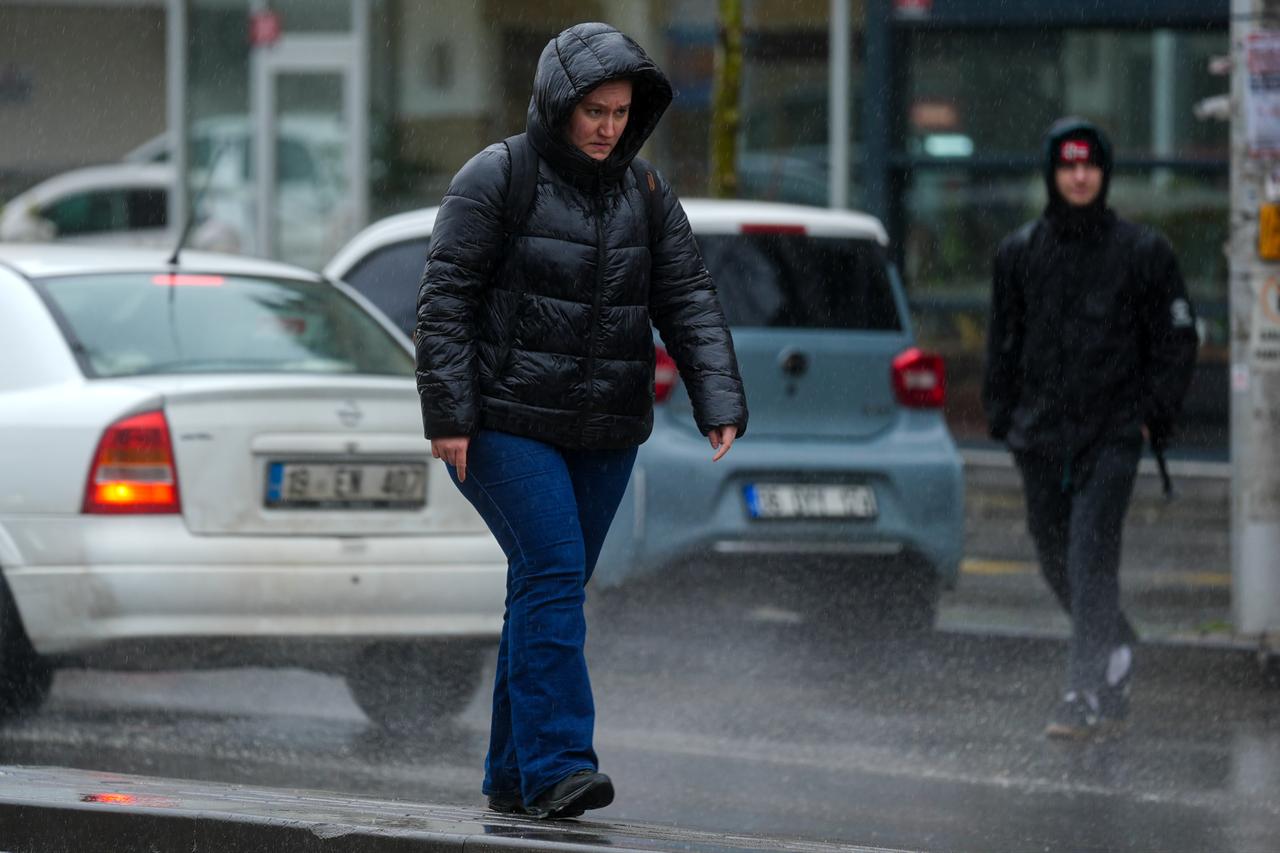


The Turkish State Meteorological Service (MGM) has issued multiple nationwide warnings, stressing that weather conditions are expected to intensify tonight, particularly across western regions where locally heavy rainfall and strong winds may disrupt daily life.
According to the national forecast, skies across Türkiye will remain partly to mostly cloudy throughout the day.
Rain showers are expected to move into the Marmara region, excluding Sakarya and Bilecik, as well as coastal parts of the Aegean and the surroundings of Antalya.
Authorities indicated that precipitation is likely to become stronger after dark, especially around Izmir, Aydin, and Manisa, where rainfall may turn locally heavy during nighttime hours.
Meteorologists also warned of dust transport, a phenomenon in which airborne particles travel long distances through strong winds. The event is expected to affect both the Marmara and the Aegean regions, potentially leading to reduced visibility, disruptions in transportation, and a decline in air quality.
By highlighting these risks, officials emphasized that changing atmospheric conditions could compound the effects of rainfall and wind, particularly in urban areas.
As temperatures remain above seasonal averages nationwide, moisture in the air is expected to trigger fog and mist in several inland areas. These conditions are forecast during morning and nighttime hours across the interior parts of the Central and Eastern Mediterranean, inland sections of the Central and Eastern Black Sea, as well as northern and western parts of Southeast Anatolia and much of Eastern Anatolia.
Winds blowing from southern directions are expected to strengthen across Marmara, the Aegean, the western Mediterranean, western Central Anatolia, and parts of the Black Sea region.
Forecast models indicate short-lived storms with wind speeds reaching 40–70 kilometers per hour, conditions that may briefly intensify before easing again.
In higher elevations of the inland Eastern Black Sea and eastern parts of Eastern Anatolia, authorities warned about avalanche danger and snowmelt risks.
Areas with deep snow cover on steep slopes are considered particularly vulnerable as warmer temperatures persist above seasonal norms.
Officials urged caution in mountainous terrain, where changing snow stability may pose hazards.


 Set as preferred source
 Set as preferred source



 2 min read