Newsletters





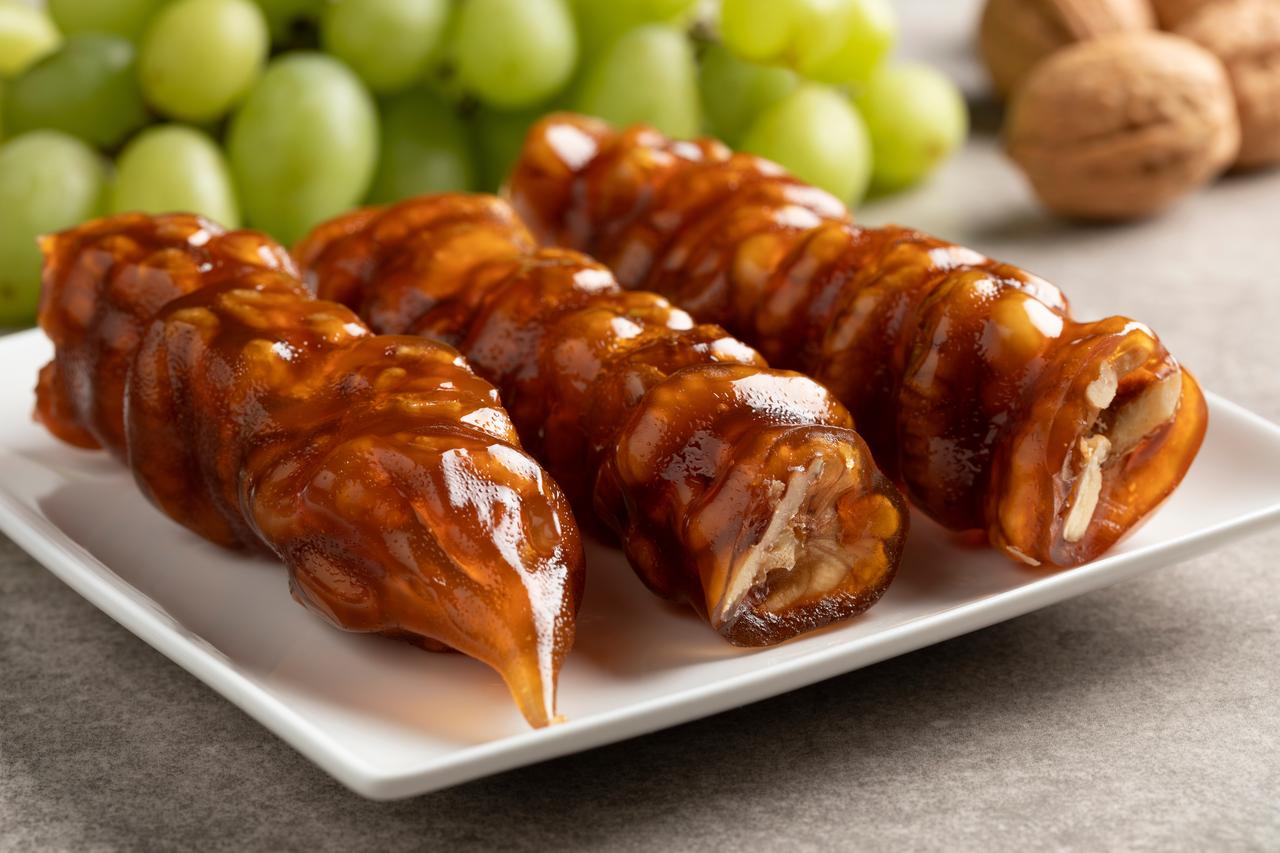
It hangs from the market stall with the confidence of an object that has never had to be attractive. Dark, cylindrical, ropey, slightly glistening, it looks less like food than evidence recovered from a house where something folkloric has gone wrong.
Given it has the moral presence of a sausage and the texture of a village secret, you would not want it found in your luggage by a dour customs officer, nor explain it to a child.
The woman selling it has no interest in whether I buy one. She has been hanging these in the same doorway since before I could chew, and she watches me hold one up to the light like a man pricing a rug he can neither afford nor judge. She calls it "cevizli sucuk," walnut sausage, which is both accurate and an act of considerable nerve.
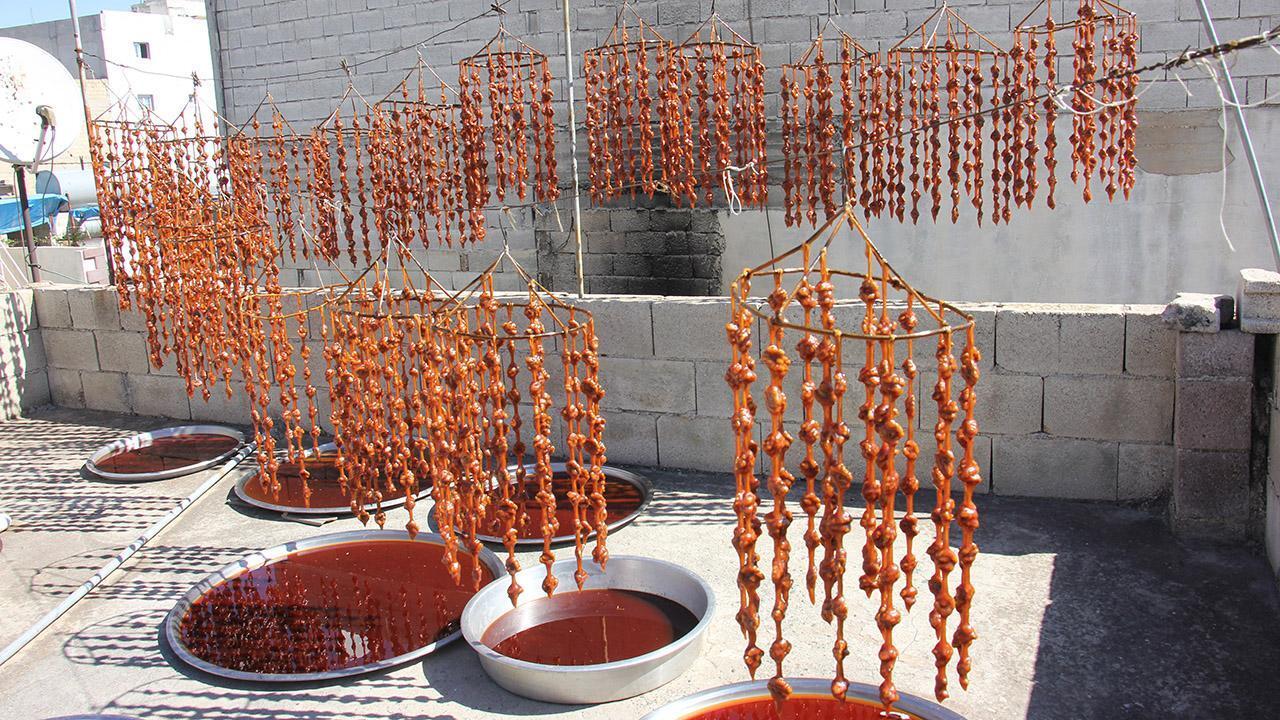

It is made from grape must, walnut, flour, string, heat, air and patience. Meat has nothing to do with it. The impersonation is so old that calling it fake feels rude, like accusing an elderly duchess of fraud because her title was a dead letter two empires ago.
It marries the substance of a dessert with the silhouette of something you might fry with eggs, yet the costume has been worn so long that only bores still demand autopsies.
Even in your hand it has no “give” whatsoever, and eating it requires appetite as well as a certain whiff of resignation. The surface is leathery, darkened until it has passed beyond purple into the color of an Edwardian piano.
You bite down and the casing resists, then yields, sweet first, then sour, then tannic, with that faint gloom of grapes boiled until their future has been canceled.
Usually your teeth will hit a walnut, with the small, guilty knock of cartilage in the real thing. After that you are committed.
For some minutes, you stand in the street working your jaw like a ruminant with a grievance, aware that your face has entered a private dispute that it must conduct in public.
I bought four, having gone in for one.
Cevizli sucuk is grape-harvest panic resolved into edible rope, and is made by those who have known several bad winters in a row, and given themselves fully over to the understanding that useful food often takes the edible form of a grimace.
The Turkish file for Beypazari’s version is a small masterpiece of accidental literature. The name expands into Beypazari Cevizli Tatli Sucuk, sweet walnut sausage, as though the first deception needed certifying before the second could proceed.
Then, in the voice of a man specifying grout, it instructs chefs to boil the must with pekmez topragi, molasses earth, or just “dirt” to you and me—a pale calcareous clay that clarifies the juice and draws the sourness out of it.
Ibn Battuta got there early, as he generally did. At Baalbek, en route to Mecca and giving the entire known world a character reference, he watched them boil grapes down to a syrup and work earth into it until it set.
The jar was then broken and the sweet came out in one piece, studded with pistachios and almonds. They called it "mulabban," literally “bricked,” and also "jild al-faras," horse-hide.
Scholars Defremery and Sanguinetti, contemplating the shape, decided that hide was not the part of the horse intended. Le Strange agreed and fled into Latin: "penis equi."
Back then the nuts were almonds and pistachios, and the shape a brick, meaning the walnut and the string must have arrived later, in colder country. Still, several centuries and a dozen borders apart, a Moroccan tourist and a Turkish ministry specify the same clay, in the same must, for the same job, which counts as anything but a coincidence.
The method travelled because everything in the mix did: grapes, walnuts, clay, flour, merchants, brides, soldiers, recipes, insults, bad ideas, good bacteria. A confection like this belongs less to a nation than a road with kitchens along it.
And anything with such a messy travel itinerary invariably muddles its own etymology. One account sends meat sucuk back toward stuffing intestines, an honest birthplace for a sausage.
The sweet one, however, comes by a more devious route: sut, milk; then sutsig or sucig, sweet, pleasant, delicious; then sweet drink, wine, syrup; then sweet food; then, somehow, sucuk, a rope of grape and walnut. This is how language behaves when nobody is watching.
Later, of course, scholars arrive with torches.
Naturally, everyone wants custody. Georgians have churchkhela, Armenians sharots or sweet sujukh, Cypriots soutzoukos. Each can produce an aunt, a village, a harvest, and a look of deep injury. But arguments on this terrain are pretty useless: a nut on a string makes a poor flag, though men have marched under worse.
The Turkish state, being a state, has tried to improve matters by narrowing them. Beypazari’s version is now registered, inspected, bordered, stamped, which is less absurd than it first sounds.
Old foods need protection from syrup cheats, factory shortcuts and the sort of people who think artisanal means ruining something more slowly. Still, there is something magnificent about a ministry certifying a sweet whose entire comedy is mistaken identity.
The thing itself does not care. It hangs, waits, darkens, sugars slightly with age, ready for the next customer with the insulting calm of an object that has never had a brand consultant, nor a lifestyle launch.
Similarly, the woman did not look up when I left. She had four fewer sausages and no opinion about it. What did I expect? Nobody in Britain expects a conversation at the till over the fact you’ve bought a four-pack of baked beans.
Meanwhile, I had grape in my teeth and the faint sense of having lost an argument with agriculture.
A domestic approximation. Patience is the main ingredient. Makes 6–8 strings
For the coating
For the strings
1. Thread the walnuts: Run a needle through each walnut half and thread them closely onto the twine, leaving a few centimetres free at each end for hanging. The string should be dense with no gaps: gaps will show in the finished shell and weaken the structure.
2. Make the coating: Pour all but a ladleful of the grape juice into a heavy saucepan and bring to a simmer over medium heat. Whisk the starch into the reserved cold juice until completely smooth—do this before adding any heat, or it will clump. Pour the starch mixture back into the simmering juice in a slow stream, whisking constantly. Continue to stir over low heat for 20–30 minutes until the mixture thickens to the consistency of a loose custard. It should coat the back of a spoon and hold a line when you draw your finger through it. Do not rush this. A scorched bottom will announce itself in the finished taste and cannot be retrieved.
3. Dip and dry: Dip a walnut string into the warm mixture, coating it thoroughly, then lift it out and hang it over a rail or broom handle. When the surface is dry to the touch—30 to 45 minutes—dip again. Repeat four to six times, building up the shell in layers. The string will thicken and darken with each pass. Between dips, keep the coating warm on the lowest possible heat; if it cools and firms, thin it with a splash of grape juice.
4. Final drying: Hang the finished strings somewhere dry and well-ventilated, not touching each other. They are ready in 10 to 15 days, when the outer shell is firm and no longer tacky. Cut into rounds to serve.
On the grape juice: Freshly pressed must, available in September in any area with Turkish or Middle Eastern communities, gives a more complex result than shop-bought juice. The traditional method uses a calcium carbonate powder to clarify the must before reduction—note that it’s not essential for a domestic version, but correct.
On the dipping: Each layer must be dry before the next is applied. This cannot be accelerated. Plan across several days, not one afternoon.
On the starch: Wheat starch produces a slightly more elastic, traditional shell. Plain flour works and is easier to find.
On the name: It is called a sausage. Do not let this mislead you into expecting meat, or into thinking it is a joke when it’s neither.


 Set as preferred source
 Set as preferred source


 2 min read