Newsletters


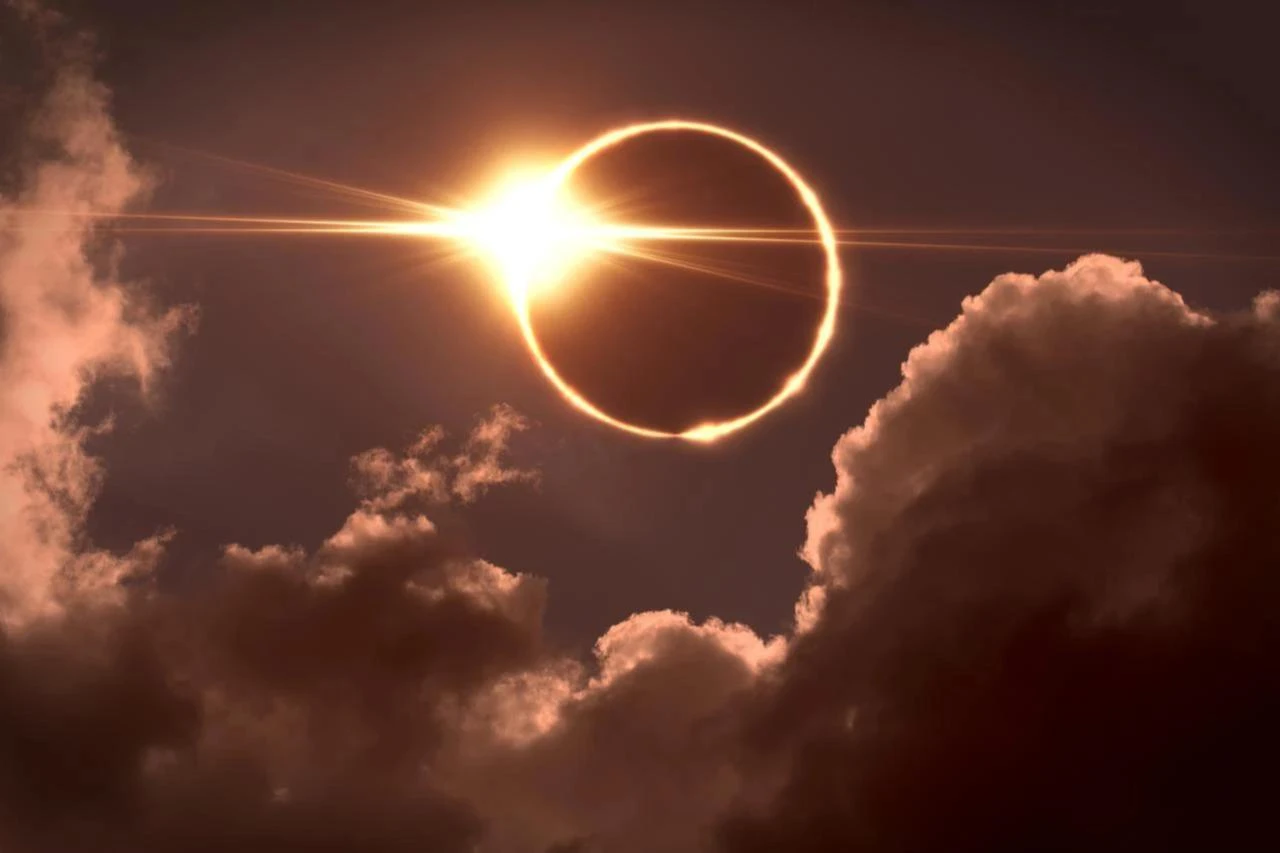


A naked-eye view of the sun's outer atmosphere is the reason eclipse chasers travel the world, and this year's total eclipse on Aug. 12 offers an unusually favorable chance to see vivid prominences on opposite sides of the sun at the same time.
According to an article by Space.com, the moment the moon fully covers the sun, its outer atmosphere—the corona—suddenly becomes visible in delicate white tendrils shaped by the sun's constantly shifting magnetic field. No two eclipses ever look the same, and this one, part of Solar Cycle 25, will offer a snapshot that will never be repeated once totality ends.
The corona is formed by extremely hot, charged gas shaped by the sun's magnetic field, which rises and falls on an 11-year cycle, according to solar physicist Ryan French of the Laboratory for Atmospheric and Space Physics in Boulder, Colorado.
At solar maximum, numerous sunspots create a corona with sharp spikes and streamers; at solar minimum, it looks more symmetrical and wing-like.
Solar Cycle 25 peaked in October 2024, and while activity has been declining since, the drop has not been sharp. According to solar physicist Ryan French, the 2026 corona will be significantly more active than the structures seen during the 2017, 2019, and 2020 eclipses, though less dramatic than the display in 2024.
Predicted sunspot activity for August 2026 sits around 102, compared to 144 during the 2024 eclipse. This puts this year's display in a middle range that will likely appear uneven, with one side of the sun noticeably more active than the other, depending on which sunspot regions rotate near the sun's edge.
Vivid pink or crimson prominences—massive structures of hydrogen plasma held above the sun's surface by powerful magnetic fields—are often among the most memorable sights during totality. Because these plasma features can persist for days, they are far easier to predict than short-lived solar flares.
Furthermore, the moon's slightly larger apparent size this year will limit totality to a brief two minutes and 18 seconds. However, this specific geometry could allow towering prominences on opposite sides of the sun to be visible at the exact same time.


A coronal mass ejection was spotted during the 2020 eclipse and could theoretically appear again, though capturing it would take immense luck and it would likely show up only in long-exposure photographs rather than to the naked eye.
Ultimately, no scientist can say exactly what the corona will look like until eclipse day itself, since its shape depends entirely on solar activity in the preceding days. For a few brief minutes over Greenland, Iceland, Spain, and the Balearic Islands, the sun's hidden atmosphere will flare into view and then vanish, never to look quite the same again.


 Set as preferred source
 Set as preferred source


 2 min read

 1 min read