Newsletters


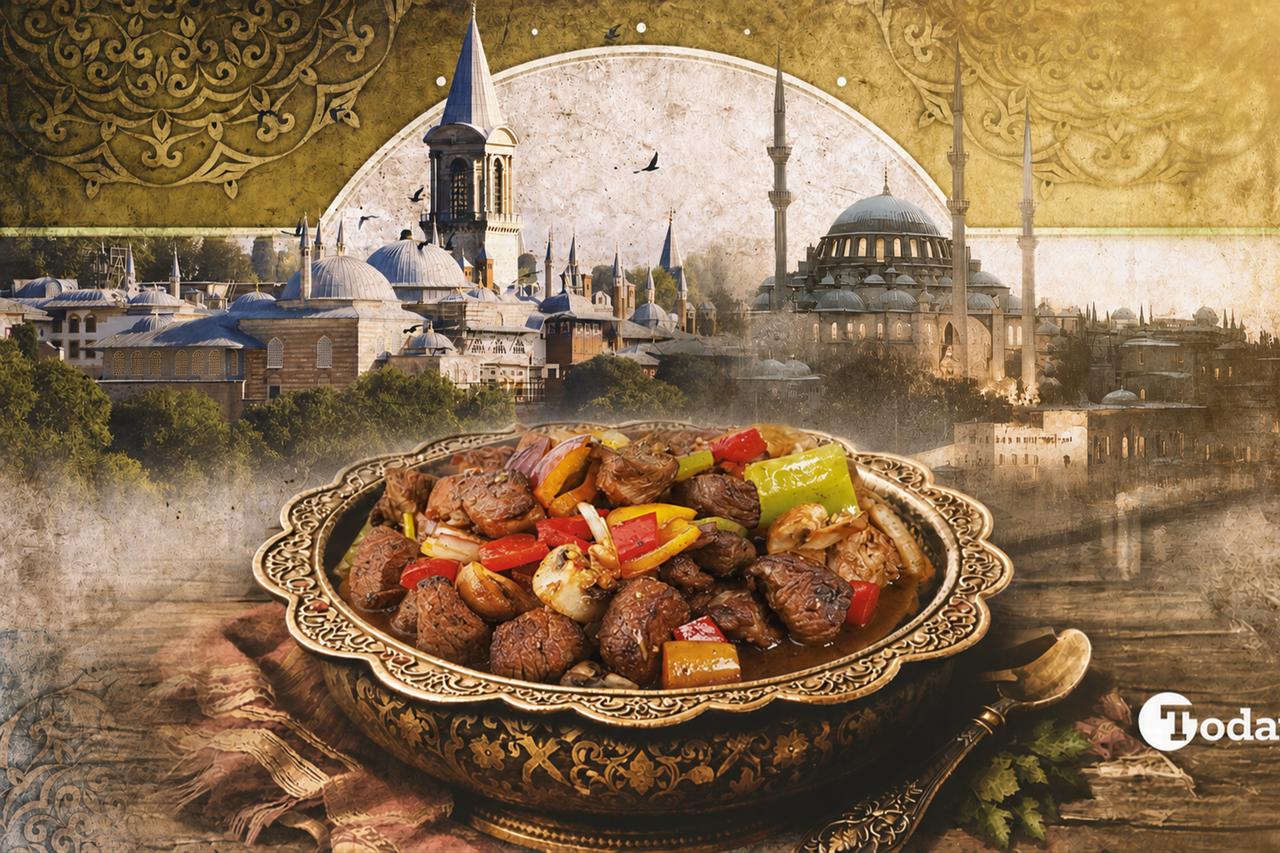


The sac arrives still working. It is a shallow iron disc, blackened, faintly convex, hissing through the first minute of conversation while lunch continues to have a breakdown in front of you.
And everything in the pan should lose the fight: the lamb is charred; the onions should confess their treacherously sweet nature. Meanwhile, the peppers collapse into green rags, and the tomato gives up being a vegetable altogether.
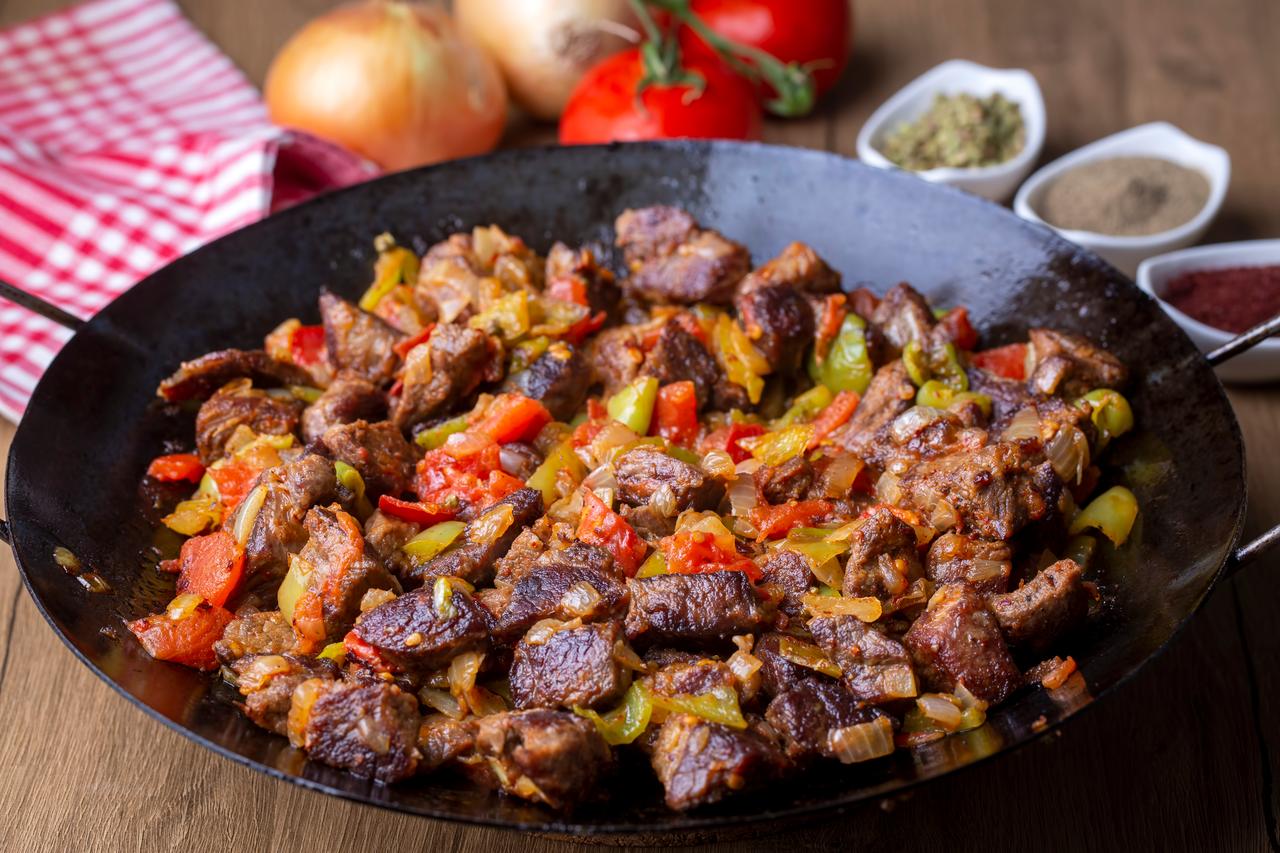

There’s no stock, no thickener and certainly no little jug arriving afterwards to suggest anybody planned a sauce. What collects at the bottom is simply what the ingredients surrendered under duress.
The whole dish tastes of itself “squared,” meaning it’s a meat less cooked than condensed, with every part of the animal carried back onto the tongue by its own fat.
The best version I ate was almost two decades ago at roadside digs east of Sivas with three tables and a pan roughly the size of a manhole cover. The man cooking had reached that enviable stage of life when customers had become a vague inconvenience.
When I asked what cut of lamb he used, he lifted a piece, held it up for two seconds, and put it back down. He never turned around. I nodded anyway, in the hope that the other customers would understand that something useful had just passed between us.
Coban kavurma means shepherd’s fry. Ottoman food names frequently arrived with their social coordinates attached: Arnavut cigeri, Albanian liver; Cerkez tavugu, Circassian chicken; Tatar boregi.
This was an empire with a habit of swallowing somewhere and then naming lunch after it.
At the other end of the scale sat hunkar begendi, “the sovereign liked it,” a name which is admirably honest about whose TripAdvisor review mattered.
And then there is “the shepherd,” with no province, conquered people or pleased sultan attached to him. Just a man on a hillside with an animal, a fire and a pan, occupying somewhere close to the basement of the Ottoman social imagination.
Kavurma itself is older than the empire. Its ancestors lie in the Turkic qawirma, a fried thing, with the verb behind it older still. The word names an operation rather than a recipe, and there’s a pleasing security in food whose instructions are contained in the laws of thermodynamics.
The word proved more adventurous than the dish, and relatives appear across an astonishing stretch of Eurasia. Mughal India had qorma, eventually luxuriant with yogurt, nuts and spice; Iran has ghormeh, whose most famous descendant goes dark with herbs and sour with dried lime; Azerbaijan has qovurma; the Levant its qawarma.
The dishes differ so completely that anyone attempting to reconstruct a culinary family tree from the names alone will soon require a whiteboard, a lawyer, not to mention an unfeasibly large imagination.
Britain eventually met the Indian version and treated it with the peculiar affection reserved for foreign things we intend to alter beyond recognition. Cream arrived like cavalry and the result acquired the color of a manila envelope. It has been quietly apologizing for itself ever since.
Again, what emigrated was the word, not the technique. And, in Türkiye, the dish remained faithful to the old verb: fry the meat. Everything abroad looks elaborate beside it, like souvenirs acquired during a journey the pan refused.
Yes, Turkish kavurma remained remarkably literal, which is all the remarkable considering the kitchens of Topkapi employed men whose main purpose was to make dinner suitable for people who owned Bosnia, and there was not much they could not perfume, glaze or arrange into shapes suggestive of superiority. Lamb seared in its own fat, however, offered considerably less scope.
Kavurma also had another, rather more useful life as insurance. Cooked meat could be packed into containers beneath a sealing layer of that fat and kept through winter like a Turkic confit, which suited a state that spent much of its time outdoors.
Suleyman the Magnificent personally led 13 campaigns and spent more than 10 years of his reign away at war before dying outside Szigetvar at 72, gouty, imperial and magnificently far from a dining room.
The empire could move cannon, pay chests, imams and tens of thousands of men across continents. But it travelled a very long way from the steppe only to arrive at the same pan.
Tomatoes came later, from the Americas, and established themselves so completely that coban kavurma now looks oddly underdressed without them. The older version was drier, sterner and impeccably authentic, qualities which excite a certain kind of diner much more reliably than they improve his meal.
The pan is better for the intrusion, whatever the purists say, and the pul biber remains in the background with the amused confidence of a minor official who knows any official inquiry will be aimed higher up.
It is best eaten from the sac, before somebody transfers it to a plate and introduces distance where none is needed. When most of the pan’s contents are gone, the inexperienced diner tends to assume that lunch is over, but people who know better start looking at the bottom of the pan.
What remains is the blackened patches of food on the iron, which are technically past rescue and all the better for it. French cooks call this stuff fond because theirs is the preferred language for making licking a pan sound dignified. Turkish simply calls it kazinti, scrapings, which is nothing if not more honest.
Bread is the best tool. Press it into the iron, lift scorched fragments and smear up the last red-brown fat with the grim concentration of somebody destroying evidence.
Serves 4
On the pan: A sac gives an intensity of sear and a faint smokiness that a conventional pan cannot fully replicate. If you cannot find one, the heaviest pan you own, preheated longer than seems necessary, is the correct substitute. A thin pan is not a substitute. It is a different problem entirely.
On the lamb: Shoulder is correct—enough fat to baste itself, enough connective tissue to stay tender under the heat. The leg works but dries faster. Neck is very good. Supermarket diced lamb is too uniform and too lean; ask a butcher for the shoulder on the bone and cut it yourself.
On the tomato question: Some cooks insist the dish is purer without tomatoes. They are not wrong about the history. They are wrong about the lunch.
On the bread: Essential before the fond evaporates or hardens into the pan.


 Set as preferred source
 Set as preferred source



 1 min read