Newsletters


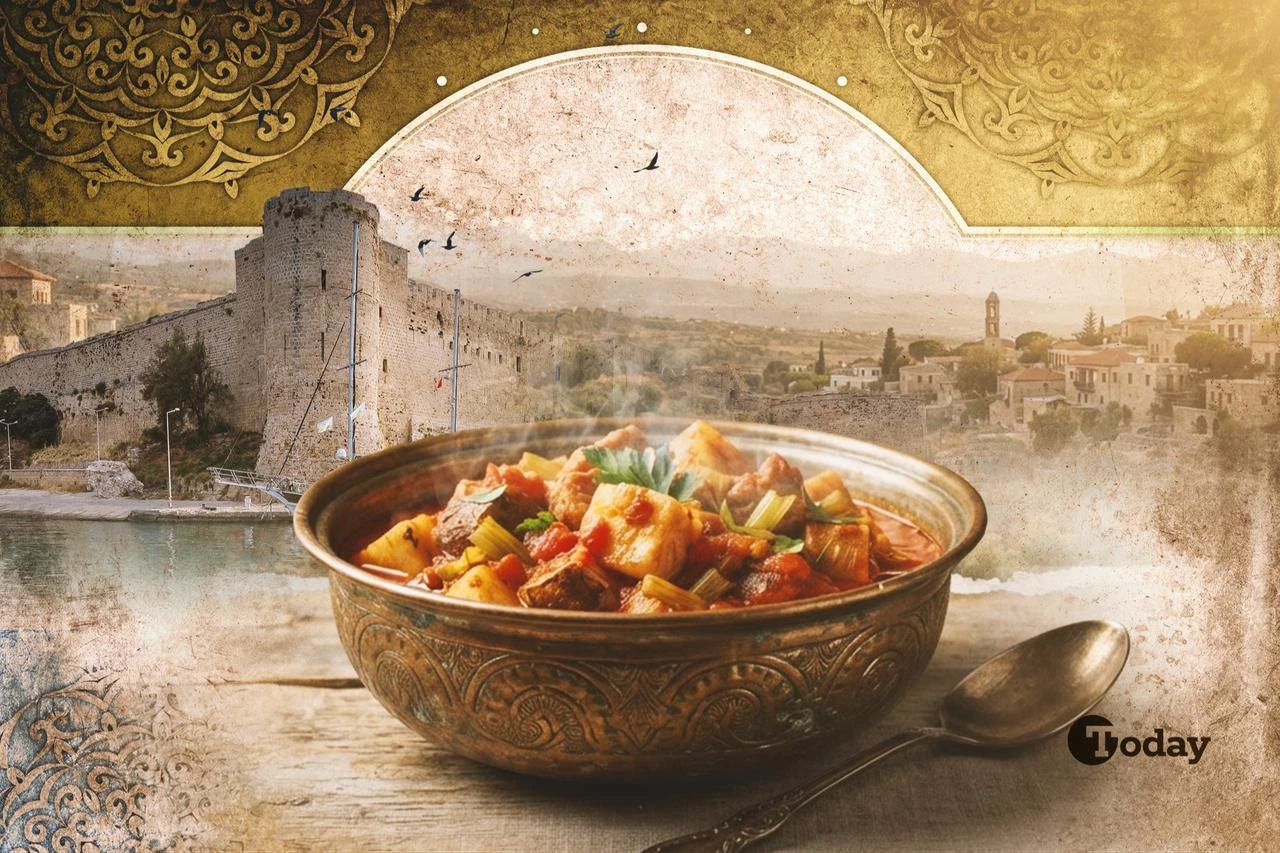


Kolokasi arrives in a deep bowl, dark and glistening, smelling of celery and something earthier—the odor of a root that has spent centuries underground, minding its own business.
The pieces are irregular, rough-edged, and cracked rather than cut, because if you slice kolokasi, it weeps a mucilaginous liquid that dissolves the whole enterprise during cooking. The dish requires violence: you insert the knife and twist.
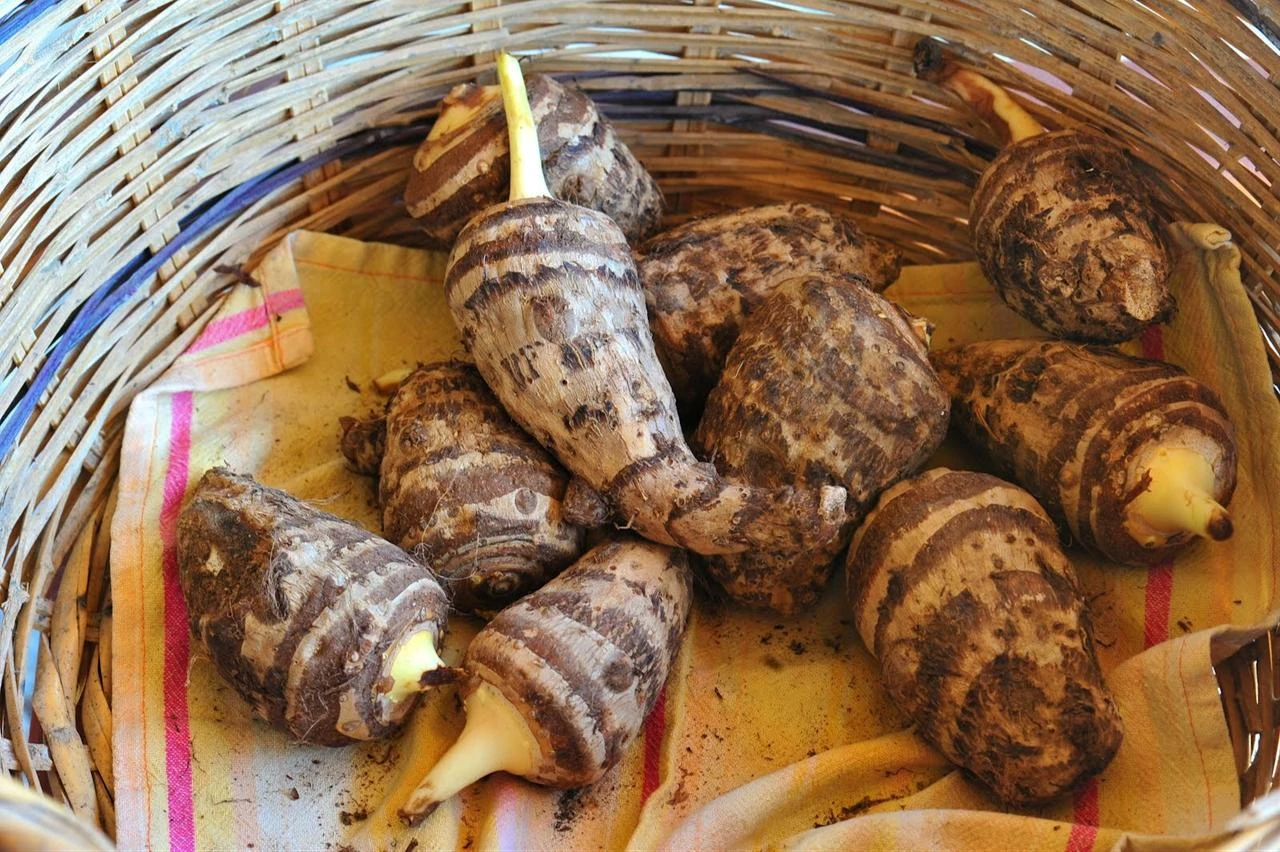

It tastes of something between potato and chestnut—denser than either, with a faint nuttiness.
When correctly cooked, it achieves a velvetiness that holds the braising liquid without becoming it. The meat will fall apart around it. The sauce is thick and red and serious. You eat it with bread and do not leave any.
This is Cypriot food at its most revealing, and it’s not the island of beach clubs, wedding venues and diplomatic acronyms, but the older order of parish calendars and agricultural stubbornness.
It is not austere, exactly, but it is without vanity, the kind of dish that has taken a vow of obscurity. What use are critics when you have always had parishioners?
The secret to all of this, it turns out, is that nobody wanted it badly enough to ruin it.
Kolokasi is what happens when a vegetable refuses to become lifestyle content. It is brown, hairy, stubborn and faintly prehistoric. Even well-cooked, it looks less plated than exhumed. It cannot be spiralized, juiced or placed meaningfully beside a woman in linen doing Pilates on a hotel terrace. This is not a superfood but an under food, bunkered below the level at which idiots usually begin to improve things.
Acai was feeding the Amazon before Santa Monica noticed it was purple; quinoa was minding its own business in the Andes before it was discovered by people who describe their chakras without blinking.
Kolokasi, having no gloss, jewel color or agreeable geometry, has so far escaped discovery. No influencer can hold it near her face without looking as though she has interrupted an archaeological dig.
Cyprus kept kolokasi mostly by accident—nobody occupying the island ever had reason to look twice at it. The name is the more glamorous inheritance. Greeks and Romans first used kolokasia for the root of the Egyptian sacred lotus, a Nilotic, ceremonial thing with nothing knobbly about it.
When the lotus faded from Mediterranean diets around the fourth century A.D., the name quietly migrated to taro, which accepted the inheritance without ceremony and has traded on it since.
The root itself had arrived from Southeast Asia by way of Egypt, and Romans ate it the way later civilizations would eat potato. Then Rome fell and Europe forgot it was food. It survived instead as a fountain plant, occasionally trimmed by a gardener with no idea he was manicuring someone's dinner.
Yet in Cyprus and Ikaria it never stopped being eaten. Entirely coincidentally, the pair were also not troubled by food writing. The Greeks had already tried that in the Deipnosophistae, which is essentially 15 books of men talking about dinner over dinner, and sensibly declined to make it a permanent profession.
In Cyprus, and especially in the Gazimagusa (Famagusta) district, kolokasi survived less as a curiosity than a sensible answer to island history. Empires came and went, harvests failed, locusts arrived like it was still the Old Testament, and the sensible thing to eat was the crop that had remained underground, refusing the drama.
On the locusts, a 1510 Venetian source describes swarms covering the island like snow, requiring emergency wheat imports from Syria.
The Ottoman administration later made peasants collect and bury the insects in pits, which was, at the very least, efficient pest control and a fairly exact index of what a peasant's week was worth in Istanbul. The kolokasi, perhaps nourished by thousands of exoskeletons, simply continued.
If mature kolokasi is the culinary equivalent of a damp country vicar—tweedy, dependable and requiring hours of patient coaxing before he reveals anything resembling an interior life—poulles are the delinquent nephews who borrowed his car and came back at dawn smelling of wine, oil, coriander and someone else’s perfume.
These tiny, bulbous barnacles are snapped from the root and subjected to the kind of high-heat oil bath usually reserved for insects in Asia. Just as they reach a state of blistered, defiant crunch, they are pelted with crushed coriander seeds and shocked into submission by a bracing slap of fresh lemon juice—the sort of correction a γιαγιά or babaanne administers without breaking eye contact.
Kolokasi was served at Richard I's wedding to Berengaria of Navarre in Limassol, 1191, alongside Commandaria, which Richard reportedly called "the wine of kings and the king of wines" before selling the island to the Knights Templar almost immediately after. Overdone compliment, or the island already had a surplus of wedding stationery; it’s not clear.
The Knights named the wine after their estate, and it's still made in the same 14 Troodos villages, arguably the oldest named wine in continuous production anywhere. A 13th-century poem puts a sweet Cypriot wine through what is often advertised as history’s first recorded wine competition.
Judged by an English priest who sorted entries into "worthy of praise" and "worthy of excommunication," he excommunicated most of the French wines in France before the French king. Commandaria won, and history does not record whether the priest made it home.
Commandaria got the poem and eight centuries of foreign praise. Kolokasi got left in the dark—and the wellness industry still hasn't worked out how to put a weeping, knife-twisted tuber in front of a camera. Best keep it that way.
Serves 4–6
Ingredients
1 kg kolokasi (taro root)
750 g–1 kg beef chuck roast, cut into chunks
1 large onion, finely chopped
2–3 celery stalks, chopped
3 ripe tomatoes, grated, or 400g tinned tomatoes, blended
1 tbsp tomato paste, dissolved in a little hot water
Juice of 1–2 lemons
3–4 tbsp olive oil
Salt and black pepper
A pinch of ground cinnamon (optional—some Pitsilia versions use it, most don't; your call)
Water or light stock, to cover
Method
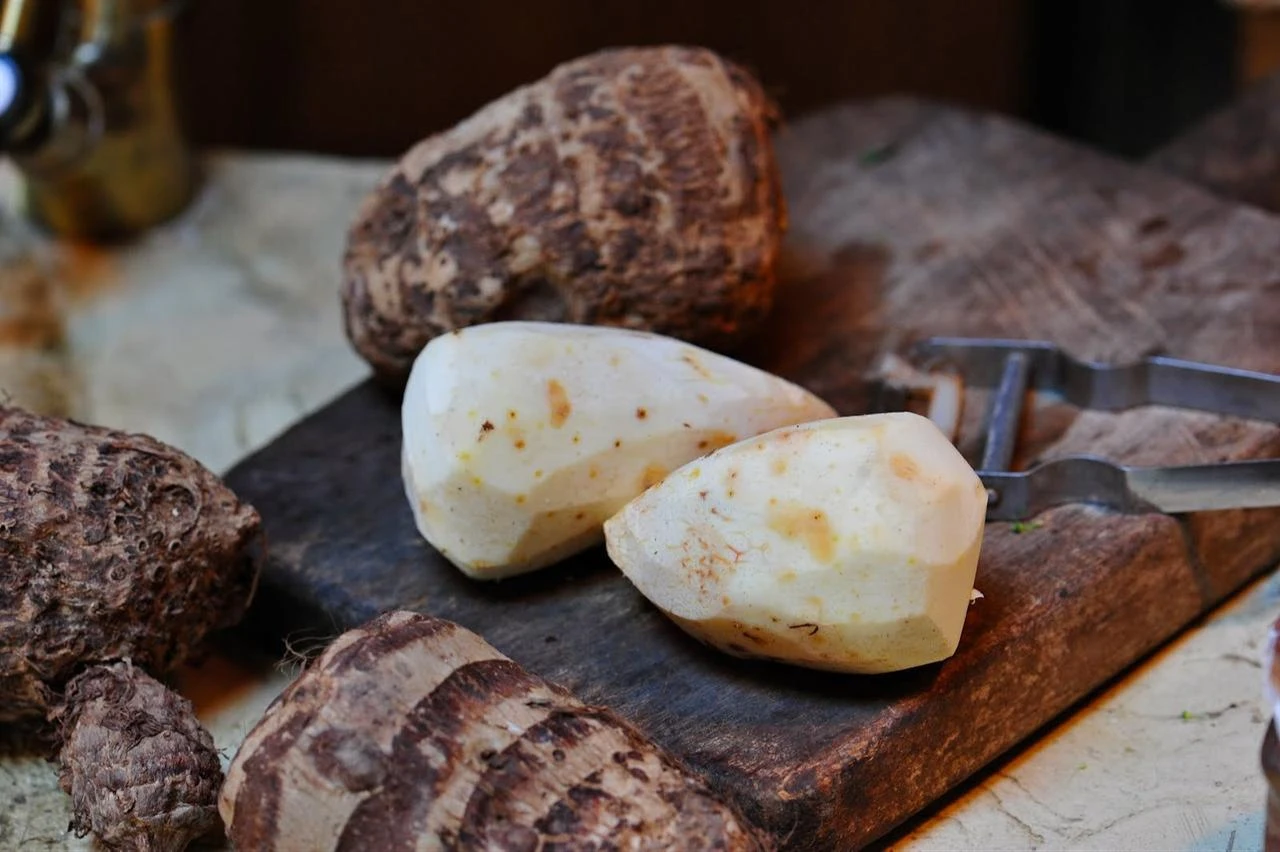
Deal with the taro: Do not wash it before peeling—wipe it dry with kitchen paper, holding it in the paper rather than your bare hand, since the skin sheds a mild irritant that will have you regretting your manicure. Peel, then break the flesh into chestnut-sized pieces with the point of a knife rather than slicing—a clean cut releases the starch that turns your sauce to wallpaper paste; a snapped edge does not.
Brown the beef: Heat the oil in a heavy pot and brown it in batches. Don't crowd it—you're after color, not a steam bath. Set aside.
Soften the base: In the same pot, saute the onion and celery until soft. Return the beef, add the kolokasi, and stir gently to coat everything in the fat.
Build the sauce: Add the grated tomato, the dissolved tomato paste, and enough water or stock to just cover everything. Season with salt, pepper and cinnamon if using. Bring to a boil, then reduce to a low simmer.
Wait: Cover and simmer for 60–90 minutes, stirring occasionally and turning the taro pieces so they cook evenly, until the meat is collapsing and the kolokasi has gone velvety—it should hold its shape but yield instantly to a fork. Add more liquid if the sauce reduces too far before that point.
Finish: Stir in the lemon juice at the very end, off the heat. Taste—it should be rich, slightly sharp, and unapologetically brown-red. Adjust salt and lemon to taste.
Notes
On the taro itself: sold as kolokasi, taro, eddo or dasheen depending on where you're buying it—Mediterranean, Turkish, Caribbean and South Asian grocers will all have something usable. Texture varies between varieties, so ask for the kind that holds together when cooked rather than disintegrating.
On the poulles: if you can find the small, immature taro cormels (unlikely outside Cyprus), they're a separate dish entirely and usually fried hard, then doused in crushed coriander and lemon. Don't try to fold them into this stew. They want violence, not company.


 Set as preferred source
 Set as preferred source




 6 min read