Sign in
 Newsletters


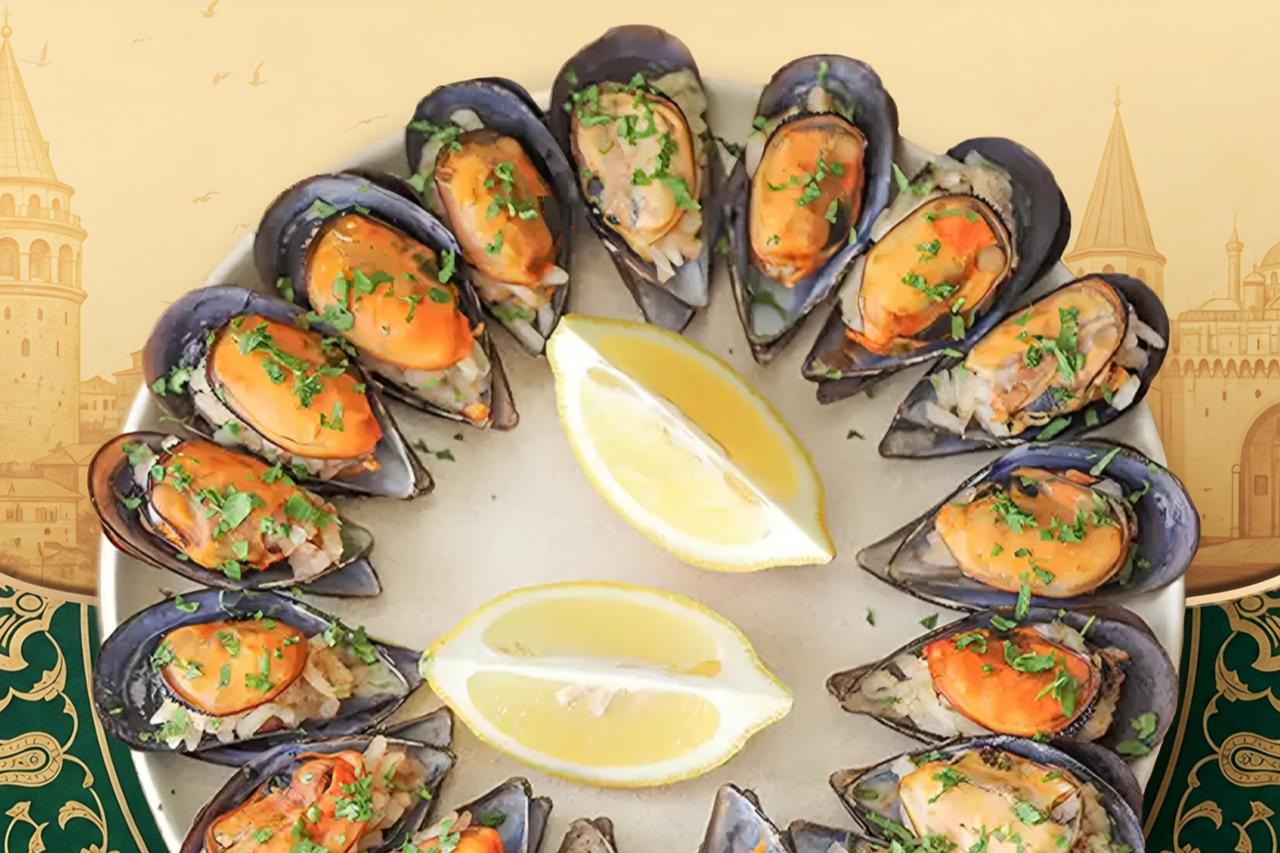


There is no menu or table. There is, in the strictest sense, no price. You walk up to the man on Istiklal Caddesi at 11 o'clock at night, hand him an approximate sum—a gesture in the direction of commerce rather than a neat transaction—and he begins opening mussels and handing them to you one at a time, squeezing lemon over each as he goes.
He sits on an upturned crate, a roll-up wedged in the corner of his mouth like punctuation he never got around to using. Each shell arrives with the same flat “buyrun”—here, go on—delivered as if the whole charade were beneath comment. Every fourth or fifth comes with “afiyet olsun.” That’s “enjoy, may it do you good,” said with total indifference.
Before that point, he has already worked out exactly how many mussels you'll be good for, and the price he names somewhere around the eighth is not the price he said at the start; it climbs in close correlation with how much of your character he’s managed to clock. Think of it as a contempt tax he invented himself and has never had to justify. He opens, squeezes, hands over, and watches you swallow, then announces the next one again. Remember, you are not dining. You are in a pit stop, and the way he is looking at you suggests he has seen stronger people fold.
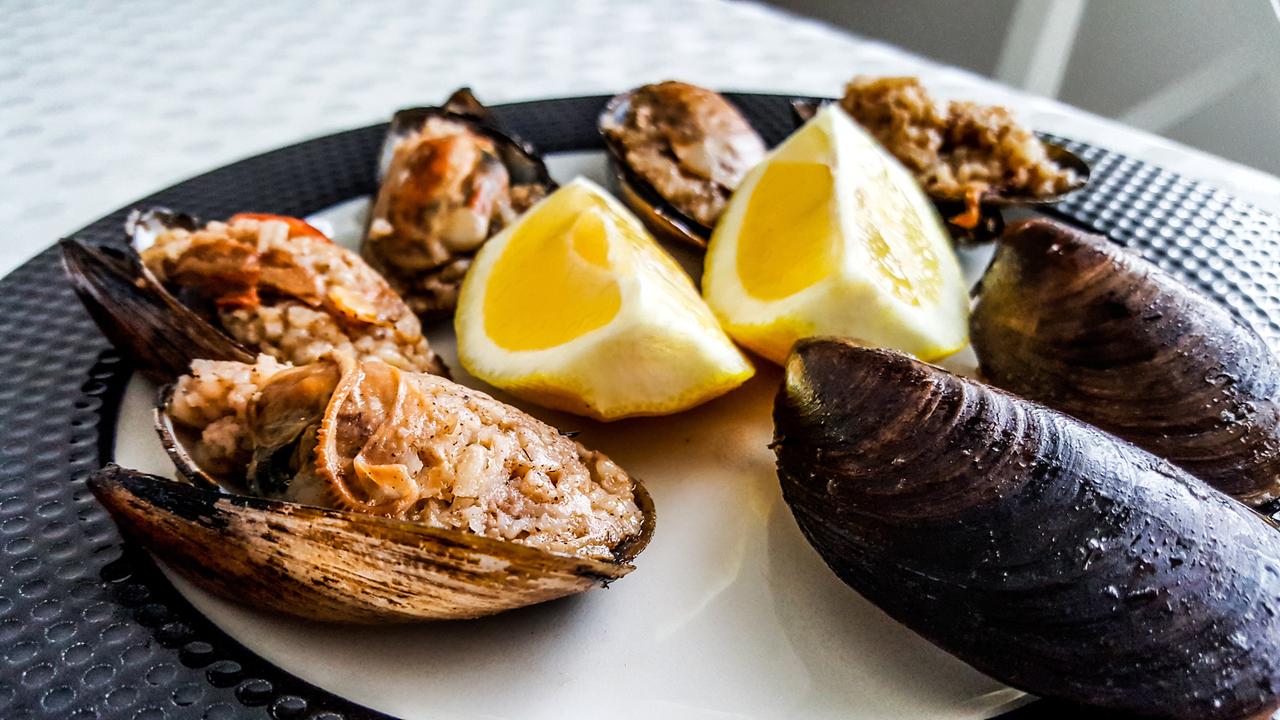

This is midye dolma. Stuffed mussels, specifically Mytilus galloprovincialis, or French mussels, with everybody agreeing on Mediterranean mussels on the grounds that French amour-propre must not be offered any assistance.
The filling is rice spiced with onion, slow-cooked until it sweetens, allspice, cinnamon, black pepper, currants, pine nuts, dill, then packed into the raw mussel and steamed so the grain absorbs the brine of the shell as it cooks. This is, structurally speaking, what paella is doing, except nobody will stab you for using the wrong pan.
The dish was first written down among Armenian Istanbullites making the most of the fact that their fasting calendar, which barred meat and dairy for roughly half the year, said nothing whatsoever about shellfish. Somebody read the small print properly and a religious restriction quietly became a business plan.
Rumor has it that Mehmet II dined on them in the first days of his conquest, but it's hard to find a single dish that doesn't make such a claim. We're on firmer ground in 1585, when Murat III imported a whole brigade of chefs from Rhodes and Crete specifically to prepare midye dolma—recorded in palace archives under the Greek name gemismena mydia—and ordered it distributed free to the public, presumably on the strength of the fact that a mussel-stuffed population has one fewer thing to complain about.
The earliest specific account comes from Ali Riza Bey, the city's long-serving balikhane naziri, inspector of the fish market, who recorded that in Bahariye, a Kadikoy brickworks owner named Sahbaz Efendi kept an Armenian cook on staff, and that stuffing mussels was among her duties. Which may be the kind of detail a man writes down when he has inspected fish for too long and has begun, not unreasonably, to suspect this is what he'll be remembered for.
It did not stay an exclusively Armenian skill for long. Ordinary Turkish housewives were soon making their own, and Greek meyhane keepers, who were required to shut their doors for the whole of Ramadan along with every other tavern in the city, turned their reopening-day into a calling card. One “Barba” (literally “bearded bloke” in Italian), for instance, sent a boat-shaped tray round to favored customers by way of saying “don't forget us.”
By the 1960s, as the city's Armenian population thinned out, the street trade passed to recent arrivals from Mardin—landlocked, several hundred miles from the nearest mussel—who now run something like nine in every 10 mussel stalls in the city.
Even within that handover, the mussel’s pull on the heartstrings had its limits. Ask an Armenian Istanbullite which dish is truly, untouchably theirs, and most won't say midye dolma at all. They'll say topik, a Lenten paste of chickpea and potato, bound with tahini, wrapped around caramelised onion, currants and walnuts, formed in cheesecloth over the better part of two days, and eaten cold with raki at Armenian meyhanes. It never made the leap to the street, probably on the grounds that nobody has found a faster way to make it.
Meanwhile, the scale of midye dolma has all reached its own kind of joke. Türkiye gets through something like a million metric tons of mussels a year, sold by vendors whose individual output ranges, depending on who you ask, from a modest 100 a night to a genuinely deranged 15,000. A spread wide enough that the true number isn't really a statistic so much as a rumor everyone's agreed not to test.
A 2020 study measuring the one variable nobody had actually asked for found Istanbul's mussels carry more microplastics per shell than any other Turkish city's—a distinction the trade appears to have absorbed with the same shrug it absorbs everything else. And it can afford to shrug because the recipe has spent a century doing what a good winter coat does in a large family with one income. It's passed down, let out at the seams by whoever's wearing it that decade, claimed by nobody in particular because everybody has, at some point, worn it.
Today, mothers and sisters do the actual stuffing, usually in apartments in Bagcilar and Gaziosmanpasa, in a job that is neither picturesque nor much discussed. The sons sell what gets made on the street at night, typically to those in no state to be discerning.
Nobody buys midye dolma at two in the afternoon on a Tuesday. They buy it at three in the morning, in a group, after an evening that got away from them, and the shell pile at their feet is less a record of appetite than a sobriety test: a typical person stops at eight or nine. Fifteen is a cry for help wearing the disguise of bravado.
Back on Istiklal Caddesi, the vendor opens another mussel and mutters afiyet olsun for what must be the sixth or seventh time this evening, each one delivered with exactly the same sincerity as the first. You hand over more than the last round cost, and neither of you sees any reason to bring this up. Buyrun, he says, like a man bored of his own rites.
Ingredients
1kg fresh mussels in their shells, scrubbed and debearded
100g short-grain or round-grain rice, rinsed
1 large onion, finely chopped
2 tbsp olive oil
1 tsp ground allspice
½ tsp ground cinnamon
½ tsp black pepper
2 tbsp currants
2 tbsp pine nuts
2 tbsp chopped dill
Salt
150ml water
Lemon wedges, to serve
Method
Make the filling
Heat the olive oil in a pan over medium heat and cook the onion slowly for 10 minutes, until very soft and faintly sweet. Add the pine nuts and toast for 2 minutes. Stir in the rice, allspice, cinnamon, black pepper and a pinch of salt, coating everything in the oil.
Partially cook
Add the currants and the water, bring to a simmer, cover, and cook for 8 minutes—the rice should be only just tender, not fully cooked; it will finish inside the shell. Stir through the dill, then spread the mixture on a tray to cool.
Open the mussels
Using a small knife at the flat edge of each shell, work the blade around to loosen the hinge without separating the two halves completely—you want them to open like a book, not come apart.
Stuff
Spoon a heaped teaspoon of the cooled rice mixture into each opened mussel and press the shells gently closed around it.
Steam
Pack the stuffed mussels tightly into a wide pan, hinge-side down, in a single layer. Add a splash of water, cover tightly, and steam over medium heat for 10 minutes, until the mussels are cooked through and the rice has finished.
Serve
Squeeze lemon over each one just before eating, using the top shell to scoop the filling out of the bottom, exactly as the dish has always been eaten.
Notes
On the rice: slightly undercooked at the stuffing stage is correct, not a mistake, as it finishes in the shell, and overcooked rice beforehand makes for a mushy filling.
On eating position: standing, ideally on a street corner, ideally late. This is not strictly necessary at home, but it is traditional.
On portion control: people tend to stop at eight or nine shells. Fifteen is not so much greedy as possibly proof that the night has gone somewhere you didn’t intend it to go.


 Set as preferred source
 Set as preferred source



 2 min read