Newsletters


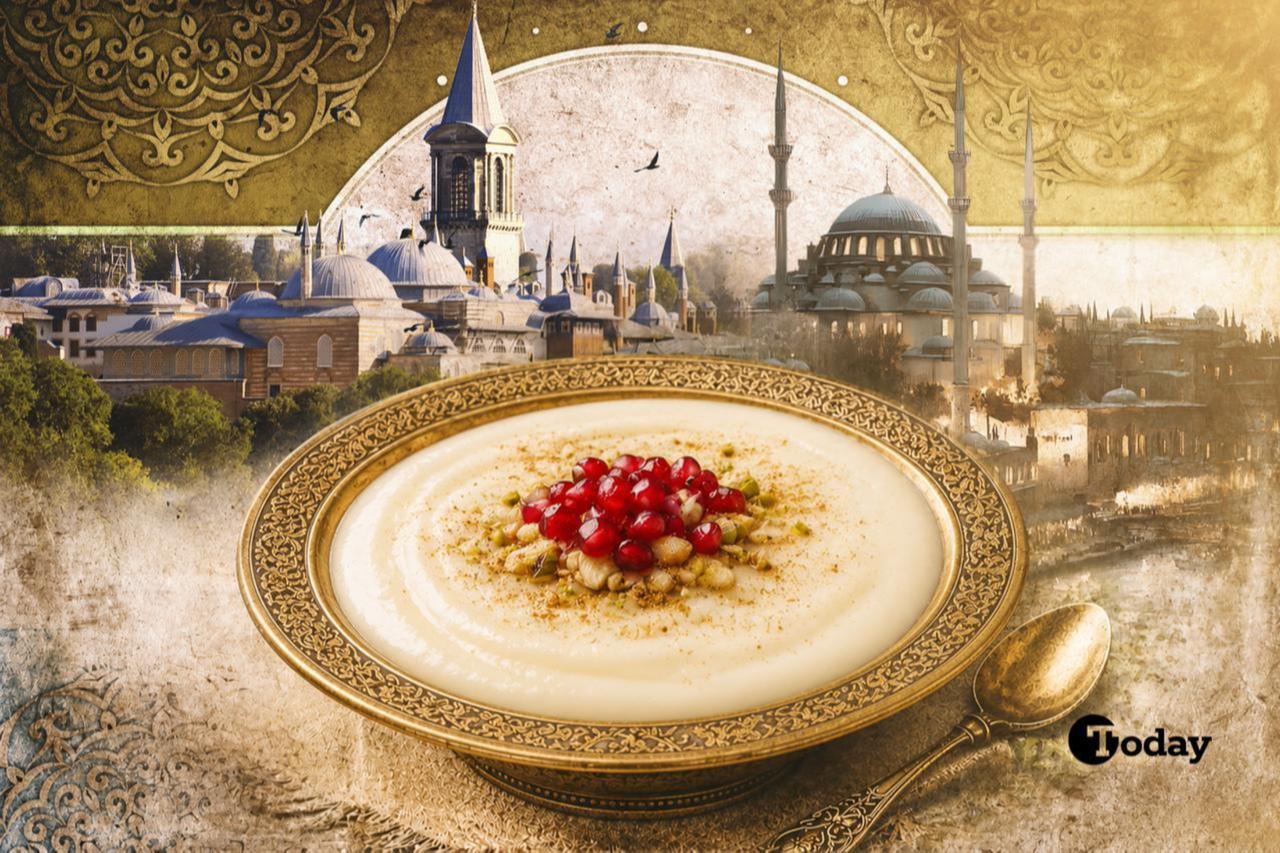


Al-Muhallab ibn Abi Sufra campaigned across India, raided the territory between Kabul and Multan, and fought Kharijite rebels across the length and breadth of Persia.
He switched allegiances between caliphs with the fluid convictions of a man who followed whoever buttered his bread. He died in A.D. 702 on campaign in Khorasan, still at it, ready to submit more lands to Allah.
Yet what he is remembered for is milk pudding.
Once upon a time, a Persian cook made it for him, and he liked it, so he named it after himself. Not after Persia, the caliph, or the cook. Himself.
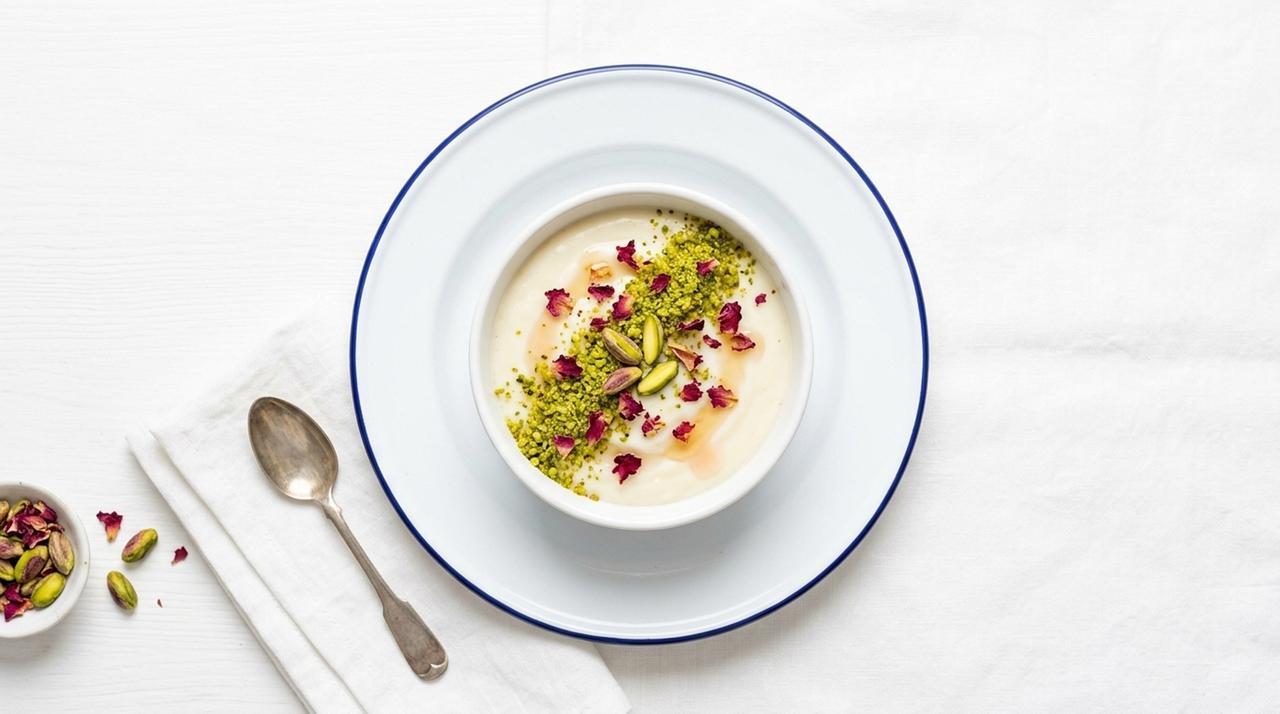

Historians note, with the weariness of those who have spent careers debunking factoids, that halib simply means milk in Arabic—meaning "muhallebi" may be nothing more than "milky thing."
Ultimately, the general's story represents nothing more than 14 centuries of cynical self-promotion.
Either way, muhallebi does not arrive so much as materialize. One moment, the table is empty. Next, there is a small bowl, pale and barely set, wearing a dusting of cinnamon with the diffidence of an after-dinner mint placed by a waiter who refuses to catch your eye.
In this, it resembles nothing quite so much as the unsolicited raki in a Turkish meyhane, or the grappa every Venetian trattoria produces from nowhere at the end of a meal. The thing simply appears and you are expected to deal with it.
Other countries possess beige relatives. The French have creme brulee. The Italians have panna cotta. The English took the same basic idea, called it blancmange, and produced something that resembles a dessert in the same way that a police photofit resembles a face—technically correct and deeply unsettling.
Muhallebi made no such journey into indignity. It left Persia, arrived in the Arab world, settled into the Ottoman palace, descended to the street, and remained itself throughout.
Over 14 centuries, that is either supreme self-knowledge or catastrophic incuriosity.
The earliest written recipe appears in a 10th-century Baghdadi cookbook and already has three variations: milk thickened with ground rice, milk with rice and chicken, and an egg custard without rice. Even in A.D. 900, it couldn't commit.
The chicken version is worth dwelling on.
Tavuk gogsu is muhallebi's distinguished cousin, a white milk pudding made with finely shredded chicken breast, cooked until the meat dissolves entirely into the milk and disappears structurally, like a witness who has said too much and is relocated for their own safety.
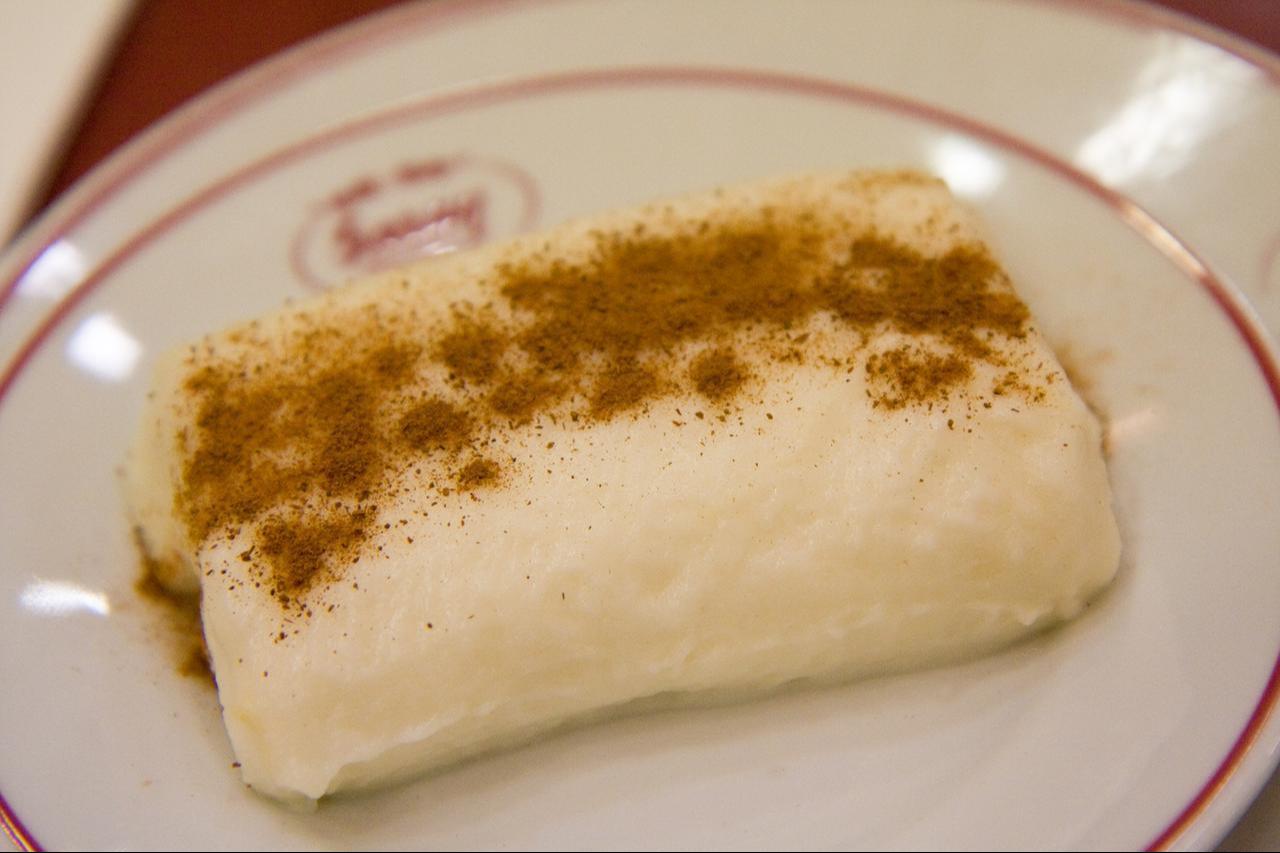
It does not taste of chicken. This is the first thing anyone serving it will tell you, with the urgency of someone who has watched its reception play out too many times.
The chicken is a thickening agent—the solution of a kitchen so desperate for texture that it looked at a milk pudding and concluded the missing ingredient was a bird.
The same logic had been running in European kitchens for centuries under the name "blanc manger"—pale, sweet, chicken-based, the direct ancestor of England's nursery blancmange, which means that generations of British children were eating poultry custard without anyone telling them.
By the 17th century, the French and English had quietly voted the bird out. The Italians took considerably longer to reach the same conclusion.
The Ottomans kept it and served it to sultans.
Legend holds that it was invented when a sultan demanded something sweet in the middle of the night and the palace kitchen contained, at that hour, only a chicken. The cook made his calculation. You have to admire his nerves.
The descent from the palace to the street had consequences nobody planned.
The Ottoman city organized its social life around a gendering of public space—coffeehouses for men, homes and private picnics for women—but the muhallebici undid this quietly because, ultimately, it’s difficult to attach moral freight to rice flour.
This made the pudding shop the first retail space in Istanbul where men and women could sit together in public without official complaint. A milk pudding, in this city, was a more effective instrument of social reform than a century of petitions.
Which brings us, on a fairly violent tangent, to Billy Hayes. In 1957, two brothers opened a pastry shop in Sultanahmet called Lale Pastahanesi.
By the 1960s, it had become the nerve center of the overland route to Kathmandu, spitting young people in Volkswagen vans out East after they’d left messages on the brothers' bulletin board: hitchhiking offers, border warnings, recommendations that aged well and some that didn't.
One surviving message was a public apology from Megan to Malcolm, asking forgiveness for the “business down in Greece.” His response has not been preserved.
The restaurant's name fared similarly—nobody could quite hold onto it, but the desserts were another matter, and so it became, globally, The Pudding Shop.
It was here, in 1969, that Billy Hayes' taxi driver collected him before he made the purchasing decisions that would eventually become Midnight Express.
The restaurant has been trading on this association ever since, which is either savvy marketing or the only available strategy once your most famous customer was arrested at the airport with 2 kilos of hashish strapped to his body.
It is currently ranked 611th on TripAdvisor among Istanbul's restaurants. The pudding remains blameless.
Ingredients
Steps
1. Make the slurry
Whisk the rice flour and sugar into the cold milk in a heavy-bottomed saucepan until completely smooth and no lumps remain. Do this before any heat is applied.
Rice flour added to warm milk will clump with the vindictive efficiency of something that has been waiting for an opportunity.
2. Cook and thicken
Place over medium-low heat and stir continuously with a wooden spoon or whisk, reaching the bottom and edges of the pan. Do not walk away.
The mixture will seem entirely liquid for longer than seems reasonable, then thicken quite suddenly over about 15–20 minutes. When it coats the back of a spoon, and a line drawn through it holds its shape, it is done.
3. Add rosewater
Remove from the heat, then add the rosewater. Take the pan off the heat before you do anything else.
Stir in the rosewater. Taste. It should be present but not medicinal—the quantity given is a starting point, not a guarantee.
If it smells more of pharmacy than pudding, you have gone too far, and there is no coming back.
4. Set and chill
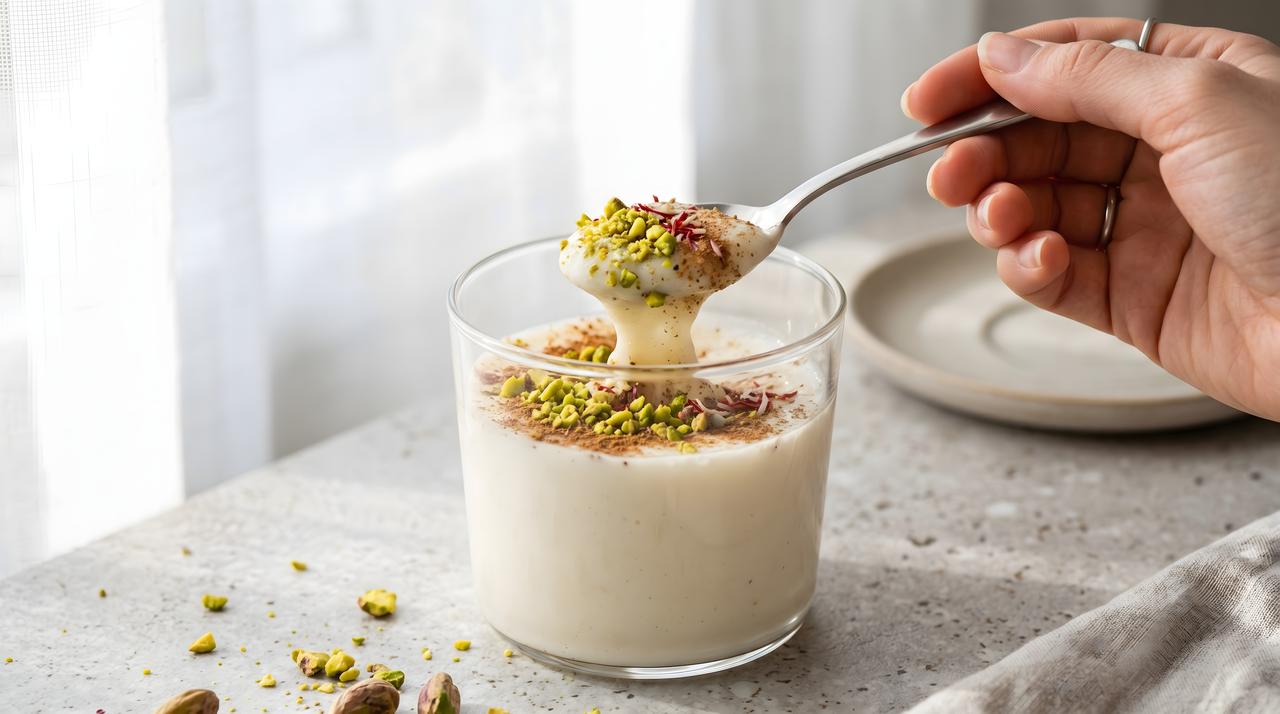
Pour into small bowls or glasses. Leave to cool at room temperature, then refrigerate for at least two hours. The pudding will set to something barely trembling—loose enough to spoon through without resistance, firm enough to hold its shape in the bowl.
5. Finish and serve
Dust with cinnamon immediately before serving. Add crushed pistachios if using.
Serve cold.
Notes
On rice flour: This is the historically correct thickener and produces a pudding with a subtle texture and genuine depth. Cornstarch produces something smoother and blander. The choice reflects your priorities.
On rosewater: Buy the best you can find. Cheap rosewater smells of soap and will make the pudding taste like a gift shop. A little goes further than you expect and the damage, once done, cannot be undone.
On sugar: 80g produces a pudding that is lightly sweet and allows the milk and rosewater to speak.
On serving: Four small bowls or six modest ones. Muhallebi is the kind of thing people want a second bowl of and then think better of. Plan accordingly.


 Set as preferred source
 Set as preferred source




 6 min read