Newsletters


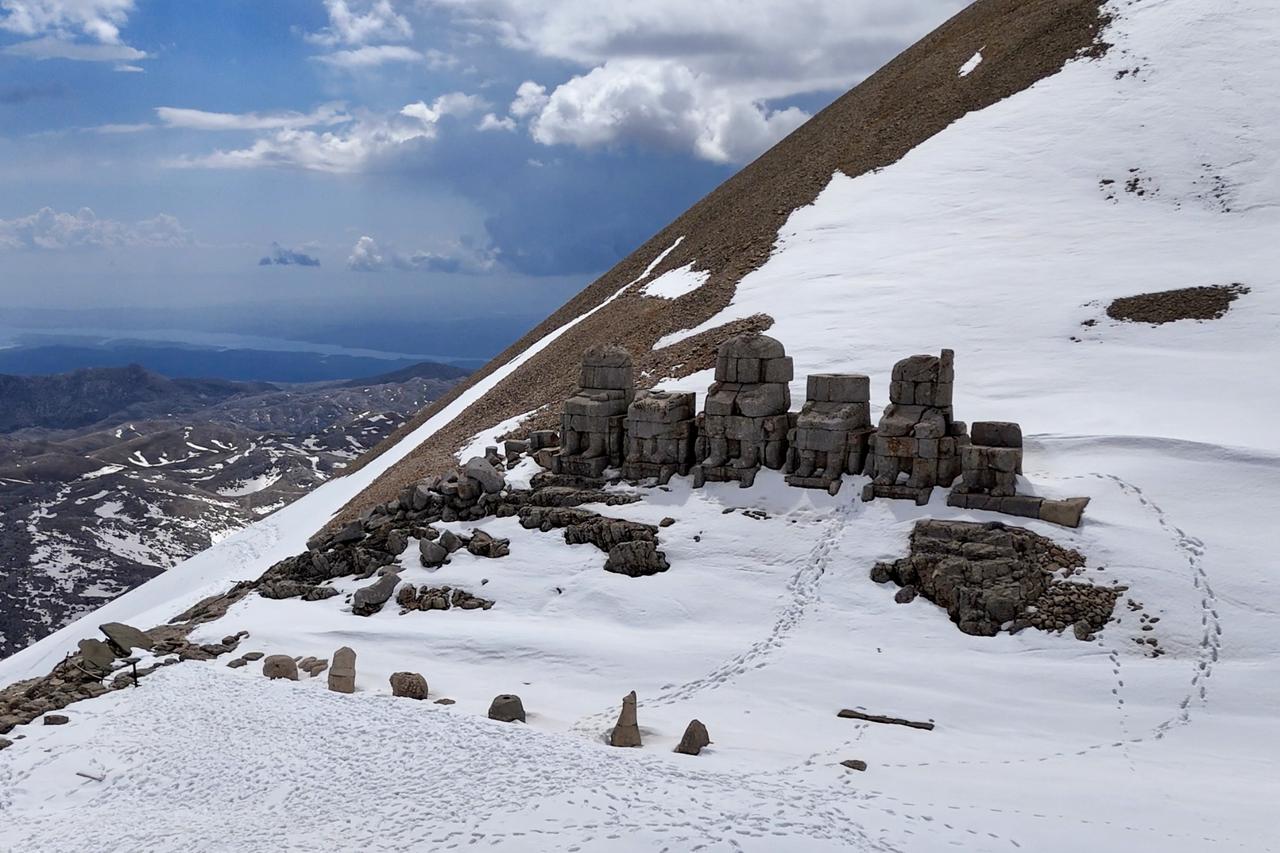


Mount Nemrut Archaeological Site, a UNESCO World Heritage Site located within the Kahta district of Adiyaman province, has opened to visitors this week following months of winter closure, with roads to the summit cleared of snow on April 4.
Perched at 2,150 meters (7,054 feet) above sea level, the site draws thousands of visitors each year for its panoramic sunrise and sunset views.
It houses a tumulus 50 meters tall and 150 meters wide, along with colossal statues from the Kommagene Kingdom.
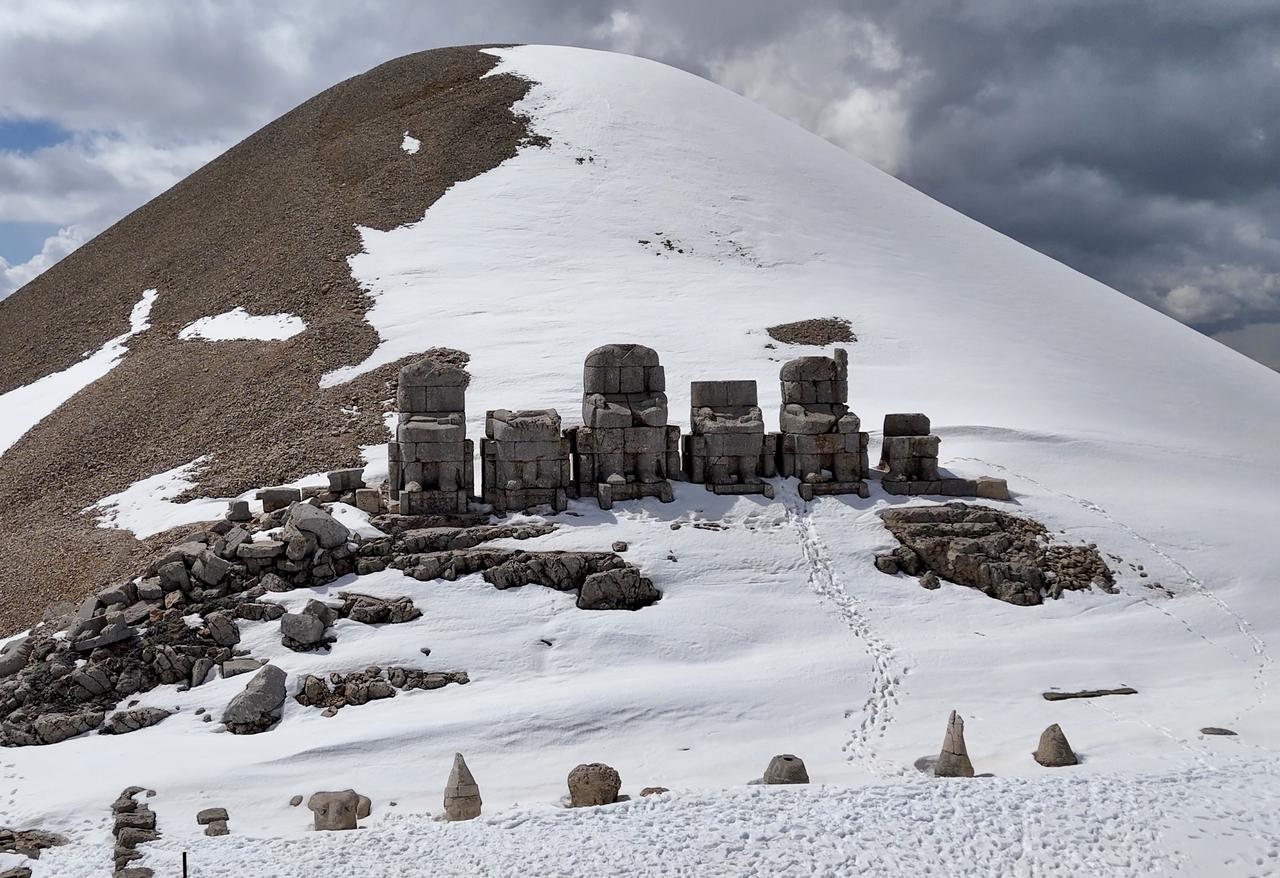

Heavy winter snowfall delayed the start of the tourism season, with road crews working to reopen access routes before the first visitors arrived this week.
Bilal Mente, an official with the Nature Conservation and National Parks branch directorate, confirmed the season's opening.
"The opening of the season was delayed due to snowfall in our city. Road crews cleared and opened the roads," Mente said, adding that the colossal statues are partially buried under snow.
Mente said both domestic and international tourists have begun arriving at the site. "The massive statues look stunning under the snow.”
“We welcome nature lovers and photography enthusiasts to capture this unique scenery," he said.
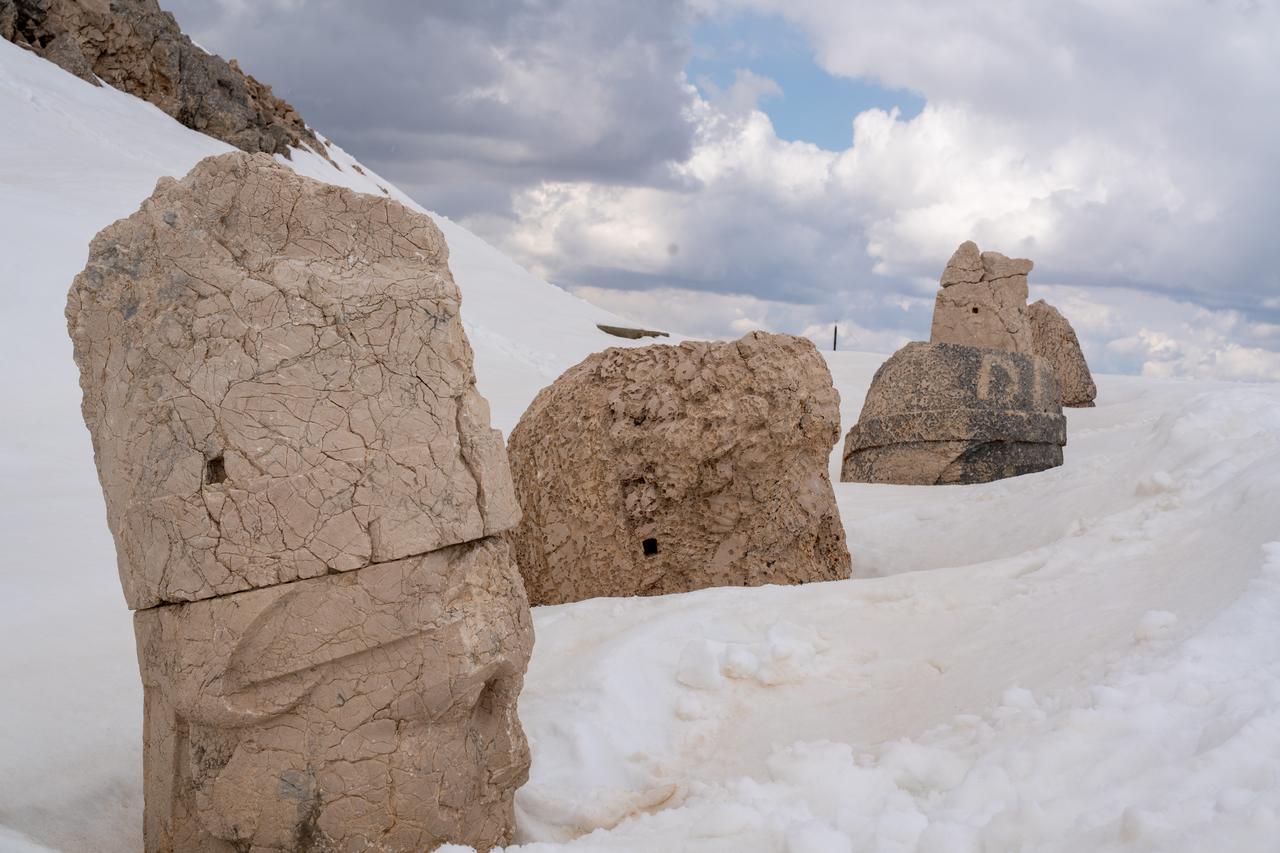
Mount Nemrut's significance stretches back to the first century B.C., when King Antiochus I of the Kommagene Kingdom commissioned the sanctuary that crowns the summit.
The Kingdom of Commagene occupied a strategic position between the Roman Republic and the Parthian Empire, and under Antiochus I, it reached its peak—embracing a syncretic identity in which Greek and Persian deities coexisted within a single sacred landscape.
Ten colossal statues once flanked the summit terraces, depicting a pantheon of Greco-Persian gods including Zeus-Oromasdes, Apollo-Mithras-Helios-Hermes, and Herakles-Artagnes-Ares. Antiochus himself is immortalized among them.
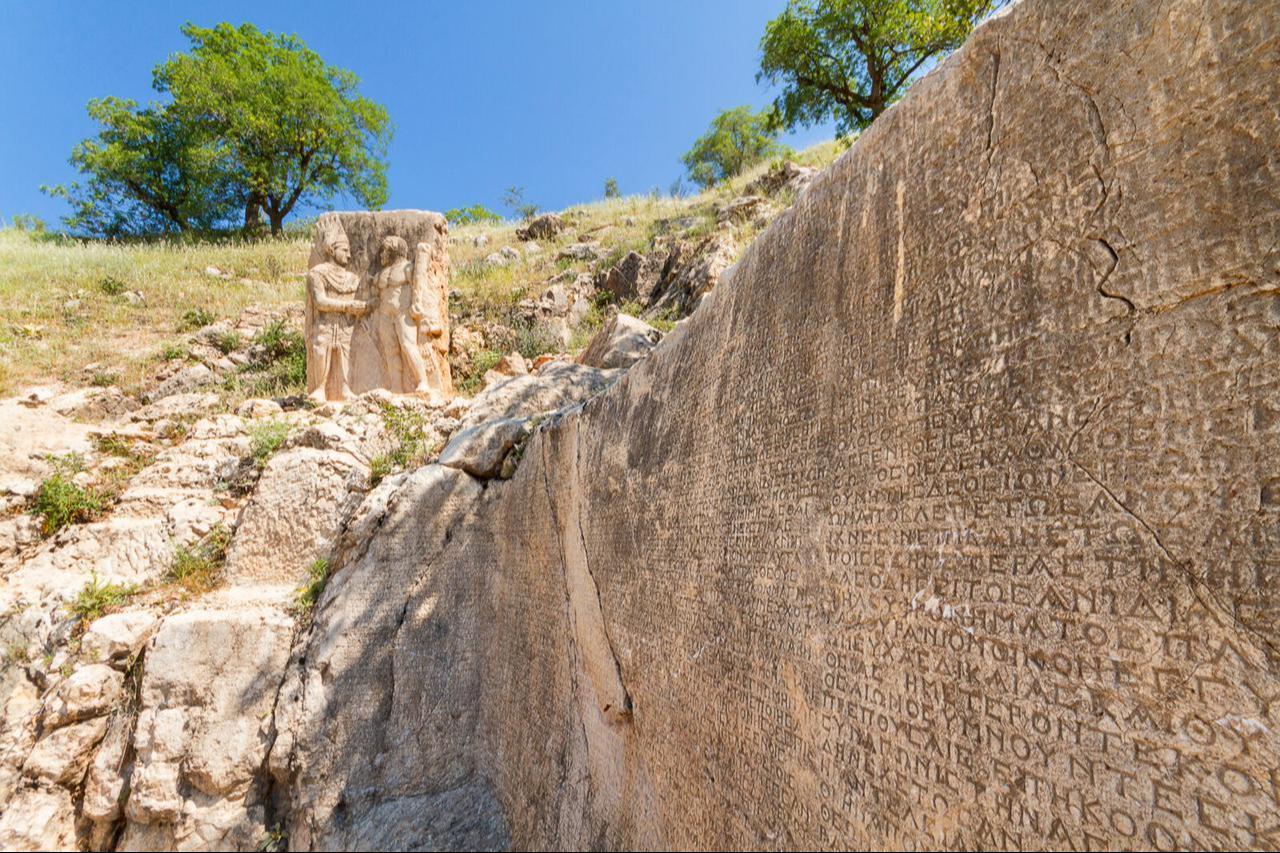
Dexiosis reliefs—carvings depicting the king shaking hands with the deities—line the terraces, symbolizing divine approval and the ruler's claim to eternal legitimacy.
Beneath the towering tumulus, historians and archaeologists believe the undisturbed tomb of Antiochus I may still lie intact.
The burial mound's interior is layered with thousands of meticulously placed stones, a structure that has made excavation nearly impossible without risking irreversible damage and has kept the site's deepest secrets sealed for more than 2,000 years.
Unlike the subterranean tunnel network used for the burial of his father, Mithridates, Antiochus chose an Anatolian model elevated to a mountaintop setting, a choice that distinguishes the site as one of the ancient world's most unusual royal monuments.
The site's inscriptions confirm its dual role as both tomb and temple, with ritual pathways indicating that ceremonial processions and religious offerings once took place around the summit.
Nearby, the royal summer capital of Arsameia houses Türkiye's longest-known Greek inscription, carved into stone and detailing Antiochus' deeds and the ideological framework behind his self-deification.


 Set as preferred source
 Set as preferred source


 2 min read