Newsletters


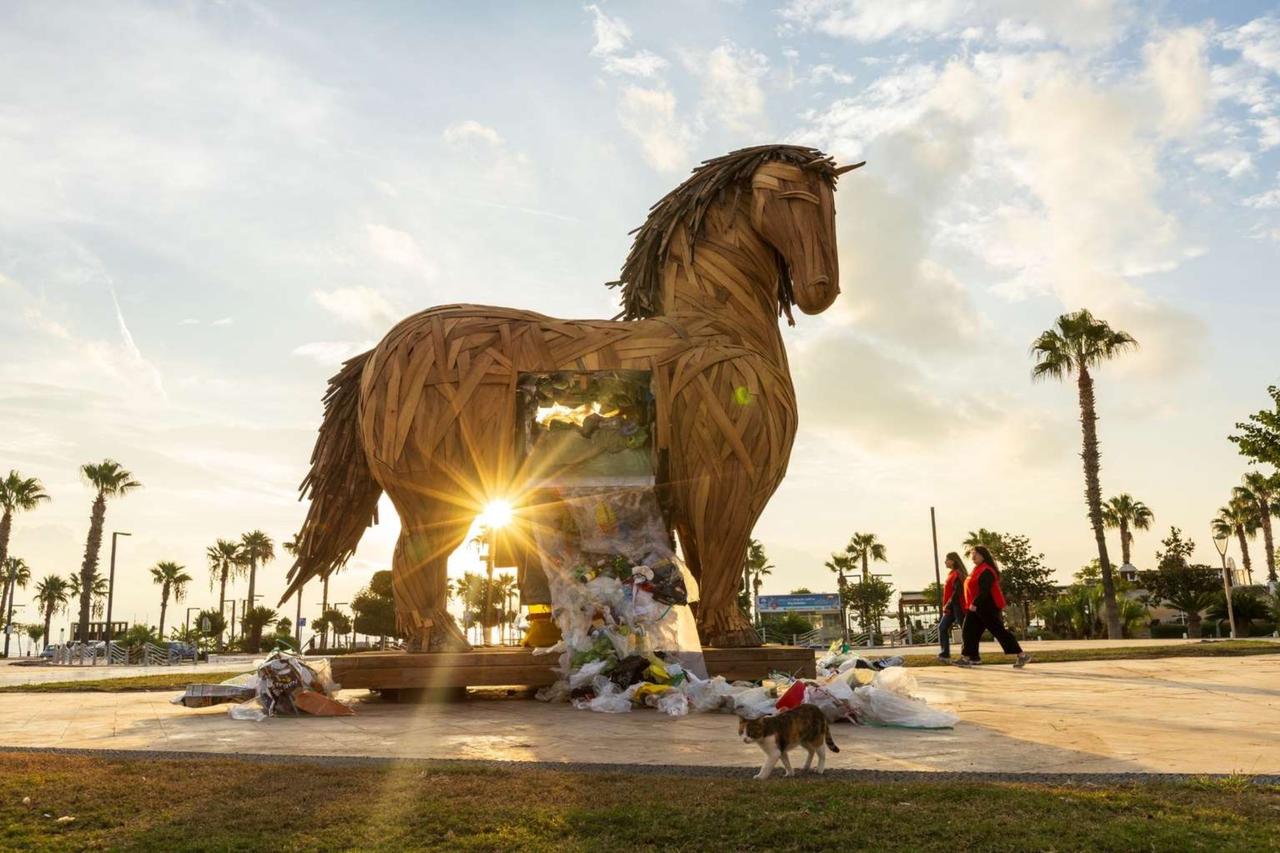


Greenpeace International unveiled a six-meter-tall Trojan Horse in Antalya, Türkiye, on Nov. 13, warning that the fossil fuel industry is expanding plastic production to maintain demand for oil and gas as world leaders gather for the COP31 United Nations climate conference.
Created in collaboration with Danish artist Thomas Dambo, the installation measures four meters wide and features a trapdoor in its belly that opens to release plastic, illustrating what Greenpeace describes as the hidden connection between everyday plastic products and fossil fuels.
The environmental organization used the installation to call for limits on global plastic production ahead of the next round of Global Plastics Treaty negotiations, scheduled for March 2027.
Drawing on the ancient legend of Troy, Greenpeace presented the horse as a symbol of how the fossil fuel and petrochemical industries use plastic production to protect their profits and prolong dependence on oil and gas.
Berk Butan, Social and Economic Systems Campaigner at Greenpeace Türkiye, said the Trojan Horse legend was particularly relevant because of its historical connection to the region.
“The fossil fuel industry is using plastic as an escape hatch,” Butan said, arguing that plastic products conceal environmental threats behind their everyday uses.
He also called on Türkiye to strengthen its Zero Waste initiative, which aims to reduce waste generation and improve resource management, by introducing limits on plastic production and stopping imports of plastic waste from other countries.
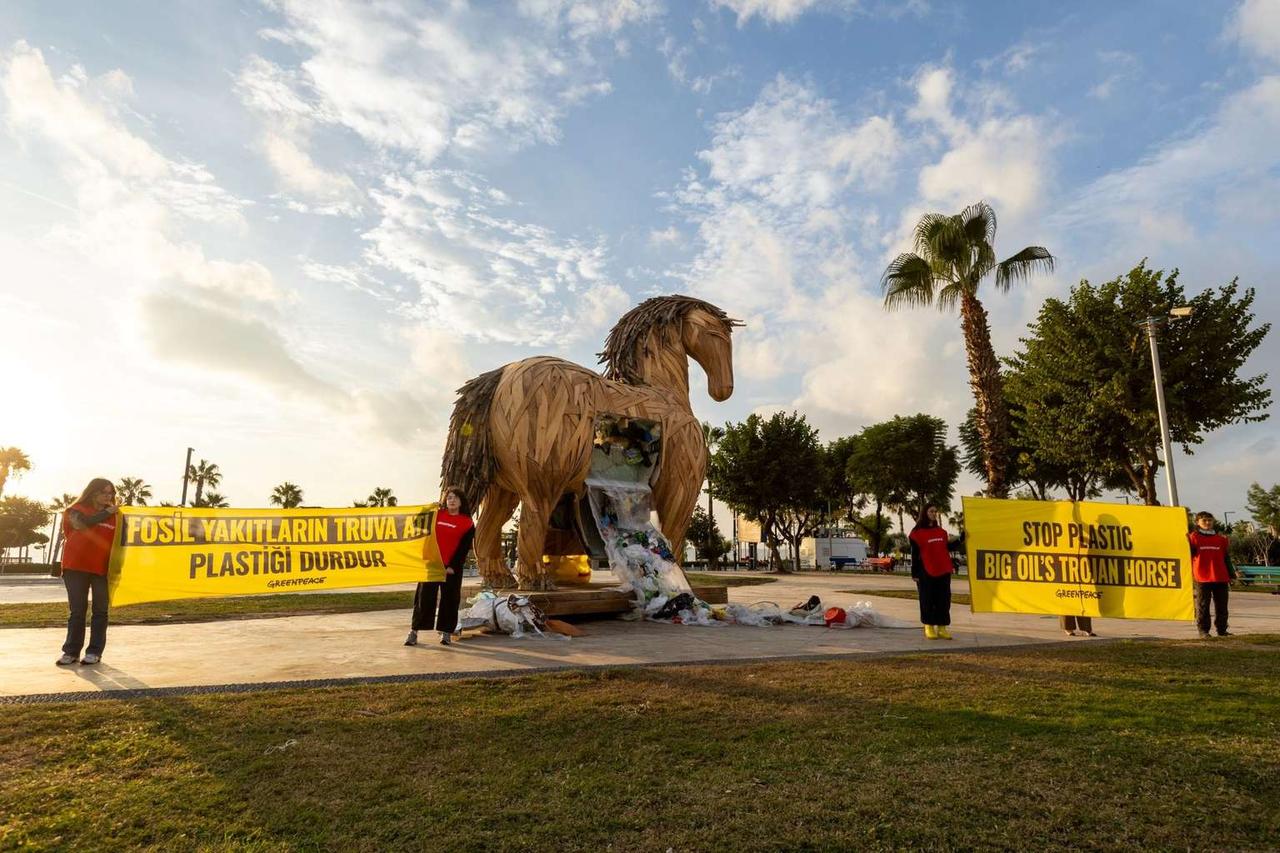

Dambo, who created the installation using recycled materials and discarded items, said the project was intended to draw attention to excessive production and the relationship between plastic and fossil fuels.
“Here at COP31, this Trojan Horse reveals what everyday plastic conceals: its connection to oil and gas,” Dambo said.
Greenpeace maintains that plastic contributes to climate change throughout its life cycle, from the extraction of fossil fuels and manufacturing to disposal.
Jacob Kean-Hammerson, Global Plastics Policy Lead at Greenpeace USA, warned that expanding plastic production could allow fossil fuel companies to continue generating emissions and pollution despite international climate commitments.
“Plastic is Big Oil’s Trojan Horse,” he said, calling on governments to confront fossil fuel interests during COP31 and upcoming negotiations on a global plastics agreement.
Greenpeace urged governments to back a binding Global Plastics Treaty that would reduce plastic production at its source, support reuse and refill systems, and promote a just transition away from fossil fuels, meaning a shift that also takes workers and affected communities into account.
The organization said the installation was intended to bring these demands into the COP31 negotiations before international talks on plastic pollution resume in March 2027.


 Set as preferred source
 Set as preferred source


 2 min read