

 Newsletters


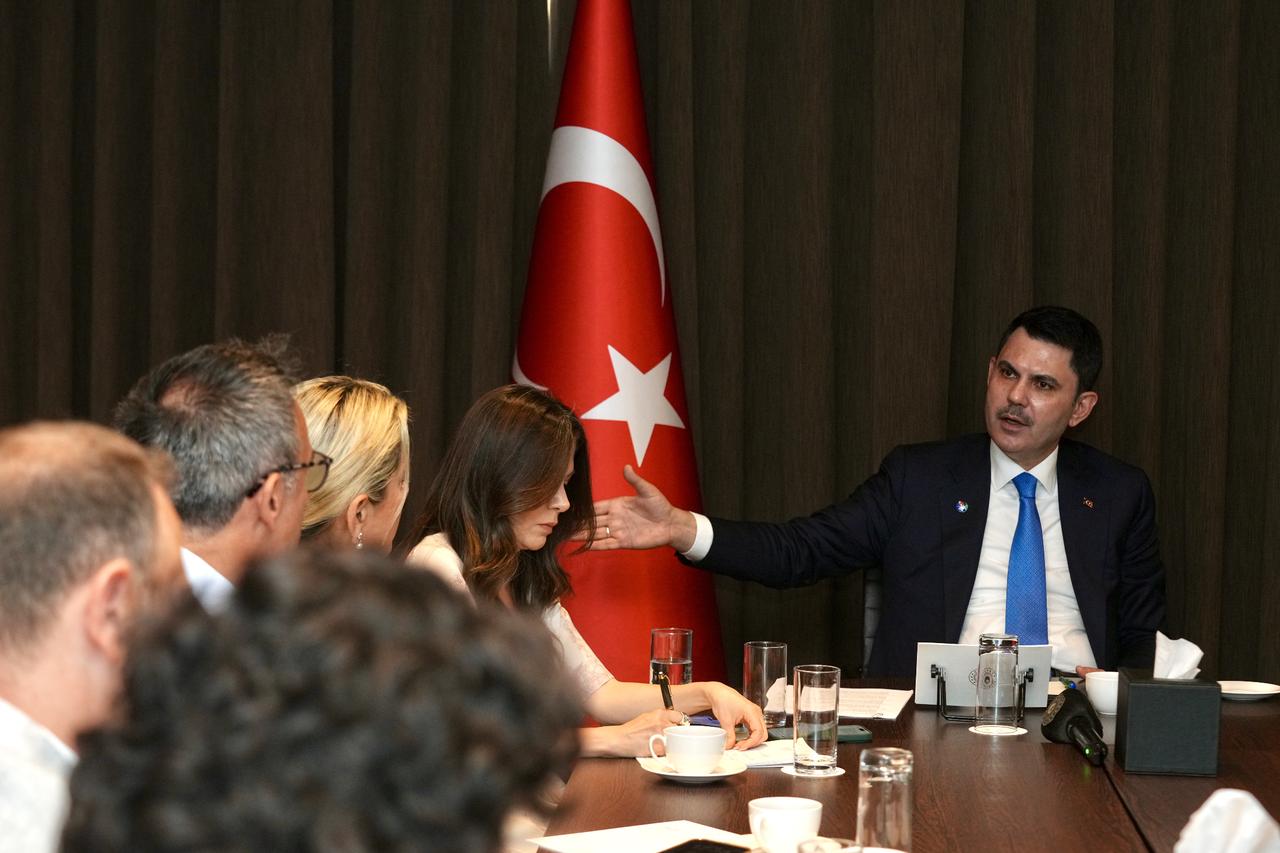


Türkiye aims to raise its recycling rate from the current 37% to 80% by 2053 as part of its wider circular economy goals, Environment, Urbanization and Climate Change Minister and COP31 President Murat Kurum said during London Climate Action Week.
Speaking to Turkish journalists in London, Kurum said the country was working to cut down waste, make better use of materials and move toward a production model in which resources are reused instead of thrown away.
“Our aim is to raise this rate to 80% in the circular economy toward 2053,” Kurum said.
He also underlined that Türkiye does not import “garbage” from abroad, saying materials such as paper and certain plastics are brought into the country as raw materials for production.
As part of its waste reduction plans, Türkiye is preparing to roll out a deposit return system on July 1. The system is designed to encourage the return of used packaging through a deposit-based collection model.
Kurum said regulations limiting single-use plastics are also expected to be published in September, while Türkiye aims to cut waste by 50% as part of its broader environmental agenda.
Kurum said COP31, this year's United Nations climate change conference, will be held in Antalya in November and will focus on implementation, concrete action and dialogue.
“We call it the ‘implementation COP.’ We are building it on action, consensus and dialogue,” he said.
The COP31 agenda will include Zero Waste, clean energy transition, food security, climate-resilient cities, youth and education, health systems and green industrialization.
Referring to tensions around the Strait of Hormuz, Kurum said the risks of fossil fuel dependence had become visible again, making renewable energy and energy independence more important.
He said renewable sources now make up around 62% of Türkiye’s installed power capacity, while investments in hydro, wind, solar and nuclear energy are continuing.
Kurum also pointed to Türkiye’s reconstruction efforts after the Feb. 6, 2023 earthquakes as an example of the country’s experience under COP31’s climate-resilient cities agenda.
He said Türkiye carried out work in 3,500 separate areas across 11 provinces and delivered homes to citizens within two years.
“Seeing Türkiye’s determination and stable stance through the work we have done, they believe Türkiye can carry out the COP31 presidency,” Kurum said.
Asked about the United States’ stance on climate action, Kurum said the green transition is shaped not only by governments, but also by the private sector, production and consumption.


 Set as preferred source
 Set as preferred source


 1 min read
 1 min read


