Newsletters


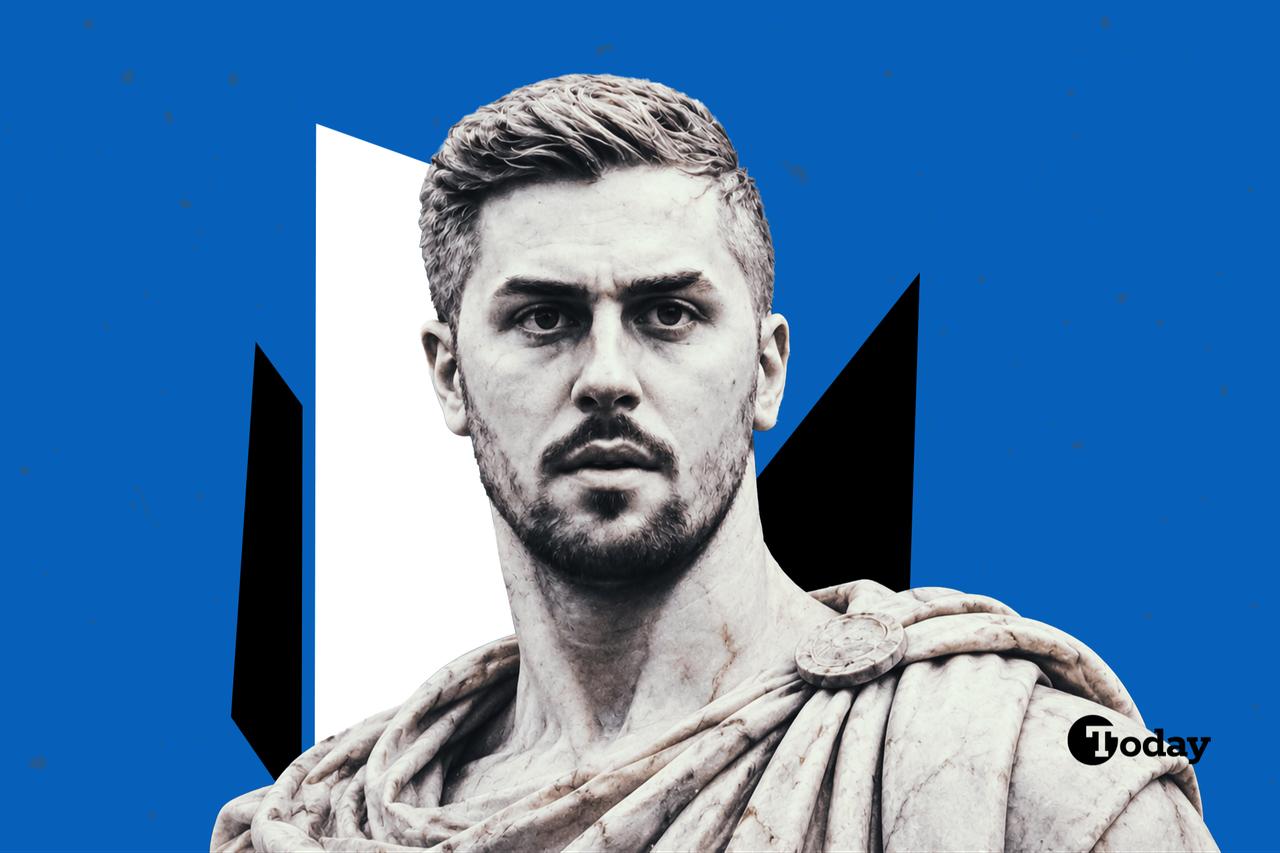


A Greek member of the European Parliament who denounced Ottoman civilization as a thousand-year epidemic of barbarism last week suffered a biological emergency when a DNA test revealed that he was 49% Turkish.
Emmanouil “Manolis” Fragkos, a veterinarian by training and leading voice of the Patriots for Genetic Sovereignty, the European parliamentary faction that believes chromosomes should carry passports, received the results in a Brussels café from his family dog, Xenophobicles.
The pooch had been entrusted with the envelope because he was discreet, loyal and the only member of the household not suspected of harboring foreign sympathies.
Fragkos last week delivered a parliamentary address describing his eastern neighbors as Mongol barbarians responsible for a millennium of cholera, darkness, and assorted civilizational misfortunes.
The chamber responded with the silence normally associated with diplomatic embarrassment and the discovery that the stenographer had begun typing a suicide note.
Fragkos was especially proud of the cholera reference. Six years of veterinary training had taught him to recognize disease in livestock. Diagnosing entire nationalities was apparently his own contribution to medical science.
Then Xenophobicles deposited the envelope at his master's feet, sat obediently, and waited for a biscuit. Fragkos tore it open.
Forty-nine percent Turkish. The Ottomans were back.
They had apparently established a beachhead in his reproductive history and were now occupying nearly half his genetic inheritance.
Xenophobicles watched his master's face turn white and retreated beneath the table.
Fragkos demanded an investigation. Was the laboratory financed by Ankara? Could the offending chromosomes be sanctioned or expelled under EU legislation?
Within hours, the European Commission had established an Emergency Directorate for Politicians Containing Populations They Publicly Despise. Legal Affairs proposed dividing Fragkos into two jurisdictions. Foreign Affairs recommended negotiations. Public Health requested that he stop confusing ethnic groups with intestinal pathogens.
An Austrian delegate suggested deporting the offending chromosomes, but nobody could identify them. Seventeen consultants were appointed. Three resigned. The remaining 14 submitted invoices.
Fragkos's office insisted the results were impossible because generations of Greeks had preserved their language, religion and identity under Ottoman rule.
A historian explained that cultural survival did not require genetic isolation. Centuries of migration and intermarriage had made the eastern Mediterranean a genealogical nightmare for anyone demanding immaculate bloodlines.
Fragkos denounced this as foreign propaganda. The historian produced a bibliography. The Greek politician demanded sanctions against the bibliography.
By late Friday afternoon, a commission of veterinary professors was investigating how a man trained to distinguish cattle breeds had come to believe human civilizations operated like pedigreed livestock.
Fragkos demanded to know whether Aristotle had been 100% Greek. The professors replied that Aristotle had died 23 centuries before commercial DNA testing.
The commission then tested Xenophobicles, whose pedigree identified him as a purebred Greek shepherd. The results revealed six breeds, four countries, and substantial Anatolian ancestry.
Fragkos accused the dog of concealing his origins and ordered him removed from the household pending a national security review. Xenophobicles, who had spent seven years guarding the family against burglars and suspicious deliverymen, was reportedly devastated.
But the real catastrophe was still waiting. His great-grandmother.
For years, Yiayia had entertained the family with affectionate memories of a handsome Ottoman soldier she had known in her youth. A magnificent mustache. Broad shoulders. Dark eyes. An impressive command of maneuvers never mentioned in military histories of the Aegean.
Fragkos remembered her wistful silences and her insistence that a proper mustache was the foundation of masculine civilization.
He reached for his telephone.
“Yiayia,” he whispered. “The soldier. Tell me the truth.”
There was a silence. “Manoli? Why are you bothering me?”
“My DNA test. Forty-nine percent.”
“Forty-nine? Such precision. In my day, we just called it a good time.”
“Grandmother. My speeches. My principles. The purity of our ancestors.”
“Your ancestors? Manoli, half this family came from somewhere else. Your grandfather's people were islanders, your uncle married an American, and your cousin is married to a German woman who puts ketchup on moussaka.”
“But the soldier. Was he my ancestor?”
“Darling, I am an old woman. I cannot be expected to remember every handsome soldier.”
Fragkos gripped the telephone. “Every?”
“Listen carefully. You spent the morning insulting our neighbors, the afternoon trying to deport your chromosomes, and now you're interrogating a dying woman about her love life. Six years studying veterinary medicine and you still don't know the difference between a family and a kennel?”
“Grandmother, this is a matter of national identity.”
“Enough. I have one foot in the grave, and you're making me regret that it isn't the other one.” She sighed, and delivered her verdict.
“Manoli, if the Ottomans really spent centuries trying to destroy Greek civilization, judging by you, they should have spent a little longer.”
Xenophobicles was reinstated after officials discovered that his Anatolian ancestors had entered Greece without passports thousands of years before border controls existed.
The dog received an exemption because he had never made a political speech, understood the difference between a family and a kennel, and possessed the one qualification his owner lacked.
A pedigree that could withstand scrutiny.


 Set as preferred source
 Set as preferred source



 1 min read