Newsletters




The growing international interest in Turkish is no longer viewed solely as a cultural trend but is increasingly framed as a strategic development that directly affects Türkiye’s global influence and the cohesion of the wider Turkic world.
According to academic experts, Turkish functions not only as a spoken language but also as a unifying force that carries history, identity and long-term geopolitical relevance.
In an in-depth interview, lecturers Ferhat Imer and Umut Erdogan from Bolu Abant Izzet Baysal University, speaking to Türkiye Today, examined how Turkish has spread across regions, how it continues to shape cultural ties, and why language remains central to any vision of Turkic unity.
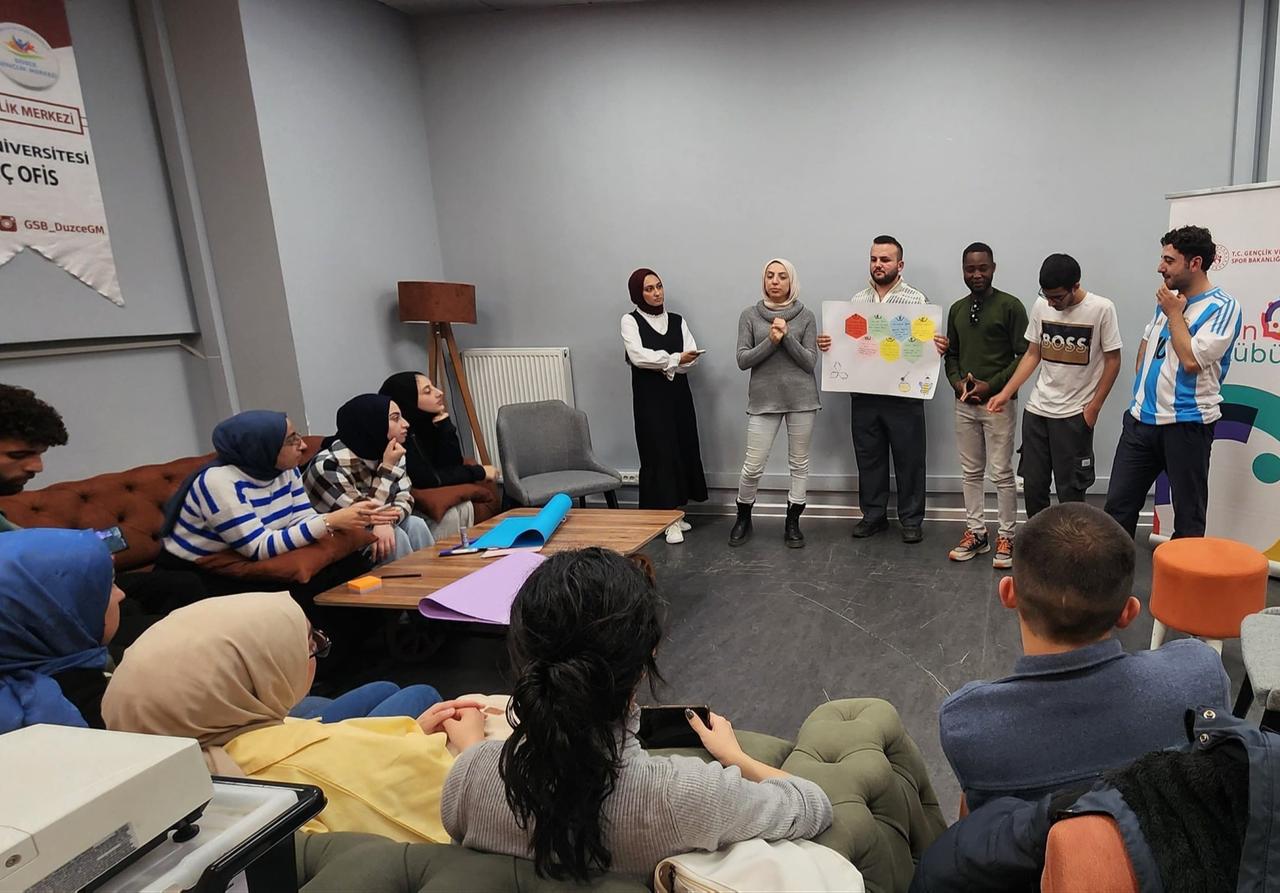

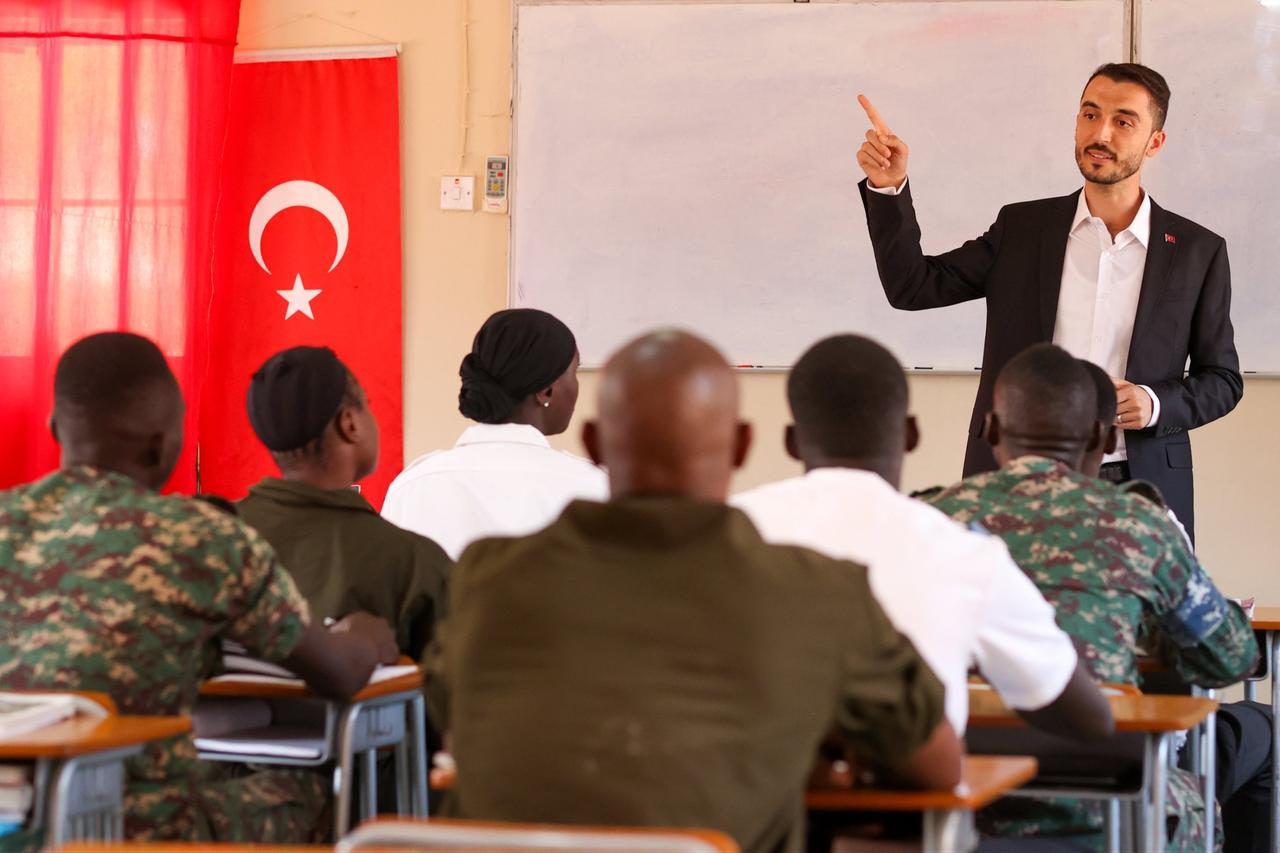
Ferhat Imer underlined that teaching Turkish as a foreign language has gone far beyond classroom instruction and has turned into an effective soft power tool.
He explained that the rising demand for Turkish worldwide closely tracks Türkiye’s growing political, economic, and cultural visibility.
Institutions such as the Yunus Emre Institute play a central role by running Turkish Cultural Centers abroad, where language education is backed up with arts and cultural programs.
This combined approach helps Turkish stand out as both a practical and culturally rich language.
Alongside this, the Türkiye Maarif Foundation contributes by opening schools overseas where Turkish is taught from an early age and increasingly used as a language of instruction. Imer stressed that this model helps Turkish shift from being a language people merely learn to one they actively use in education, public life, and daily communication.
Imer further pointed out that the continued use of Turkish in historically connected regions such as Aleppo, Kirkuk, Mosul, and Tabriz reinforces long-standing cultural ties.
These cities, deeply linked to the Turkish language and heritage, represent what he described as natural areas of influence shaped through language rather than borders.
By staying present in education and public life in such regions, Turkish helps keep historical connections alive and up to date. In this sense, language works as a bridge that carries cultural continuity forward while also strengthening Türkiye’s modern engagement with these areas.
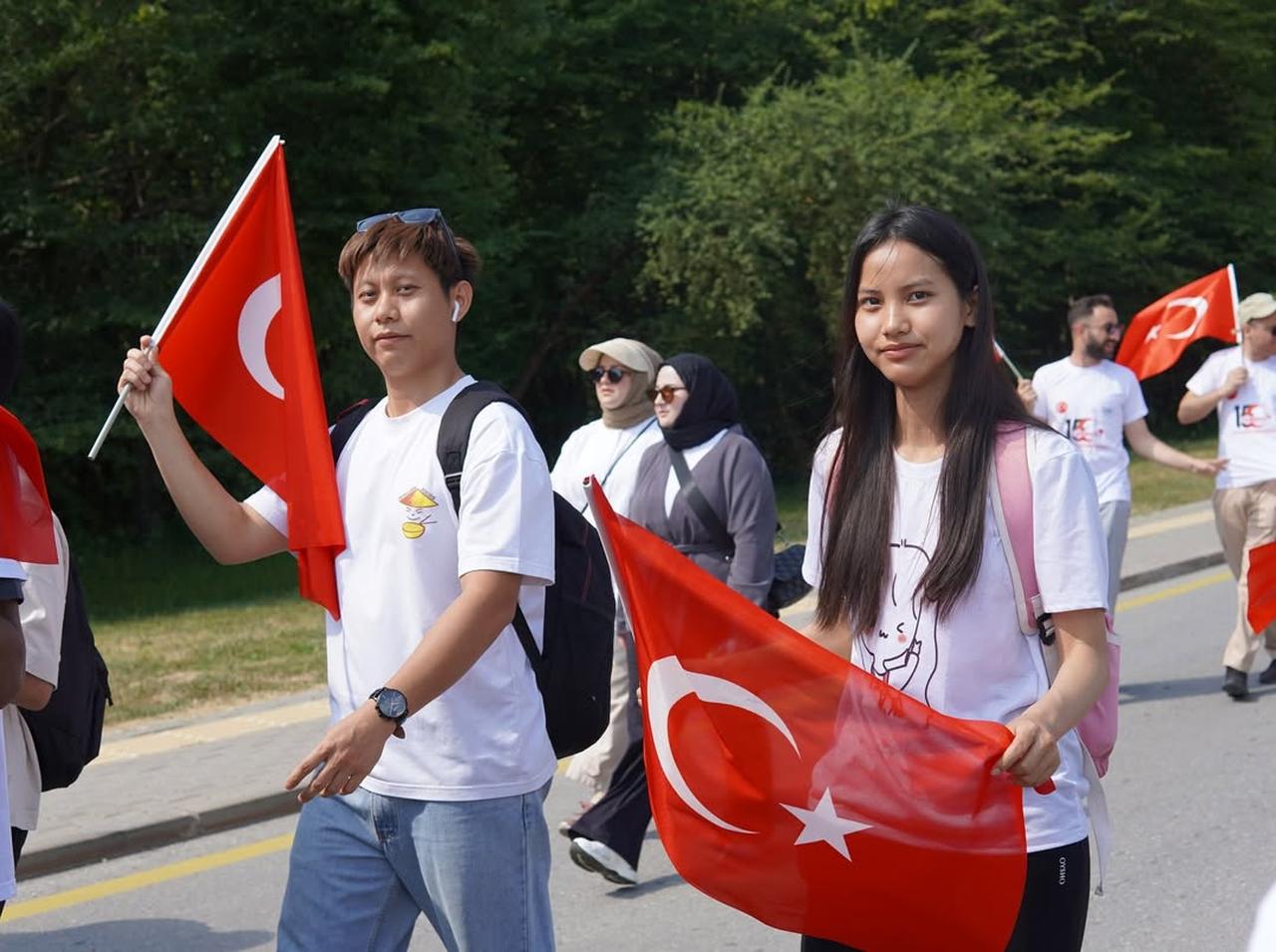
He also highlighted the role of Turkish teaching centers, known as TOMER, which operate within universities both in Türkiye and abroad.
These centers offer general, academic, and professional Turkish courses, turning learners into long-term academic and cultural partners connected to Türkiye.
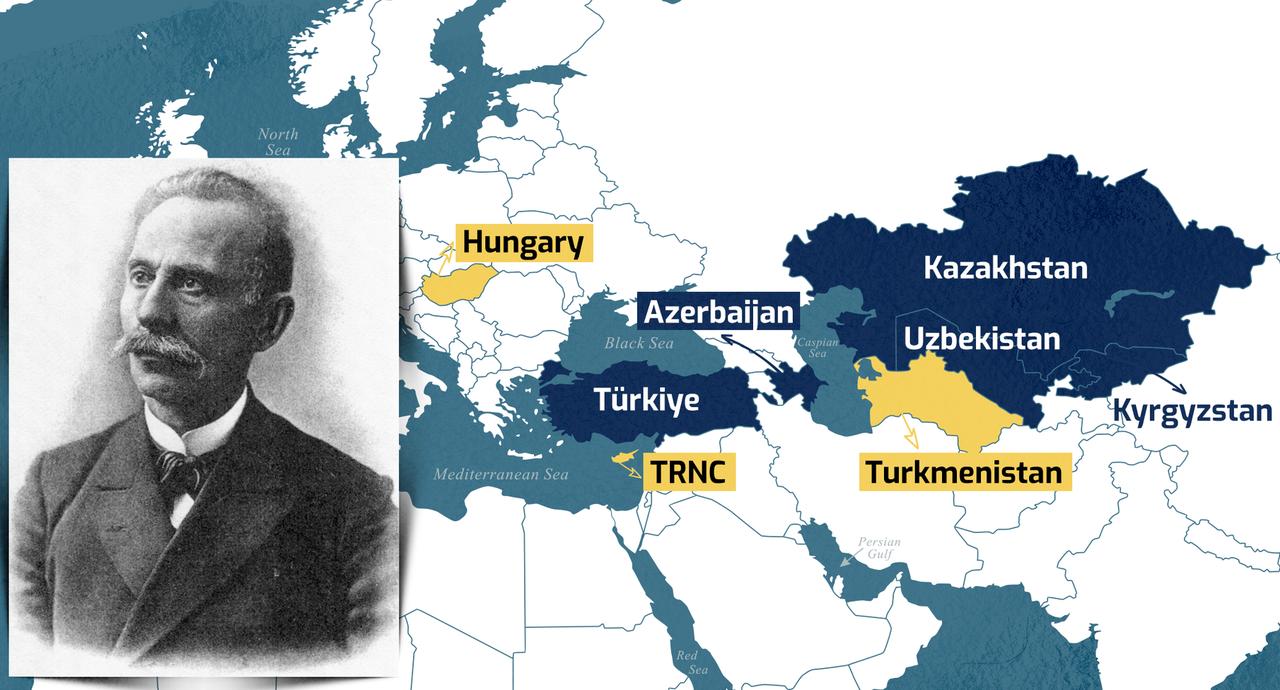
An illustration featuring Ismail Gaspirali alongside a map highlighting members and observers of the Organization of Turkic States, reflecting his vision of unity through language, thought, and action across the Turkic world.
Umut Erdogan focused on the idea that unity among Turkic societies cannot be built without linguistic unity.
He argued that a shared language allows communities across different countries to understand one another and reconnect around a shared historical consciousness.
According to Erdogan, efforts led by the Organization of Turkic States, together with institutions such as the Turkish Language Association (TDK), Turkish Cooperation and Coordination Agency (TIKA), and the International Organization of Turkic Culture (TURKSOY), aim to develop a common alphabet for the Turkic world. For foreign readers, this initiative seeks to reduce barriers between different Turkic languages by aligning writing systems, making communication and cooperation easier.
He noted that history supports this approach. Until the 13th century, Turks shared a common literary language, and despite later regional differences, figures such as Ali-Shir Nava'i, Fuzuli, Yunus Emre, and Asik Pasha were read across vast territories.
Their works helped carry a shared sense of identity that went beyond local variations.
Erdogan also addressed how linguistic unity was deliberately weakened in the 19th century through imperial policies, particularly under Russian influence, which encouraged divisions among Turkic dialects. These efforts aimed to separate communities linguistically to weaken collective identity.
In response, reformist thinker Ismail Gasprinsky emerged as a key figure advocating the principle of “unity in language, thoughts, and deeds.”
Erdogan recalled Gasprinsky’s vision of enabling ordinary people across the Turkic world to understand one another, arguing that a nation without a common literary language cannot sustain unity.
He emphasized that this idea has since moved from vision to institutional action. Conferences, academic studies, and joint educational projects have multiplied, while organizations such as TIKA, TDK, TURKSOY, and educational bodies linked to Türkiye have supported structured language initiatives.
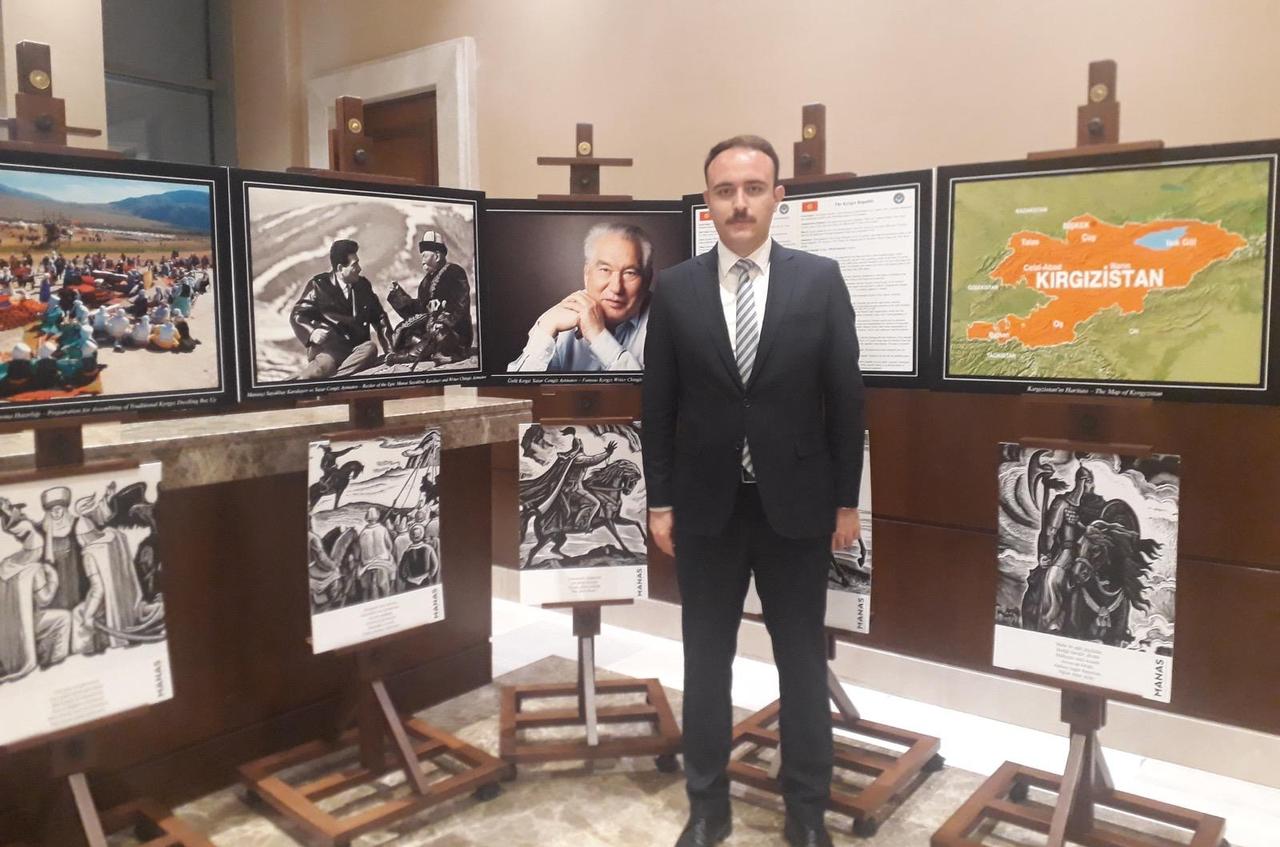
Joint universities like Ahmet Yesevi University and Manas University continue to teach Turkish as a shared academic language, helping thousands of students carry out their studies in Türkiye Turkish.
Both scholars agreed that Turkish should be seen as more than a communication tool.
Instead, they described it as a long-term strategic asset that helps tie together history, culture, education, and international influence.
As Turkish continues to spread through education and cultural exchange, it also lays the groundwork for deeper cooperation across the Turkic world and strengthens Türkiye’s global reach.


 Set as preferred source
 Set as preferred source




 6 min read