

 Sign in
 Newsletters


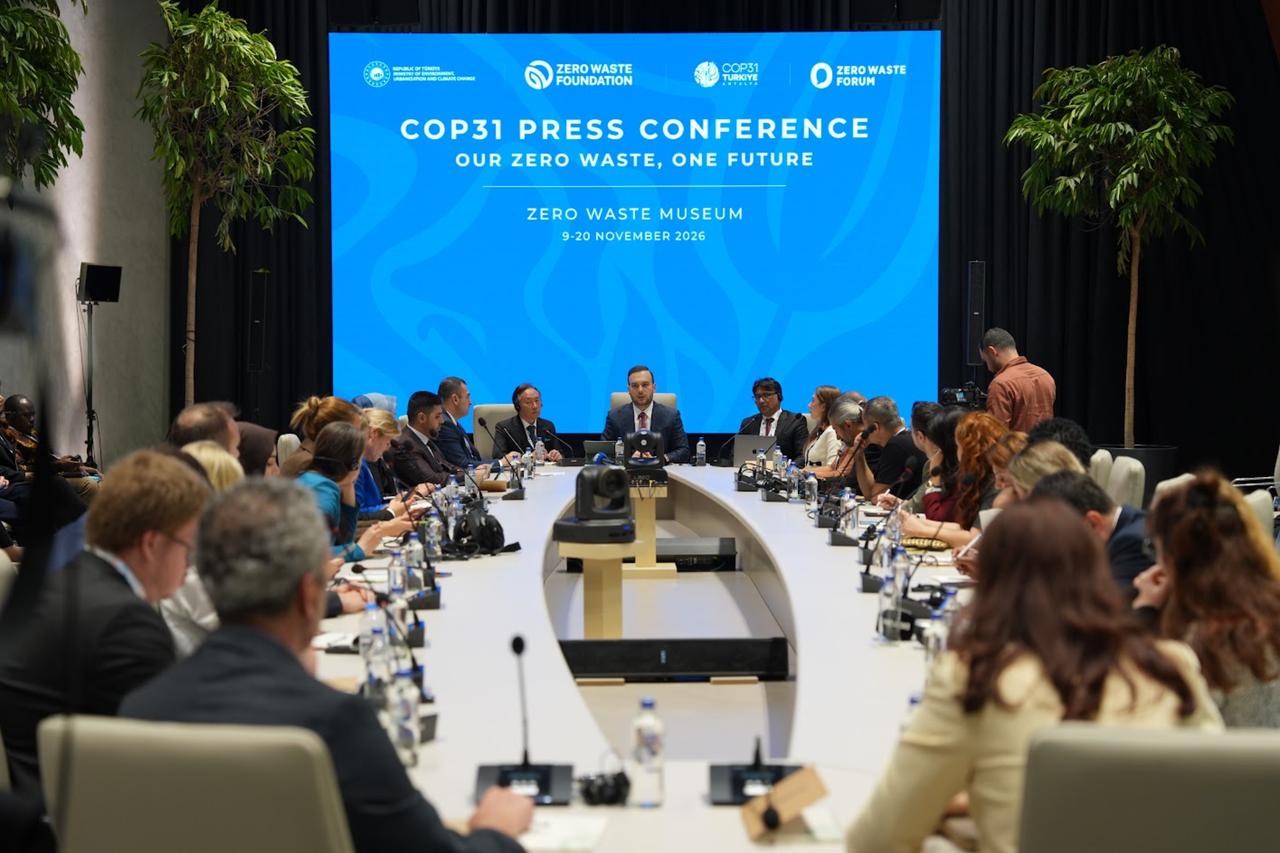


The Zero Waste Foundation said in a new report that fully applying zero-waste and circular-economy practices could prevent 149 gigatons of carbon dioxide equivalent emissions between 2025 and 2050.
A gigatonne is one billion tons, and a circular economy keeps materials in use through reuse, repair and recycling instead of discarding them.
Foundation President Samed Agirbas, who is also the COP31 Climate High-Level Champion, presented the report, titled “Our Zero Waste Future,” at the Zero Waste Museum in the Blue Zone of the COP31 climate summit in Antalya. The foundation said the report was prepared with international scientific input.
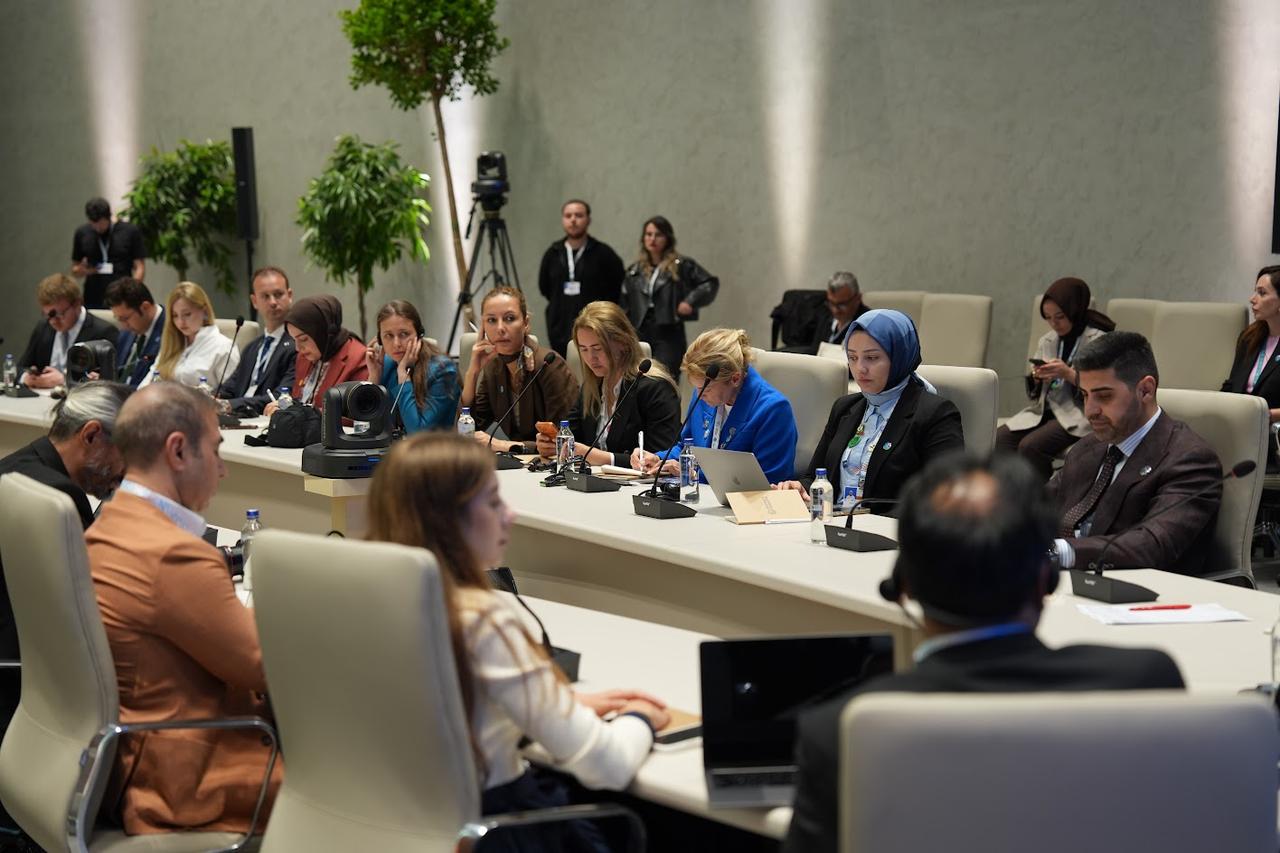

The report projects annual savings of 9.6 gigatons by mid-century. It attributes 37 gigatons of the total to better waste management, food waste prevention, and reuse and repair, and 112 gigatons to changes in buildings, infrastructure, and durable goods.
It says more than 55% of global greenhouse gas emissions are linked to extracting and processing natural resources, and material production alone emits 11.8 gigatons a year. The global economy’s circularity rate is 6.9%.
Organic waste decomposing in landfills, dumpsites and wastewater accounts for about 20% of human-caused methane emissions, according to the report. It also says 2.7 billion people lack regular waste collection, and 845 million tons of municipal waste each year are dumped without control, burned in the open, or end up in water sources. The report puts the annual cost of the linear model of production and consumption at €25.4 trillion ($27.93 trillion).
Agirbas said most of the solutions rely on methods available today rather than future technology. The COP31 presidency has set two goals for 2035: cutting the projected growth in municipal waste by at least 50% and raising circular material use from 6.9% to at least 15%.
Agirbas said Türkiye recovered 90 million tonnes of waste between 2017 and 2025, saving 613 million trees from being cut down and avoiding 180 million tonnes of greenhouse gas emissions. He said the recovery rate rose from 13% to around 40%, with targets of 60% by 2035 and 70% by 2053. The figures come from the foundation’s presentation.
The zero waste movement began in Türkiye on Sept. 27, 2017. The United Nations General Assembly later declared March 30 the International Day of Zero Waste in a resolution cosponsored by 105 countries.
On plastics, Agirbas said production has risen 230-fold over 70 years to more than 460 million tons, and only 9% of plastic waste is recycled. According to a Turkish workshop report he cited, 50% of the country’s plastic waste is landfilled, 19% is incinerated and 22% leaks into the environment. He said about one-third of microplastics come from washing synthetic textiles and nearly one-quarter from tire wear.
He said governor-led meetings took place in Adana, Mersin, Mugla and Antalya in August and September, followed by a workshop in Istanbul with 17 ministries, 34 academics and more than 400 participants. That work informed Türkiye’s 2053 Plastics Vision.
The foundation also announced a program with the Ministry of Family and Social Services to recruit volunteer women ambassadors in all 81 provinces, with a goal of one million participants.
Agirbas said 102,610 participants had registered in the Blue Zone by the end of the first week, while the Green Zone (the area open to the public) received 212,000 visitors. He said leaders of 95 countries and seven international organizations attended, along with more than 300 ministers.
He said the first draft cover decision was based on 45 submissions on behalf of more than 160 countries and is not yet final. Addis Ababa will host COP32.
“Our zero waste future is not a wish; it is a decision,” Agirbas said.


 Set as preferred source
 Set as preferred source


 1 min read
 1 min read


