Newsletters


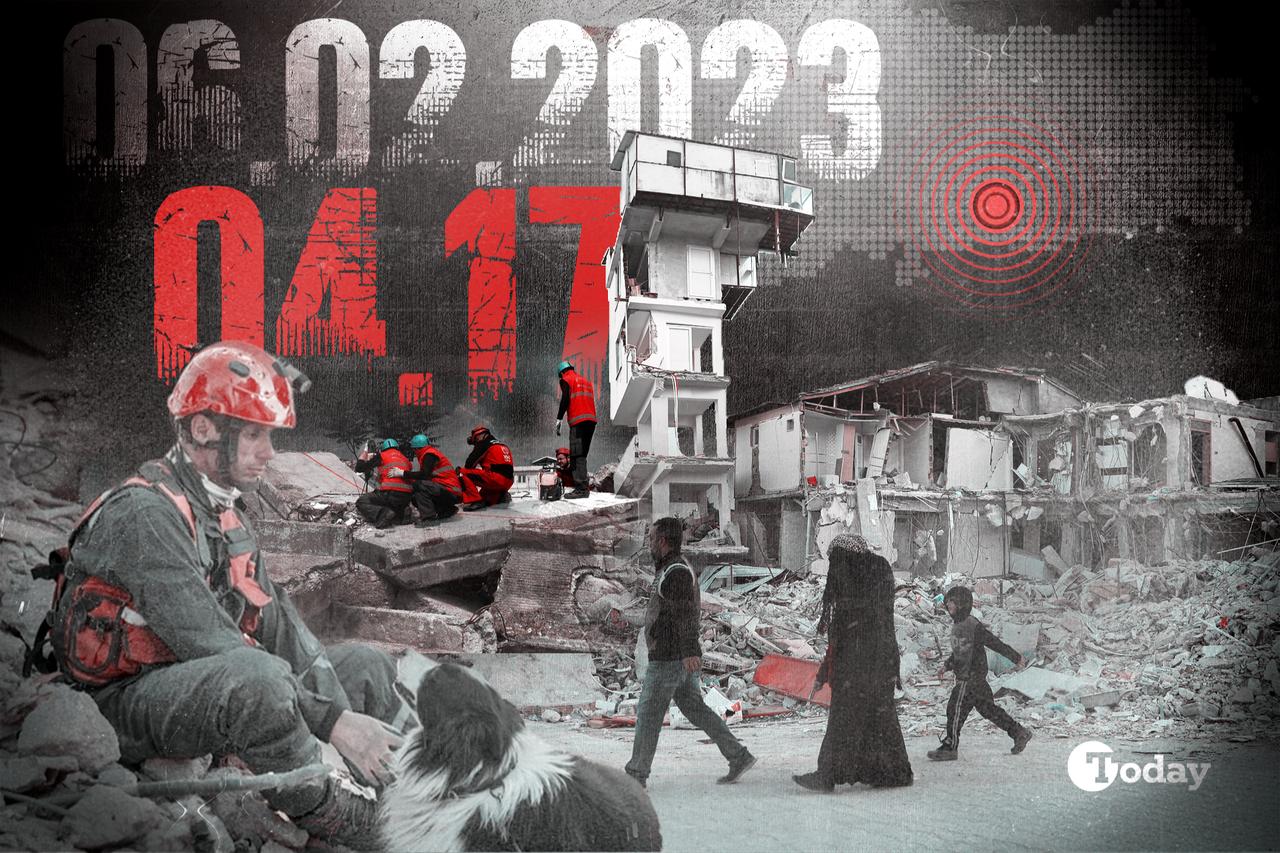


You wake to a roar that sounds like the earth splitting open. The bed shifts violently. The walls ripple.
You search for something stable, but nothing holds. There is nowhere to escape. You wait, suspended between seconds, unsure whether you will walk out alive.
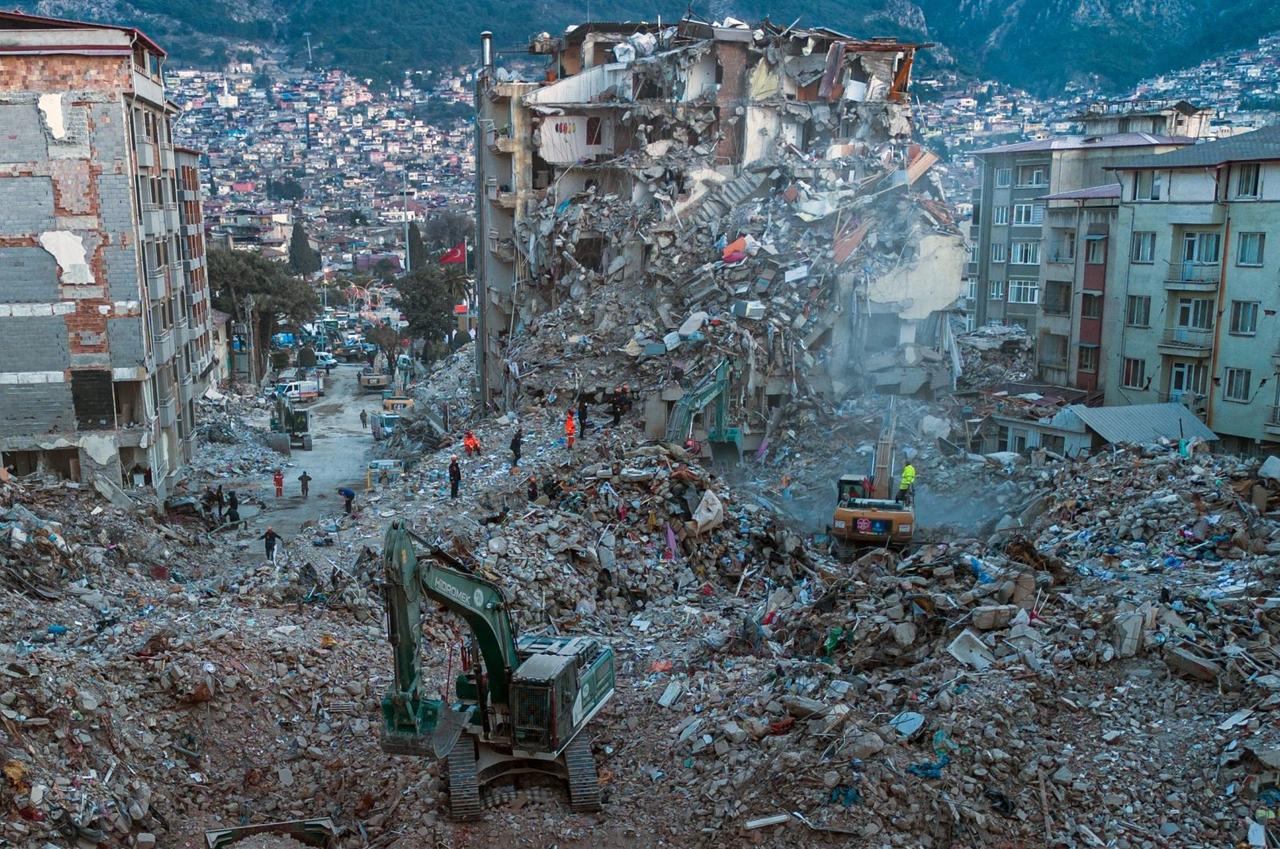
Three years ago, this was the reality for millions across southern Türkiye and neighboring Syria.
On Feb. 6, 2023, two powerful earthquakes struck southern Türkiye within nine hours, measuring Mw 7.7 in the early morning and Mw 7.6 in the afternoon. On Feb. 20, another tremor measuring Mw 6.4 hit the region. Earthquakes above magnitude 7 are rare worldwide, and two such events on the same day is highly unusual.
The sequence devastated a region home to more than 14 million people, leaving 53,697 dead and 107,213 injured, according to official figures.
More than 3.5 million residents were evacuated in the aftermath. By scale of human loss, geographic reach and economic damage, the disaster stands as the most destructive in the history of the Republic.
In its 2026 “Reconstruction and Development Report,” prepared by the Presidency’s Strategy and Budget Directorate, the government describes the physical destruction in stark terms.
As of Jan. 30, 2026, nearly 40,000 buildings had completely collapsed. More than 199,000 were classified as heavily damaged. The report further notes that over 21,000 buildings required urgent demolition, while millions more were assessed for varying levels of structural damage.
An initial economic assessment placed the cost of the disaster at $103.6 billion, equivalent to roughly 9% of national income. The report calls it the largest disaster related economic loss in modern Turkish history.
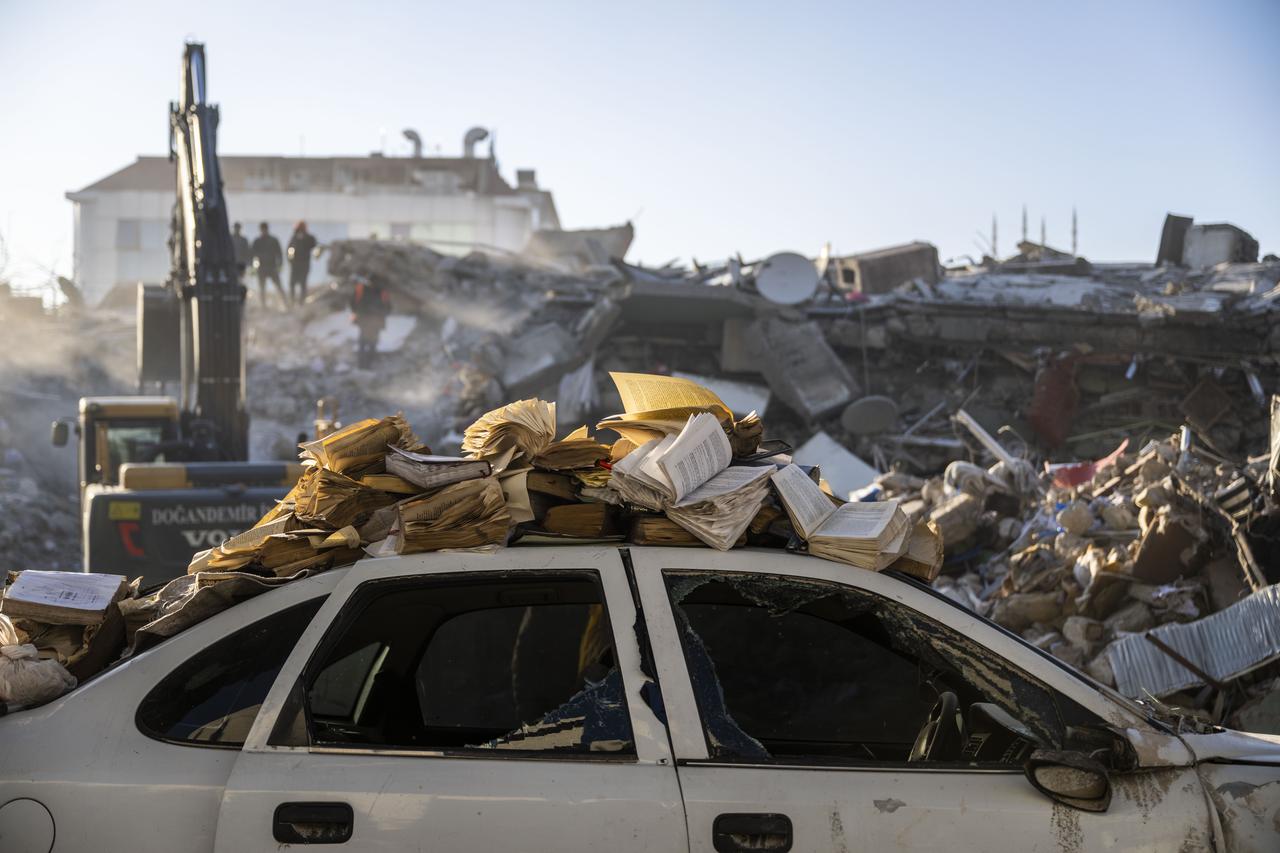

In cities such as Hatay, Malatya and Kahramanmaras, container settlements that were intended as short-term emergency solutions have become semi-permanent neighborhoods.
According to a table included in the 2026 official report, 360,455 people are still living in container housing as of Jan. 26, 2026. Hatay alone accounts for more than 150,000 of those residents. While large scale construction continues, the presence of hundreds of thousands in temporary units shows that permanent relocation is still incomplete.
The state’s response has been defined by scale. The Strategy and Budget Directorate reports that approximately $91.5 billion had been spent by the end of 2025 to compensate for losses and reduce disaster risk.
The report emphasizes that resources have been directed primarily toward permanent housing and major infrastructure projects. An additional $2.3 billion in external financing was provided as grants to municipalities for water and sewer systems, signaling that reconstruction has extended beyond housing into the basic networks that make urban life possible.
Infrastructure spending has also included large scale investments in electricity distribution, railways, highways and airport restoration, with several transport projects scheduled for completion in 2026.
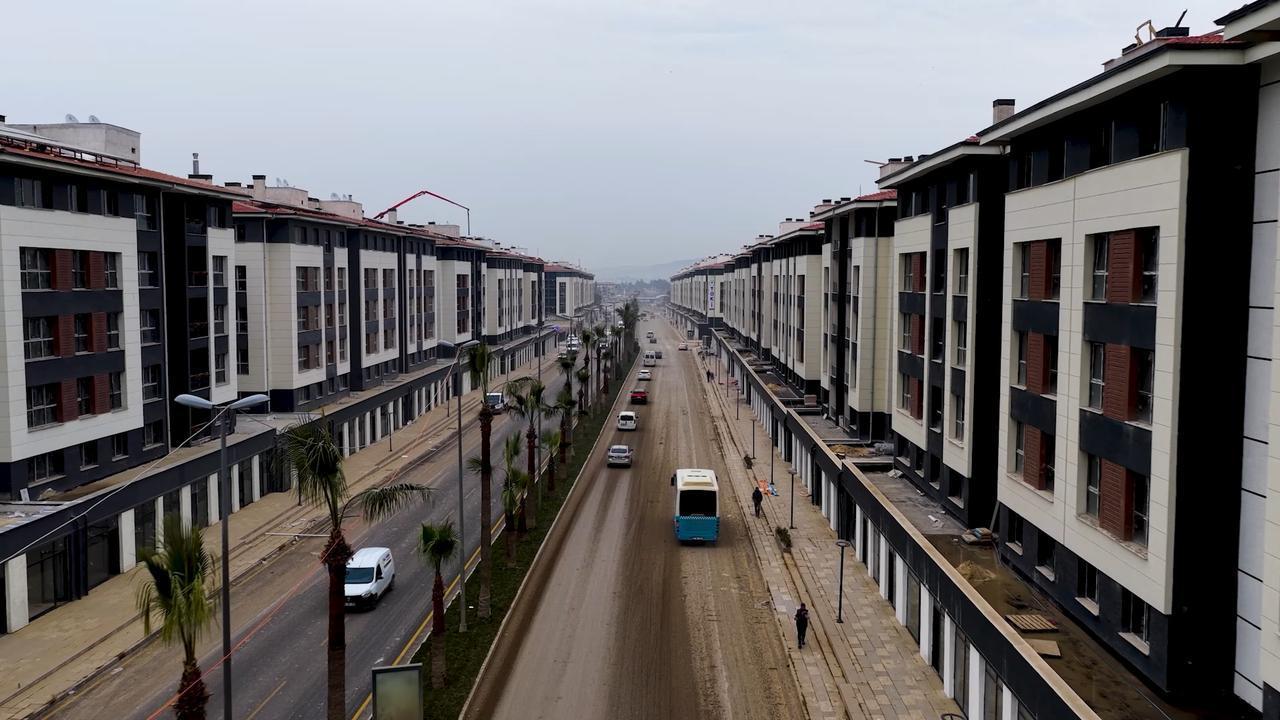
Housing delivery remains the central benchmark of progress.
According to the official report, lottery draws have been completed for 433,667 housing units and 21,690 workplaces, and deliveries to recognized rights holders are ongoing.
Under Türkiye’s post-disaster framework, residents must first be formally recognized as “rights holders” before becoming eligible for permanent housing. Units are then allocated through a public lottery system. While the state provides grants and subsidized loans, the housing is not universally free, and repayment terms vary depending on the type of assistance provided.
Environment, Urbanization and Climate Change Minister Murat Kurum said reconstruction planning and housing design began while search and rescue operations were still underway, according to remarks carried by TRT.
“We were conducting search and rescue, but at the same time we began the project design process for new housing,” Kurum said. “We made Gaziantep our base and traveled continuously to all 11 provinces.”
He added that the first foundations were laid on the 15th day after the earthquake, saying the pace was made possible by running multiple processes simultaneously across provinces.
However, completion of lottery draws does not automatically mean that all units have been physically delivered or occupied. Construction milestones, key handovers and actual relocation often occur in stages. The continued scale of container housing suggests that allocation, construction and settlement have not progressed uniformly across the region.
Debate also persists over whether early political pledges matched the pace of delivery.
Visiting the region this week, main opposition Republican People’s Party (CHP)'s leader Ozgur Ozel argued that authorities had promised to build 650,000 homes within one year of the earthquake.
“After the first year, only 2.7% had been completed,” he said, adding that by the end of the second year, completion stood at around 30%. He linked those figures to the continued existence of container settlements, stating that “three years on, hundreds of thousands are still living in temporary housing.”
Ozel also alleged that some beneficiaries were asked to sign contracts without finalized repayment details. “People are being asked to sign blank promissory notes,” he claimed, arguing that uncertainty over long-term payment conditions has caused anxiety among some recipients. Government officials have not publicly responded to that characterization.
Beyond housing, reconstruction has reshaped essential public services. The official report states that more than 13,000 new classrooms have been built, thousands more strengthened, and tens of thousands repaired.
New hospital facilities have opened, and further projects are funded through 2026. Electricity grids, rail lines and highways damaged by the earthquakes have undergone large scale repair. Airports in Hatay and Malatya are also being restored, with most projects expected to be completed this year.
Officials present these developments as proof that recovery has moved beyond emergency response into long-term urban renewal.
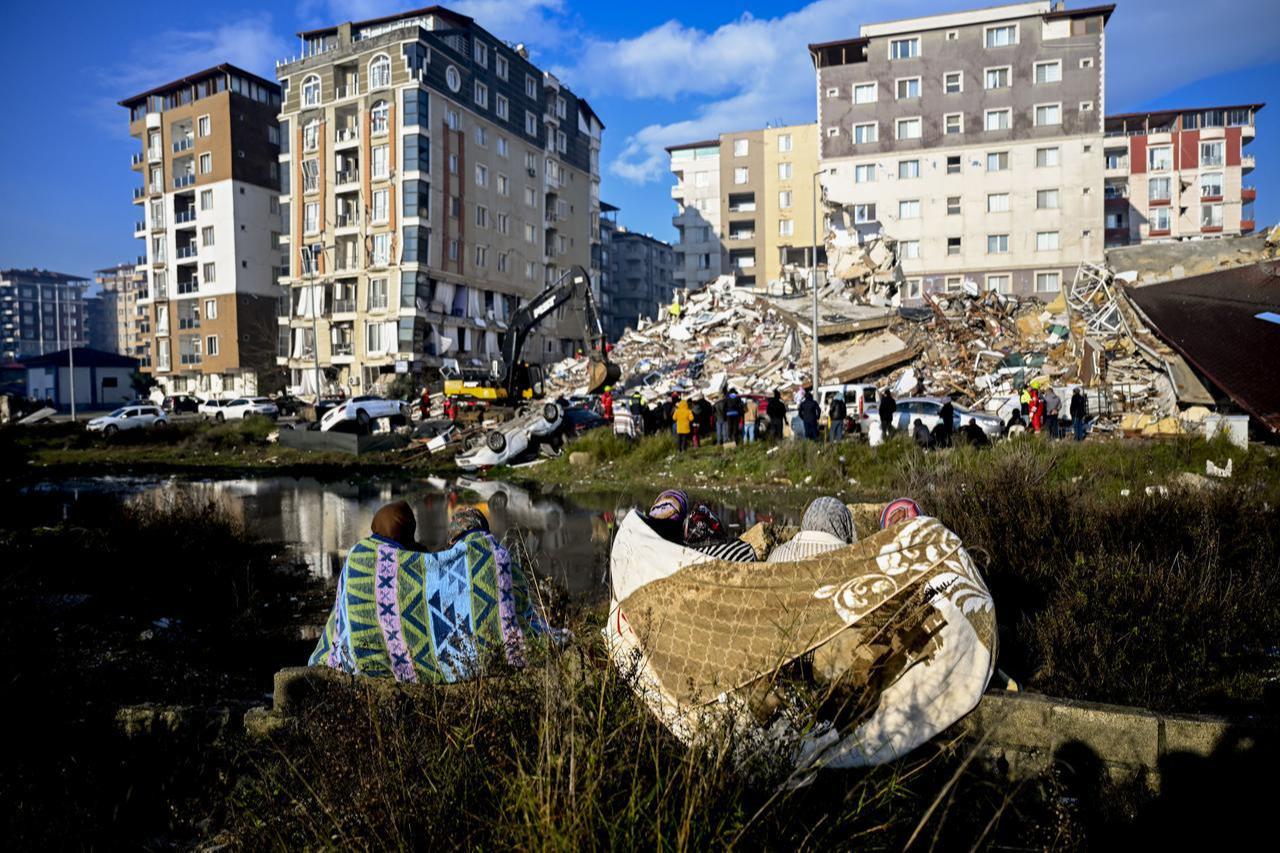
Physical rebuilding, however, does not automatically translate into full economic stabilization.
Data summarized in the 2026 report indicate that labor force participation in the affected provinces remains below the national average, while unemployment in provinces such as Hatay and Kilis exceeds the countrywide rate. Although per capita income in the region has improved since 2023, it continues to trail the national average.
In 2024, labor force participation in the affected provinces stood below Türkiye’s overall rate, while unemployment in provinces such as Hatay and Kilis exceeded the national average. Per capita GDP in the region, though rising compared to 2023, remained below the countrywide figure.
This gap between visible construction and slower economic normalization shapes the broader public debate. Reconstruction can be measured in billions of dollars spent and in hundreds of thousands of housing units processed.
However, it can also be measured in container settlements that remain part of the urban landscape and in employment figures that have yet to return to pre disaster parity.
Three years after the earthquakes, the country’s reconstruction effort reflects both significant mobilization and unresolved strain.
The next question is not only how many buildings have risen, but how responsibility is assigned for the collapse that made rebuilding necessary in the first place — a debate that now unfolds in courtrooms across the region.
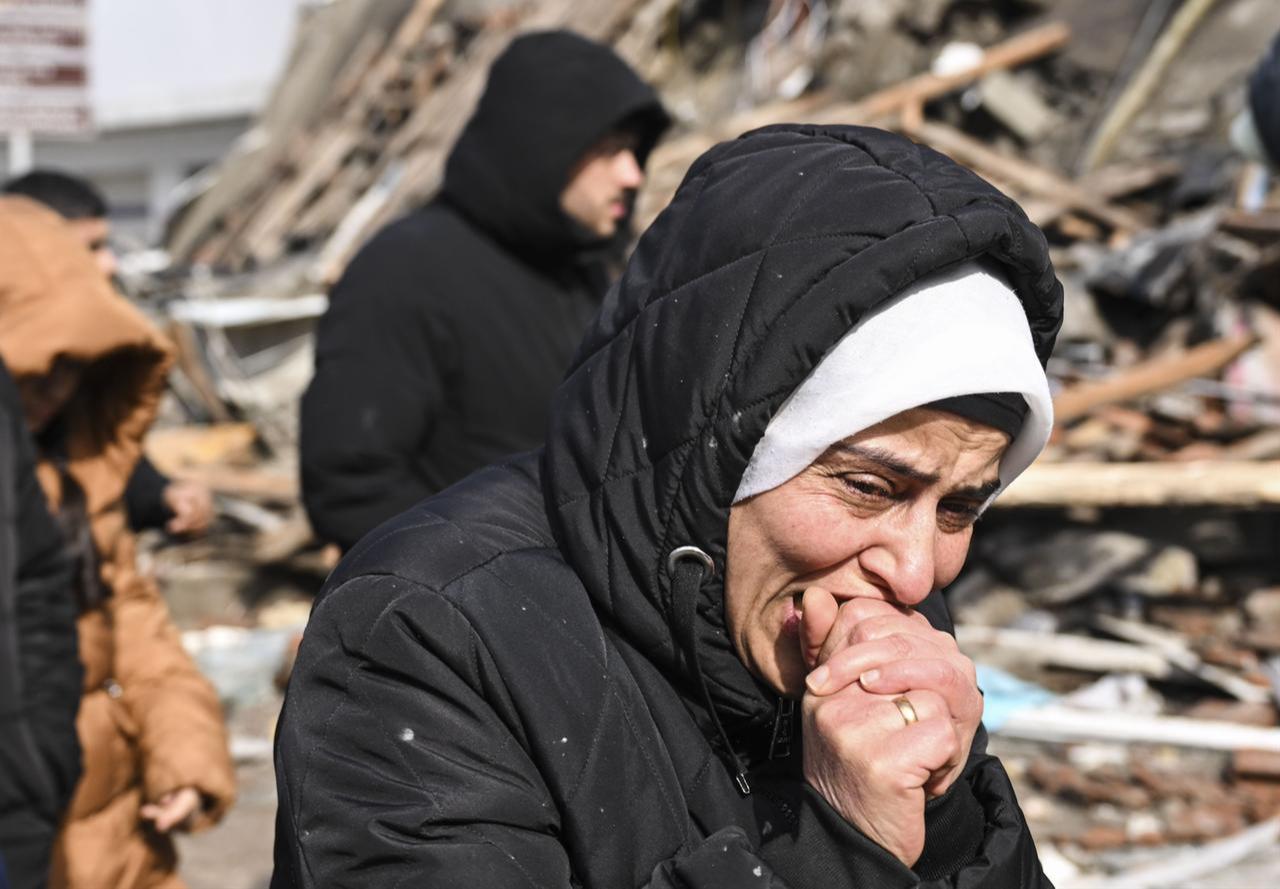
In the months after the earthquakes, prosecutors in the affected provinces set up dedicated investigation units to handle cases linked to collapsed buildings. The core question across these files is responsibility.
Courts have examined everything from design and material choices to project deviations, ground floor alterations, and failures in oversight, with contractors, engineers, site managers and building inspection actors appearing as defendants in thousands of proceedings, as reported by Anadolu Agency.
The scale is vast, but the process is still incomplete.
Justice Ministry figures cited by DW show that as of Nov. 1, 2025:
In addition:
Officials and state media point to convictions and prison sentences as proof that the judiciary is moving.
Anadolu has reported multiple convictions in Adana, Hatay and Osmaniye, including cases where defendants received lengthy terms for conscious negligence resulting in multiple deaths.
Yet survivors and families of those killed have continued to argue that accountability remains uneven, especially when cases reach questions of public oversight.
A recurring criticism involves how prosecutors frame criminal responsibility.
Lawyers quoted by DW argue that many indictments proceed under charges equivalent to "conscious negligence" rather than the heavier intent-based framework they believe better reflects "foreseeable risk", which in practice can narrow sentencing ceilings and shape how society reads the outcome.
A second criticism centers on permission procedures that can slow, or halt, investigations into public officials. Even when expert reports identify public officials as bearing primary fault, requests can stall at permission gates tied to the Environment, Urbanization and Climate Change Ministry, leaving families waiting as proceedings move forward mainly against contractors and inspection actors.
In one Hatay file cited by DW, a relative of a victim described the wait in stark terms, saying that a year had passed without progress and concluding that there was no justice and no right to grieve.
The controversial Ronesans Rezidans case in Hatay has become a reference point for this wider debate because it combines high profile loss with unresolved questions about oversight. Cumhuriyet reported that 269 people were killed in the collapse, including public figures, and that some bodies could not be recovered from the debris.
The same report said the contractor, Mehmet Yasar Coskun, was detained at Istanbul Airport while allegedly attempting to leave for Montenegro shortly after the disaster and was arrested on Feb. 11, 2023.
The file has continued through multiple hearings, while families and their lawyers have kept pressing for broader accountability, including the role of public authorities in permits and supervision. Three years on, permission had still not been granted to open an investigation into public officials linked to the case.
Beyond construction sites and permit files, critical reporting has also raised alarms about potential failures inside public institutions after the quake.
In a column focused on legal accountability gaps, T24 described a Kirikhan State Hospital case in which families alleged that intensive care patients who survived the initial quake later died after prolonged abandonment and equipment failures, and it reported that efforts to reopen a file were rejected on the grounds that there was no new evidence.
Three years after the earthquakes, the justice story has therefore split into two realities that sit uneasily together. Courts have issued convictions and prison sentences, and prosecutors continue to process a vast docket across multiple provinces.
At the same time, families and legal observers continue to question whether the full chain of responsibility, particularly within public oversight structures, has been tested in court.
Three years after the earthquake, cranes still mark the skyline and new housing blocks continue to rise. The debate has long moved beyond construction speed to a more difficult question: how far accountability will reach and whether every layer of responsibility will ultimately stand before a judge.


 Set as preferred source
 Set as preferred source


 6 min read