Newsletters


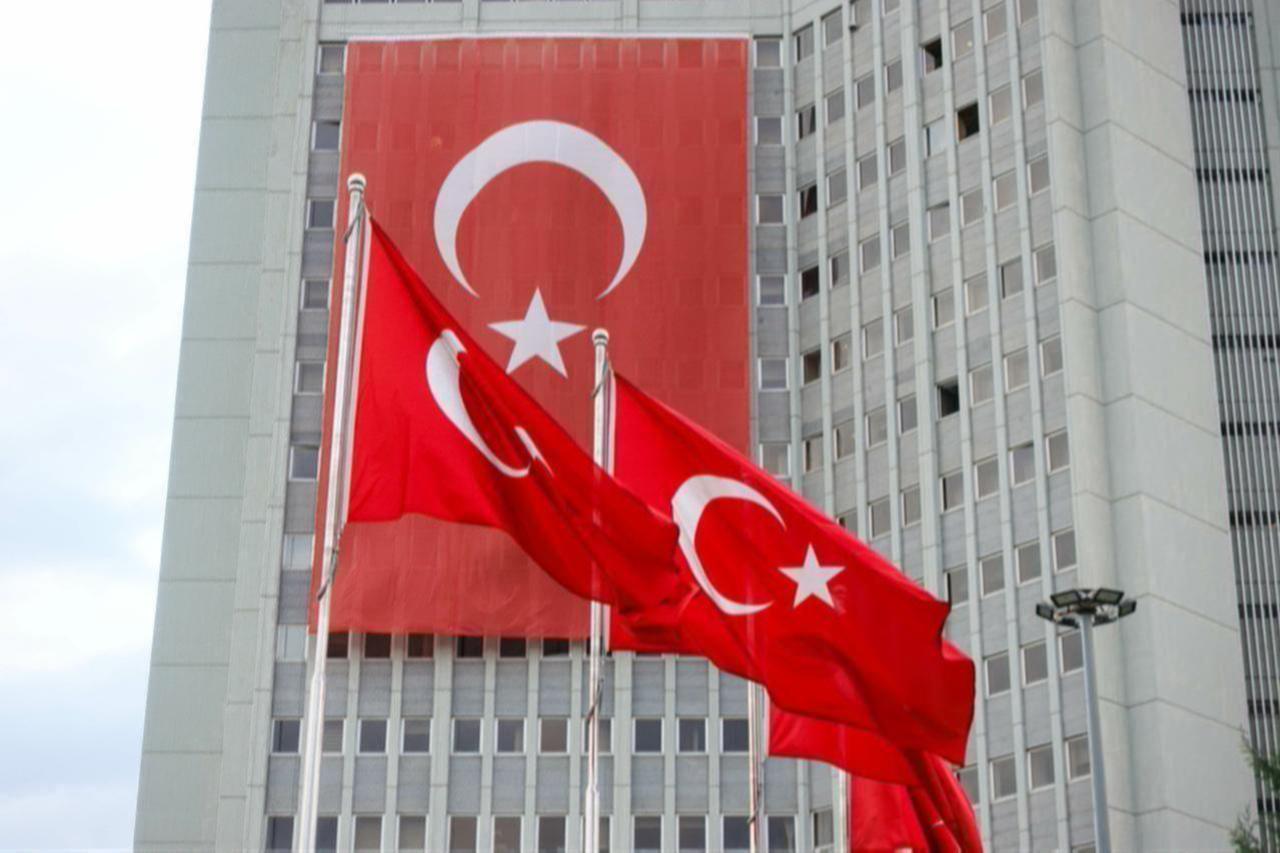


Türkiye's Foreign Ministry issued a pointed rebuke of Greece on Tuesday, accusing Athens of advancing legally baseless claims about the Pontic Greeks while urging the two NATO allies to build bilateral ties "in peace and cooperation" rather than draw hostility from contested history.
The statement coincided with May 19, the date in 1919 when Mustafa Kemal Ataturk landed in the Black Sea city of Samsun and launched the Turkish War of Independence against occupying forces that included Greece.
The anniversary is observed across Türkiye as the Commemoration of Ataturk, Youth, and Sports Day, one of the country's most significant national holidays.
At the center of Ankara's complaint is Greek legislation adopted in 1994 that formally recognized what Athens designates as the Pontic Greek genocide, a classification Türkiye has consistently and categorically rejected as historically unfounded.
The Turkish Foreign Ministry said Greece has not only refused to revisit those claims but has steadily expanded them, codifying the narrative through a Ministry of Education circular that requires it to be taught as curriculum in primary and secondary schools across the country.
The ministry described the Pontus allegations as a political instrument, arguing that Greece has revived and amplified them in order to obscure what Ankara characterizes as its own military and moral failures. "Greece should cease exploiting history for political concerns," the statement said.
Türkiye's statement drew attention to what it described as documented evidence of Greek wrongdoing during the same period.
The Foreign Ministry cited the findings of Allied investigation commission reports and Article 59 of the 1923 Treaty of Lausanne, both of which, it said, placed on record war crimes and atrocities committed by the Greek army during its Anatolian campaign.
That campaign, launched under the banner of the Megali Idea, a 19th-century nationalist vision of a greater Greek state encompassing lands of the former Byzantine and Ottoman empires, ended in military defeat.
Greece's forces were expelled from Anatolia by 1922 following a protracted and destructive conflict. The ministry framed Greece's contemporary Pontus claims as an attempt to recast that defeat and deflect from the conduct of its forces.
 1 min read

Going further back into shared history, Ankara called on Greece to also reckon with the 1821 Tripolitsa massacre, in which Ottoman Muslim and Jewish inhabitants of the Peloponnesian city, present-day Tripoli, were killed during the Greek War of Independence, as well as atrocities Türkiye says were committed in the aftermath of the Greek landing at Izmir on May 15, 1919, four days before the Samsun anniversary now being commemorated.
The ministry framed these episodes as part of a broader pattern of violence against Turks and other ethnic groups that Athens has never formally acknowledged.
The statement closed with a call for a forward-looking approach, inviting Greece, "instead of distorting facts and deriving hostility from history, to take an attitude that will develop our bilateral relations in peace and cooperation."


 Set as preferred source
 Set as preferred source


 1 min read