Newsletters


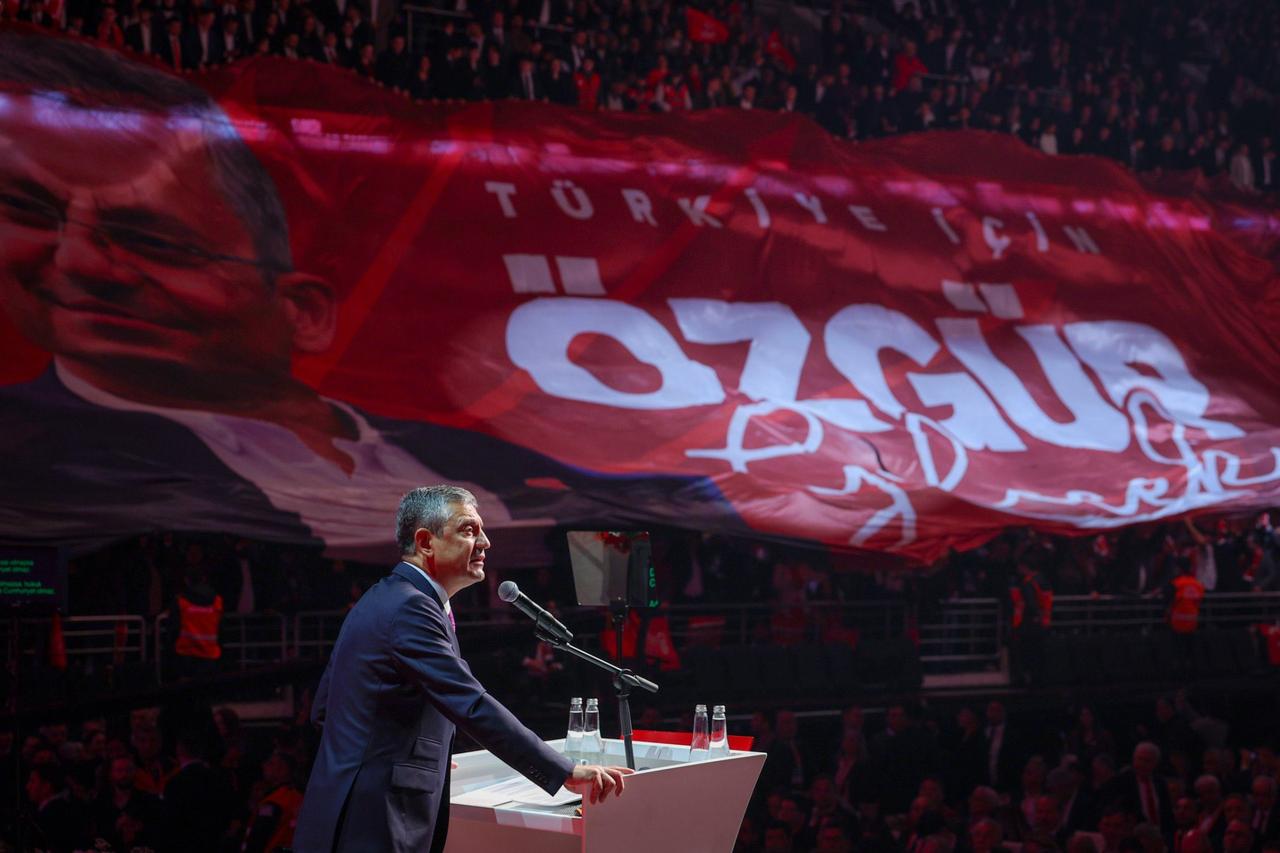


Türkiye’s main opposition Republican People’s Party (CHP) wrapped up its 39th Ordinary Congress with a clear message of unity at the ballot box.
Delegates delivered all 1,333 valid votes to incumbent chairman Ozgur Ozel, reaffirming his mandate at a moment when the party’s future direction is under intense scrutiny.
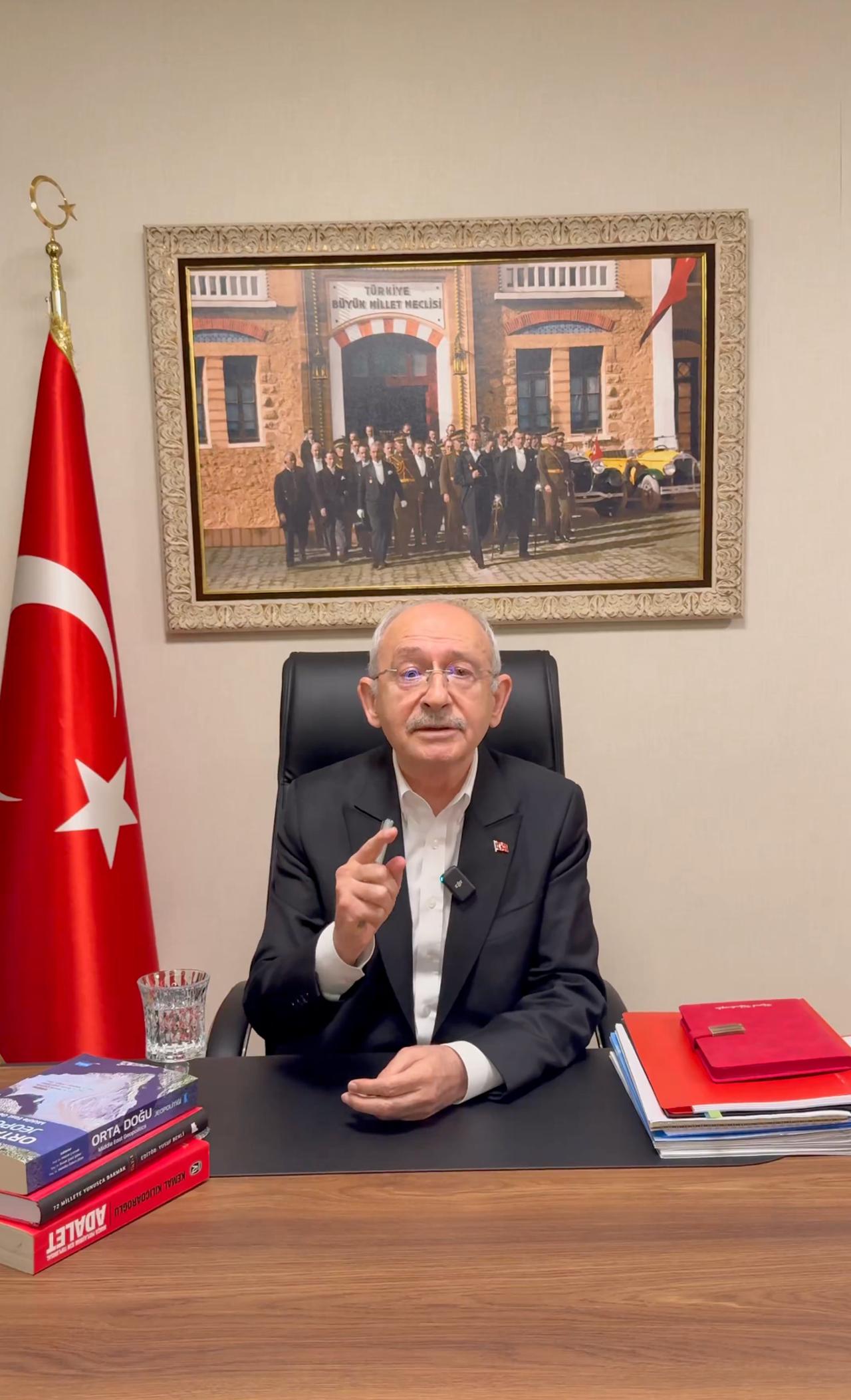
The vote unfolded amid a sharp public spat between Ozel and former party leader Kemal Kilicdaroglu, whose recent comments reopened long-simmering internal rifts. Kilicdaroglu had warned that the CHP “cannot be associated with bribery, corruption, (or) contractors of bribery networks,” insisting that the party must safeguard its ethical foundations.
He doubled down on social media, arguing that keeping politics clean requires full transparency and calling accountability “a moral obligation for every CHP member.”
Ozel did not brush aside the implications of those remarks. In his victory speech, he pledged to “purify” the party of what he described as attempts to drag the CHP back to its “old ways.”
At the heart of the dispute lies a single word, "purifying," the party of its dirt as both leaders invoked it.
Yet each outlined a starkly different interpretation. Kilicdaroglu’s “purification” message, at its core, was widely understood as a direct demand to distance the party from CHP figures currently facing judicial scrutiny, most prominently Istanbul’s ex-mayor Ekrem Imamoglu.
In Kilicdaroglu’s view, those under investigation, and also the faction that had sidelined his own team in the race for influence within the CHP, are poised to stain the party’s reputation.
For him, separating the party from these names was essential to restoring credibility and reclaiming the movement’s moral compass, abiding by the law.
The current CHP leadership rejects this framing entirely. Ozgur Ozel and his circle view the ongoing prosecutions as politically motivated efforts engineered by the governing coalition to halt the CHP’s upward electoral momentum.
According to this perspective, the cases targeting figures like Imamoglu are less about alleged wrongdoing and more about neutralizing rising challengers at a moment when the opposition’s vote share has become a genuine concern for the government.
Hence, Ozel, from the congress podium, countered that if the CHP is to “purify,” it must distance itself not from individuals accused in ongoing cases, but from factions seeking to pull the party backward.
In his view, purification means shedding the pressures of “those who want to return us to the past,” as well as voices that fear breaking with entrenched political norms.
This clash created an impression among some observers that Ozel’s comments might imply a severing of ties with prominent party figures aligned with the previous leadership.
Party veteran Mustafa Balbay argued that the congress results themselves served as a response to Kilicdaroglu’s critique. For Balbay, the overwhelming vote for Ozel reflects the party’s collective choice, even if not all members agree on the definition of renewal or on the tone of recent criticisms.

The latest exchange between the two leaders has revived a probability inside the CHP that the leadership could be heading toward a political purge, in contrast to the relative tolerance it had so far.
For many within the organization, one reality is difficult to ignore. Despite Kilicdaroglu’s enduring influence within the party bureaucracy, his resonance among the CHP grassroots has diminished significantly after multiple electoral defeats the party faced under his leadership.
Even long-time opposition voters acknowledge that he no longer commands the kind of support that could split the party or mount a counter-movement capable of reshaping its direction. The backlash he faced on social media in recent weeks only reinforced this perception.
Ozel appears fully aware of this dynamic, and his decision to lean into it immediately after securing a unanimous Congress victory was no coincidence. By drawing a sharp line around the concept of purification, he signaled both confidence in his mandate and readiness to recalibrate internal power balances.
Yet the implications of that message are far from symbolic. If Ozel genuinely believes the CHP needs a “purification,” as he implied from the congress stage, the party could be heading toward a period of targeted clear-outs. And those most vulnerable would be figures aligned with the Kilicdaroglu faction.
Since taking office, Ozel has been careful not to marginalize individuals appointed during the previous leadership, offering them positions and responsibilities that many interpreted as gestures of unity and institutional continuity.
This makes the current escalation all the more striking, as Kilicdaroglu had never adopted such a confrontational tone before. Likewise, Ozel had avoided language that could be interpreted as a precursor to internal consolidation.
But the shift in rhetoric on both sides, Kilicdaroglu’s sharpened accusations and Ozel’s explicit invocation of purification, suggests that the post-congress phase may bring a more assertive, centralized approach to party management.
Within the CHP, there are influential voices who believe such consolidation is not only expected but necessary.
After navigating a turbulent chapter marked by legal disputes, factional tensions, and fears of fragmentation, many argue that the party needs a period of disciplined unity to regain political momentum.
For this camp, a more cohesive, tightly aligned CHP, even if it requires difficult internal decisions, could strengthen the party’s position as Türkiye’s principal opposition force at a time when national politics remain fluid and competitive.
Like any such move, however, this option carries risks for the party as well. Cutting out an entire faction that is accused of collaborating in a game orchestrated by those in power could trigger a noticeable loss of votes.


 Set as preferred source
 Set as preferred source


 6 min read