Newsletters


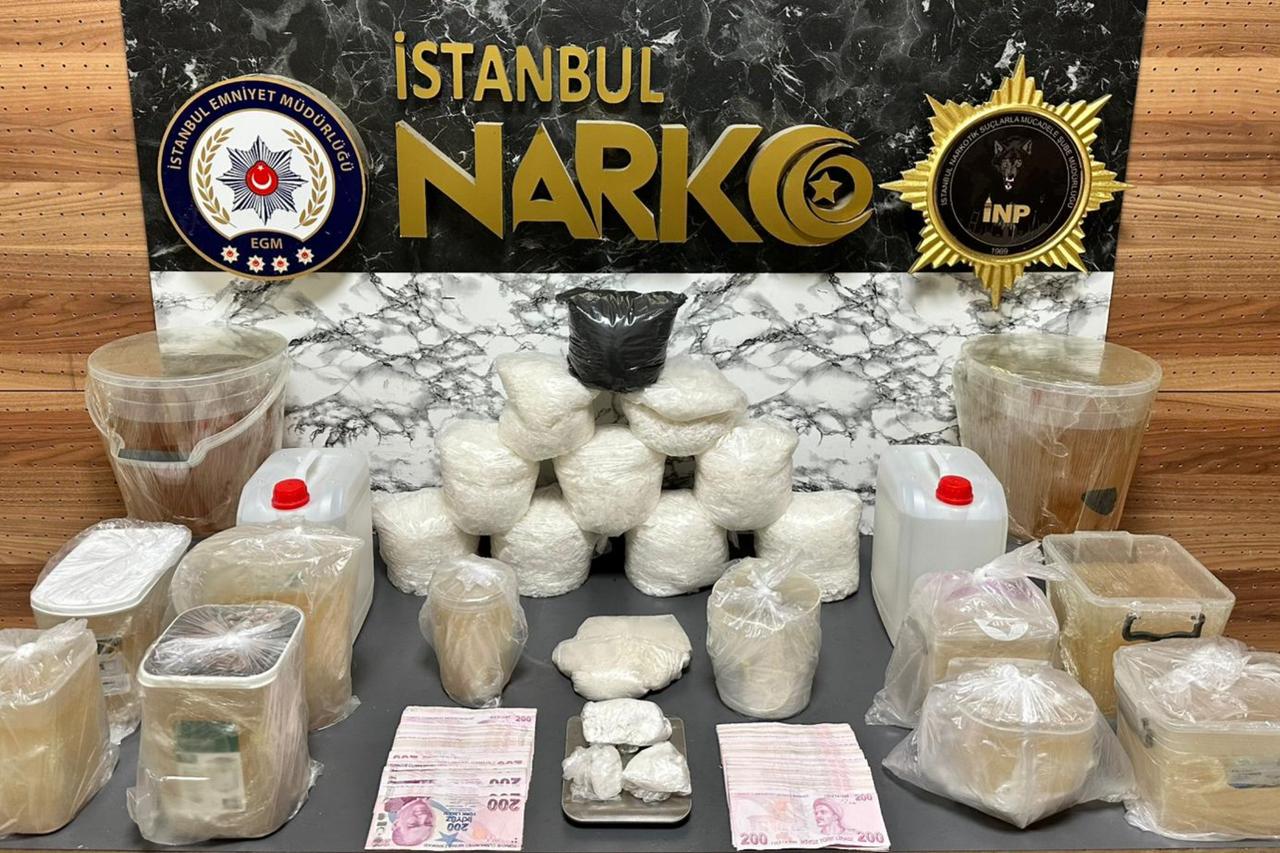


Drug use in Türkiye has expanded markedly over the past decade, with official figures and expert assessments pointing to a shift that extends beyond isolated substances or high-profile scandals.
What was once discussed mainly in the context of trafficking routes and occasional celebrity cases is now increasingly described as a broader public health challenge and a law enforcement workload shaped largely by personal use offenses.
Specialists cited in recent reporting identify the post-COVID period as a key turning point, when access methods changed and a wider range of substances became more visible in everyday life.
Recent police operations involving public figures have helped keep the issue in the spotlight, including raids at a luxury hotel in Istanbul’s Besiktas district and toxicology results linked to earlier investigations. Yet the more durable signal has been the expansion in user-linked cases, rather than a simple rise in trafficking.
Judicial statistics covering 2015 to 2024, as referenced in the reporting, indicate that the fastest-growing category has been personal use offenses under Turkish criminal law, increasing more than fourfold over the period.
That expansion helps set up a central tension now shaping the debate: cocaine has been associated with higher income users, while synthetic drugs and methamphetamine are described as appearing more often among lower income groups, even as the risks cut across classes and availability is increasingly framed as something that can be sourced “for every budget.”
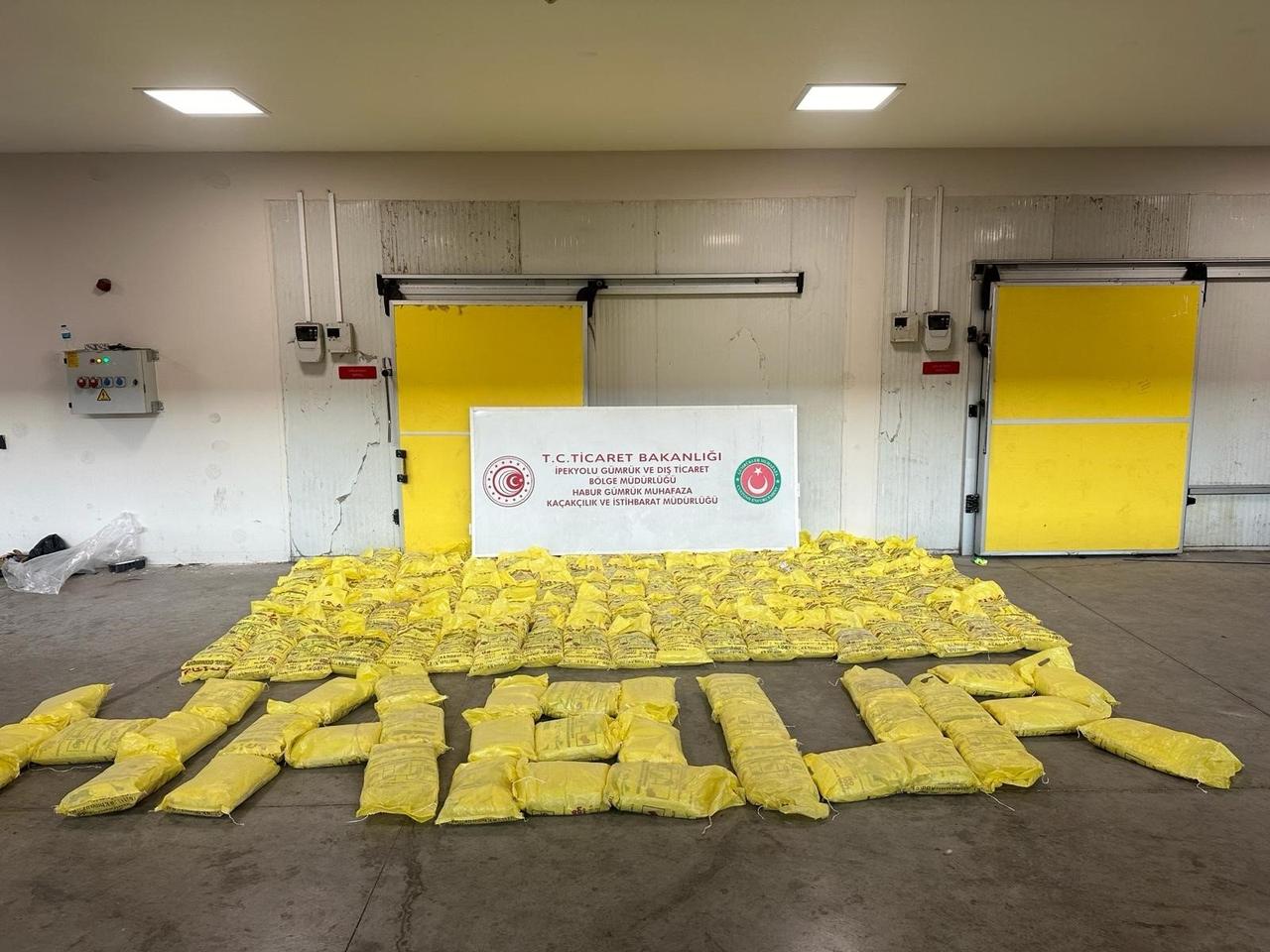

The clearest shift described in the reporting is the rapid climb in user-linked offenses. Under Turkish law, Article 191 of the Turkish Penal Code (TCK) covers purchasing, accepting, possessing, or using narcotics for personal consumption.
Article 188, by contrast, addresses manufacturing and trafficking. In the decade-long judicial trend cited in the text, Article 191 cases rose more than fourfold from 2015 to 2024, suggesting that the user base, not only supply networks, has been expanding at scale.
Police statistics cited in the same reporting reinforce the emphasis on consumption. In 2023, more than 250,000 drug-related incidents were recorded nationwide, and more than four out of five were linked directly to personal use.
Cocaine-related cases were described as rising by more than one-fifth compared to the previous year, with the bulk again tied to consumption rather than distribution.
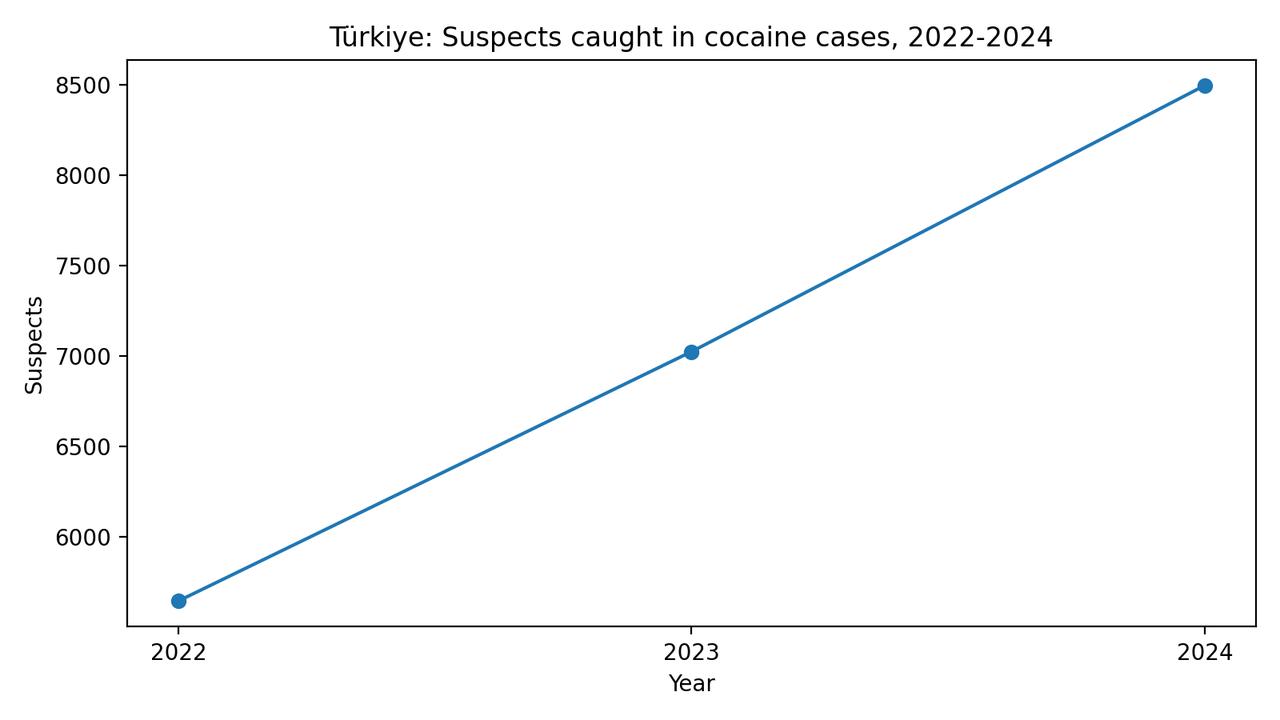
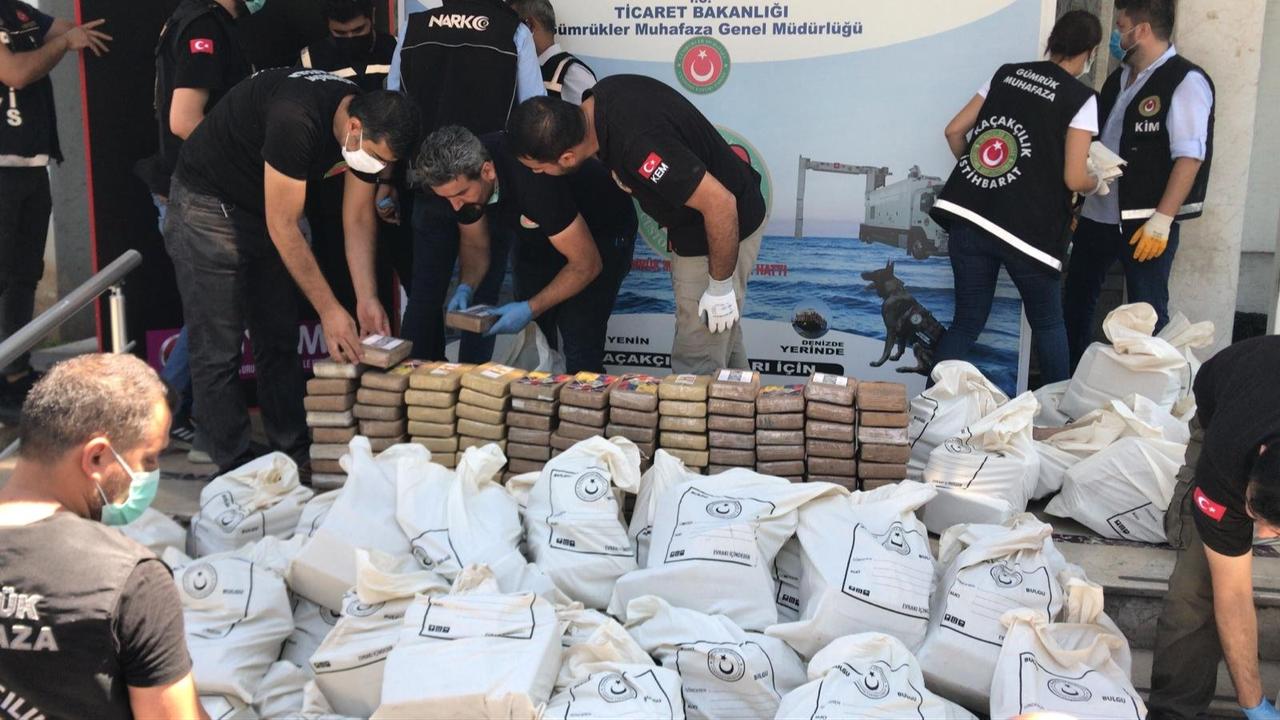
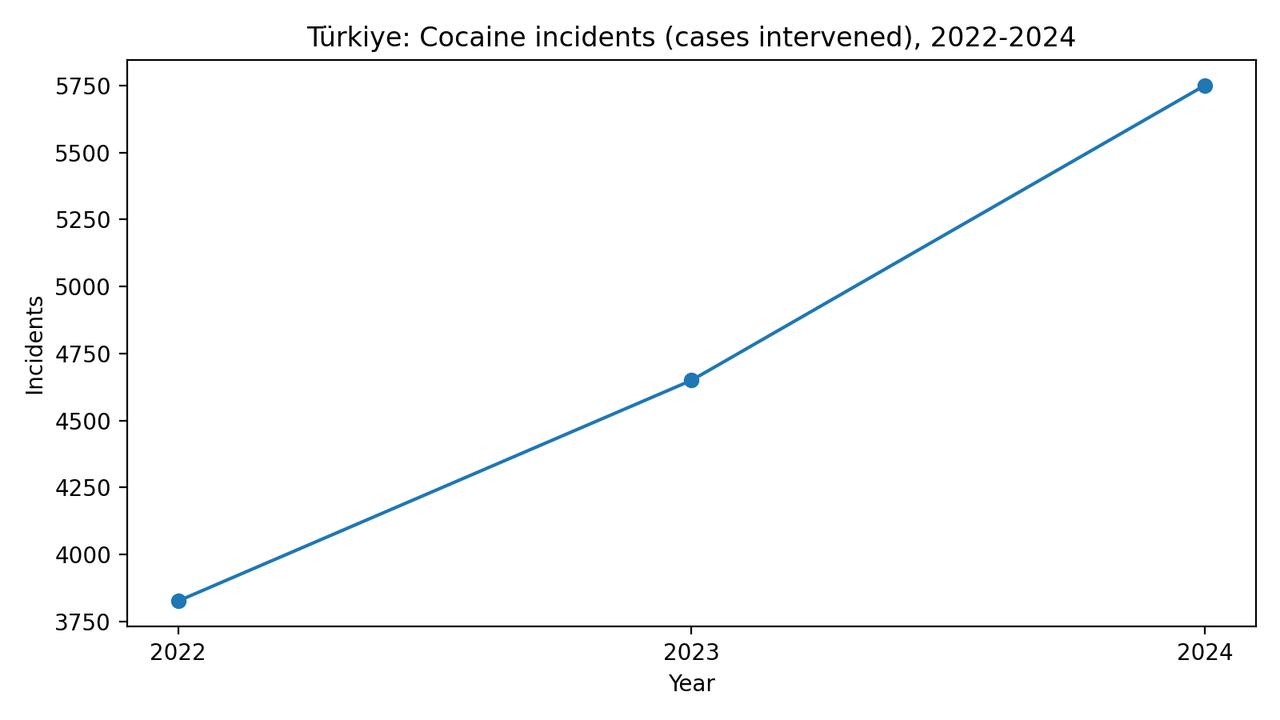
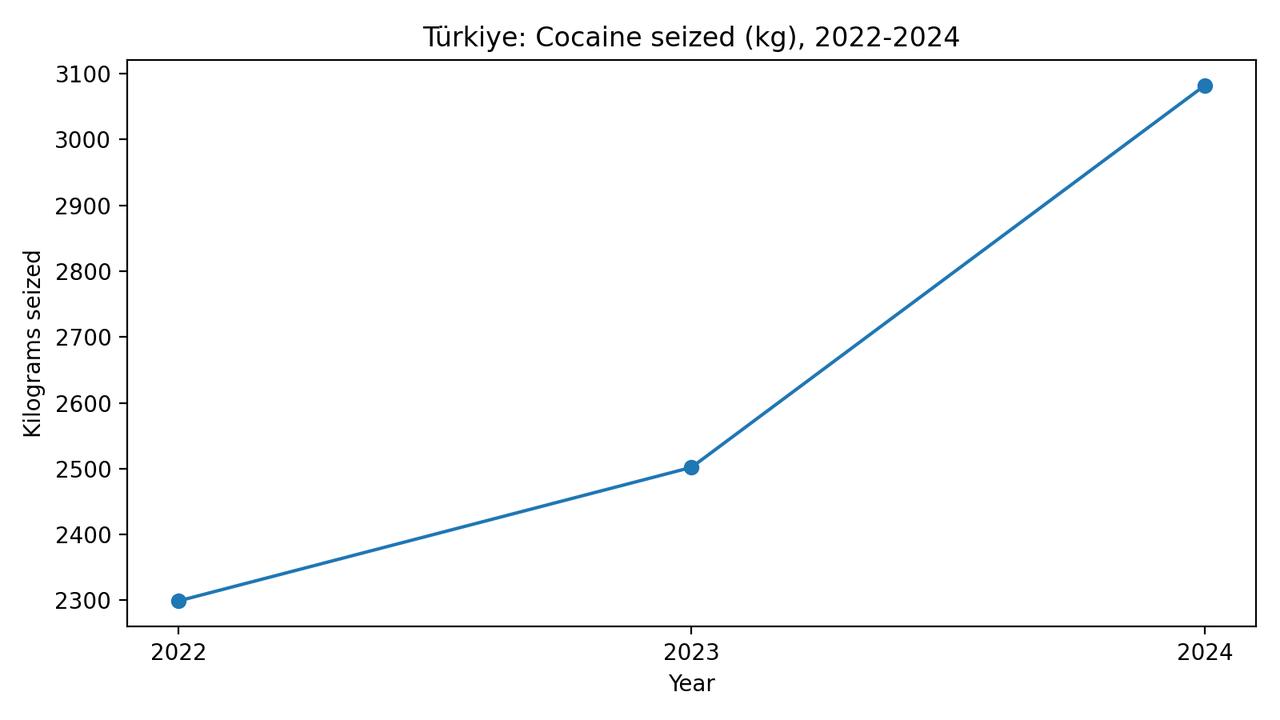
While those figures are presented in the reporting as a nationwide snapshot, official year-by-year cocaine enforcement numbers reported in the national drug reports show a similar upward pattern in cases and suspects.
| Year | Cocaine incidents (cases intervened) | Suspects caught | Cocaine seized (kg) |
|---|---|---|---|
| 2022 | 3,827 | 5,647 | 2,299 |
| 2023 | 4,650 | 7,026 | 2,502 |
| 2024 | 5,750 | 8,498 | 3,082 |
Official narcotics data shows a steady rise in cocaine-related incidents, suspects, and seized quantities in Türkiye between 2022 and 2024, highlighting the growing scale of cocaine use and enforcement activity in the post-pandemic period. (Created by the Türkiye Today team)

Even within the cocaine subset, the legal classification points back to personal use patterns. The official breakdown for 2022 showed 58% of cocaine incidents falling under TCK Article 191 and 42% under Article 188.
The distribution remained similar in 2023 and 2024, with the 2024 report again indicating 57% under Article 191 and 43% under Article 188.
Taken together, the figures and classifications described in the texts point to a story that is not only about seizures, but also about how the state is encountering the problem: increasingly through individual users and possession cases, rather than only large-scale trafficking investigations.
The reporting frames Türkiye as having moved from a country seen primarily as a transit corridor into a place where narcotics are actively consumed, with specialists describing the last four to five years as the period when the increase became hard to ignore.
Professor Kultegin Ogel, cited as the medical director of Moodist Psychiatry and Neurology Hospital, linked the acceleration to the COVID-19 pandemic period, describing it as a turning point.
In that account for Hurriyet daily, lockdown conditions helped push supply methods toward home delivery, which in turn made access easier and more routine. Patient accounts referenced through Ogel described substances such as cocaine, once considered expensive and difficult to source, as now widely available, a change presented as an indicator of rising demand.
Official statistics in the reports do not attempt to measure delivery practices directly, but the year-by-year increases in cocaine incidents and suspects provide a compatible enforcement-side view of a market that is being encountered more often and in more places.
The 2024 report, for example, explicitly notes that the rise in 2024 involved higher incident counts and larger seizures compared to the prior year.
The report also lays out an income-linked pattern in the substances being used, while cautioning that the overall risk does not remain confined to one social group.
In the description attributed to Ogel, cannabis has long been socially tolerated in some circles, and additional substances have gradually been added.
Synthetic drugs and methamphetamine are described as appearing more often among lower-income groups, while cocaine is characterized as more common among higher-income users and increasingly among middle-income users as well. Some users in that middle bracket are described as relying on credit or debt to fund repeated use, a dynamic presented as part of how the market has broadened out.
The official data provided in the reports do not directly measure household income by substance, but it does show that high-volume markets exist beyond cocaine, including large-scale methamphetamine case counts and seizures.
In the 2023 national report, methamphetamine was described as having seen a sharp rise beginning in 2019, continuing into 2020 and 2021, and reaching the highest seizure totals in 2022. The report recorded 77,765 methamphetamine incidents in 2022, with 101,193 suspects and 16,210 kilograms seized.
These figures sit alongside the reporting’s narrative that methamphetamine is showing up more often in lower-income contexts, while cocaine is becoming more normalized in higher and middle-income circles.
Together, they underline that the overall drug landscape being described is not a single-substance story, but a portfolio of substances circulating through different user groups.
Beyond arrests and seizures, the reporting points to wastewater analysis as another lens on consumption. A scientific study described as being conducted by Istanbul University Cerrahpasa Forensic Medicine Institute analyzed wastewater treatment plant samples in 2019 and identified cannabis and cocaine as the most commonly used substances in the sampled data.
The reporting also states that, among cities where cannabis sales are not legal, Istanbul ranked second after Barcelona for cocaine indicators, and that within Istanbul, use appeared concentrated in multiple districts across residential and coastal areas, suggesting a broad, socially diverse user base rather than one confined to a single neighborhood profile.
While the report text does not provide additional numerical wastewater values in the excerpt, it uses the wastewater study to support the broader claim that cocaine use is showing up in patterns consistent with large, mixed urban populations.

A key public-facing element of the reporting is the effort to push back against what it describes as a persistent misconception: that cocaine is not addictive.
In Ogel’s account, cocaine is described as a textbook substance for understanding addiction mechanisms, with dependency able to develop even with intermittent use. The explanation offered in the text links this to dopamine depletion in the brain, in which the short-lived effects can be followed by a longer recovery period that can set up repeated use.
The reporting also warns against claims that cocaine boosts performance, framing them as misleading in light of serious risks cited in the text, including heart attack and brain hemorrhage.
This framing matters because it connects the enforcement-focused data to the wider health framing: if use is spreading across classes and becoming easier to obtain, misconceptions about risk can help sustain the cycle, particularly among occasional or social users who do not self-identify as at-risk.
The celebrity-linked raids and toxicology news that periodically dominate headlines are presented in the reporting as a trigger for public attention, but not as the core of the story.
The deeper signal, the text argues, is the longer-term growth in personal use cases and the normalization of access methods, especially since the pandemic.
That view lines up with the official cocaine enforcement figures cited in the national reports: from 3,827 incidents in 2022 to 4,650 in 2023 and 5,750 in 2024, alongside steady increases in suspects caught and kilograms seized.
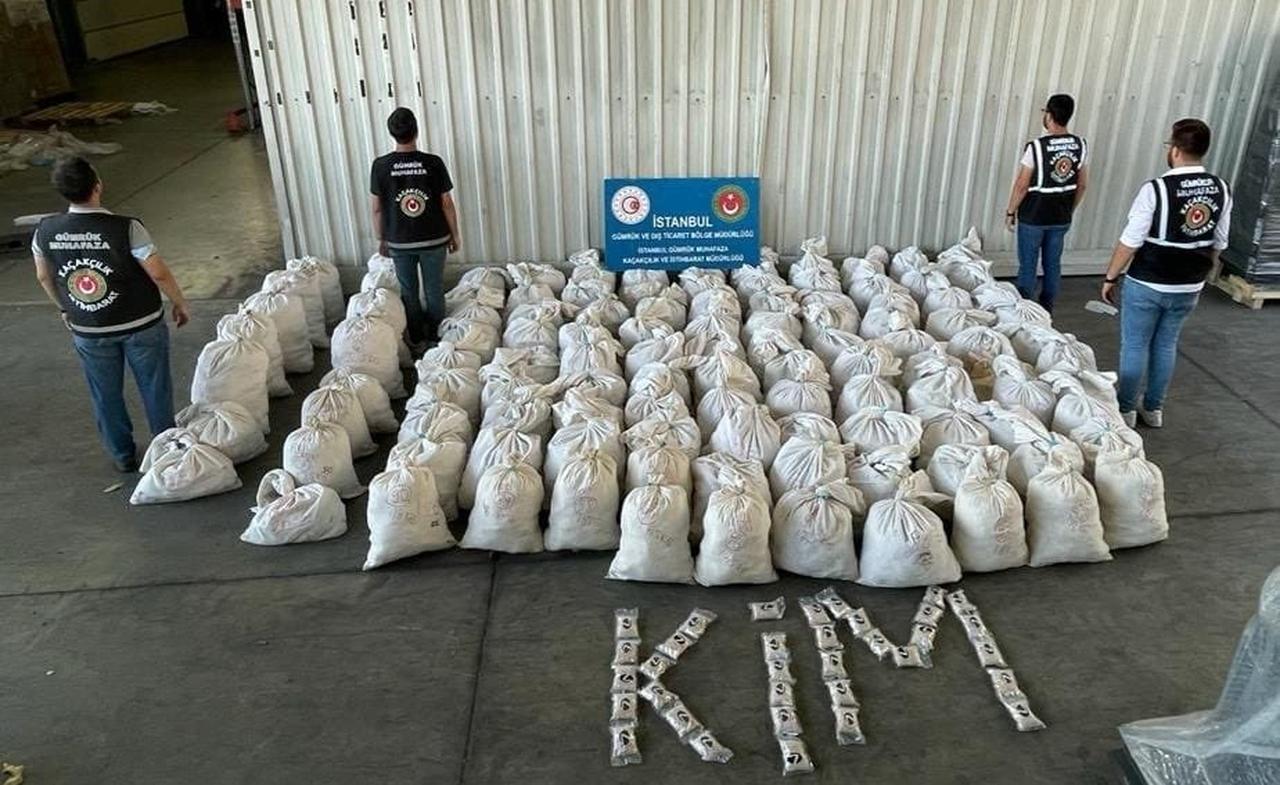
It also aligns with the official legal categorization, where a majority of cocaine incidents are consistently recorded under the personal use-related article of the penal code rather than trafficking, reinforcing the reporting’s central claim that the country’s drug challenge is increasingly a user-scale phenomenon rather than only a supply-chain story.
As specialists cited in the reporting frame it, the post-pandemic period did not simply bring the issue to the surface; it changed how the market is reached, how different substances show up across income levels, and how a once niche urban drug has become part of a wider and more socially mixed consumption pattern.


 Set as preferred source
 Set as preferred source



 2 min read