

 Newsletters


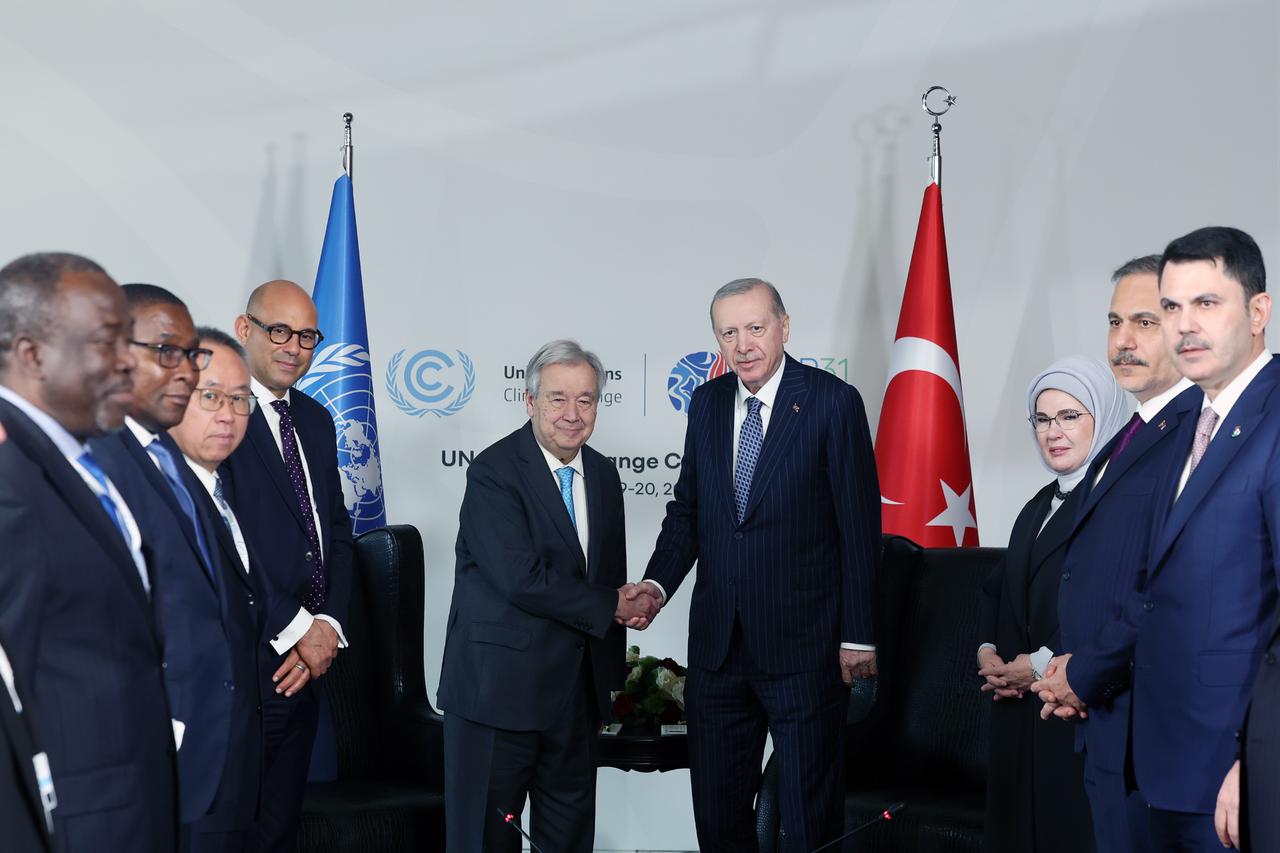


President Recep Tayyip Erdogan met UN Secretary-General Antonio Guterres on Tuesday on the sidelines of the COP31 climate conference in Antalya, where the two discussed tensions between Iran and the United States, the war in Ukraine and developments in Gaza, Cyprus and Libya, the Turkish presidency’s communications office said.
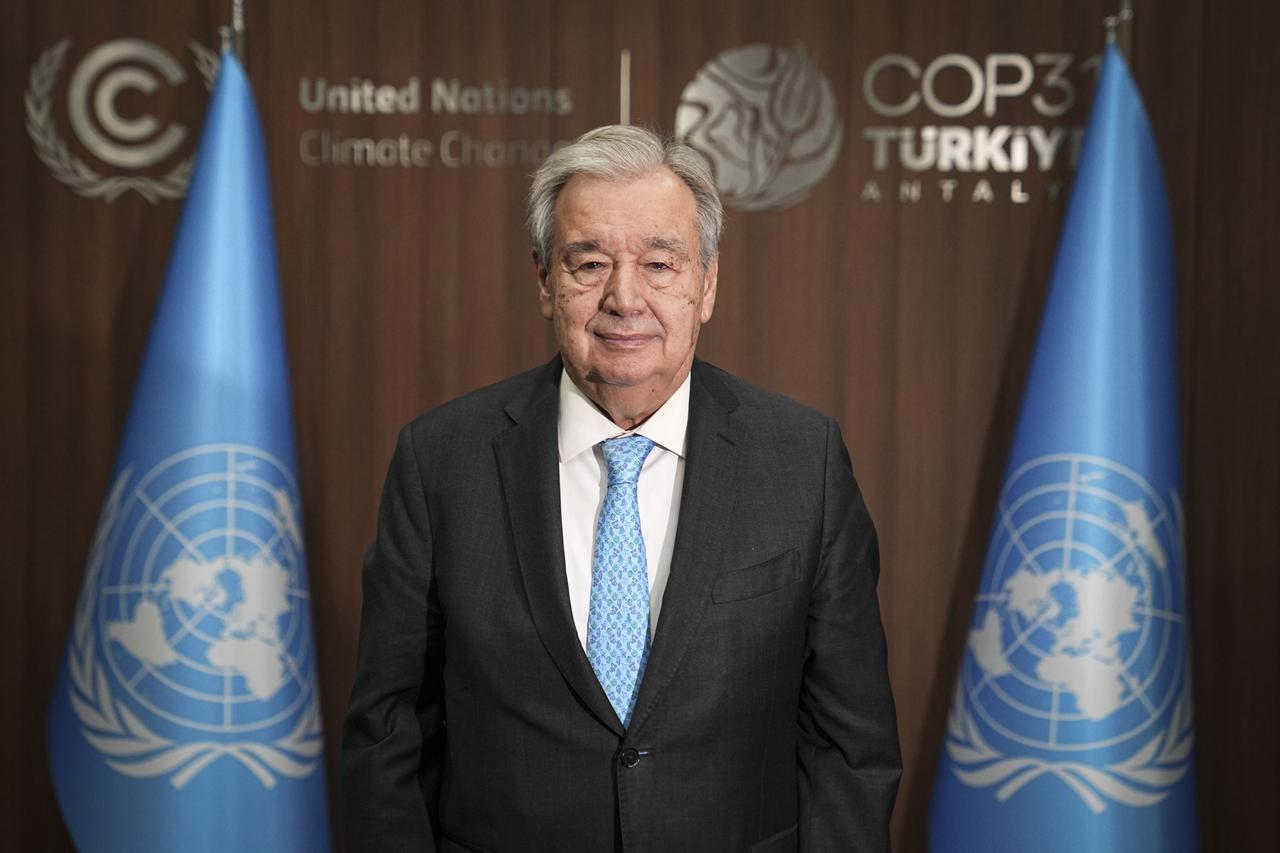
Guterres, speaking separately at the conference, urged governments to stop treating a move away from fossil fuels as a taboo and begin carrying it out.
According to the presidency, Erdogan told Guterres that Türkiye was pleased to hold the presidency of the UN climate summit and that preparations for a successful conference were complete. He said he hoped the Antalya meeting would be “a new starting point” for solving climate-related problems.
The meeting took place on the sidelines of the Leaders’ Summit held as part of the 31st Conference of the Parties to the UN Framework Convention on Climate Change. It is the first edition of the annual climate talks hosted by Türkiye.
On the dispute between Iran and the United States, Erdogan said Türkiye was working with countries in the region to ease escalating tensions. He stressed Ankara’s commitment to resolving disagreements through dialogue and diplomacy, the presidency said.
On the war between Russia and Ukraine, Erdogan said Türkiye was working to help end the conflict and was ready to support a new dialogue process. The two leaders also reviewed the latest situation in Gaza, Cyprus and Libya.
Turkish first lady Emine Erdogan, Foreign Minister Hakan Fidan, Environment, Urbanization and Climate Change Minister Murat Kurum, Health Minister Kemal Memisoglu and Communications Director Burhanettin Duran attended the meeting.
Omer Celik, deputy chairman and spokesperson of the ruling AK Party, and Zero Waste Foundation President Samed Agirbas were also present.
At a separate session in Antalya on a roadmap for a just, orderly and equitable transition away from fossil fuels in energy systems, a document associated with the previous COP30 presidency, Guterres said the shift was no longer a subject to be avoided.
“We must now, here at COP31, move beyond discussing the transition and begin organizing, financing and delivering it,” he said.
Guterres said speeding up the move away from fossil fuels was essential to keeping global warming from exceeding 1.5 degrees Celsius, the limit countries set in the 2015 Paris Agreement, and to building cleaner, safer economies less exposed to shocks. He said the roadmap would help that effort.
He argued that fossil fuels were not only driving the climate crisis but also carrying a heavy economic and security cost, as the crisis in the Middle East had shown.
Since that crisis began, he said, the European Union had paid more than 100 billion euros in extra fossil fuel imports without receiving any additional fuel, and oil prices had risen globally.
Families, businesses and governments are bearing those costs, Guterres said, while nine oil companies are on course to earn more than $95 billion in just three months, or more than $1 billion a day.
Switching suppliers would not remove the vulnerability, he said, because “a disruption anywhere pushes prices up everywhere.”
The only solution, he said, was to reduce dependence itself through clean energy, grids, storage, efficiency and green electrification.
Guterres said the roadmap rested on two points. First, there is no one-size-fits-all transition: each country has different capacities and starting points, but the destination must be the same.
Second, national action alone is not enough, and supply and demand must be managed together in an interconnected global market.
He said countries with greater responsibility and capacity should move fastest, in line with the principle of “common but differentiated responsibilities,” a long-standing foundation of the UN climate regime.
He called on developed countries, development banks and other partners to cooperate on finance, technology and capacity building, and urged fossil fuel importers and exporters to coordinate their plans.
Others who spoke at the session pressed similar themes. Andre Aranha Correa do Lago, who presided over COP30, praised Guterres for embracing the climate cause and said the climate community would remember how he pushed the United Nations to work in a more coordinated way once his term as secretary-general ends.
Simon Stiell, executive secretary of the UN climate body, said COP meetings move problem-solving “one step further” and that the Antalya conference should accelerate implementation.
He said renewable energy reduces exposure to fossil fuel price swings and strengthens energy security, and that clean energy infrastructure, grids and storage must expand as fossil fuel use falls.
Former US Secretary of State John Kerry said commitments made in words must be turned into plans, investment and action.
He said 91 percent of new renewable energy projects in 2024 cost less than the cheapest new fossil fuel alternative.
Even so, he said, companies that signed a decarbonization pledge in Dubai approved 68 new oil and gas fields and expansion projects in the first nine months of the following year.
The Dubai pledge came out of the COP28 summit, which for the first time called for transitioning away from fossil fuels in energy systems.
“Even so, last year the world burned more fossil fuel and released more carbon into the atmosphere than in any year in human history,” Kerry said.
Kerry also said American voters had climate change in mind in last week’s midterm elections, arguing they backed clean, affordable energy and clean governance in races from Congress to governors’ offices and other statewide posts.


 Set as preferred source
 Set as preferred source


 2 min read
 1 min read


