Newsletters


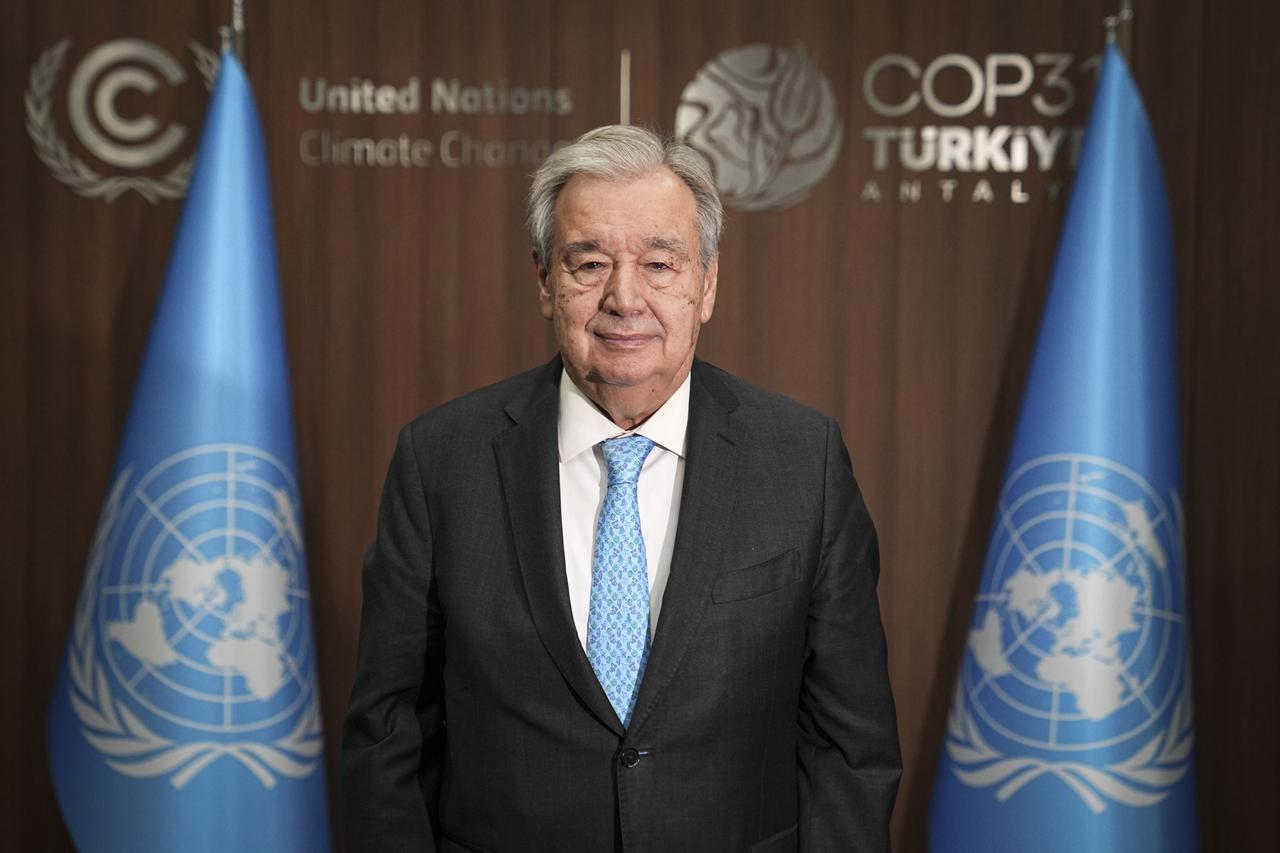


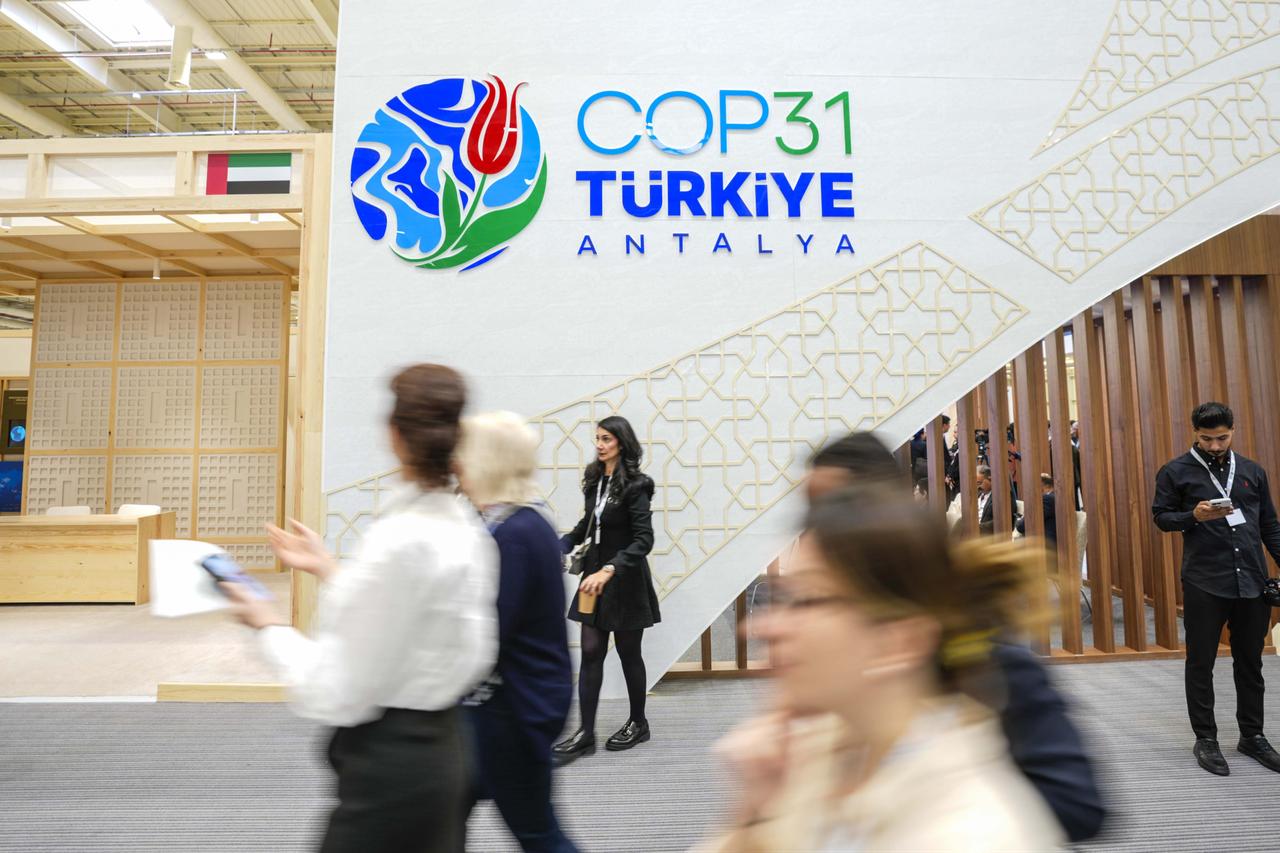
United Nations Secretary-General Antonio Guterres on Tuesday called on countries to accelerate the transition from fossil fuels to renewable energy at the 31st U.N. Climate Change Conference (COP31) in Antalya, saying global emissions must fall by around 6% annually in the coming years.
Speaking to Türkiye’s state-run Anadolu Agency on the sidelines of the summit, hosted by Türkiye for the first time, Guterres said the scientific community had reached a consensus that global temperatures would exceed the 1.5-degree Celsius (2.7-degree Fahrenheit) threshold in the coming years.
“The central question is to make that overshoot as short and as low as possible,” he noted.
Guterres said achieving this would require a drastic reduction in emissions, adding that the only way to do so was through a significant acceleration of the transition from fossil fuels to renewable energy.
“The only way to do it is through a meaningful acceleration of the transition from fossil fuels to renewables,” he said, adding that he expected a strong message on this issue from Antalya.
Guterres said the principle of common but differentiated responsibilities must be upheld, while stressing that all countries needed to increase their efforts.
“We must, as I said, achieve a clear reduction of at least 6% a year of emissions in the next few years,” he reiterated.
He also called for the full implementation of existing agreements on climate finance and emissions reduction, adding that efforts must go beyond previously agreed commitments.
“Beyond implementing what was agreed, I think we need to accelerate what we are doing,” he stressed.


Guterres expressed his gratitude to Türkiye for hosting COP31, saying he was impressed.
“It's a great pleasure to be back in Türkiye, and I want to say that I'm extremely grateful for the excellent organization that Türkiye has guaranteed for the success of the COP,” he said.
“I've been in many COPs and, indeed, I'm extremely impressed by the high quality of the Turkish organization of this COP,” he added.
Guterres said he hoped Türkiye's organizational standards would be replicated by other member states, in line with the level of ambition required to protect the planet.
Commenting on Türkiye's Zero Waste Project, spearheaded by Emine Erdogan, wife of President Recep Tayyip Erdogan, Guterres said he was honored to have been associated with the initiative.
“I'm very happy that I was associated with that. This is an extremely important objective,” he remarked.
Guterres said reducing waste was important both economically and environmentally, noting that resources that would otherwise be wasted could instead be used to support people, particularly those in need.
He also highlighted the role of waste reduction in tackling methane emissions.
“The reduction of waste is one of the most important factors in reducing the emissions of methane. And methane is the biggest accelerator of climate change,” he explained.
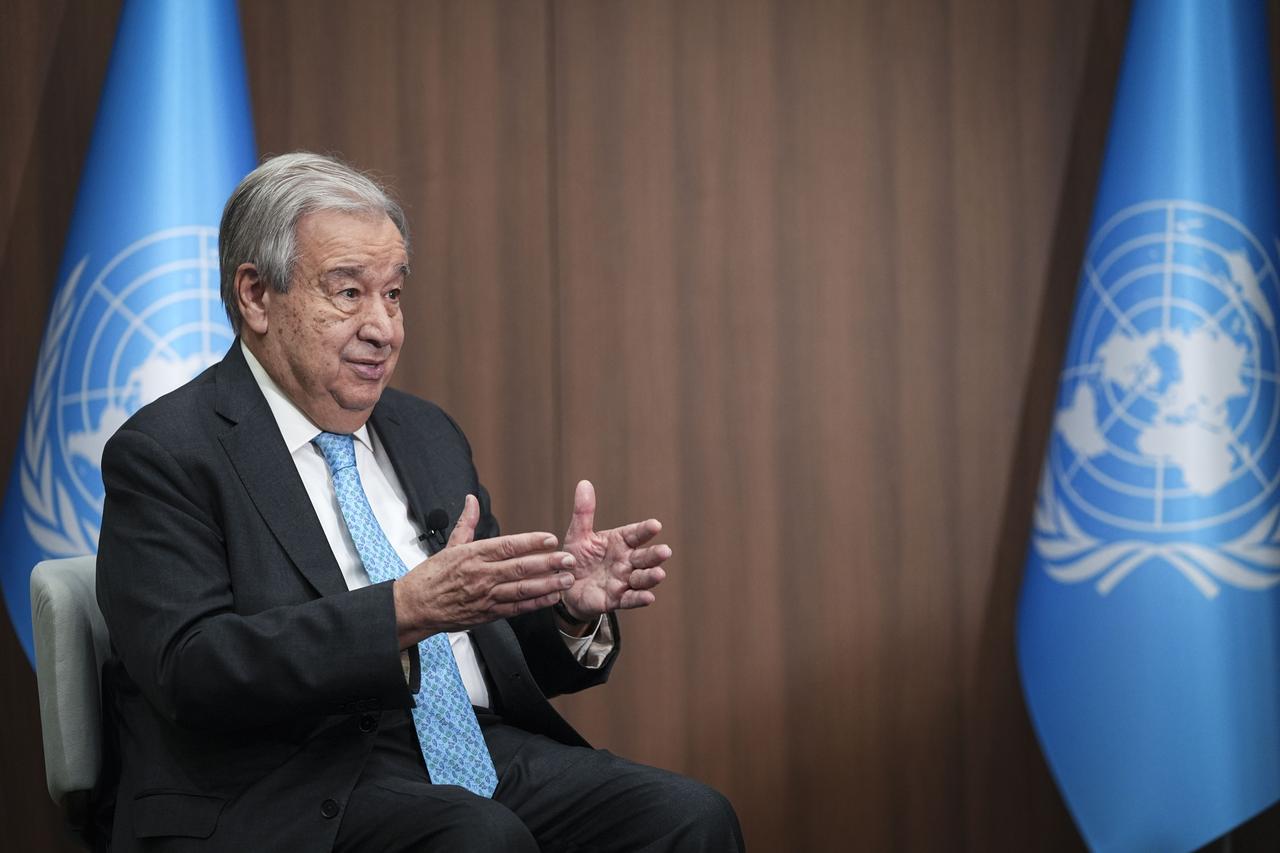
Guterres urged developed countries to fulfill their financial commitments to developing nations, including providing $300 billion annually in climate finance.
He also called for full participation in the more ambitious goal of mobilizing $1.3 trillion from all sources to support developing countries.
Warning about the consequences of global temperatures temporarily exceeding 1.5 degrees Celsius, Guterres said millions of people would face increasingly severe climate-related disasters.
“Floods will be bigger, drought will be more dramatic, storms will be worse,” he warned.
He stressed the need to increase financial support for countries to strengthen their resilience and adapt to climate change.
Guterres recalled the commitment to triple adaptation finance, saying it was essential that countries deliver on the pledge.
“But let's be honest, it's less than 30% of what would be necessary,” he acknowledged.
He added that climate justice involved not only accelerating emissions reductions but also ensuring greater support for developing countries.
“Supporting developing countries is also extremely important,” he said.
Guterres described Türkiye as having a key role in ensuring that developed countries fulfill their commitments and increase their support.
“I believe that Türkiye has a key role to play as a developing country, and as a country respected in the developing world,” he said.
Turning to the humanitarian crisis in Gaza, Guterres said the international community had failed, but stressed that responsibility for this failure lay with specific actors.
“The international community has failed, but that failure has names,” he stated.
Guterres recalled condemning Hamas' attacks, while also condemning the scale of death and destruction caused by Israel in Gaza and the severe restrictions on humanitarian aid deliveries.
“There was a ceasefire, but the ceasefire is not being respected. Children go on dying, and that is something horrible,” he said.
He noted that a peace plan endorsed by the U.N. Security Council was also progressing very slowly, accusing Israel of creating obstacles to its implementation as well as to the effective delivery of humanitarian assistance.
“Israel has created many obstacles for the implementation of the peace plan, as it has created obstacles for effective humanitarian aid in Gaza. And this situation must end,” he said.
Guterres called for full humanitarian access and the completion of both phases of the peace plan to give Gaza's population a chance for recovery.
Guterres said the situation in the occupied West Bank was also “absolutely unacceptable.”
He pointed to the construction of new settlements, evictions and violence by Israeli settlers against Palestinians, journalists and diplomats.
“There is a clear intention of progressively occupying more and more land, which gives the indication that in the end the objective is annexation,” he said.
“That is absolutely unacceptable. We must guarantee that this is avoided at all costs,” he added.
Guterres stressed that the two-state solution must remain viable and be implemented as the only way to secure lasting peace in the Middle East.
 2 min read
Asked about the most memorable moment of his decade as U.N. secretary-general, Guterres pointed to his visit to Rafah, where he witnessed the urgent humanitarian needs of Palestinians.
“My most memorable moment was to be in Rafah, to see the dramatic needs of the Palestinians to have humanitarian aid, and to see a huge number of trucks that were stopped at the entrance and were not allowed to go inside Gaza,” he recalled.
“That was a moment I will never forget, taking into account the suffering the Palestinian people were feeling at that time,” he added.
As his tenure as U.N. secretary-general approaches its end, Guterres said he hoped his successor would work under more favorable circumstances.
“These 10 years have been extremely, extremely difficult, as you know,” he said.
He declined to offer specific advice on how the next secretary-general should approach the role, saying it was not his place to give instructions.
“I can only wish him or her the best success in the exercise of the mandate for the benefit of the UN and the benefit of humankind,” he said.
Concluding his remarks, Guterres wished COP31 every success, expressing hope that Türkiye's organizational efforts would be matched by the ambition needed from all countries to protect the planet.


 Set as preferred source
 Set as preferred source



 1 min read