Newsletters


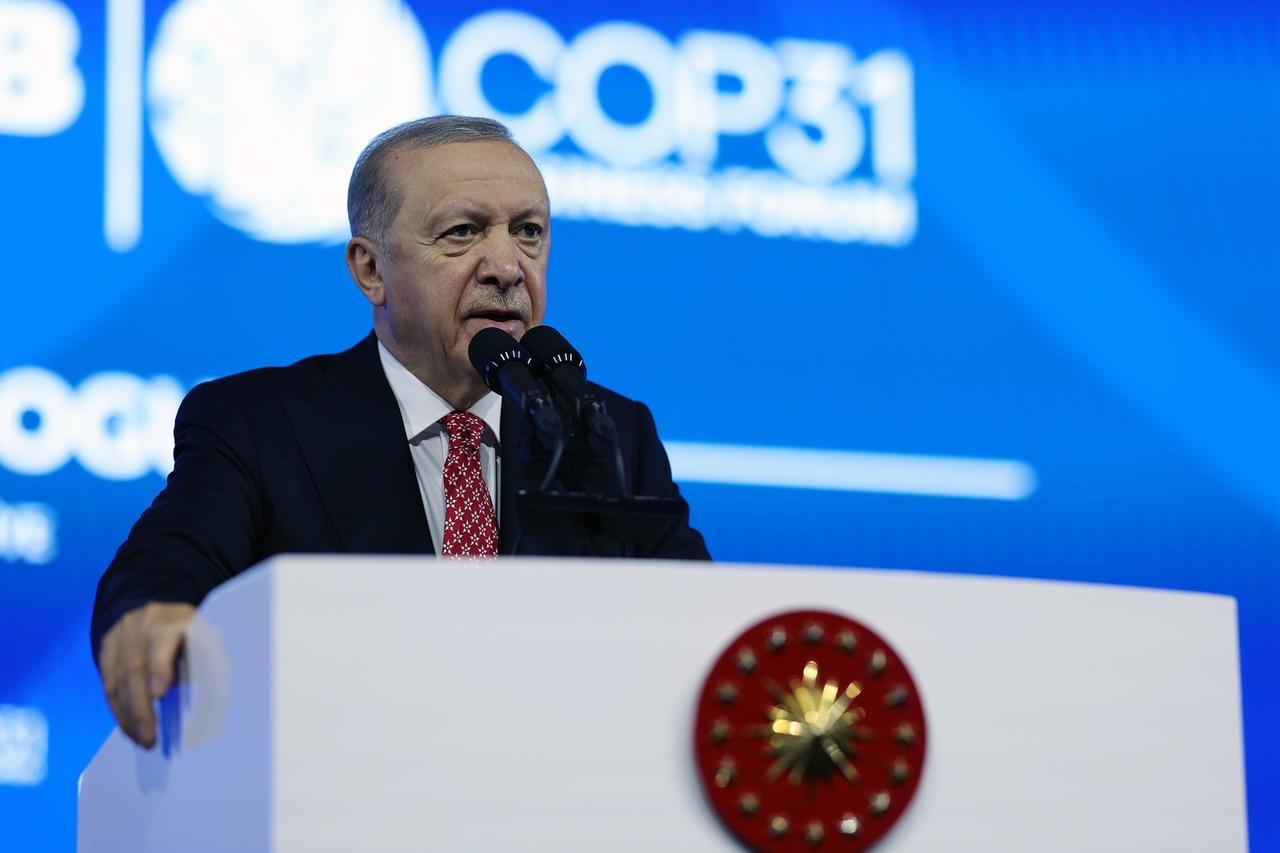


President Recep Tayyip Erdogan said Thursday that the political commitment shown at the COP31 Leaders’ Summit was an encouraging sign for work under the Paris Agreement. On the final day of the summit, he also held back-to-back talks with at least ten leaders, covering the Iran-US conflict, Libya, Sudan, Iraq and Africa.
The two-day summit was scheduled to close at 5 p.m. After that, leaders were expected to leave Antalya and hand the talks to negotiators. The wider conference runs until Nov. 20. Türkiye holds the COP31 presidency, while Australia leads the formal negotiations.

In a written statement, Erdogan thanked all the heads of state and government who attended. He said their presence and direct messages carried particular weight at a time of major international challenges.
“The political commitment demonstrated in Antalya is encouraging for the work to be carried out under the Paris Agreement,” he said. He urged participants to “maintain this determination” and make the 1.5-degree target achievable. The 2015 Paris Agreement commits countries to limiting global warming to well below 2 degrees Celsius, while pursuing efforts to hold it to 1.5 degrees.
Erdogan said countries had arrived with different experiences, priorities and national circumstances but still found common ground.
He cited the Climate Implementation Bridge, which he said aims to turn existing commitments into concrete outcomes through closer cooperation among governments, financial institutions and other stakeholders.
He also welcomed support for the “35x35 Global Electrification Pledge,” saying numerous countries had already joined.
“COP31 was designed as an implementation-focused COP,” he said. He praised the partnership with Australia as a sign of confidence in multilateralism.
He also thanked Pacific Island countries, particularly Tuvalu and Fiji, which hosted the pre-COP meetings. Erdogan urged all parties to carry the summit’s constructive spirit into the ongoing negotiations.
Erdogan’s meeting with Iranian President Masoud Pezeshkian centered on the conflict between Iran and the United States. Erdogan said he wished for an end to the fighting and lasting peace, and that diplomacy should be given a chance.
He called for a negotiating table to be set up without delay and pledged continued support for peace efforts with regional partners. Foreign Minister Hakan Fidan, Defense Minister Yasar Guler and intelligence chief Ibrahim Kalin were among those present.
Pakistani Prime Minister Shehbaz Sharif was received later in the day, according to Anadolu Agency. The two leaders discussed bilateral ties and regional and global developments, with an emphasis on transportation and the defense industry.
Erdogan said the Mecca Defense Alliance had strengthened solidarity between the two countries. He said they would keep working together to help end the conflict in Iran.
He also offered condolences over people killed in an attack on a police convoy in Pakistan.
Sharif thanked Erdogan for Türkiye’s “warm and generous hospitality” during COP31. He also thanked him for “steadfast support and close coordination” in Pakistan’s diplomatic efforts between the United States and Iran.
In a post on X, Sharif said the leaders had “reaffirmed the deep-rooted, historic and brotherly bonds between Pakistan and Türkiye.” He listed trade, investment, defense, energy and connectivity as areas of cooperation.
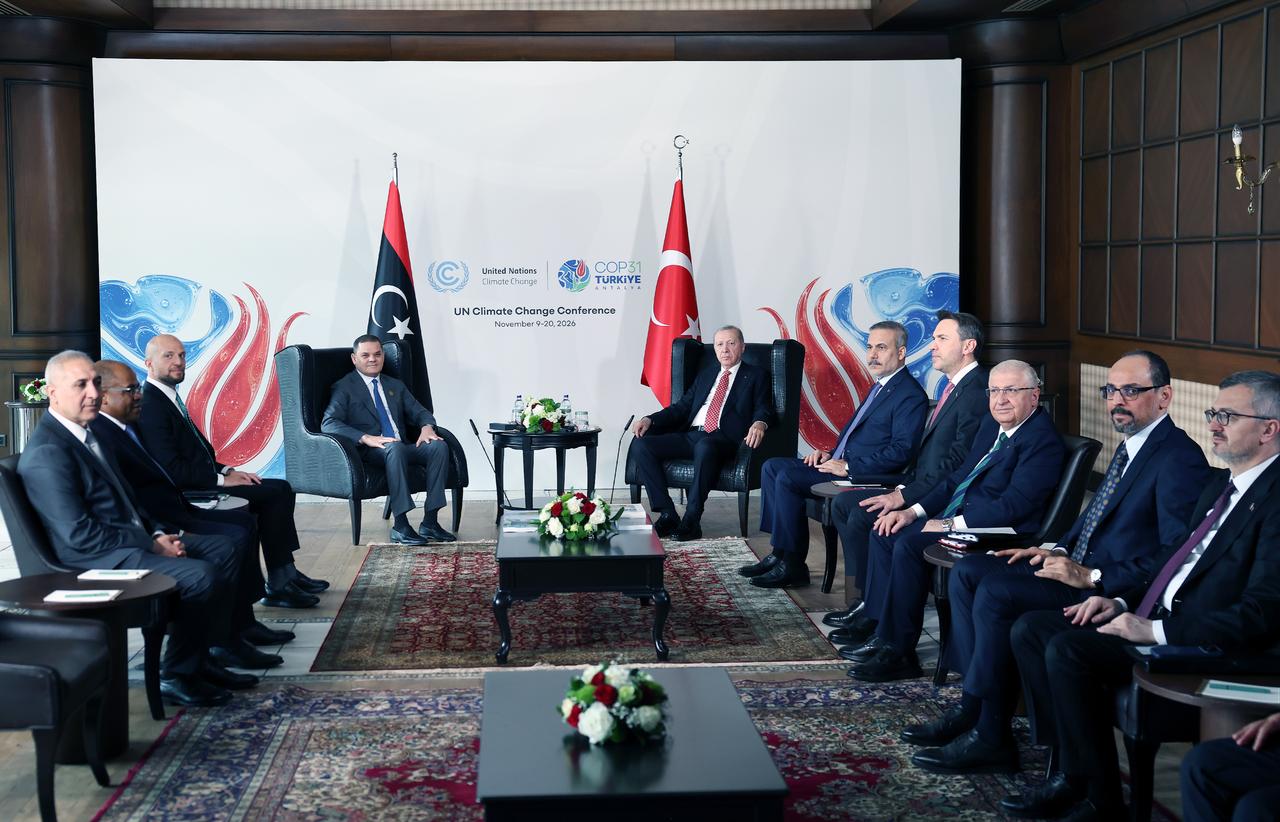
Libyan Prime Minister Abdulhamid Dbeibah also met Erdogan, with Fidan, Guler, Energy Minister Alparslan Bayraktar, Kalin and Communications Director Burhanettin Duran attending. Erdogan said the two sides would keep taking steps to deepen cooperation, with energy singled out.
He said Türkiye would increase its support for Libya’s stability. According to Anadolu, he said no initiative lacking the support of the Libyan people “could succeed on the ground,” and that Türkiye would not accept any formula running counter to Libya’s interests.
Erdogan also met Abdulfattah al-Burhan, chairman of Sudan’s Sovereignty Council. He reaffirmed Türkiye’s support for Sudan’s unity, territorial integrity and independence, and said Ankara was closely following developments on the ground and backed the Sudan peace initiative.
The presidential Communications Directorate said Erdogan told Somali President Hassan Sheikh Mohamud that Türkiye would keep expanding cooperation, especially in defense and energy. He said Somalia’s peace and stability remained a priority for Ankara and expressed hope for the success of Somalia’s national dialogue process.
With Republic of Congo President Denis Sassou Nguesso, Erdogan highlighted progress in trade and investment and stressed protecting biodiversity, particularly in the Congo Basin. He voiced confidence that the Climate Implementation Bridge would help address environmental challenges.
Tanzanian President Samia Suluhu Hassan discussed bilateral relations and regional developments with him. Erdogan welcomed growing trade and said Türkiye aimed to implement climate initiatives addressing Africa’s priorities during its presidency.
Democratic Republic of the Congo President Felix Tshisekedi was also received. Erdogan said the partnership was growing in all areas, with further steps planned in trade, transport and the defense industry.
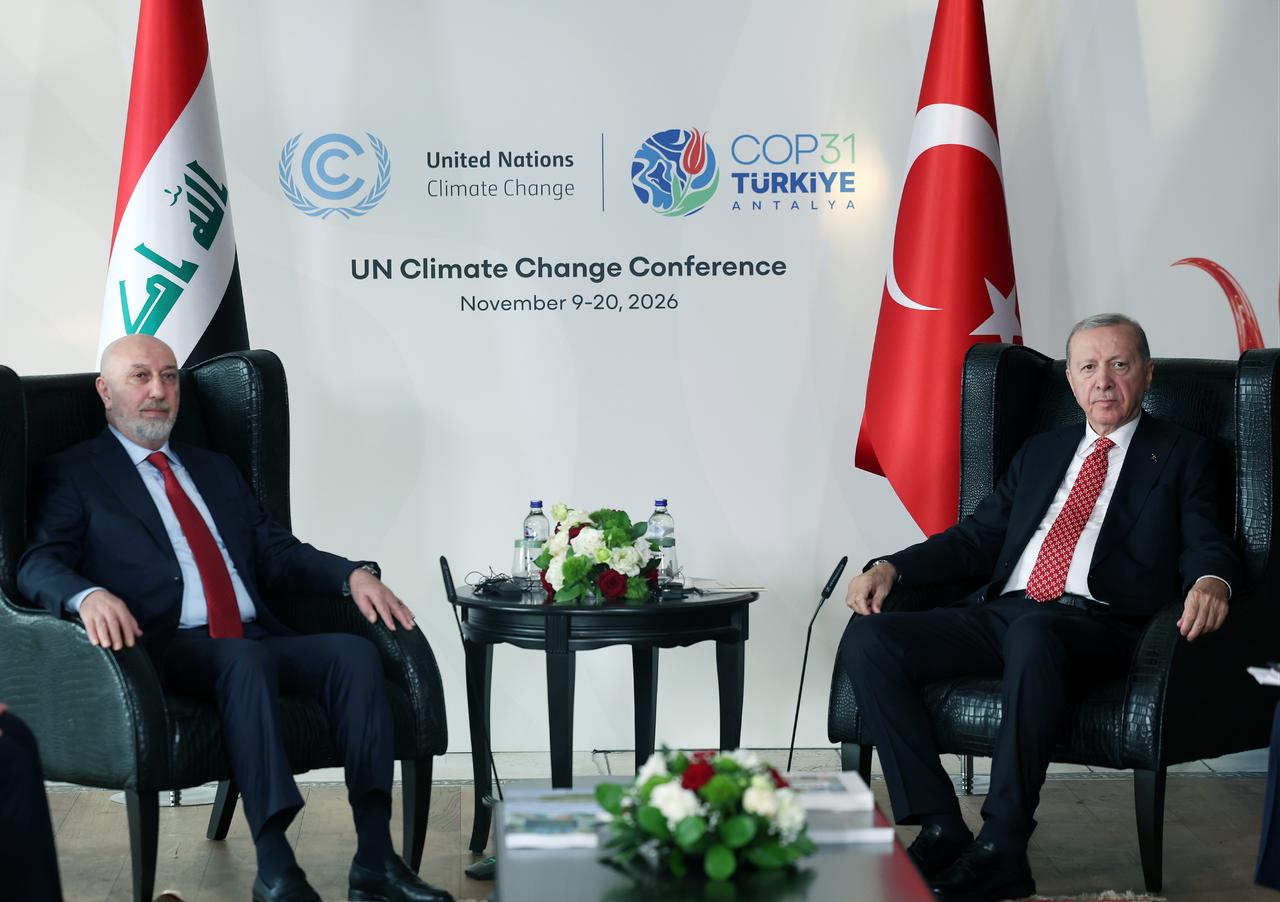
Iraqi President Nizar Amedi was told that recent high-level contacts had added momentum to relations. Erdogan reported progress on the Development Road Project, a transport and trade corridor meant to link Iraq with international markets and open a new East-West route. He said cooperation would expand across sectors, particularly energy.
He also urged Baghdad to strengthen its support for Ankara’s goal of a “terror-free region,” which he said would benefit both countries.
Erdogan also met Georgian President Mikheil Kavelashvili. Turkish media headlines said Erdogan expects trade with Georgia to increase.
Around 25 leaders were scheduled to speak Thursday, down from about 40 on Wednesday, according to Climate Home News. Wednesday’s speakers included UN Secretary-General Antonio Guterres, who called for a “climate justice compact” and said “polluters must pay.”
British Prime Minister Andy Burnham said the consensus on science and climate “has gone,” and that “the reality is now the world will reach 1.5 degrees.” He described climate change as a national security issue.
Swedish activist Greta Thunberg, attending a climate summit for the first time in five years, said “no one is coming to our rescue” and that the planet “is not dying, it is being killed.”
Mali’s Prime Minister Abdoulaye Maiga argued that countries that contributed least to climate change should not carry the heaviest burden. Seychelles Vice President Alix Sebastian Pillay warned that rising seas threaten the survival of island nations.
A leaders-level summit on non-CO2 greenhouse gases opened the day. France’s ecological transition minister, Monique Barbut, urged that the COP31 decision direct the oil and gas sector to reach near-zero methane emissions intensity by 2030 at the latest and end routine flaring and venting. “We must go beyond coalitions of willing countries and mere declarations of intent,” she said.
She proposed that countries sign a note to the Australian and Turkish presidencies asking that methane be included, and said France was ready to share draft text. Germany’s Heike Henn backed recognizing methane in the negotiated text. Seven countries endorsed a Global Methane Pledge declaration: Belgium, Canada, Germany, Indonesia, the Federated States of Micronesia, Norway and Britain.
The day’s program also included a roundtable on accelerating Paris Agreement implementation and access to finance, a dialogue on urban resilience and a Global Grids Accelerator event hosted by Guterres.
Others covered clean cooking in Africa and African climate leadership, and a Pacific Resilience Facility showcase. Australian Prime Minister Anthony Albanese has urged support for the facility, which aims to raise $500 million. The coverage reviewed reported no confirmed new pledges on Thursday. The COP31 Business Forum also opened.


 Set as preferred source
 Set as preferred source


 1 min read
 1 min read