

 Newsletters


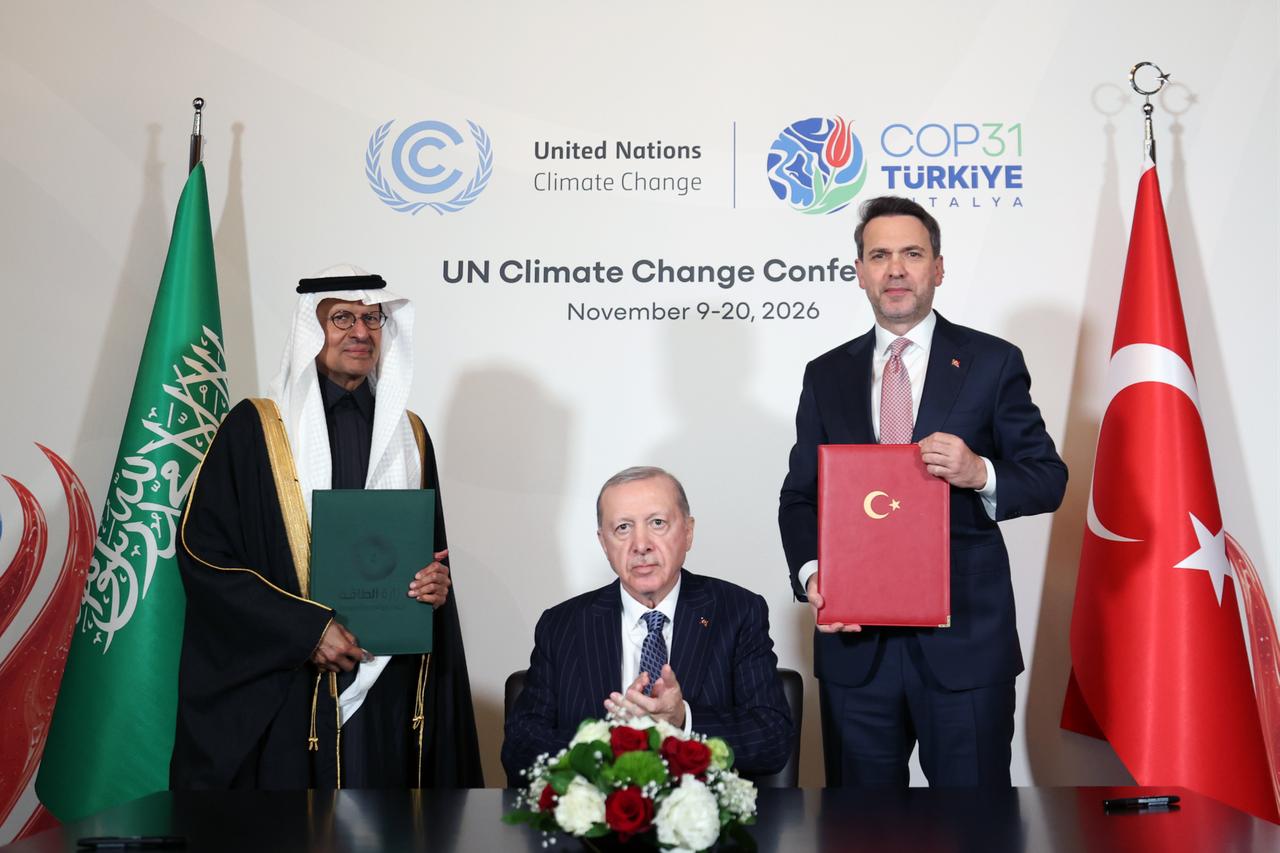


President Recep Tayyip Erdogan received six leaders and officials on the sidelines of the COP31 climate conference on Tuesday, including UN Secretary-General Antonio Guterres, and witnessed the signing of a Türkiye-Saudi Arabia electricity agreement.
Meanwhile, delegates on the second day of the conference faced crowded transport and worked through an energy-focused program of voluntary pledges and early talks on the formal agenda.
Erdogan arrived in Antalya in the afternoon for the Leaders’ Summit, which begins Wednesday.
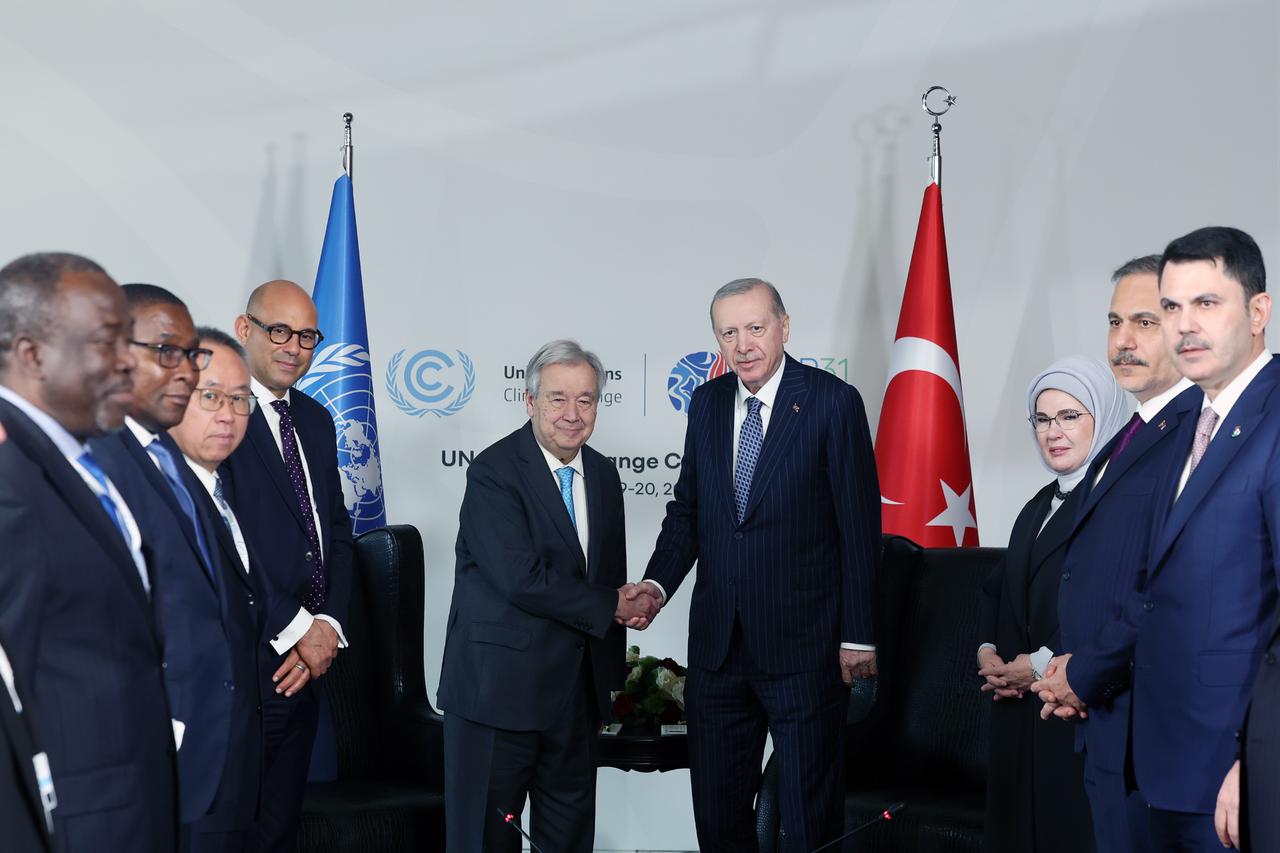
His first meeting was with Guterres, joined by first lady Emine Erdogan, Foreign Minister Hakan Fidan and Environment Minister Murat Kurum, who is COP31 president.
Erdogan said Türkiye hoped the Antalya meeting would be “a new starting point” for solving climate-related problems. The two also discussed Gaza, Cyprus and Libya. Erdogan said Türkiye is working toward de-escalation in the dispute between Iran and the United States and is ready to support a new dialogue process on the Ukraine-Russia war.
He then received Saudi Energy Minister Prince Abdulaziz bin Salman, followed by Ethiopian Prime Minister Abiy Ahmed Ali.
Ethiopia will host COP32, and Erdogan congratulated Abiy on that role while pledging continued advances in trade and investment cooperation and support for peace and stability in the region.
Brazilian President Luiz Inacio Lula da Silva was next. Erdogan said the two countries plan to expand cooperation in trade and the defense industry, and noted that 2027 will mark 100 years of diplomatic relations.
He said Türkiye aims to build on Brazil’s progress during its COP30 presidency and has designed COP31 around putting past decisions into practice. He also congratulated Lula on his election success.
Later in the evening came Bangladeshi Prime Minister Tarique Rahman. Erdogan said Türkiye will keep the humanitarian situation in Cox’s Bazar, home to Rohingya refugees, on the international agenda.
He said flood management and resilient infrastructure are on the COP31 agenda and expressed hope that a Turkish initiative called the Climate Implementation Bridge would help address such needs.
The day closed with a dinner with Gurbanguly Berdimuhamedov, chairman of Turkmenistan’s People’s Council. Erdogan urged deeper cooperation in energy, trade, the defense industry and investment, and said he hopes Turkmenistan will join the Organization of Turkic States as a member.
The Saudi meeting produced the day’s one signed agreement. Energy Minister Alparslan Bayraktar and Prince Abdulaziz signed a memorandum of understanding on electricity projects in Erdogan’s presence.
It advances a second phase of 3,000 megawatts, planned as wind plants backed by high-voltage direct-current transmission and battery storage. It builds on an intergovernmental agreement signed in Riyadh on February 3 that took effect October 21, which provides for 5,000 megawatts of renewable projects developed by Saudi firm ACWA Power.
The first phase covers about 2,000 megawatts of solar in Sivas and Karaman. No monetary value was disclosed. Bayraktar said the aim is to turn confidence in Türkiye’s energy transition into “concrete projects.”
Others held talks too. Vice President Cevdet Yilmaz met Mali’s Prime Minister Abdulaye Maiga on trade, defense, mining, energy, infrastructure and education.
Transport Minister Abdulkadir Uraloglu met the head of the UN Economic Commission for Europe, a Djibouti ministerial delegation, the secretaries general of the Middle Corridor body TRACECA, the International Maritime Organization and the International Transport Forum, and the president of the OPEC Fund for International Development.
On Monday, Kurum signed a memorandum with Uzbekistan’s Aziz Abdukhakimov covering climate action, pollution, waste management and the circular economy. Pakistani Prime Minister Shehbaz Sharif also arrived Tuesday for a three-day visit and is expected to hold bilateral meetings with Erdogan and other leaders.
Tuesday was Energy and Transport Day, with about 370 sessions, 140 of them on those themes. The presidency promoted its “35x35” pledge to raise electricity from about 23% of final energy consumption to 35% by 2035.
A September International Energy Agency analysis found existing technologies could reach 33%, while the Climate Action Tracker projects 28% under current policies. The European Union co-hosted the first Electrification Forum.
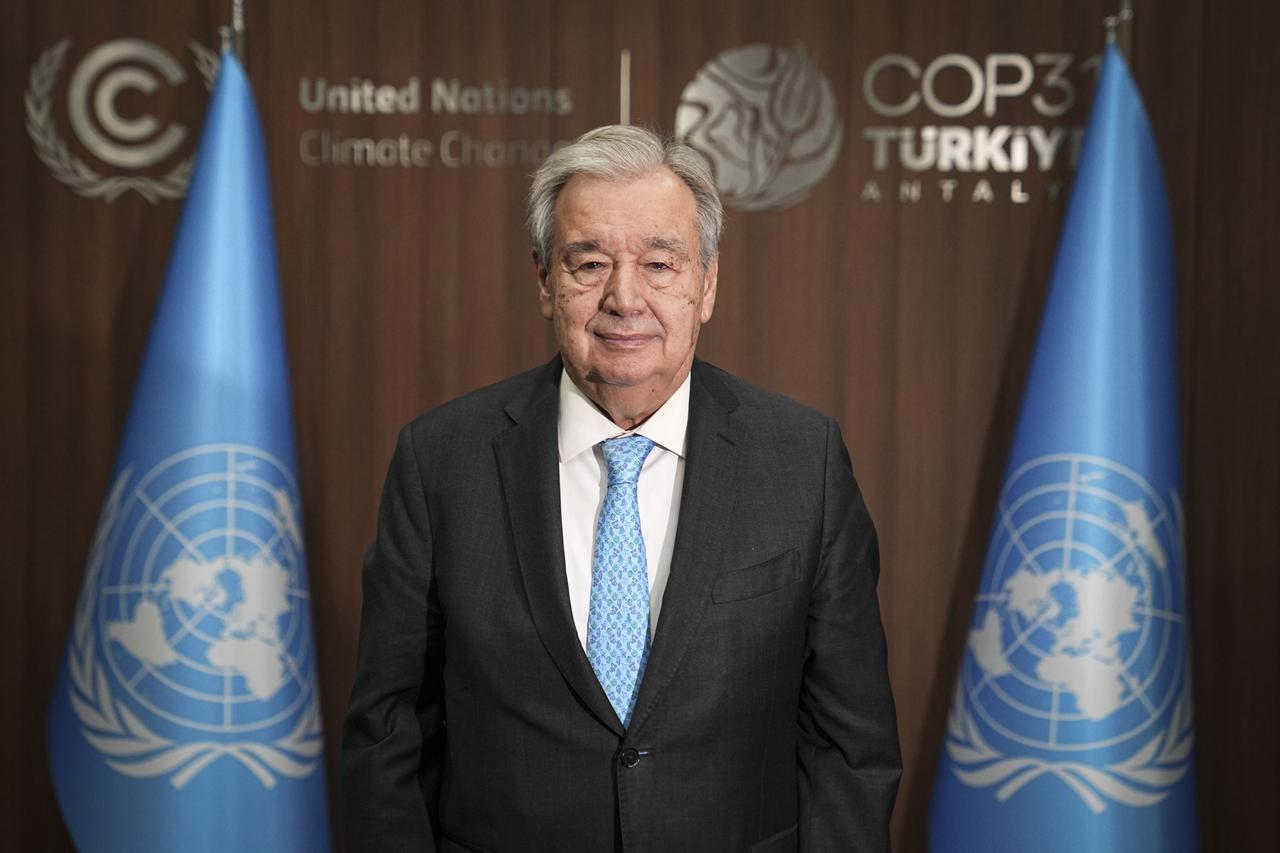
Guterres urged countries to build national roadmaps away from fossil fuels, saying the world must move from “discussing the transition to organising it, financing it, and delivering it.” Brazil’s COP30 presidency presented a roadmap toolkit.
The Powering Past Coal Alliance launched partnerships aiming to unlock more than $23 billion for coal phase-out plans in developing countries. Australia led a rooftop solar declaration seeking 300 million solar households by 2030, and a coalition set a goal for electricity to supply 20% of shipping’s energy by 2035.
The Global Carbon Project projected fossil carbon dioxide emissions would fall 0.4% this year to 38.2 billion tonnes, with a range that includes a small increase.
In the formal talks, delegations began discussing agenda items while the presidency consulted on a possible overarching decision. None of the pledges is a negotiated outcome.
The conference has more than 68,500 registered participants, plus about 24,500 workers, at a venue roughly 25 kilometers from central Antalya.
A second morning of crowded buses and trams forced some events to be rescheduled, and the presidency warned of “severe disruptions” on Wednesday, advising arrivals by 7 a.m.
Forty-two leaders are due to speak Wednesday afternoon, including Lula, European Commission President Ursula von der Leyen and China’s Vice President Han Zheng. More speak Thursday. Talks continue through November 20.


 Set as preferred source
 Set as preferred source


 1 min read
 1 min read


