Newsletters


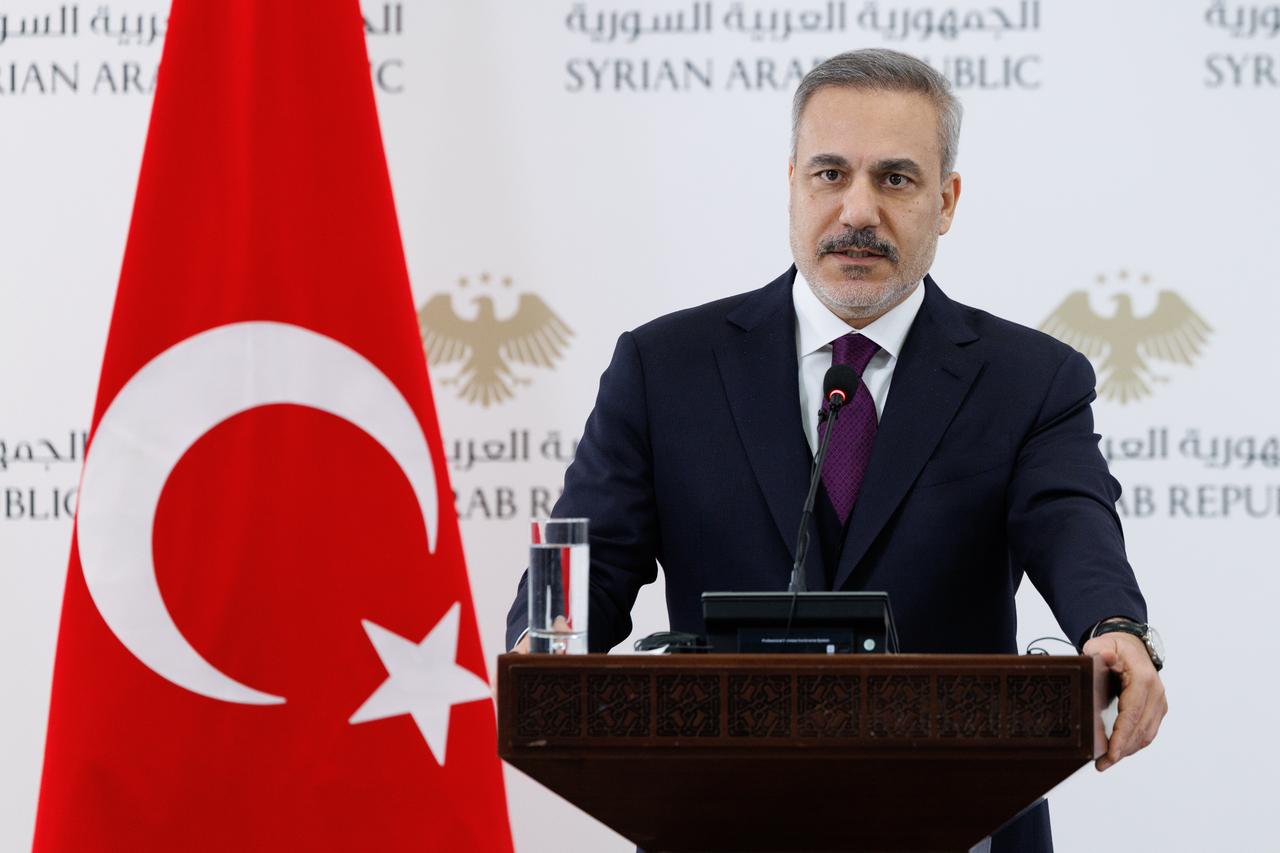


Turkish Foreign Minister Hakan Fidan held separate phone calls Friday with his Saudi and United Arab Emirates counterparts to discuss the latest developments in Yemen, Turkish diplomatic sources said.
Fidan spoke with Saudi Foreign Minister Prince Faisal bin Farhan Al Saud and UAE Foreign Minister Sheikh Abdullah bin Zayed Al Nahyan, the sources said, without providing further details.
The talks came as tensions escalate in Yemen following what officials described as an unprecedented security deterioration. In early December, forces loyal to the Southern Transitional Council (STC) seized control of the provinces of Hadhramaut and Al-Mahra. The two regions account for nearly half of Yemen’s territory and share borders with Saudi Arabia.
Earlier this week, Saudi Arabia accused the UAE of “pushing STC forces to carry out military operations” along the kingdom’s southern border in Hadhramaut and Al-Mahra. Abu Dhabi rejected the accusation.
The STC says successive Yemeni governments have politically and economically marginalized southern regions and has long called for secession. Yemeni authorities reject the claim and reaffirm their commitment to the country’s unity.
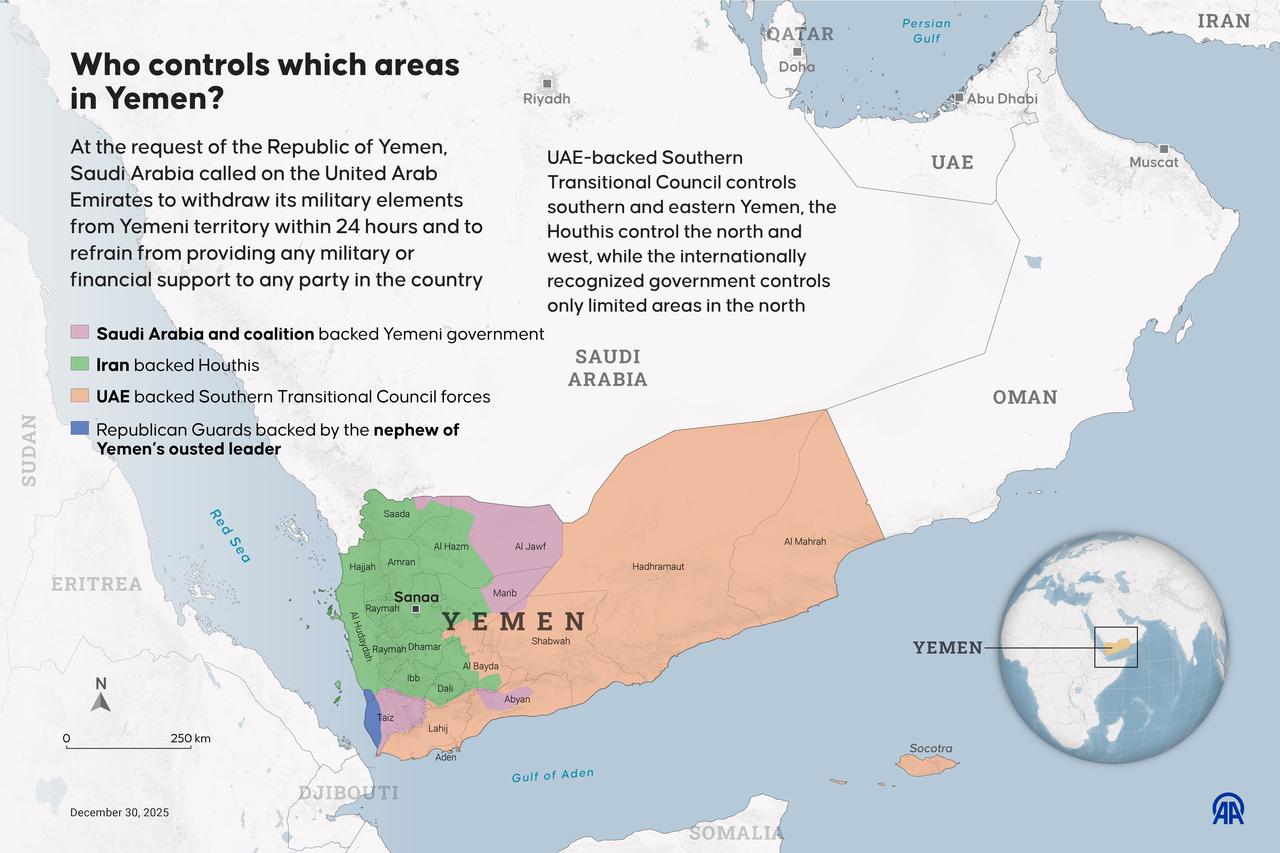

Meanwhile, Yemen’s UAE-backed separatists on Friday announced the start of a two-year transitional period toward declaring an independent southern state, after their forces seized large parts of southern Yemen.
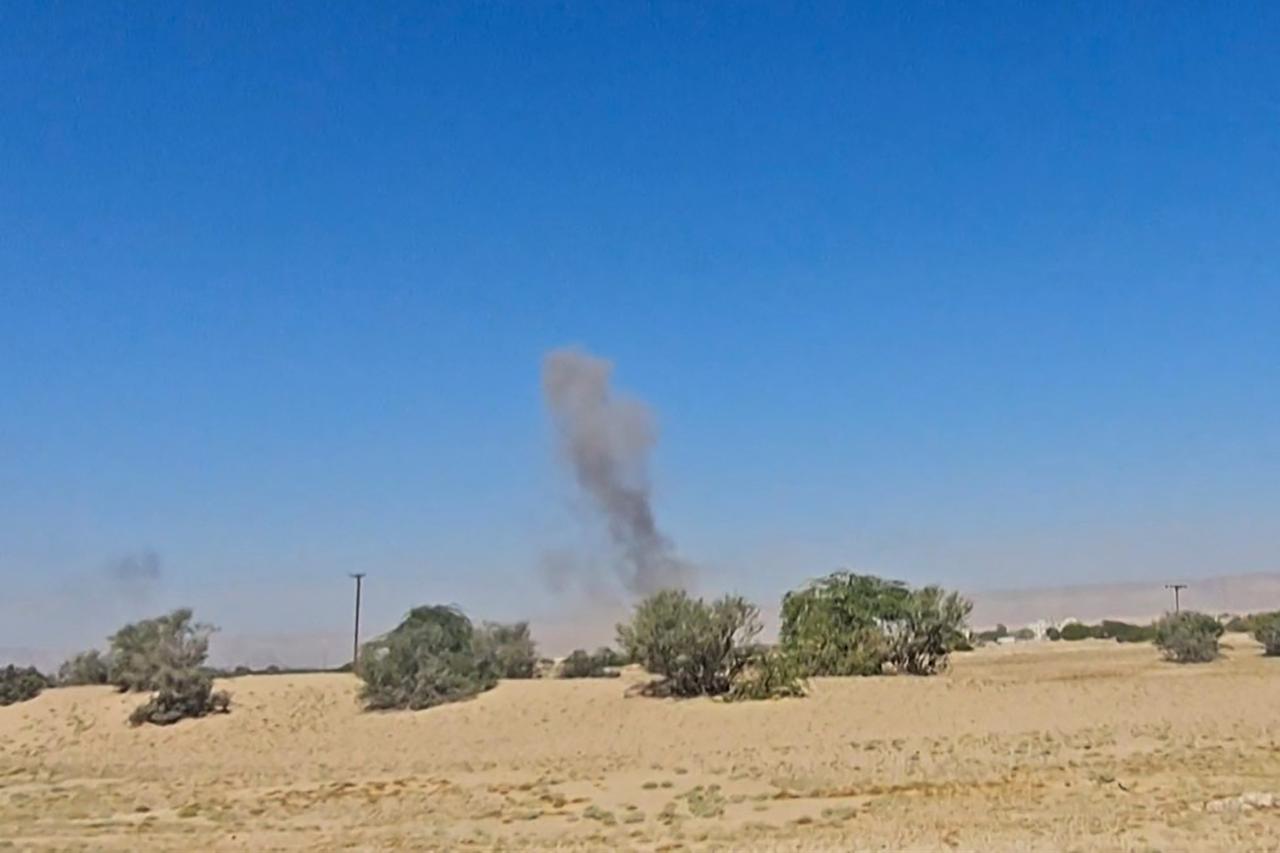
The Southern Transitional Council, whose forces were targeted by Saudi-led coalition airstrikes on Friday, said the process would include dialogue and a referendum on independence.
“We announce the commencement of a transitional phase lasting two years, and the Council calls on the international community to sponsor dialogue between the concerned parties in the South and the North,” STC President Aidarus Alzubidi said in a televised address.
He warned, however, that the group would declare independence immediately if dialogue does not take place or if southern Yemen comes under renewed attack.
 1 min read
“This constitutional declaration shall be considered immediately and directly effective before that date if the call is not heeded or if the people of the South, their land, or their forces are subjected to any military attacks,” Alzubidi said.
STC forces last month seized large swathes of southern Yemen in what observers described as a rapid and largely unopposed advance, amid deep divisions within the internationally recognized government.
Iran-backed Houthi rebels forced the Yemeni government out of the country’s north in 2014, triggering a Saudi-led military intervention that has failed to restore government control and has fueled a prolonged conflict.


 Set as preferred source
 Set as preferred source



 1 min read