Newsletters


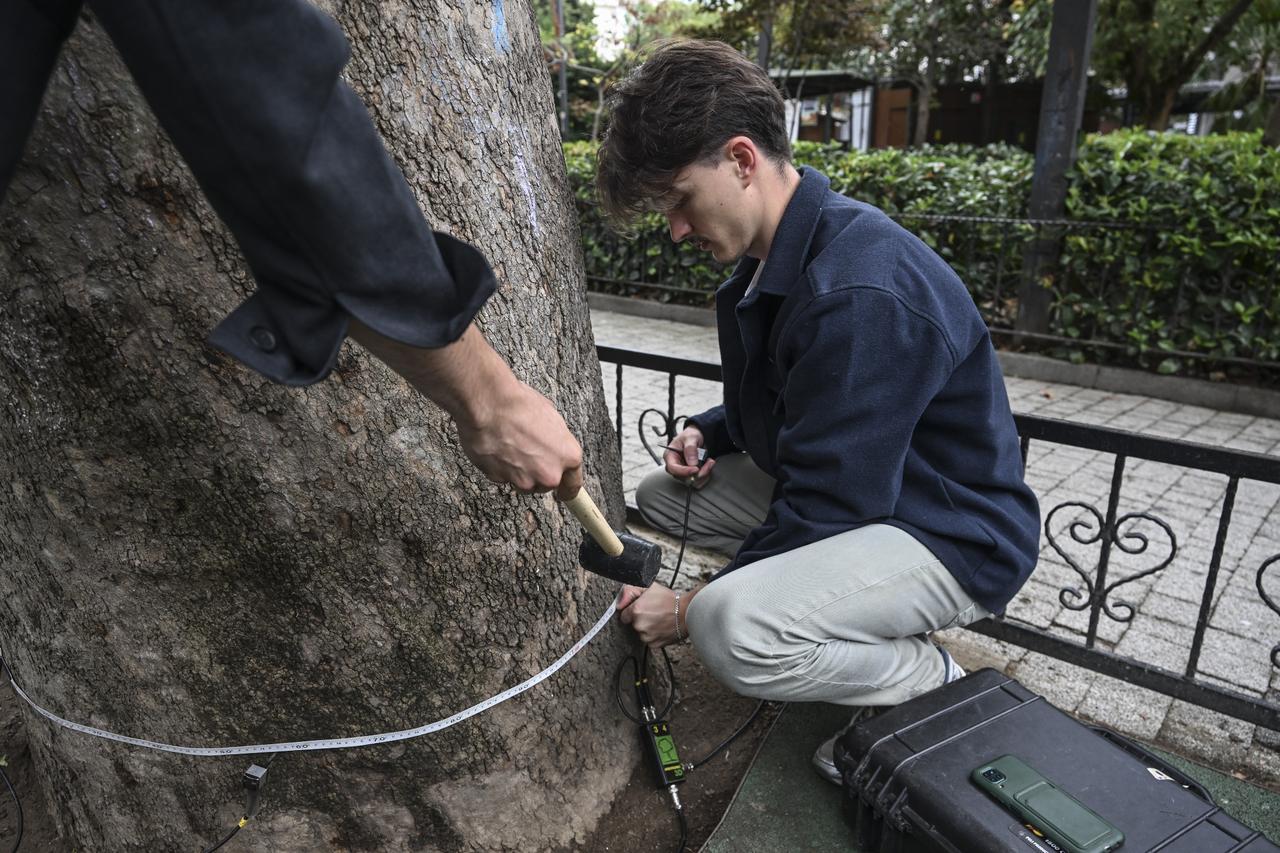


Researchers in Sisli, a central district on Istanbul's European side, are using sound waves to detect decay hidden inside century-old trees. The aim is to calculate each tree's risk of falling and keep as many as possible standing.
The project is run by the Sisli Municipality Parks and Gardens Directorate and the Faculty of Forestry at Istanbul University-Cerrahpasa.
About 200 large, old trees have been identified in the first phase, in parks, along busy streets and in compounds such as Darulaceze, an institution with a history of over 130 years.
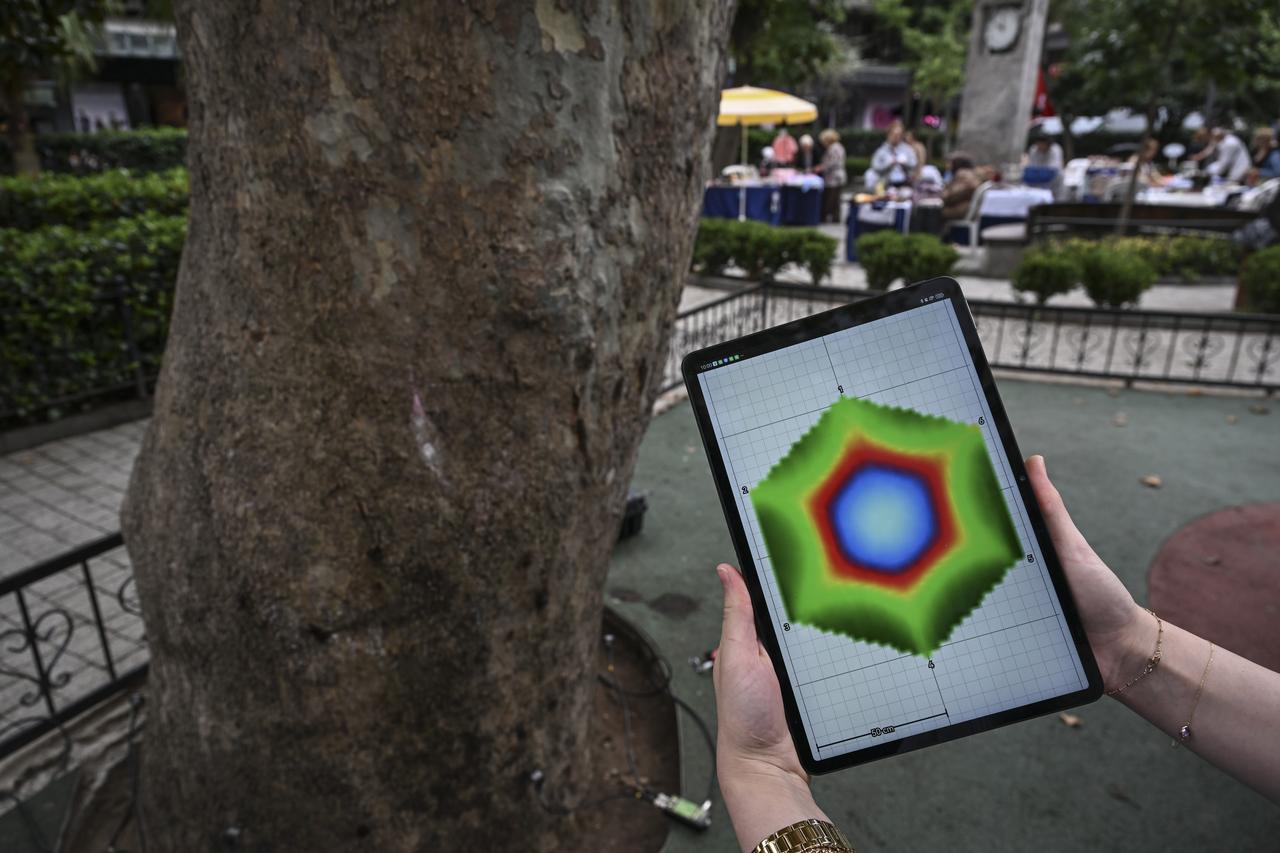

Teams first measure each tree's height, trunk structure, crown diameter, lean, and branching points. Sensors are then placed at intervals around the trunk, and sound waves are sent through it. Sound travels normally through living tissue but has to go around rotten or hollow areas, so measuring its speed shows where decay sits.
If decay appears, measurements are repeated at higher points on the trunk, giving a three-dimensional picture of where it starts and how far it extends. Doc. Dr. Serhun Saglam of the faculty said the method does not harm the tree.
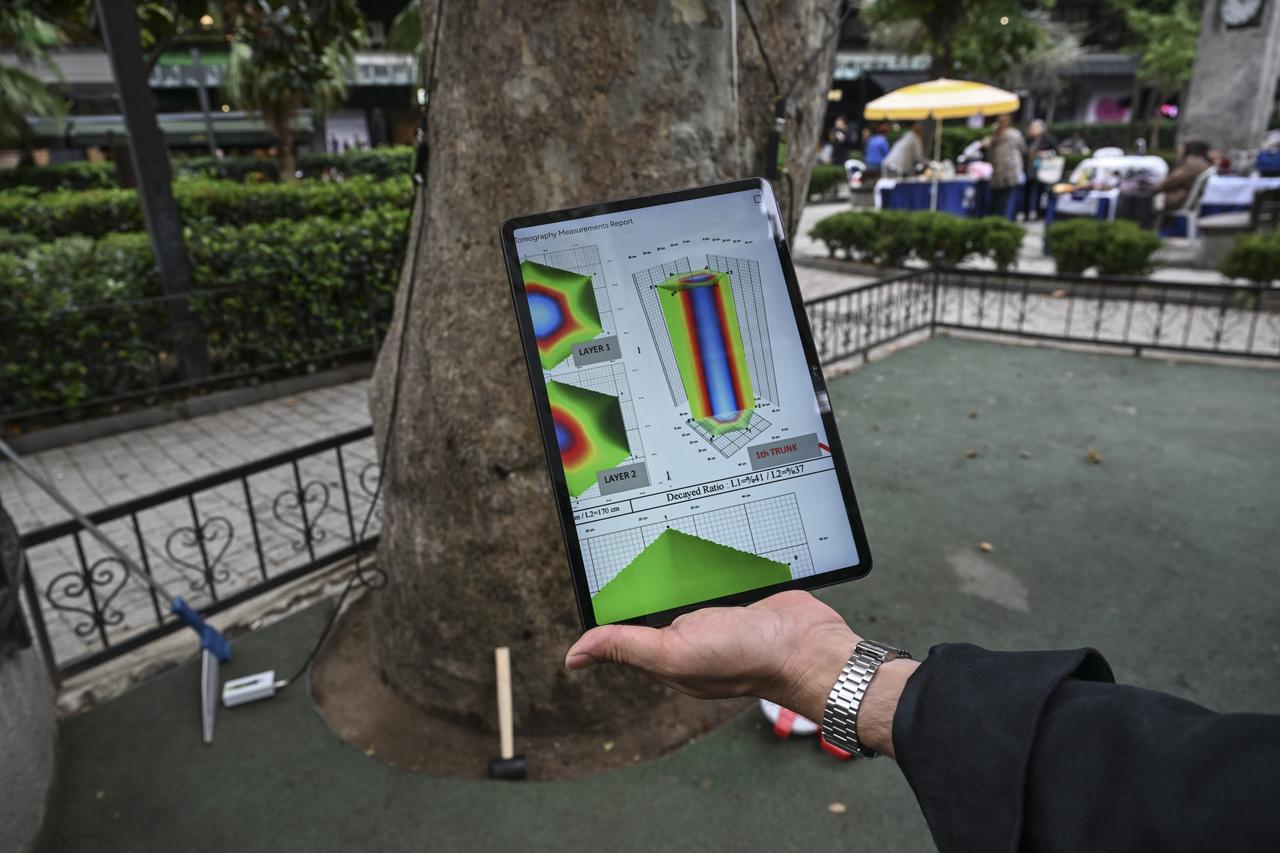
Rot inside a trunk is not enough to justify cutting a tree. Tomography results are combined with height, lean, branching and wind exposure, including the strongest winds recorded in the area, to sort trees into risk levels. Trees in the high and extreme groups receive interventions.
These include pruning to reduce crown load, cleaning visible cavities and installing mechanical supports where conditions allow. Felling is a last resort for trees that cannot be saved safely, and a new tree is then planted.
"If we see that a tree can live safely for another 10 or 20 years, we make sure to keep it in place," Saglam told Anadolu Agency (AA).
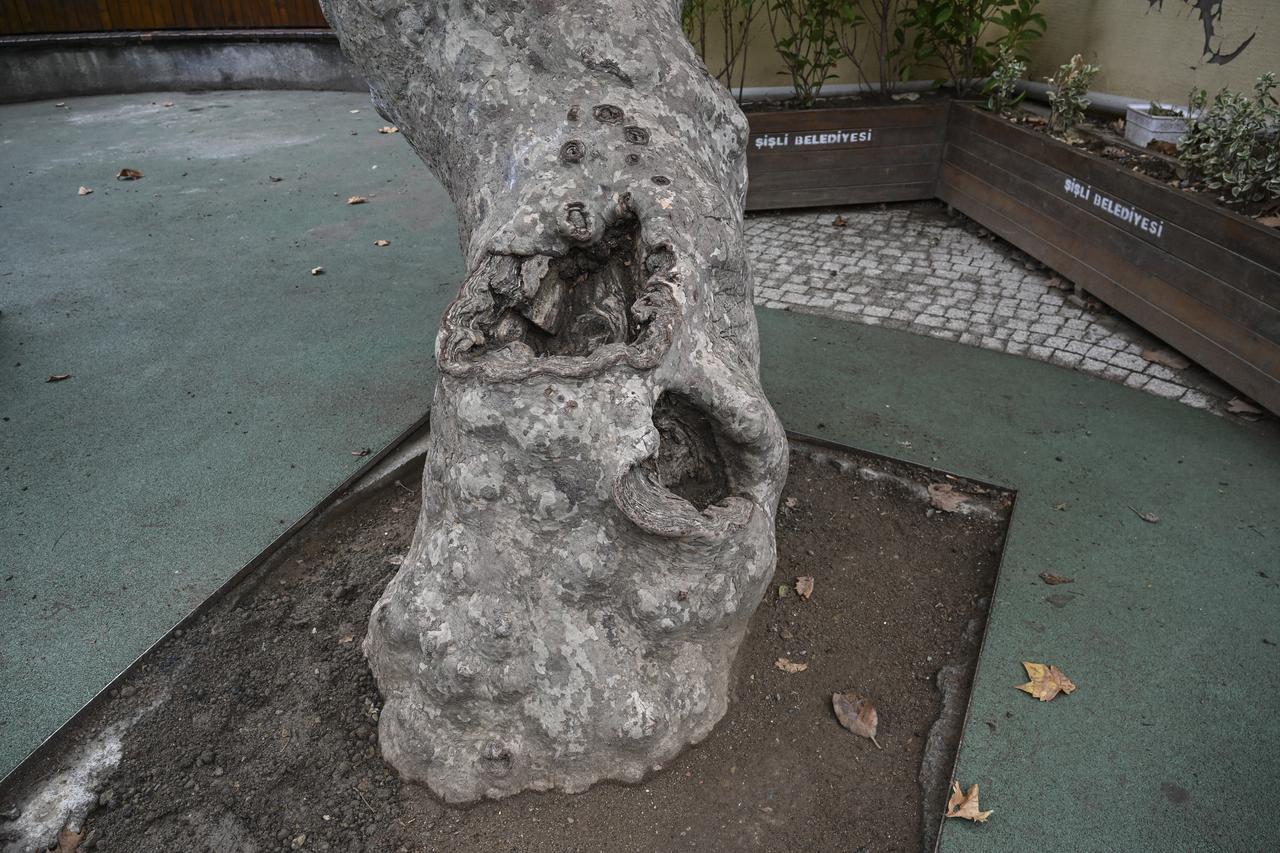
The work follows the fall of a large plane tree in Tesvikiye, a neighborhood in Sisli, last month. The tree looked healthy from outside, but decay running from its roots into the trunk was found after it fell.
"It looked quite healthy from the outside, but when it fell, it turned out there was serious decay extending from the roots up the trunk," Saglam said.
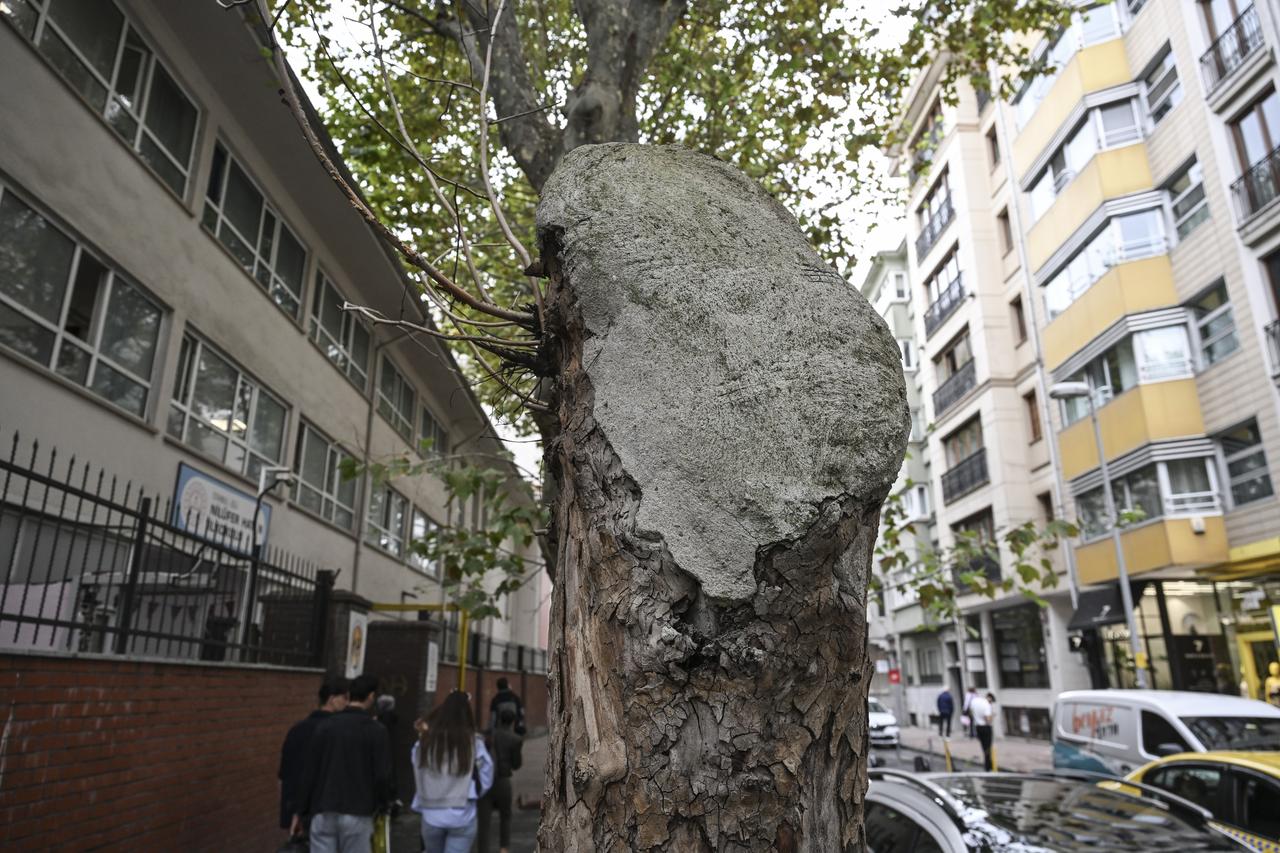
Saglam said Sisli holds many big old trees, mainly plane trees. Many are over 100 years old, and some have reached 130 to 150. Part of them are already registered as monument trees. Medium-sized trees may be added later if needed.
Residents of Darulaceze live under the compound's old trees around the clock, and all of them will be examined with the same method. Saglam called for education and awareness work to stop damage to trees, such as carving writing into trunks.


 Set as preferred source
 Set as preferred source



 3 min read