

 Newsletters


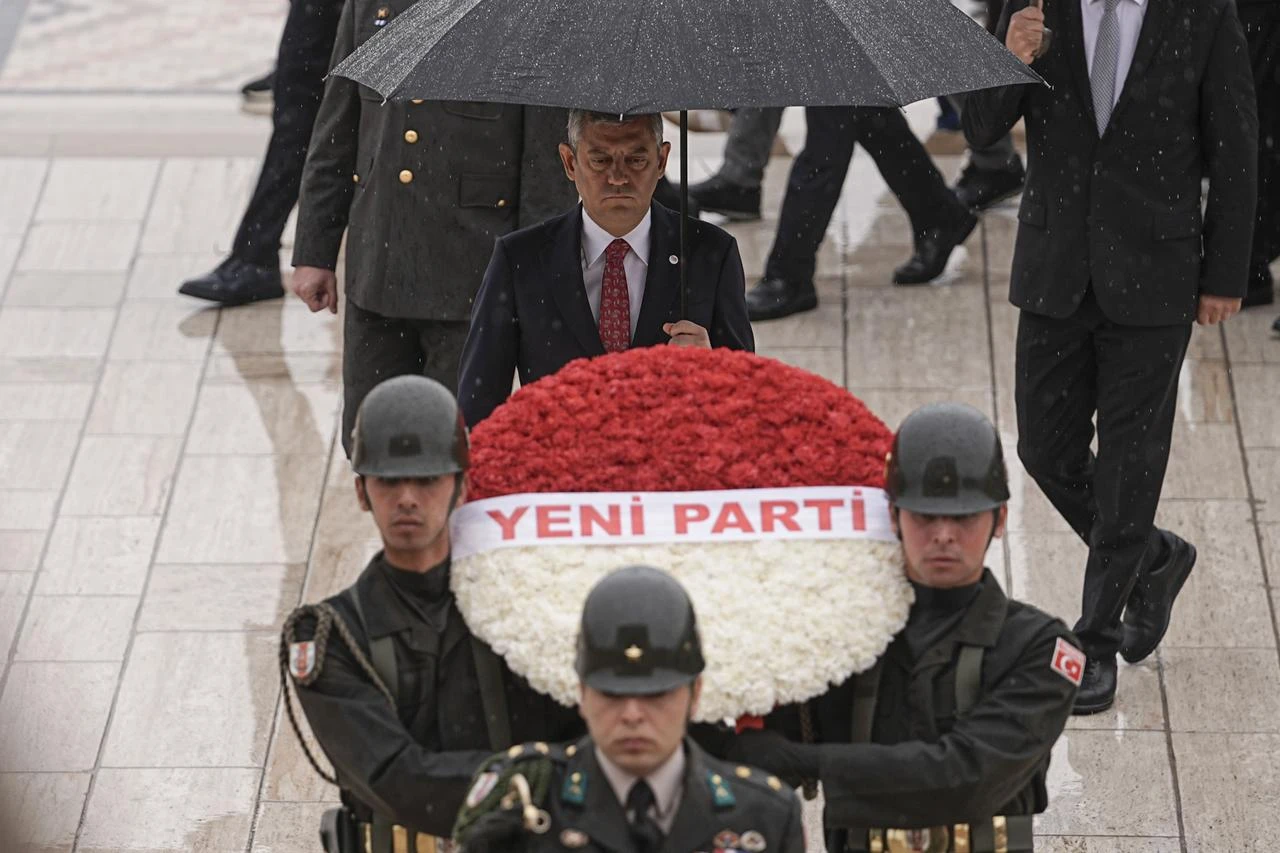


Turkish politician Ozgur Ozel formed a 91-seat bloc, pushing Türkiye’s founding party into fifth place and forcing Parliament to reorganize around a new opposition order.
Türkiye’s main opposition changed hands Friday, July 24, without voters casting a ballot.
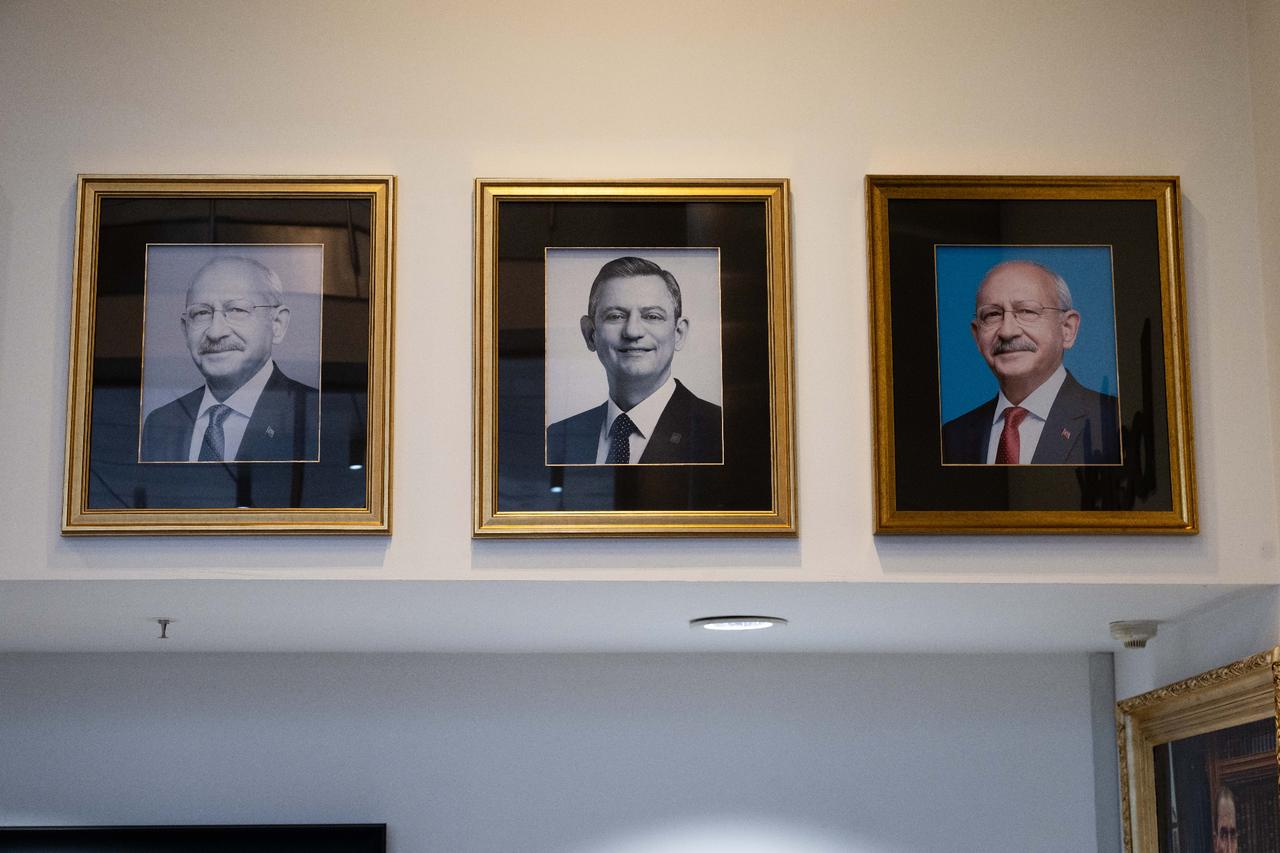
Ozel, the court-ousted chairperson of the Republican People’s Party (CHP), resigned from the century-old party alongside 90 other lawmakers and established Yeni Parti (New Party).
Within hours, the new organization had become Parliament’s second-largest force, while the CHP, the party founded by Mustafa Kemal Ataturk, lost the main opposition position it had held for decades.
The shift was immediate and unusually sweeping. The ruling Justice and Development Party (AK Party) remains the largest party with 277 lawmakers, but the New Party now follows with 91.
The pro-Kurdish Peoples’ Equality and Democracy Party (DEM Party) has 56 seats, the Nationalist Movement Party (MHP) has 46, and the CHP has fallen from 135 to 44, placing it fifth overall.
Parliament currently has 592 serving members in a chamber designed for 600.
The New Party therefore begins its life not as a minor breakaway seeking visibility, but as the institutional center of Türkiye’s parliamentary opposition. Its larger challenge will be proving that the lawmakers who followed Ozel are accompanied by the voters, local organizations and municipal networks that made the CHP the country’s leading opposition force.
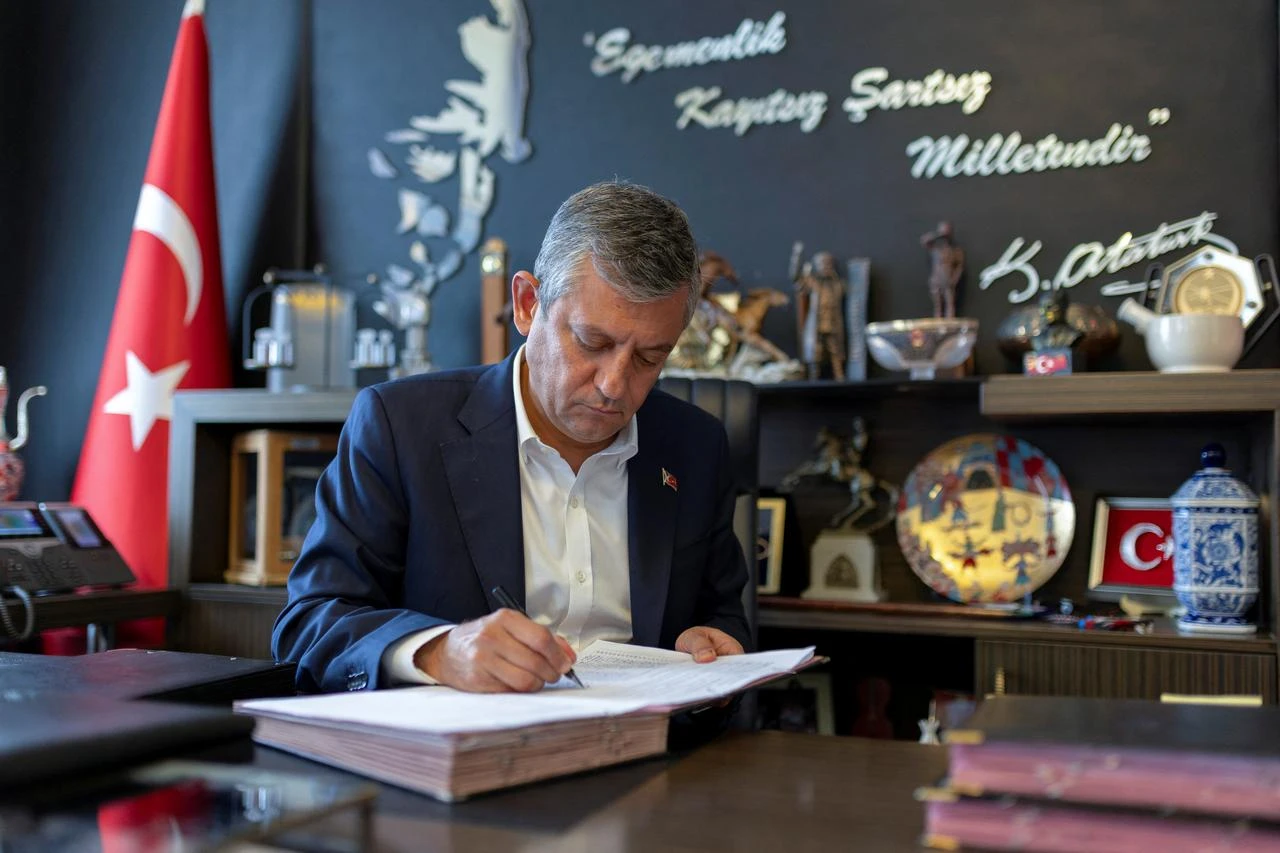

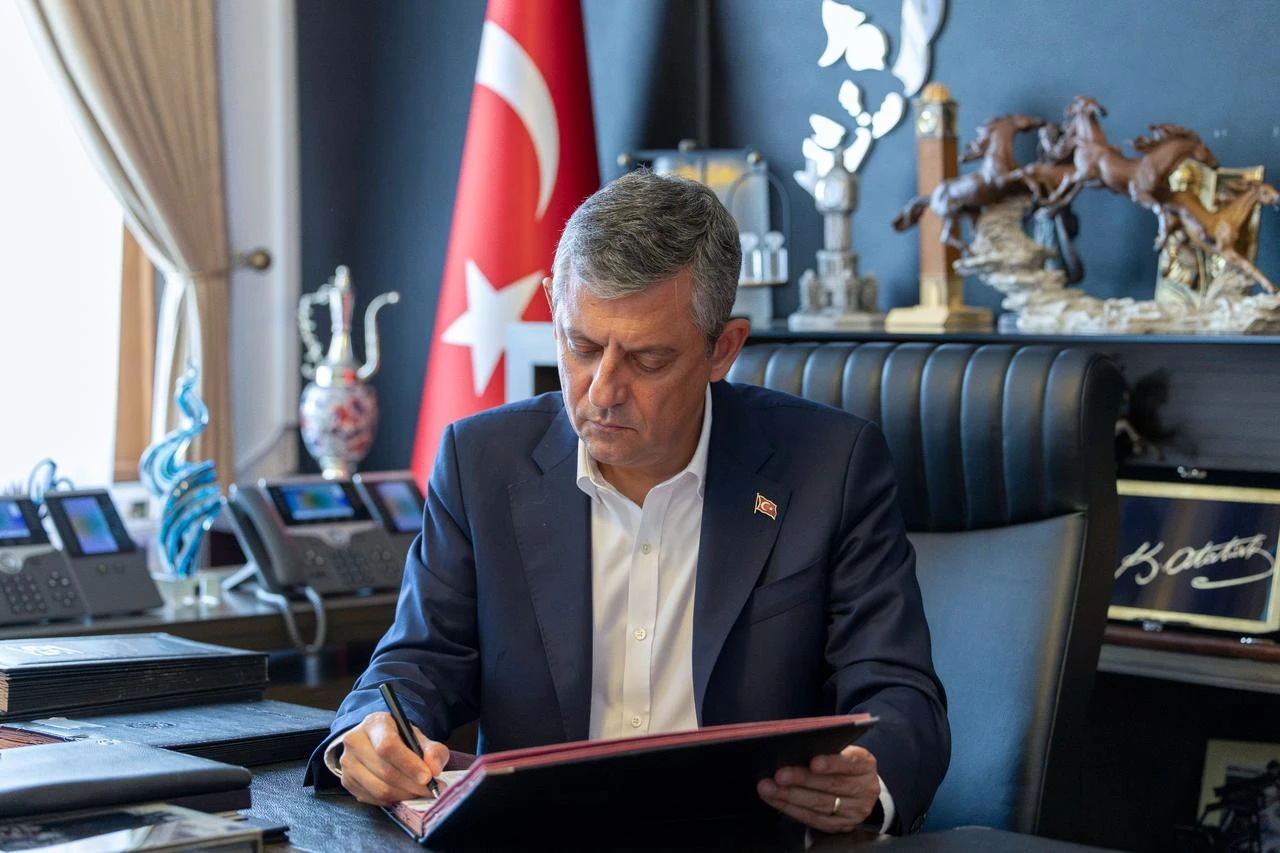
Ozel signed both his CHP resignation and the New Party’s founding documents in a video released Friday.
“May it be auspicious for our homeland, our nation and our party,” he said after signing the papers.
The founding documents were delivered to the Interior Ministry, giving the party legal personality, and the office of the Chief Prosecutor of the Supreme Court of Appeals later added it to Türkiye’s registry of active political parties with a founding date of July 24, 2026.
The party’s Founders’ Council consists of Ozel and the 90 other lawmakers who left the CHP. The council later unanimously elected Ozel as chairman. Ali Mahir Basarir, Murat Emir and Gokhan Gunaydin were selected as the party’s parliamentary group deputy chairs.
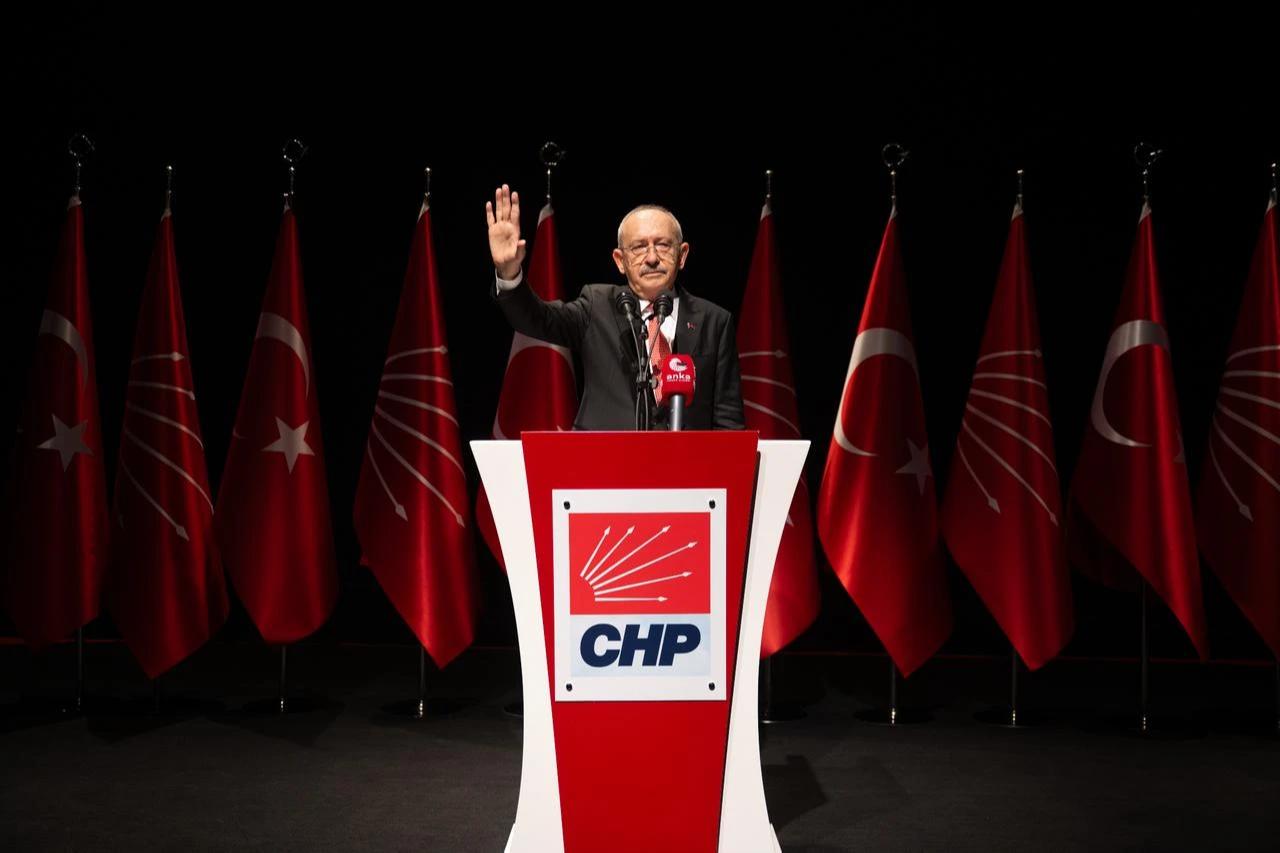
The launch completed a break that had been building since May, when a court removed Ozel from the CHP leadership and returned his predecessor, Kemal Kilicdaroglu, to the post.
Ozel had led the CHP since November 2023, when he defeated Kilicdaroglu at a party congress and ended his predecessor’s 13-year chairmanship.
An Ankara appeals court annulled that congress on May 21 over alleged procedural irregularities and vote-buying claims. The ruling removed Ozel and the party bodies elected during his leadership and temporarily reinstated Kilicdaroglu and the pre-2023 administration. Ozel appealed, but the dispute remains unresolved before the Court of Cassation.
Ozel’s supporters described the court intervention as politically motivated and part of wider legal pressure on the opposition. The government rejects such accusations and says the judiciary operates independently.
For weeks, Ozel sought a new CHP congress that could return the leadership question to party delegates. When that effort failed, and the appeals process remained unfinished, he decided to establish a separate party rather than continue operating inside a CHP controlled by Kilicdaroglu’s court-restored administration.
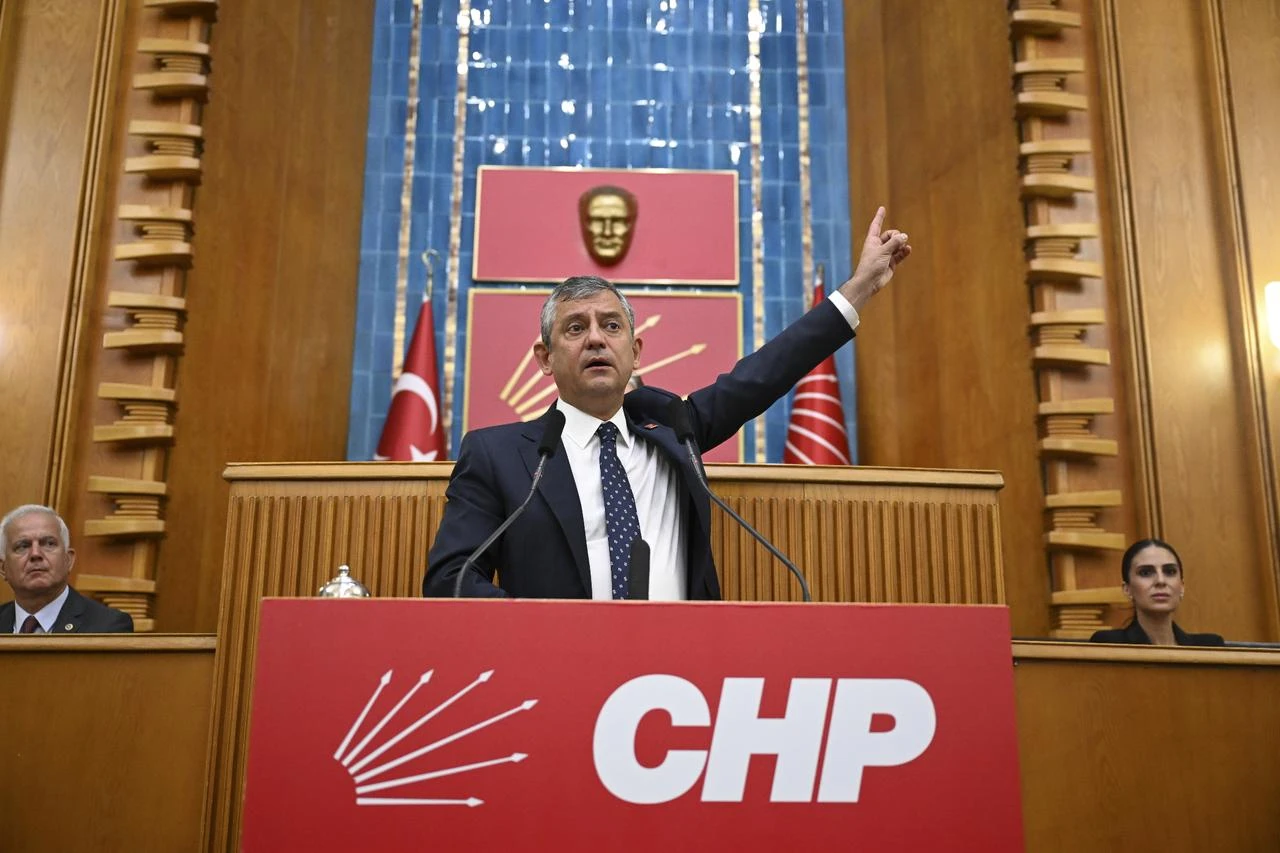
In his final speech to CHP lawmakers, Ozel said Türkiye was at a “historic crossroads.” He used the Turkish expression “putting on a shirt of fire,” which describes accepting a dangerous and painful responsibility.
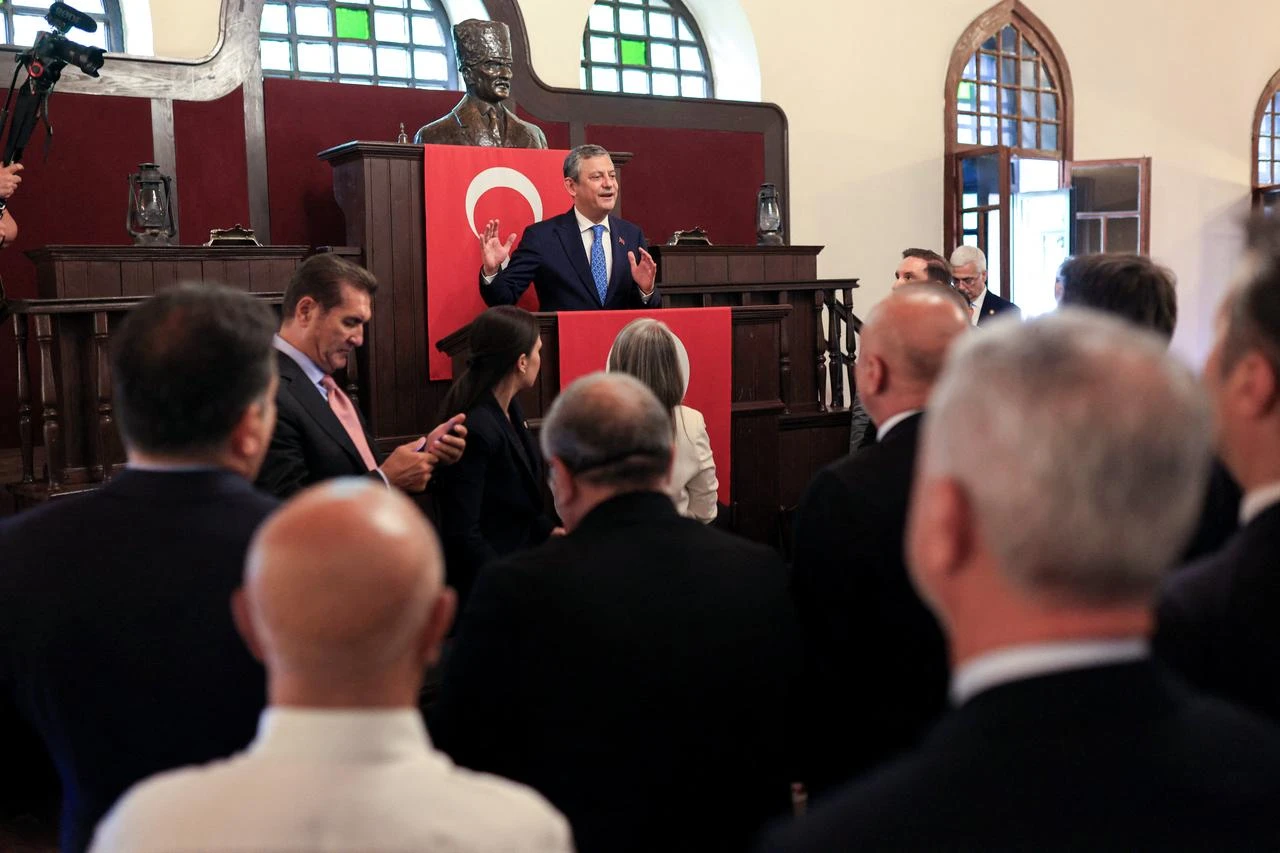
The title carries institutional power as well as political visibility.
Türkiye’s parliamentary rules require political party groups to participate in legislative bodies broadly in proportion to their strength. When a new group is created or the distribution changes significantly, commission and governing-bureau positions are recalculated.
The New Party will therefore receive more commission seats, speaking opportunities and administrative resources than the CHP’s remaining 44-member group.
As one of the two groups with the most lawmakers, the New Party will also be among those authorized to bring direct annulment challenges against laws before the Constitutional Court.
That gives a party founded only days ago immediate influence over both daily parliamentary procedure and constitutional litigation.
The CHP retains its legal identity, its century-old name and its nationwide organizational structure. It also continues to control a network of municipalities and has 44 lawmakers, more than twice the number needed to maintain a parliamentary group.
But the remaining bloc is not necessarily a unified Kilicdaroglu camp. Some of the lawmakers who stayed are critical of Kilicdaroglu or remain politically aligned with Ozel, while others may be waiting for the appeal process to conclude.
The result is an unusual division of political assets.
Ozel controls most of the parliamentary representation that belonged to the CHP only days ago. Kilicdaroglu controls the established party organization and the legal entity carrying the CHP name.
The next phase will therefore be fought outside the parliamentary chamber: over provincial and district organizations, registered members, mayors, municipal councils and the loyalties of voters who supported the CHP in the 2024 local elections.
Becoming the main opposition through parliamentary arithmetic explains where the New Party now stands. It does not explain what the party says it represents or what, beyond its name and organization, is actually new.
The founding documents suggest that Ozel is not attempting to build a movement on an ideological rejection of CHP. Instead, the New Party claims that it can renew and more effectively represent the political tradition from which it emerged.
The party program calls for replacing Türkiye’s executive presidential model with a parliamentary system based on separation of powers.
It proposes strengthening Parliament’s legislative and oversight powers, making the government accountable to lawmakers and redefining the presidency as an impartial, unifying and largely symbolic institution.
That would reverse the system introduced after the 2017 constitutional referendum and fully implemented following the 2018 elections, when the office of prime minister was abolished, and executive authority was concentrated in the presidency.
Economically, the program combines private enterprise with strong state planning and intervention.
The party also promises to protect the Central Bank’s independence in choosing its policy tools, gradually reduce indirect taxes and redesign the tax system around fairness. It says public-private partnership models that impose losses on the public should be abandoned, while state guarantees for bridges, highways and other infrastructure projects should be subjected to greater transparency and public-interest tests.
The program proposes accelerating Türkiye’s European Union (EU) membership process, updating the EU-Türkiye Customs Union and increasing the country’s influence within the Council of Europe, the Organization for Security and Cooperation in Europe (OSCE) and the North Atlantic Treaty Organization (NATO).
At the same time, it calls for balanced relations with Russia, China and other states and a larger role for Türkiye in multilateral organizations.
Not automatically.
Its 91 lawmakers give it a powerful parliamentary group but do not, on their own, make it eligible to appear on a national ballot. A 2022 amendment removed the rule that allowed a party to qualify for elections merely by establishing a parliamentary group.
The New Party must organize in at least half of Türkiye’s 81 provinces, meaning at least 41, and hold its first grand congress at least six months before election day. Organizing in a province also requires establishing party structures in at least one-third of its districts.
The party therefore begins with national visibility but without the local infrastructure required for an election campaign. It must now build provincial and district organizations, recruit members, hold congresses and establish independent finances.
Because it has not yet competed in an election, it also does not begin with the regular Treasury funding available to parties that meet electoral support requirements.
 1 min read
The more difficult contest has only begun.
The CHP retains one of the most recognizable political brands in Türkiye, an organization extending across the country and a history inseparable from the republic’s foundation. The New Party has Ozel, most of the former CHP parliamentary group and a leadership team associated with the party’s 2024 local election success.
Meanwhile, for the governing alliance, the AK Party and MHP, the consequences remain uncertain.
A prolonged fight between the CHP and the New Party could divide opposition voters, money and municipal networks. A rapid transfer of the CHP’s local organizations and electorate to Ozel, however, would amount less to fragmentation than to a change in the name and institutional home of the main opposition.
Friday’s resignations answered who leads the opposition in parliament.
They did not yet answer who leads it among Türkiye’s voters.


 Set as preferred source
 Set as preferred source


 1 min read


