Newsletters


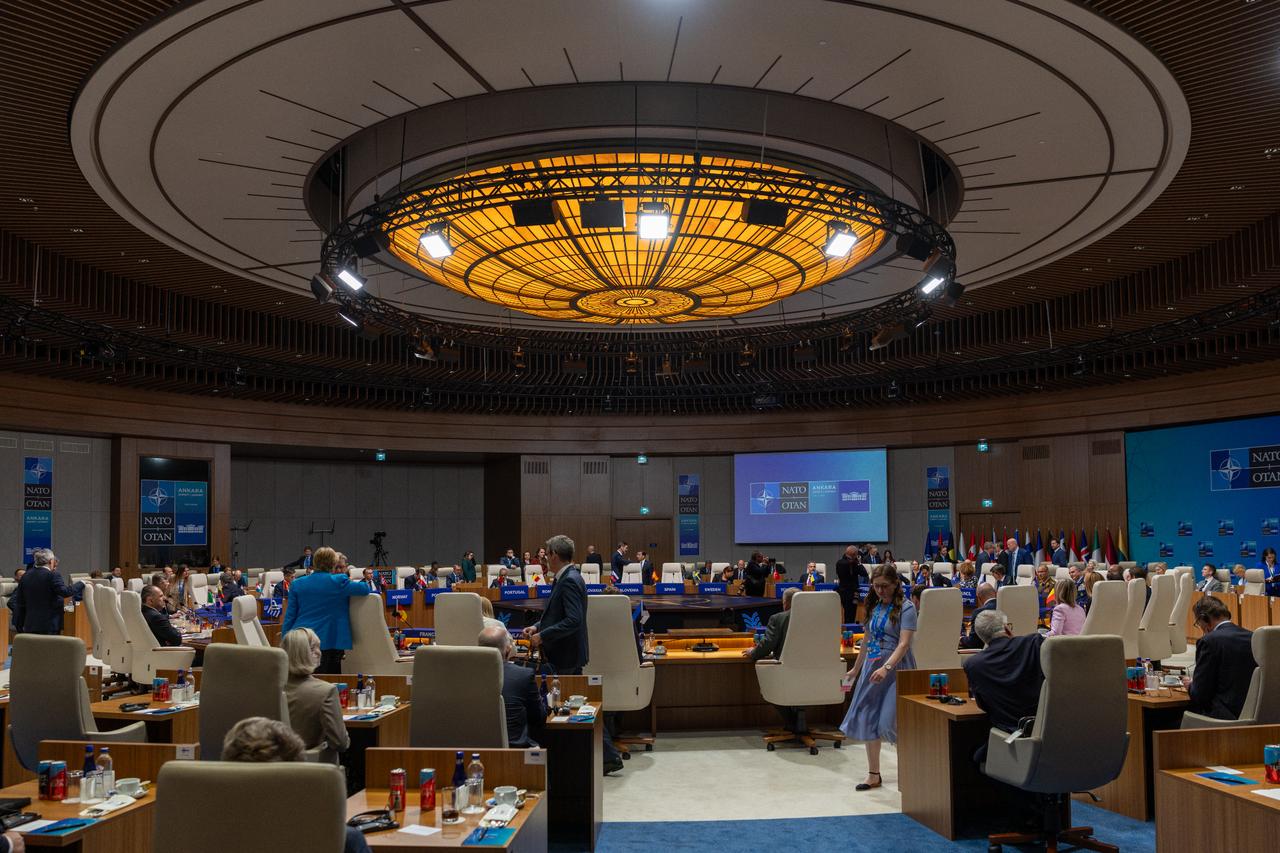


Türkiye's 2026 NATO summit brought diplomacy not only into meeting rooms but also to the dinner table, as the official menu served to leaders was framed as a message of cultural identity, hospitality and soft power.
Türkiye hosted the NATO Heads of State and Government Summit on July 7-8, 2026, 22 years after its previous turn as host. While the summit was followed for its political agenda, the official dinner also drew attention because it brought together flavors from different parts of Anatolia.
Professor Muge Arslan, head of the Nutrition and Dietetics Department at Uskudar University, said the menu should not be seen simply as a list of dishes. According to Arslan, it was also a strategic tool reflecting the host country's culture, values and respect for its guests.
Arslan said "table diplomacy," a term used for the role of shared meals in international relations, has become one of diplomacy's quiet but powerful tools. She noted that diplomacy is not always carried out only in official meeting halls, since informal meals can also help build up trust and shared understanding.
She pointed to the Camp David talks in September 1978, when Jimmy Carter, Anwar Sadat and Menahem Begin spent 13 days together in the United States, sharing meals and informal conversations before the agreements were signed. She also referred to the 2019 G20 Osaka Summit, where working meals helped create a space for contact between Donald Trump and Xi Jinping during tensions over the U.S.-China trade dispute.
According to Arslan, diplomatic menus are not built on random choices. In table diplomacy, choosing what to serve is not only about food but also about showing cultural identity, respect for guests and the image a country wants to put forward.
She said a carefully prepared menu can leave a lasting impression because each item on the table represents the host country's cultural memory, values and sense of hospitality. "Sometimes diplomacy comes to life in a sentence, and sometimes in the shared experience created by sitting at the same table," she said.
The NATO summit menu brought together dishes and products from across Türkiye, creating what Arslan described as a gastronomic map of the country. The menu included stone-oven pide, Kayseri manti, sea bass or beef ribs, Sutlu Nuriye, Maras ice cream, Trabzon butter, Hizan karakovan honey, Urla sakiz artichoke, Tokat grape leaves and firik pilaf.
For Arslan, this selection did not represent a single region but brought together the Black Sea, Central Anatolia, the Aegean, southeastern Türkiye and eastern Anatolia on the same table. She said this helped underline Türkiye's cultural variety, local production and agricultural diversity.
Arslan also said the menu paired tradition with modern service. Traditional items such as Kayseri manti and Sutlu Nuriye were presented in a contemporary way, showing both the deep roots and the current face of Turkish cuisine.
The choice of both fish and red meat for the main course also carried a diplomatic meaning, she said, because it showed respect for different tastes and dietary preferences among the guests.
Arslan described the menu as part of "gastrodiplomacy," a form of public diplomacy that uses cuisine to communicate a country's culture and values. She said Türkiye had also organized gastrodiplomacy events before the summit to introduce Turkish cuisine as a tool of public diplomacy.
In her assessment, the NATO summit dinner was more than a formal reception. It was designed as a communication tool that presented Türkiye's cultural identity, regional diversity and hospitality to world leaders through the shared language of food.


 Set as preferred source
 Set as preferred source


 1 min read
 1 min read