Newsletters


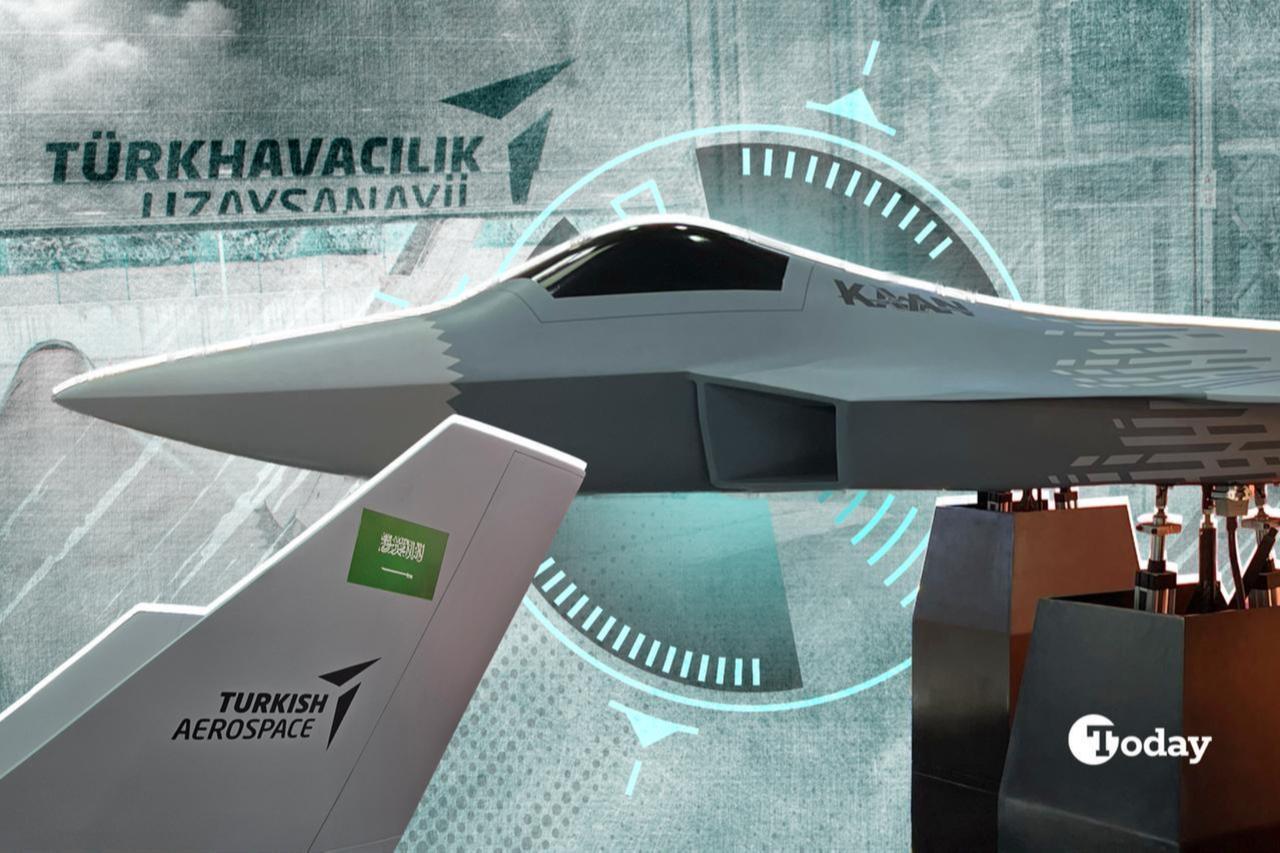


While reports of a finalized multibillion-dollar Pakistani acquisition remain unconfirmed, the depth of Turkish-Pakistani defense cooperation suggests that Türkiye’s KAAN stealth fighter jet is already part of Islamabad’s long-term strategic calculus.
Recently, Ankara signed a contract with the Turkish Aerospace Industries (TAI) for the delivery of 20 indigenous jets to the Turkish Air Force in 2028-2030 to replace the aging F-16 Fighting Falcon fleet in service. With domestically developed engines, this is seen as part of a broader push for aerospace self-sufficiency.
In this context, KAAN could prove to be an invaluable defense acquisition for Pakistan. However, whenever speculation arises regarding Islamabad acquiring this advanced fighter jet, a crucial detail is often overlooked: Pakistan has been intrinsically linked to the program since its very inception.
In 2010, when Ankara launched the TF-X program to build an indigenous next-gen fighter, plans for joint production were already there.
Joint collaborations have always been the rule in Pak-Turk defense ties. Over the years, the two nations have steadily expanded military cooperation across drones, naval platforms, electronics, training and aerospace research and have never looked back. Driven by shared experiences with Western arms restrictions and a mutual desire to boost technological self-reliance, the strategic partnership has consistently moved forward without hesitation.
While Türkiye’s expulsion from the F-35 program after purchasing the Russian S-400 missile system reinforced Ankara’s determination to pursue defense autonomy, Pakistan started to diversify away from reliance on Western suppliers after years of fluctuating American military engagement.
Following a similar pattern, Pakistan co-produced the JF-17 fighter jet with China, as well as drone tech like Akinci, Anka, and MILGEM corvettes with Türkiye. Though details remain classified, proposals for a KAAN production partnership were discussed during the 8th Pak-Turk Industrial Expo in Pakistan in 2025, an event attended by representatives from 32 Turkish and Pakistani institutions.
At that time, Turkish Defense Minister Yasar Guler, confirmed that an official agreement for Pakistan’s participation in the aircraft’s development and production had almost been reached.
Basically, with a joint factory in Pakistan, Ankara could increase production of the KAAN at a lower per-unit cost and expand its defense exports, while Islamabad would boost its aerial defense capabilities and advance its engineering skills.
The TAI established partnerships with Pakistani academic and research institutions years ago, including cooperation with the National University of Sciences and Technology (NUST) involving technology transfer and engineering collaboration linked to the TF-X (now KAAN) program.
Ahmet Khan, a Bursa-based defense and aerospace expert, told Türkiye Today that while there is no $15 billion deal between Pakistan and Türkiye, Islamabad remains a primary partner in the program.
Khan clarified that once the Kaan is equipped with its engines, Pakistan will procure the fighter jet at partner-state pricing. Furthermore, because the aircraft will feature near-local manufacturing, Islamabad will not face challenges regarding overhauling or spare parts.
According to Khan, it will be good for Pakistan to have the KAAN fighter jet to maintain dominance over India and in the Middle East.
"Deploying two stealth fighter aircraft would give Pakistan a decisive strategic advantage over India and Israel. However, utilizing homegrown Turkish TF-35000 engines is critical. Pakistan wants to avoid a repeat of the T129 ATAK helicopter project, where the U.S. blocked Türkiye’s export to Pakistan at the last minute because the engines were manufactured by America's Pratt & Whitney,” he said.
Noting that the Pakistan Air Force is using the Mirage planes, Khan said that by 2035-2040 Pakistan will retire those, as well as the F-16s and JF-17s. It will use the J-35, KAAN and PFX, the 5th generation of JF-17 instead. ”The stealth capabilities will be much better than F-22 or any other 5th generation plane, which will probably make KAAN the best. Many Islamic as well as NATO countries, like Spain and Italy, have already started negotiations for KAAN.”
Recalling how Indian jets were outmatched by Chinese aircraft during last year's conflict between Pakistan and India, Khan noted that China is seeing a surge in J-10C orders now that the fighter is combat-proven with six kills. Referencing the famous Top Gun line—"It’s not the plane, it’s the pilot"—Khan emphasized, "Our Pakistani brothers are the best pilots."
Agreeing with Khan that the relationship between Ankara and Islamabad is not a customer-supplier one, Haider Hussain, a defense industry consultant and founder of Islamabad-based defense analysis firm, told Türkiye Today that Pakistan is building KAAN alongside Türkiye, not waiting for delivery.
Stating that it is Pakistan’s most significant opportunity to break free from single-source dependency in fighter aviation, Hussain explained that Pakistan has operated a mixed fleet for decades—integrating Chinese, American, and French aircraft, each with its own supply chain, training pipeline, and political constraints.
“While the JF-17 solved our affordability problem and the J-10C closed the capability gap against India’s Rafales, both remain 4.5-generation platforms,” Hussain noted. “Stealth is the next frontier."
Adding the KAAN offers something neither China nor the West can provide: a 5th-gen platform with joint production rights and genuine technology transfer terms. According to Hussain, the real prize is industrial sovereignty. "Pakistan built JF-17s from kits, with KAAN, Pakistan builds the factory.”
Highlighting the advantages of the KAAN, Hussain said it brings internal weapon bays, advanced Active Electronically Scanned Array (AESA) radar, and low-observable design, something India’s own current air defense network is not configured to counter. Its own 5th-gen program AMCA is not expected before 2032-2033, leaving a decadelong gap.
Hussain believes the PAF would layer KAAN above its existing fleet—JF-17s for mass, J-10Cs for air superiority and KAAN for strategic strike and stealth. The joint production facility would reduce Pakistan’s dependence on China for aviation manufacturing. India can counter KAAN, but the cost of doing so would be disproportionate.
Observing that the Turk-Pak partnership has moved beyond interoperability into industrial integration, Hussain said the 20th Pakistan-Turkiye High Level Military Dialogue group was convened in Rawalpindi in early April this year.
Strengthening military autonomy and shared technological development, the KAAN joint project alone can change the balance of military power in the region.
And this is precisely why the Pakistan-Turkiye defense equation is increasingly viewed as one of the most comprehensive defense partnerships in the Muslim world, made possible due to shared history.
Since the beginning of the 20th century, Muslims in former British India held the Ottoman Empire in high regard, due to their cultural, linguistic and religious affinities with Turkiye. Ever since Pakistan’s independence in 1947, Islamabad and Ankara have remained politically and strategically aligned.
From 1964 to 1982, Iran, Turkiye and Pakistan promoted trade and connectivity under the Regional Cooperation for Development (RCD), an initiative later emulated by the Istanbul-Tehran-Islamabad (ITI) trade route in 2018.
Defense ties deepened in 1988, with the signing of the Turkish-Pakistani Protocol in Islamabad, after which Ankara began modernizing Pakistan’s tanks and supplying anti-aircraft ammunition.
Relations expanded further after General Pervez Musharraf came to power in 2001. Having spent part of his childhood in Turkiye, Musharraf actively pushed for closer strategic engagement, culminating in the first high-level military dialogue in 2003.
Defense cooperation remains the main focus of bilateral ties. Islamabad has acquired 30 T129 Atak helicopters and four MILGEM Ada Corvette warships from Ankara, while Turkish firms assist in the upkeep of Pakistan’s fleet of around 41 F-16 fighter jets.
Beyond defense, the partnership has now expanded into the energy sector, with Turkish companies involved in oil and gas exploration in Pakistan under bilateral agreements.
On an international level, Pakistan and Turkiye have consistently backed each other at the United Nations on issues such as Kashmir, Northern Cyprus and Azerbaijan’s Nagorno-Karabakh region.
Describing Turkish-Pakistani diplomatic unity, Ali Yavuz Selim, an international relations analyst, told Turkiye Today that the bond between Türkiye and Pakistan runs particularly deep, forged through decades of political and military cooperation.
“As Türkiye asserts itself on the world stage through its rapidly expanding defense industry, Pakistan has carved out its own influential role by leveraging its nuclear deterrent and principled neutral stance to amplify its voice in regional and global diplomacy,” he said.
In Selim’s opinion, though the ongoing Turkish-Pakistani diplomatic and military coordination during the latest Iran-related crisis has not delivered immediate peace, “the combined strength and strategic focus of Ankara and Islamabad could prove decisive in restoring balance.”
Through deepening military ties, Selim said, “Türkiye and Pakistan are actively sharing expertise, technology, and industrial capacity. Should they further align their defense cooperation and deploy it strategically, the two nations possess the potential to reshape the balance of power and exert meaningful influence across the Middle East.”


 Set as preferred source
 Set as preferred source


 6 min read