Newsletters




Two suspects arrested for working for the Israeli intelligence agency Mossad had been communicating since 2013 and transmitted information on Palestinian activists opposed to Israel's policies.
Digital evidence revealed messages linked to a 2016 assassination in Tunisia, according to prosecution documents obtained by state-run Anadolu Agency (AA).
Mehmet Budak, Derya, and Veysel Kerimoglu were arrested on late Monday, following a joint operation by the National Intelligence Organization (MIT), the Istanbul Chief Public Prosecutor's Office, and the Istanbul Police Department.
According to the prosecutor's referral document, Derya first made contact with Israeli intelligence on Sept. 20, 2012, when an Arab national using the code name "Ali Ahmed Yassin," presenting himself as a representative of an Austrian-based company, contacted him with a trade proposal.
Derya met Yassin at his office on Sept. 25, 2012. On Jan. 9, 2013, at Yassin's invitation, Derya traveled to Rome, Italy, where he met three Israeli intelligence operatives using the code names "Luis," "Jesus-Jose" and "Dr. Roberto-Ricardo" to discuss commercial matters.
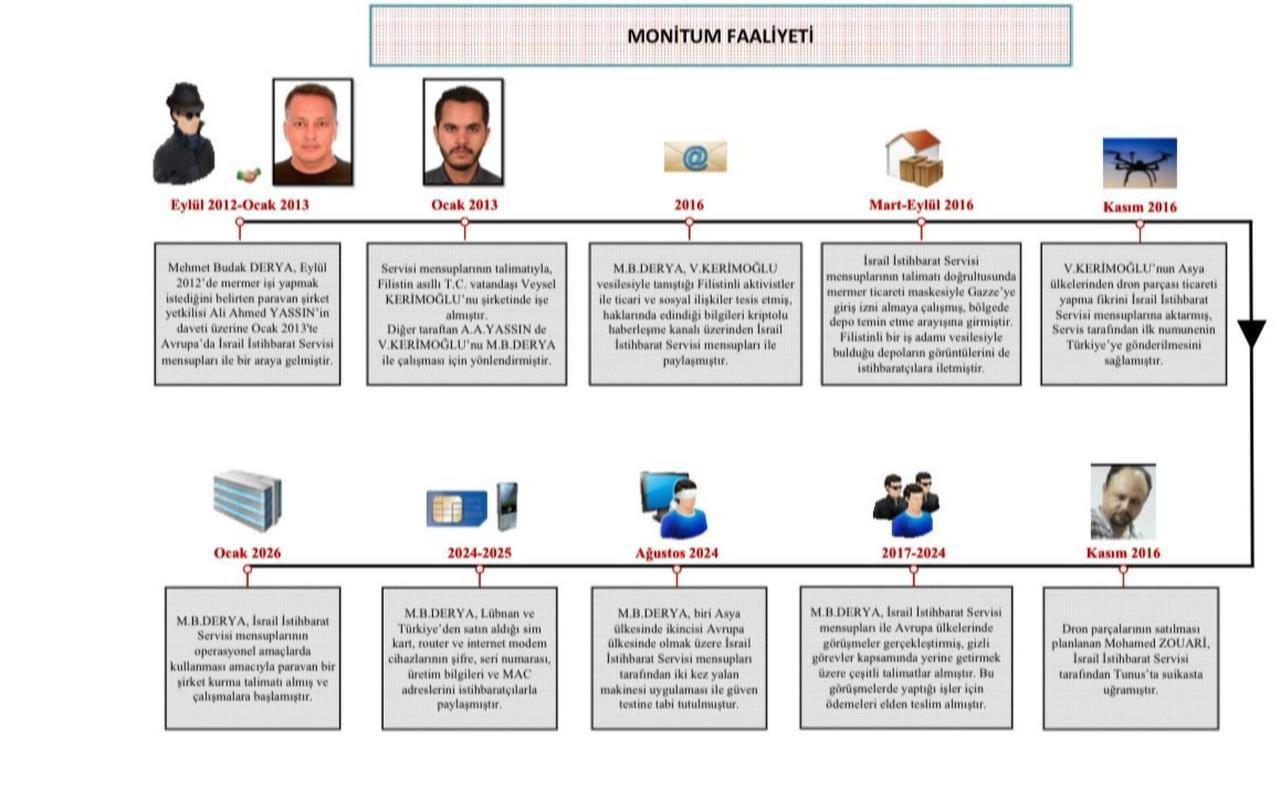

Following advice from the Israeli operative "Luis," Derya traveled to Lebanon in February 2013, attempting to establish contact with Kerimoglu using Yassin as a reference.
Though they could not meet in Lebanon, Kerimoglu came to Türkiye on March 31, 2013, and they first contacted each other on April 1, 2013.
Derya then informed the Israeli intelligence operative of the meeting.
In April 2013, Derya met with the Israeli intelligence operative in Vienna and received instructions to hire Kerimoglu at his company and provide him with a company vehicle.
For employing Kerimoglu, Derya received cash payments from "Luis"— €9,000 ($10,714) in Spain on May 8, 2013, and €9,000 in Rome on June 4, 2013.
Derya was provided with a micro SD card, converter adapter, laptop and mobile phone for a covert communication system through which he transmitted information to Israeli operatives about activities conducted with Kerimoglu.
Through commercial and social relationships with Palestinian activists opposed to Israel's Middle East policies, the suspects gathered and transmitted information about these individuals' residential addresses and family members to Israeli intelligence.
The prosecution document revealed that between March and September 2016, Derya attempted to obtain entry permits to Gaza under the cover of the marble trade, sought to secure warehouses in the region, and transmitted images of warehouses found through a Palestinian businessman to his contacts.
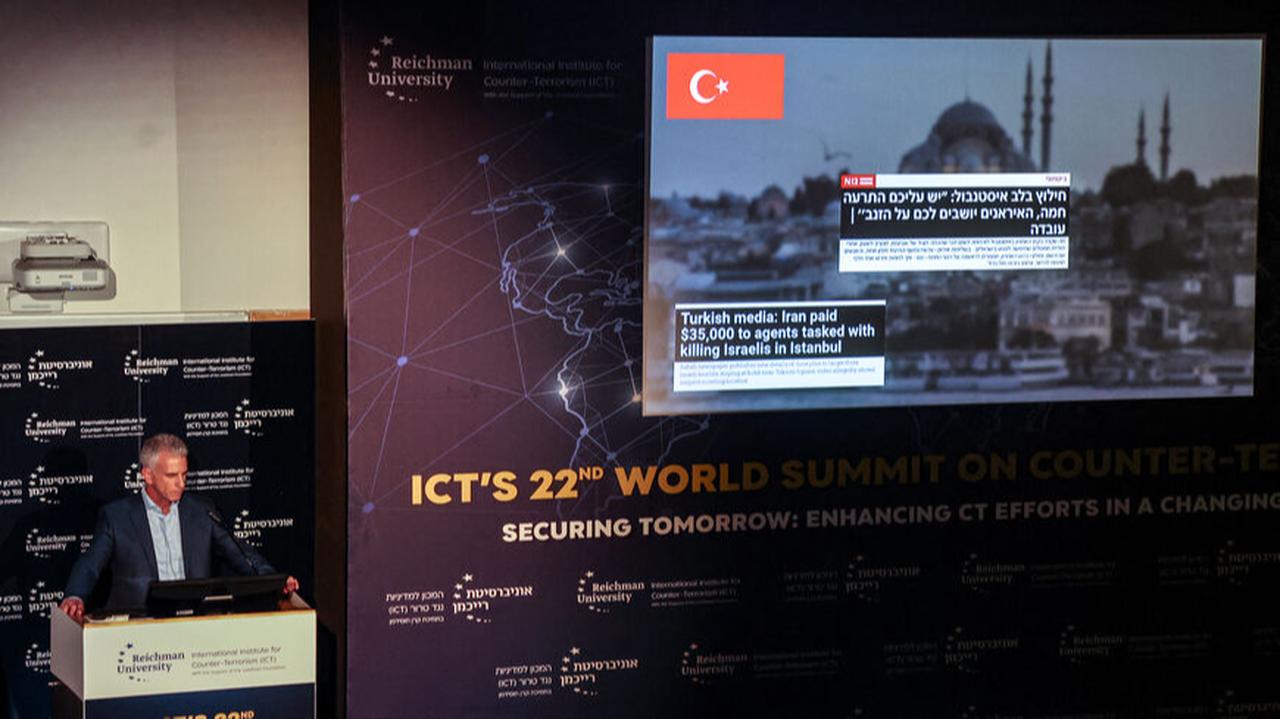
The prosecution document made a significant revelation connecting the suspects to a known Mossad assassination.
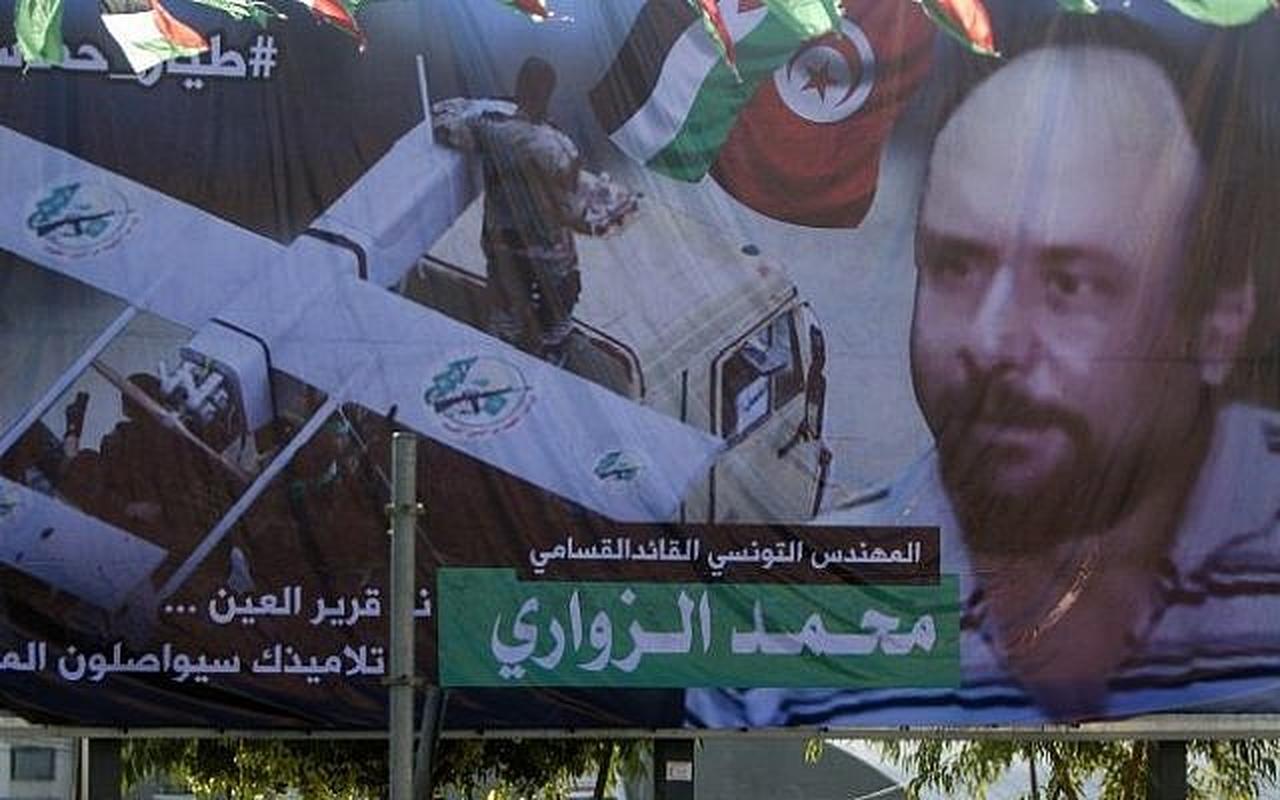
"Drone parts sourced from Hong Kong were planned to be sold to engineer Mohamed Zouari, who was assassinated by the Israeli Intelligence Service in Tunisia in November 2016," the document stated.
Derya's digital communications contained messages including: "Is your flight to Israel today?", "Don't come, they say you can't get in," "This document is related to the Gaza government's authorities and does not concern the Israeli side," "Any news from Korea?", "Israel killed him," "In Syria or Gaza?", "In Tunisia," and "They followed him."
Communications also included messages related to the Russian ambassador assassinated in Türkiye, referring to Andrey Karlov, who was killed in Ankara in December 2016.
According to the document, Derya met with Israeli intelligence operative "Dennis" five times between 2015 and 2020 in Greece, Slovakia, Austria and Italy.
During a 2016 meeting in Thailand, he was subjected to a polygraph test.
Kerimoglu met with operative "Roberto" seven times in 2018 in Austria, Italy and Greece. At Roberto's instruction, he traveled to Lebanon three times that year to purchase prepaid phone cards and internet router devices.
In August 2024, Kerimoglu traveled to France and then to Belgium by road with operative "Michael," where he was subjected to a polygraph test at a hotel.

Digital examination of Derya's devices revealed user information registered under "Ahmad Sultan," task lists including instructions to purchase e-SIM cards, find web designers and use WeChat to contact Chinese companies and individuals.
The devices contained activation messages for the Cornercard application, as well as WeChat, NordVPN, LinkedIn and iCorner programs.
Kerimoglu's phone showed records of 14 different SIM cards and documents containing shipping information for marble sent to Israel.
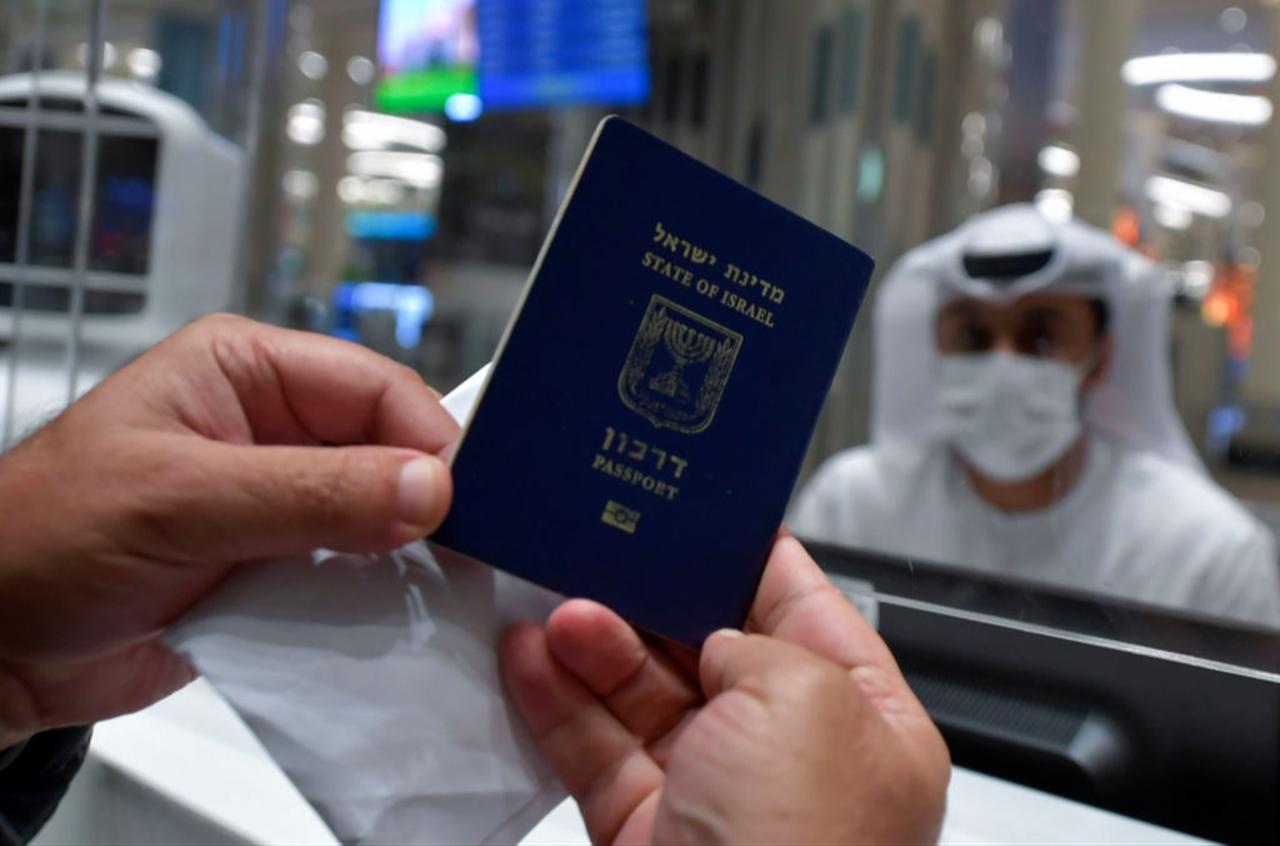
Photos of four individuals' Israeli passports were found in his device.
The document stated that Kerimoglu received approximately €60,000 from Israeli intelligence for his work and purchased 10 internet modem devices—five each from Lebanon and Türkiye—sending photos of labels containing serial numbers, MAC addresses, passwords and production information to his contacts.
Israeli operatives requested Kerimoglu find three Chinese companies for operational activities.
The first company would source products from the market and repackage them, the second would store them, and the third would export them to companies in countries designated by Israeli intelligence.
On Jan. 13, Kerimoglu sent an email to operative "Elly/Emmy" regarding the company he planned to establish in China and individuals to contact.
The prosecution document emphasized that digital examinations are continuing and additional evidence has been discovered. The investigation is being deepened, with the possibility of identifying additional suspects to be added later.


 Set as preferred source
 Set as preferred source


 1 min read
 1 min read