Newsletters


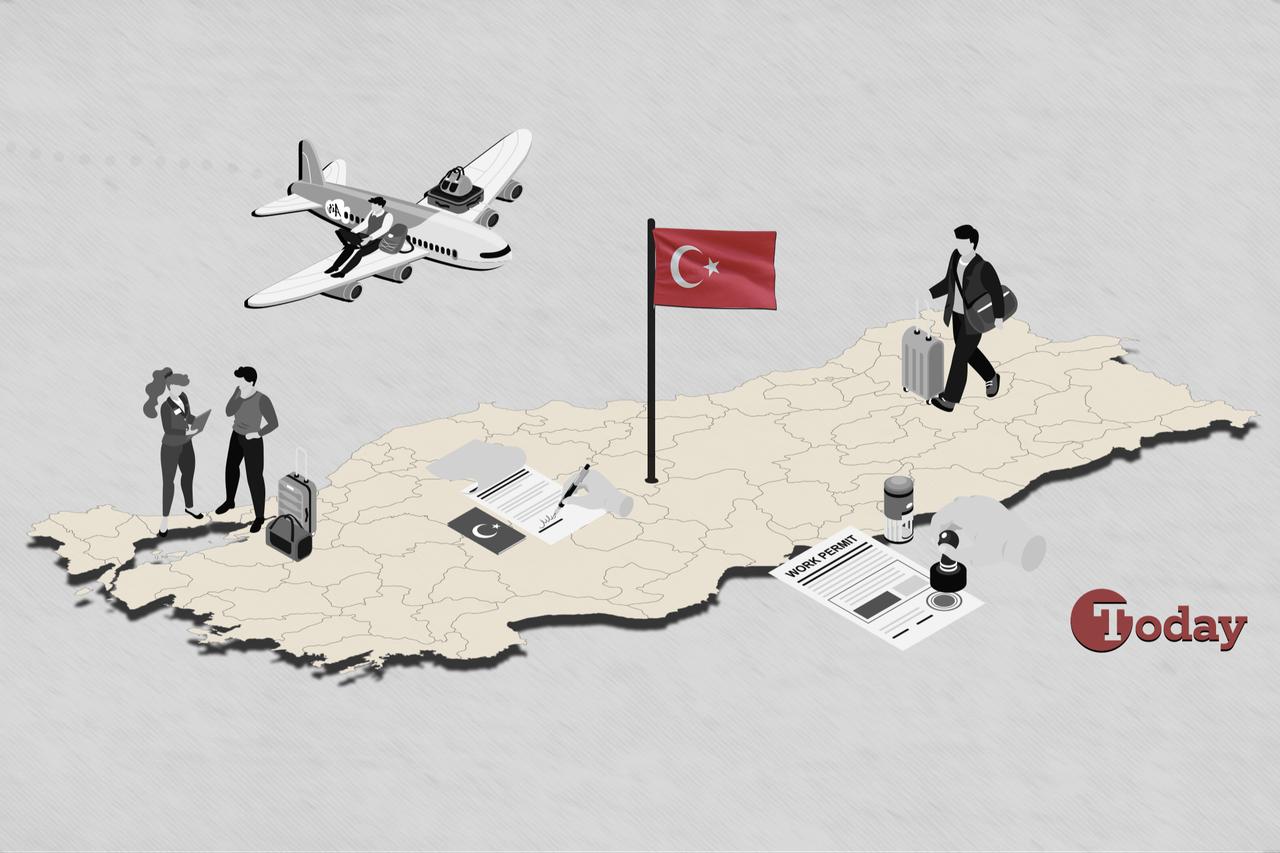


For many foreigners, moving to Türkiye is not simply a career decision but a complete life transition. It often begins with a strong belief: “I will go there, find a job, and build a new life.” While this idea sounds flexible and practical, the reality behind international relocation is far more complex, costly, and legally sensitive.
Before even arriving, most individuals go through significant financial and emotional preparation. They resign from their current jobs, terminate rental contracts, sell or store personal belongings, and pay for international relocation logistics. Once the decision is made, the financial commitment continues. After arriving in Türkiye, they must secure accommodation, pay real estate commissions, deposits, and cover all initial settlement costs in a new country.
At this stage, employment becomes the key expectation that justifies the entire move. However, this is also where many foreigners face the first serious misunderstanding: the legal framework of work authorization in Türkiye.
One of the most common issues is the lack of accurate knowledge regarding work permit procedures.
Many employers or intermediaries incorrectly assume that foreigners can first enter Türkiye, obtain a residence permit, and later convert it into a work permit. Others believe that a job offer alone is sufficient for legal employment.
In practice, Turkish immigration and labor regulations require a structured and compliant process. When this process is not correctly followed, the consequences are often carried by the foreign employee, not the employer. In many cases, residence permit applications are rejected or later invalidated, leaving individuals without legal grounds to remain in the country after having already relocated.
This results in not only financial loss but also forced departure and disruption of personal and professional plans.
It is also essential to distinguish between a standard work permit and a work permit exemption, as they are frequently misunderstood as equivalent.
A standard work permit establishes a formal employment relationship under Turkish labor law. It generally includes employer obligations such as social security registration, salary documentation, and full legal accountability. In disputes, employees typically have stronger legal grounds to claim unpaid wages and enforce their rights.
A work permit exemption, however, is a separate legal category designed for specific professional groups and short-term or specialized assignments. These commonly include university lecturers, professors, researchers, journalists, and tour operators.
While it allows legal stay and limited authorization to work, it does not always provide the same level of employment protection as a standard work permit. Salary guarantees, enforcement mechanisms, and long-term job security may be significantly weaker depending on the category and conditions.
In some cases, exemptions may also be granted for shorter durations than standard permits, sometimes around ten months, depending on eligibility and classification.
The core issue is not just legal complexity—it is expectation versus reality.
Foreign professionals often relocate under the assumption that employment is secured and legally protected. However, when companies lack accurate knowledge of immigration procedures or rely on incorrect guidance from third parties, the foreign employee becomes the most exposed party in the entire system.
What is presented as a structured career opportunity can quickly turn into a forced exit, unexpected financial loss, and serious professional disruption. In many cases, the individual has already committed to relocation costs, housing arrangements, and life restructuring before discovering that the legal foundation of their employment is not valid or properly established.
Another important misconception is that easier application procedures imply equal legal safety.
Work permit exemption applications are often more administrative and may appear simpler compared to full work permit processes. However, this simplicity does not translate into stronger legal protection or employment security. In reality, the underlying rights and enforcement mechanisms can be substantially more limited.
Another increasingly common and risky misconception is the advice given by some companies or intermediaries suggesting that foreign nationals should first enter Türkiye as tourists, apply for a residence permit, and later proceed with a work permit application.
This approach is often presented as a standard pathway, but in practice, it carries significant legal uncertainty.
In many cases involving visa-free entry or tourist visas, residence permit applications submitted with the intention of later obtaining work authorization are frequently rejected. Immigration authorities generally assess such applications strictly when the underlying purpose is employment.
There are limited and highly exceptional cases where such applications may be accepted. However, these are typically dependent on strict eligibility criteria and, in some cases, regional or institutional factors connected to the applicant’s professional profile.
For this reason, relying on the assumption that one can enter Türkiye as a tourist and “adjust status later” is a high-risk strategy that can lead to rejection, financial loss, and forced departure from the country.
About the author: Kagan Orhan is a human resources and immigration consultancy expert at Expat Solutions Turkey, dedicated to facilitating the adaptation processes of foreigners in Türkiye with the expertise and knowledge in managing legal procedures such as residence permit applications, work permits, business establishment, real estate, and citizenship processes for foreigners settling in Türkiye with their team of lawyers and consultants.


 Set as preferred source
 Set as preferred source


 1 min read



 1 min read