Newsletters


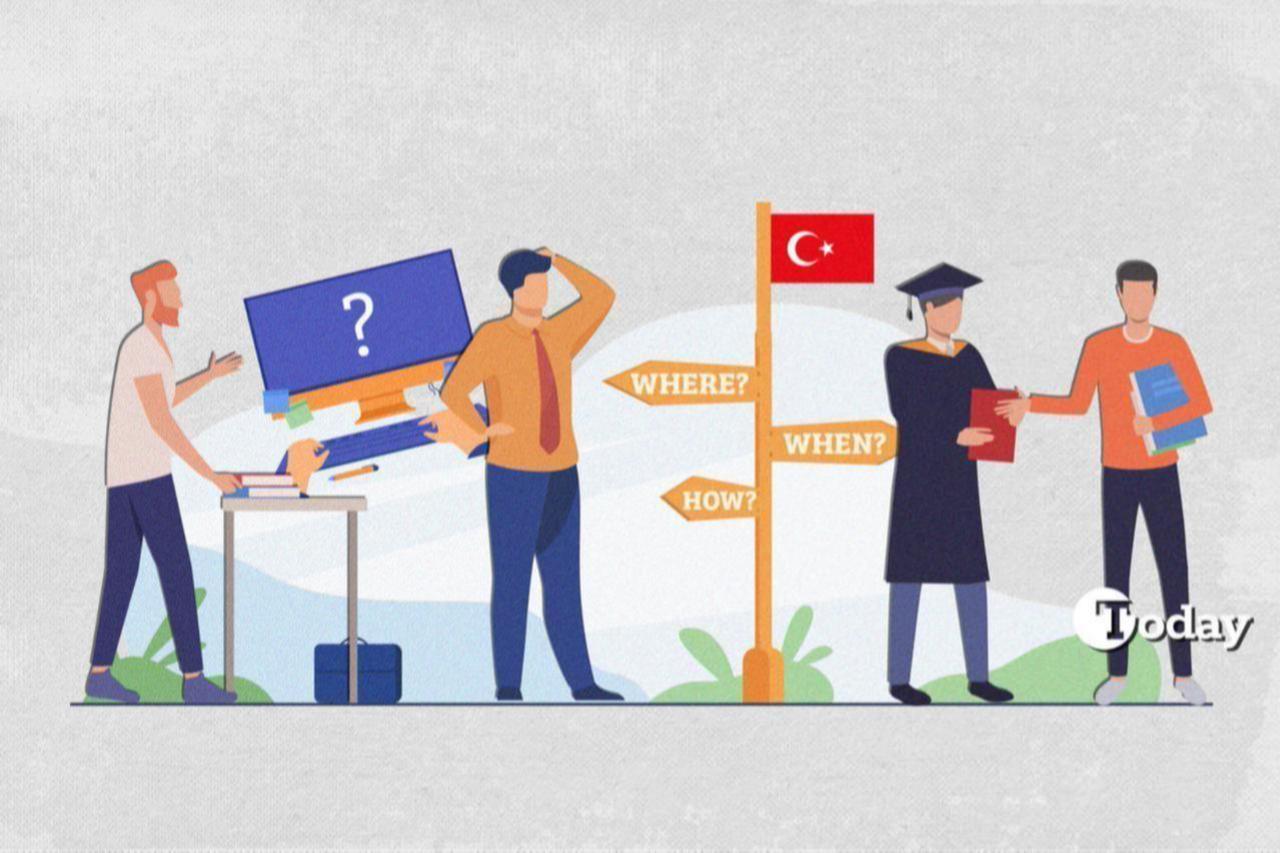


Türkiye’s residence permit system entered a decisive structural shift with the removal of large districts across the country from the list of closed neighborhoods for expats.
Türkiye's Migration Management Authority has announced in June, 2022 that due to increasing foreign population density across various regions of the country, a total of 781 neighborhoods in selected provinces had been closed to certain administrative processes.
The announcement further stated that as of July 1, 2022, the number of closed neighborhoods had increased to 1169, with the full list attached to the official notice.
By 2023, this restrictive framework was expanded again in Istanbul. An additional nine districts were incorporated into the restricted category, effectively widening the scope of limitations on where foreign nationals could initiate or transition residence status applications.
The system, however, reportedly shifted once more in June 2026. With the reopening of most districts across Türkiye, residence permit applications reportedly became broadly accessible again, with the notable exception of two districts in Istanbul, Fatih and Esenyurt.
The internal operation of the electronic system, e-ikamet website, reflects a functional reality that diverges from the earlier restrictive framework. Applicants attempting to submit files from previously closed areas, outside Fatih and Esenyurt, are now able to proceed through the system without receiving the prior blocking notifications.
From a legal practice perspective, this has already addressed a series of long standing grievances. Among them are cases where individuals holding valid work permits were previously unable to transition into residence permit categories based on property ownership within restricted districts. There are also cases involving foreign nationals who purchased real estate exceeding 200,000 US dollars in value, yet were still unable to initiate residence applications due to administrative constraints tied to district level restrictions.
These issues, which have generated significant uncertainty in both legal and investment circles, are now partially resolved through system level accessibility changes. However, a new legal expectation is emerging in parallel.
The next anticipated development concerns the recalibration of property valuation rules, particularly for individuals who acquired real estate below the 200,000 US dollar threshold in earlier periods. Many of these individuals invested in Türkiye under different regulatory expectations, often combining property ownership with alternative residence or work permit statuses. The question now being raised is whether these earlier acquisitions will be reassessed under current valuation standards, and if failure to meet updated thresholds will create barriers to residence eligibility.
This is not a theoretical concern. It directly affects long term legal certainty for foreign nationals who structured their lives and investments in reliance on prior rules.
To illustrate the practical consequences, two cases frequently discussed in legal circles are instructive.
First case sample: John purchased a property in Esenyurt in 2020 for approximately 30,000 US dollars. At the time, he obtained a Type B residence permit and subsequently remained in Türkiye for years without transitioning into a formal work permit structure. Under the current expectation, John would be able to renew his residence permit without being required to submit a new valuation report. He would also be eligible to extend family residence permits to his spouse and minor dependents. After five years, he could potentially apply for citizenship based solely on this original investment level.
Second case sample: Maria purchased a property in Besiktas in 2020 for approximately 150,000 US dollars. However, during that period she held a valid work permit and was informed that she could not simultaneously apply for a Type B residence permit. Relying on the legal framework in place, she continued working under her employment authorization. Years later, after resigning in 2025, she attempted to apply for a Type B residence permit. At that stage, she was informed that properties under 200,000 US dollars required a paid valuation report, costing approximately 62,000 Turkish Lira, so she had to pay for it, and the valuation confirmed a market value of 180,000 US dollars. Despite this, her application was rejected on the basis that she did not meet the updated threshold, without recognition of prior legal reliance. She was redirected to apply for a tourist residence permit, which was subsequently denied under Article 32. As a result, she was compelled to leave Türkiye for good with a property left behind.
From a rule of law perspective, the core issue is not simply administrative discretion. It is the question of whether previously established legal reliance interests are being adequately protected in a system that is increasingly governed by retrospective valuation logic.
In jurisdictions with mature administrative law traditions, individuals are generally protected against sudden reclassification of rights where they have acted in good faith under prior regulations. The absence of such continuity risks undermining not only individual rights but also broader investor confidence.
Türkiye’s long-term economic strategy has consistently emphasized foreign direct investment, real estate participation, and talent mobility. However, policy environments that do not clearly safeguard previously acquired rights risk creating hesitation among precisely the demographic the country aims to attract.
The current moment, therefore, represents a critical juncture. Administrative modernization, digitalization of application systems, and regional recalibration of population density policies are legitimate governance tools. Yet they must be balanced against legal predictability and investor trust.
About the author: Kagan Orhan is a human resources and immigration consultancy expert at Expat Solutions Turkey, dedicated to facilitating the adaptation processes of foreigners in Türkiye with the expertise and knowledge in managing legal procedures such as residence permit applications, work permits, business establishment, real estate, and citizenship processes for foreigners settling in Türkiye with their team of lawyers and consultants.


 Set as preferred source
 Set as preferred source



 2 min read