Newsletters


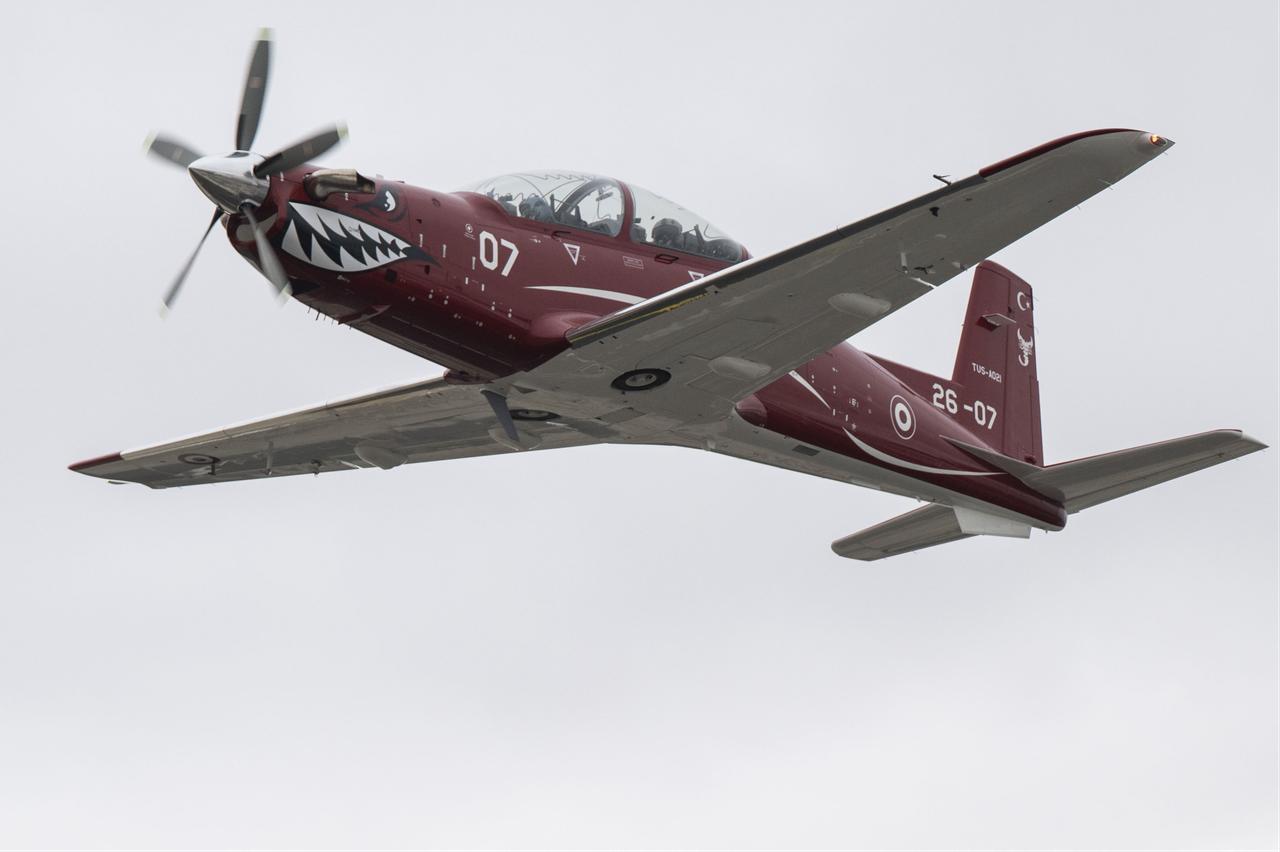
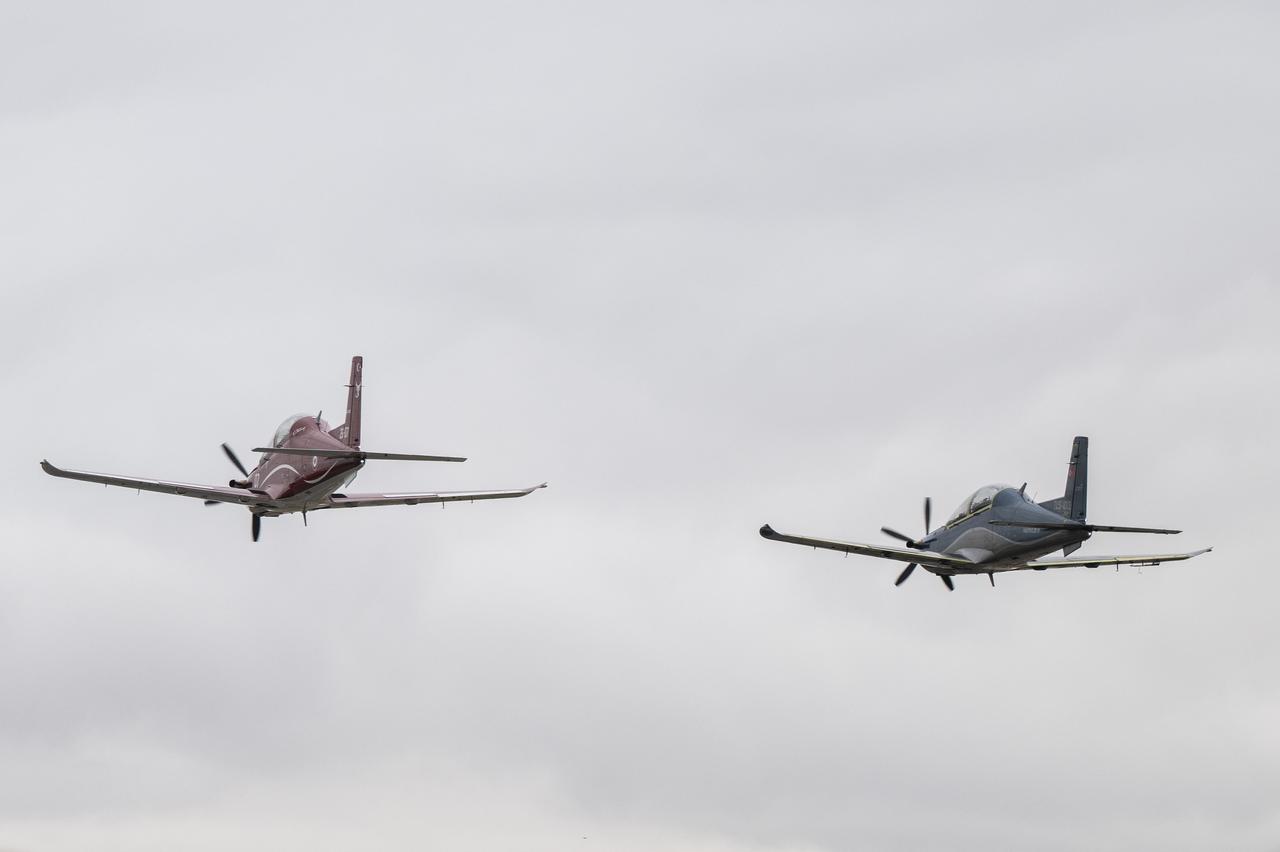
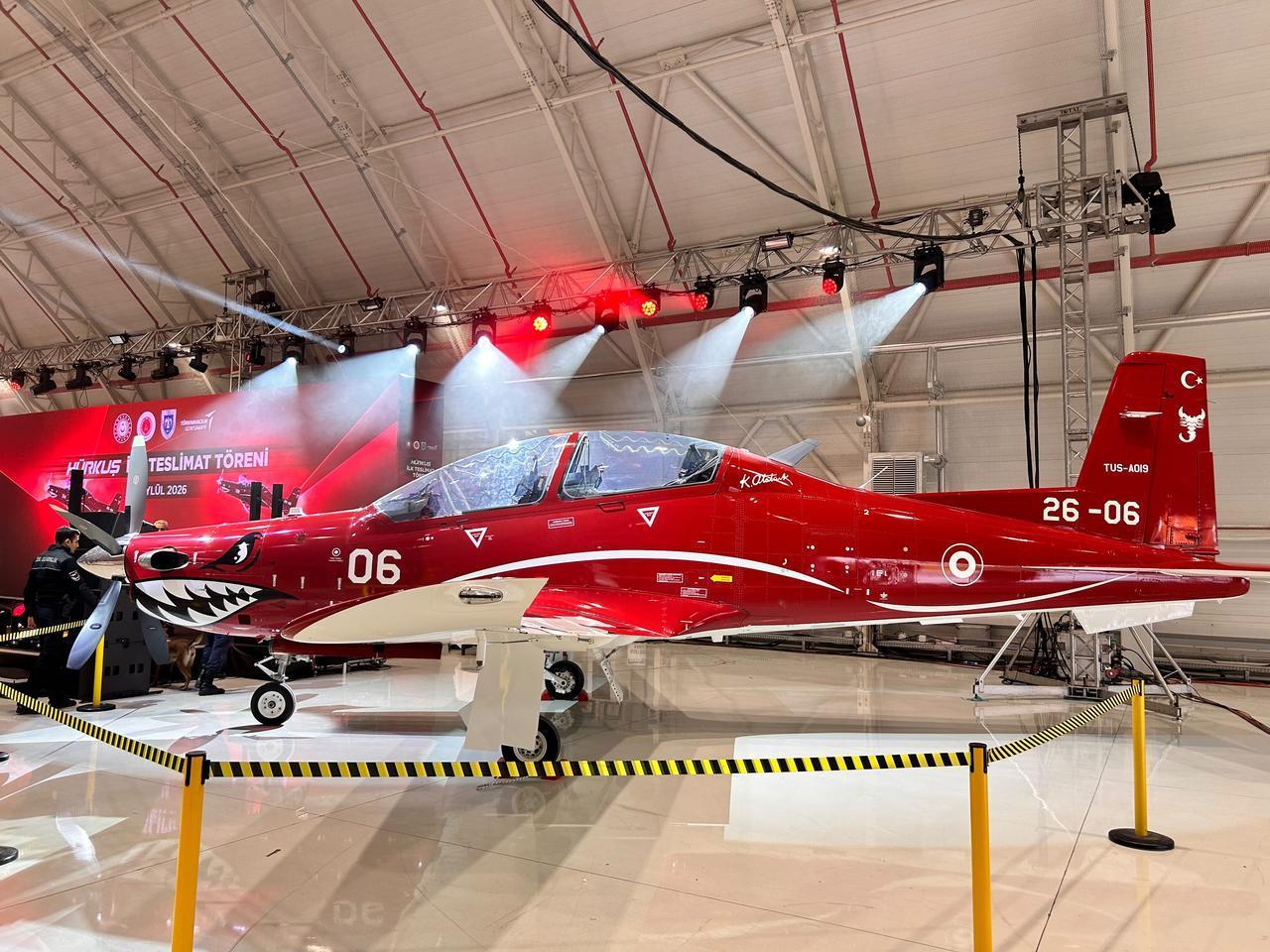
The Turkish Air Force (TurAF) received its first two Hurkus-II next-generation basic trainers on Monday, with all 55 aircraft set to enter its inventory by the end of 2028, Defense Industries President Haluk Gorgun said.
Gorgun also said Türkiye will "very soon" begin announcing Hurkus export deals, as several countries show interest in the domestically built aircraft.
Hurkus-II is the first step in Türkiye's national manned aircraft chain, which is set to continue with the Hurjet jet trainer and the KAAN fighter.
Gorgun described the delivery as the first time Türkiye has entrusted its own manned aircraft to its own pilots.
The delivery ceremony took place at Turkish Aerospace Industries (TAI) Kahramankazan facilities, attended by Air Force Commander Gen. Rafet Dalkiran and TAI General Manager Mehmet Demiroglu.
"Today is a historic day for Turkish aviation. We are delivering the first two of our new-generation Hurkus aircraft to our Air Force. Today, for the first time, Türkiye is entrusting its own manned aircraft to its own pilot," Gorgun said.
"We carried out the final test flight before delivery about two weeks ago together with our Air Force commander," he said, adding, "When we took off in an aircraft designed and produced by our own engineers, we felt much more deeply in that cockpit what years of effort had turned into."
"Looking at the work put forward, I say with great confidence that we have made the best in the world in its class," the Turkish official noted.

The procurement program has grown from 15 aircraft to 55, Gorgun said.
"New aircraft will follow the two we delivered today within the planned schedule. We increased our procurement program, which began with 15 aircraft, by 40 additional aircraft to a total of 55. Allah willing, we will see Hurkus squadrons in the Turkish Air Force in 2027. We plan to bring all 55 aircraft into our Air Force's inventory by the end of 2028," he said.
A total of 12 aircraft are planned for delivery between September and December, with deliveries continuing at two per month from 2027, according to the Defense Industries Presidency.
The Turkish official noted that Hurkus' cockpit and avionics were designed to match Türkiye's other air platforms.
"When our pilots move to Hurjet and KAAN, instead of a completely foreign architecture, they will see advanced versions of the architecture they are used to," he said.
Noting that the project's engineers had an average age of 28 when it began, Gorgun said: "The Hurkus project did not just give us an aircraft; it gave us an engineering capability that can handle bigger goals."
About 23,000 hours of ground, laboratory, and system integration tests were carried out before Hurkus received its military type certificate on Sept. 9, he said. "Thus, in addition to designing and producing, we reached the competence to test and certify our own aircraft."
Gorgun said the aircraft can also perform light attack and close air support missions, making it "a unique option in the international market."
"Today, many countries from different regions of the world are interested in our aircraft. We know there is a need covering hundreds of aircraft in the basic trainer market," he said.
"We can already say that very soon we will begin sharing Hurkus export news with you," the official noted.
"To a country that chooses Hurkus, we also offer the national systems operating on it along with our aircraft. Thus, every export will return as a gain to a wider segment of our defense industry," Gorgun said.
Hurkus is produced with domestic content approaching 80%, with TAI as prime contractor and subcontractors including Aselsan and Havelsan.
TAI has signed export contracts for the earlier Hurkus-B with three countries.
"Hurkus will assume an important role in the Turkish Air Force's pilot training. With its modern avionics systems, high performance, and maneuverability, it will greatly contribute to our pilot candidates developing their flight skills," Dalkiran said.
"More importantly, integrating with our domestic and national aircraft that will enter our inventory in the near future, especially Hurjet and KAAN, it will form an important foundation for training and operational processes," he said.
"Hurkus is not only a platform that meets today's needs, but also part of a strong vision extending to the future of the Turkish Air Force," Dalkiran added.
"The Hurkus we are delivering today not only wrote a successful story in its own class, but also became a milestone in our fixed-wing journey," Demiroglu said.
"The engineering knowledge and experience gained in this adventure that will go from Hurkus to Hurjet, from Hurjet to KAAN, and from KAAN even further, has today made our country one of 4 countries," he said.
Hurkus-II is powered by a 1,600-horsepower Pratt & Whitney Canada turboprop engine.
At the end of the ceremony, Gorgun handed the Hurkus -II delivery certificate to Dalkiran, followed by a flyover by the aircraft.


 Set as preferred source
 Set as preferred source


 2 min read