Newsletters


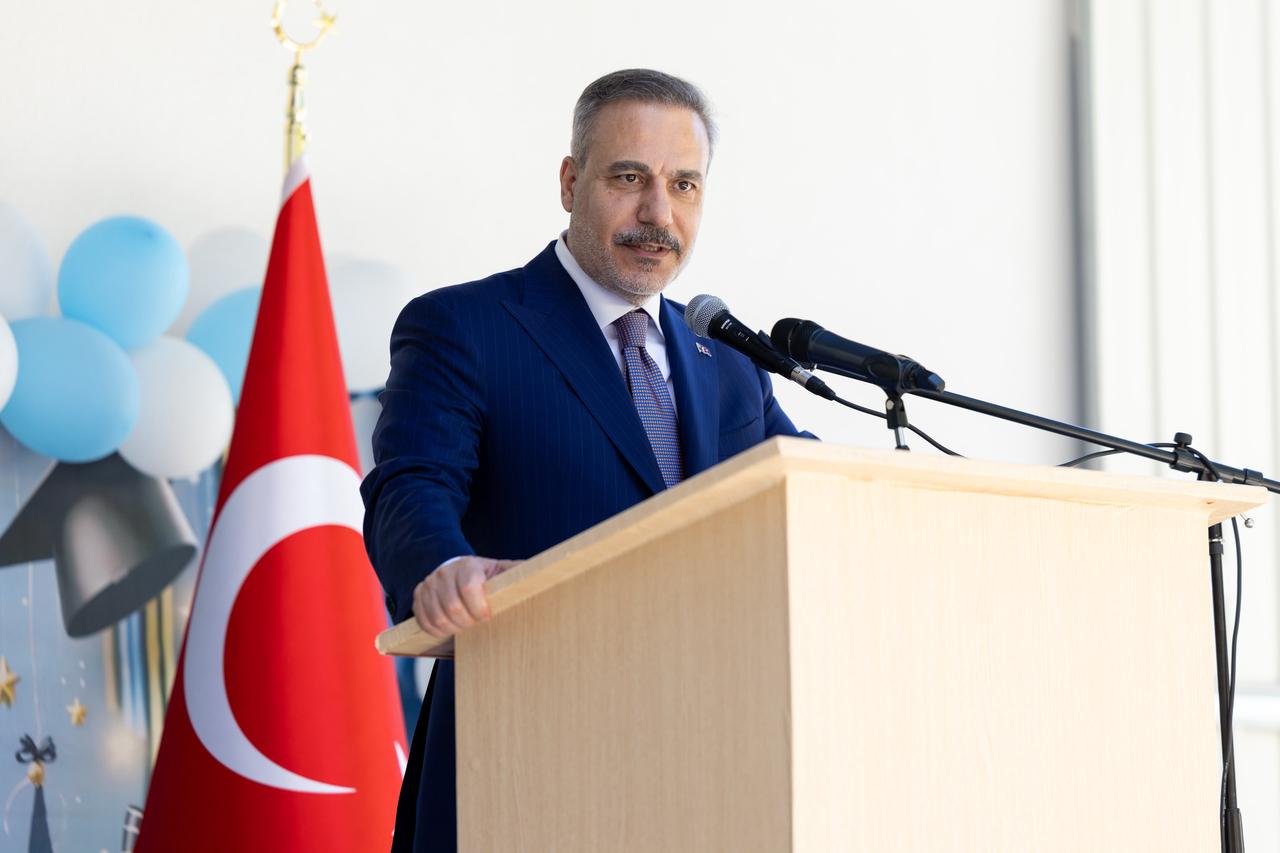


Turkish Foreign Minister Hakan Fidan said increasing natural gas transmission capacity from Türkiye to Bulgaria is strategically important not only for the two countries' bilateral relations but also for the energy security of Eastern Europe.
In an interview with the Bulgarian News Agency (BTA), Fidan discussed cooperation between the two NATO allies on regional security, energy and connectivity projects ahead of his visit to Sofia for the Southeast European Cooperation Process (SEECP) Summit.
Referring to recent developments in the Middle East, Fidan said they demonstrated how rapidly the security environment can change and underscored the broader implications of threats emerging from NATO’s southern flank.
“The rapid response to missiles fired toward our country once again demonstrated NATO’s effectiveness, its deterrent role in preserving global and regional security, and the importance of unity and solidarity among allies,” he said.
Fidan added that Türkiye and Bulgaria, as strategic partners on NATO’s southeastern flank, closely monitor developments and remain prepared to strengthen air and missile defense cooperation if necessary.
“We are in full coordination with Sofia under the NATO umbrella on border security, early warning systems and intelligence sharing. As two allies, we remain committed to preventing regional escalation,” he said.
He also pointed to Türkiye’s contribution to NATO’s Forward Land Forces in Bulgaria and its role in reinforcing the alliance’s deterrence posture in the Black Sea and Eastern Mediterranean.
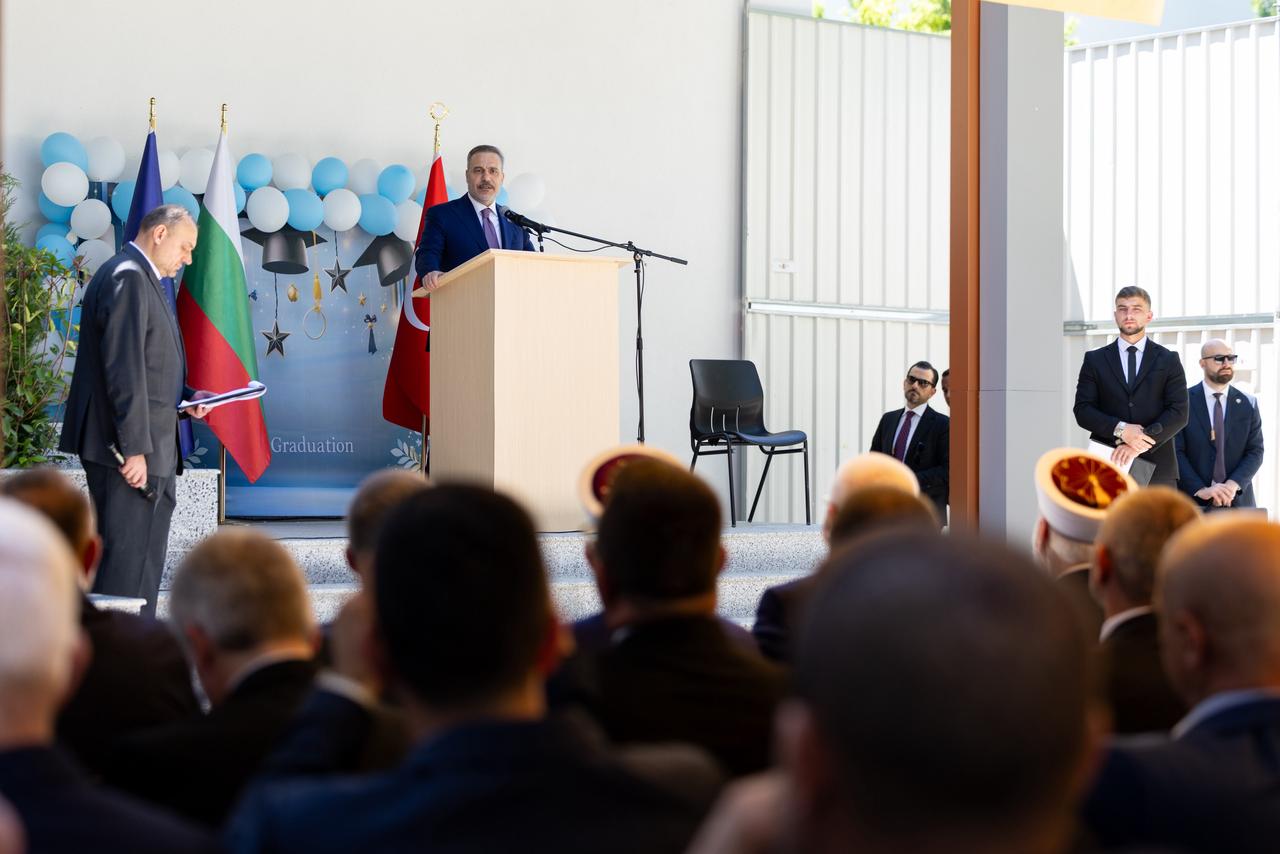

Fidan said relations between Türkiye and Bulgaria have continued to improve over the past two years, citing growth in bilateral trade, progress on border modernization and transportation projects, and rising Turkish investment in Bulgaria.
He noted that bilateral trade is approaching the target of $10 billion and that more than 2.8 million tourists traveled from Bulgaria to Türkiye in 2025.
Commenting on Bulgarian domestic politics, Fidan said the emergence of a stable government with a parliamentary majority would benefit both bilateral ties and regional stability.
He also described the Turkish community in Bulgaria as one of the strongest pillars of relations between the two countries and welcomed its democratic representation in parliament.

Addressing the agreement between Türkiye’s state pipeline operator BOTAS and Bulgaria’s Bulgargaz, Fidan said the deal signed in early 2023 helped strengthen Bulgaria’s energy security after disruptions in Russian gas supplies.
“The primary objective of the BOTAS-Bulgargaz agreement was to facilitate Bulgaria’s access to diversified energy sources and contribute to regional energy security,” he said.
Fidan stressed that both countries have long been reliable partners in the energy sector and that discussions are underway to update the agreement in line with changing commercial and legal conditions.
“Our goal is to further advance relations by signing a comprehensive energy cooperation agreement that will also include increasing natural gas transmission capacity between Türkiye and Bulgaria,” he said.
He added that expanding transmission capacity would be strategically important for Eastern Europe, particularly in light of rising regional demand, including from Ukraine.
“At present, the existing capacity from Türkiye to Bulgaria is insufficient to transport the additional volumes requested through Bulgaria. We recognize that this will require investments on the Bulgarian side, and we are ready to work together to make those investments possible,” Fidan said.

Fidan also highlighted electricity interconnection projects involving Türkiye, Bulgaria, Azerbaijan and Georgia, expressing hope that feasibility studies for the Green Energy Transmission and Trade initiative would begin soon.
He said Türkiye aims to complete new electricity interconnection projects with Bulgaria that would increase cross-border transfer capacity from 700 megawatts to 1,100 megawatts.
In transportation, Fidan said Ankara wants to open a second railway crossing with Bulgaria and advance the Black Sea Motorway Project while continuing efforts to strengthen regional connectivity.
He argued that secure supply chains have made new transport corridors a necessity rather than a choice, pointing to the Trans-Caspian Middle Corridor and the Development Road Project as key links between Asia and Europe.
“Türkiye occupies a strategic position connecting Europe, the Middle East, the Caucasus, Central Asia and Africa, while Bulgaria serves as the gateway to the European market. Together, this creates significant opportunities for regional and global trade,” he said.
Fidan also called for expanded border infrastructure and streamlined customs procedures, noting that the Kapikule crossing handles more than 4 million vehicles and over 10 million passengers annually.
Reaffirming that European Union membership remains a strategic priority for Türkiye, Fidan said judging Ankara’s accession process through short-term political considerations would be a mistake.
He noted that trade between Türkiye and the EU reached approximately $233 billion in 2025 and argued that evolving geopolitical and security challenges are prompting the bloc to reassess its relationship with Türkiye.
“We observe that a mental shift is emerging within the EU and that Türkiye’s importance is being voiced more strongly every day,” he said.
Fidan is representing President Recep Tayyip Erdogan at the SEECP Heads of State and Government Summit in Sofia, held under the theme “Strengthening Regional Unity for a Stable, Secure and Sustainable Future: Reflections on 30 Years of Partnership and Progress.”


 Set as preferred source
 Set as preferred source


 1 min read
 1 min read