

 Newsletters




Viewed from Tirana, one sometimes gets the impression that concern in Ankara has hardened into something close to a conviction: that Albania has leaned too far toward Israel, that a small country's old discipline of balancing has tipped into imprudence, and that Tirana has bought goodwill with Israel at a cost the rest of us are too polite to name.
Whether that impression is entirely fair is open to debate. What deserves equal attention, however, is a different relationship altogether.
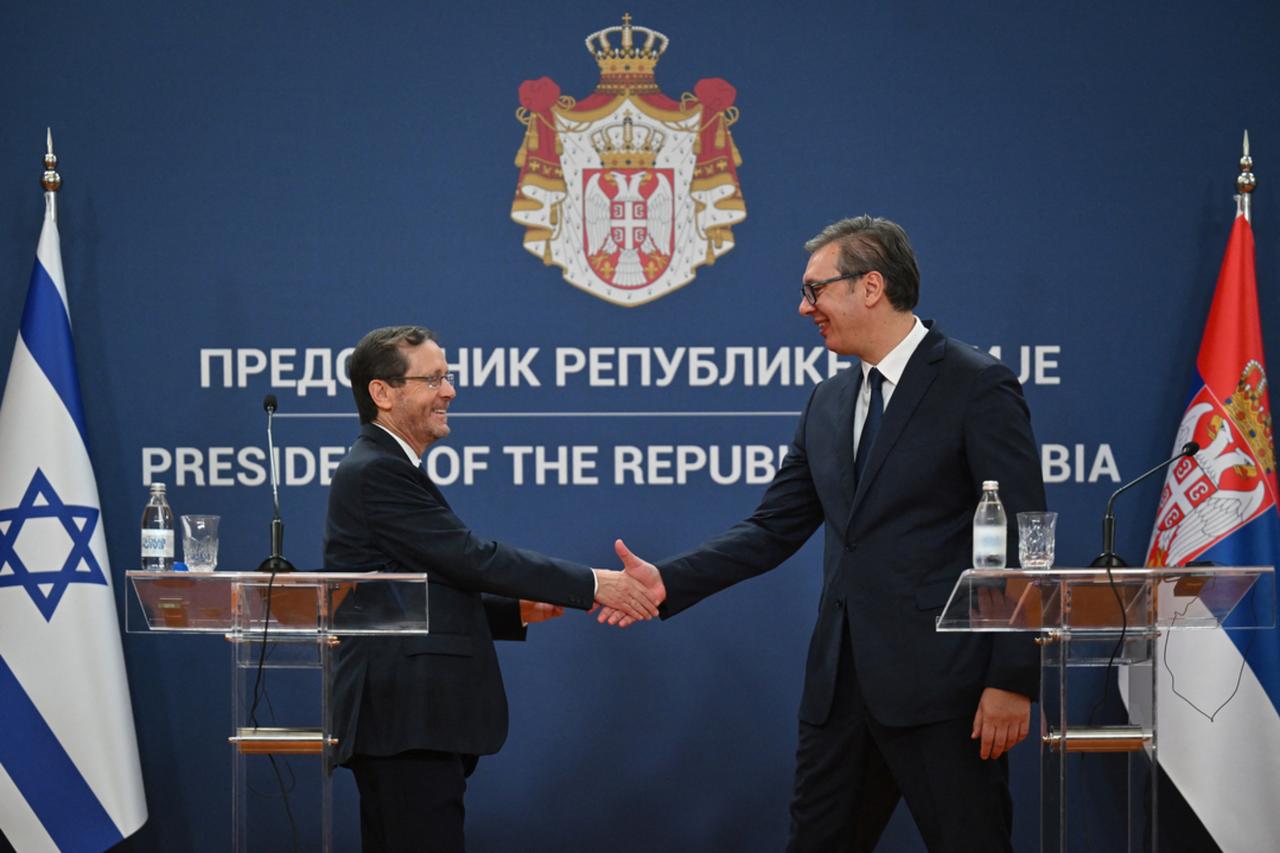
When Serbia's foreign minister visited Israeli officials in Jerusalem this spring, the two governments announced that their partnership had entered what Israeli officials described as a new phase.
They opened negotiations on a free trade agreement, agreed to establish a joint economic committee and laid the groundwork for a permanent Israeli economic mission in Belgrade.
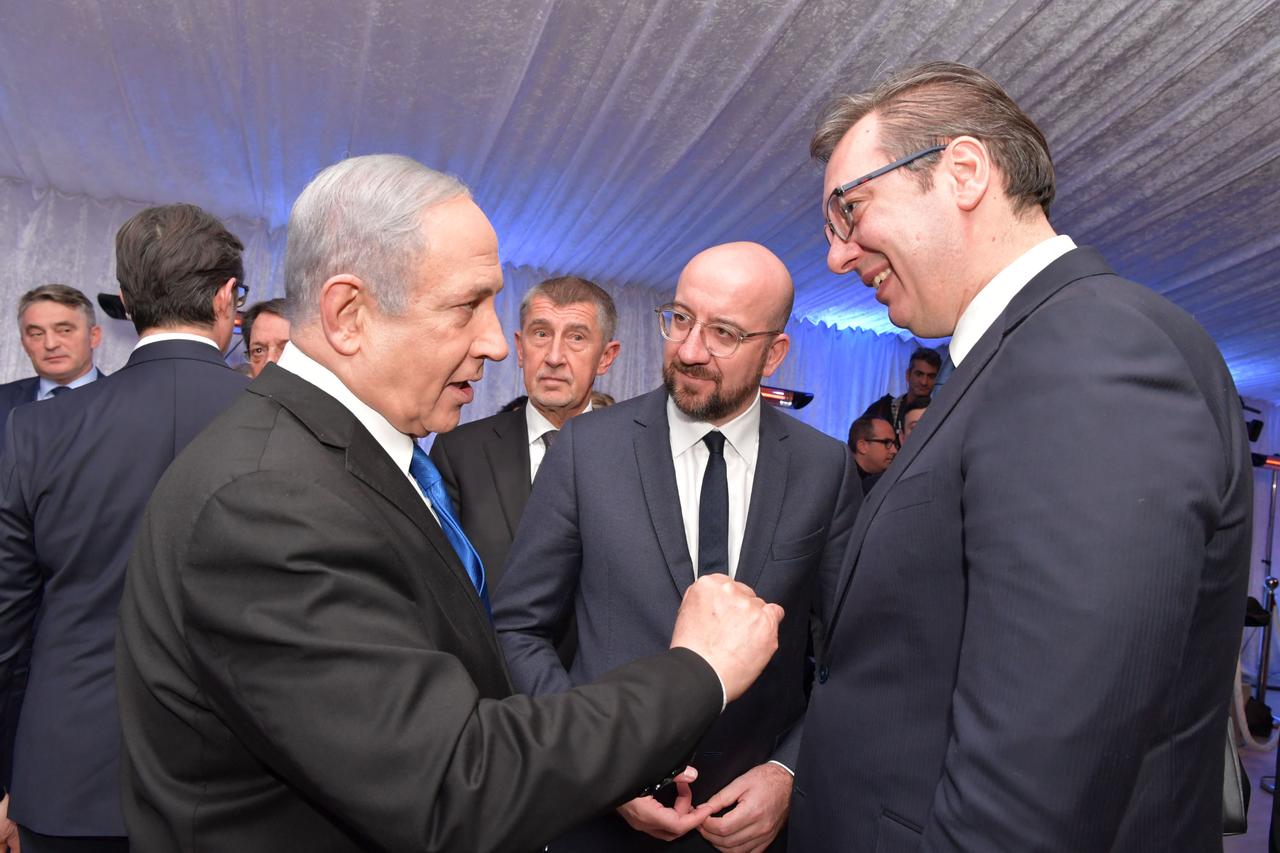
Serbian President Aleksandar Vucic did not need to make the trip himself. Israel conferred the friendship on him in absentia: its foreign minister praised his leadership by name, Israeli media grouped Serbia among the nations that show up rather than hedge when tested, and for two years Israeli officials have described him as a "true friend of the Jewish state."
A leader who acquires that title without leaving home has built something more durable than a photograph on the tarmac.
Consider what that friendship is made of, because its substance is not sentiment.
It is steel, moving in both directions. Serbian munitions flowed to Israel on dozens of cargo flights after October 2023, with exports rising dramatically over two years.
In return, Israel has sold Serbia some of the most advanced offensive military hardware in the region: rockets with a range of 300 kilometers, a $1.6 billion Elbit package with deliveries extending to the end of the decade, and a drone factory outside Belgrade in which the Israeli firm holds a controlling stake.
This is not merely a customer relationship. It is an increasingly integrated military partnership in which Israeli industry plays a central role.
Consider, too, what many Bosniaks and Albanians believe this relationship has helped legitimize. Bosnia and Herzegovina's Serb entity, Republika Srpska, placed its commission to reexamine Srebrenica under an Israeli historian, drawing on Jewish scholarly credentials in a process that many viewed as an attempt to diminish the established understanding of the genocide.
And when Milorad Dodik, who has repeatedly challenged the characterization of Srebrenica as genocide, sought relief from U.S. sanctions, the lobbyist who took the contract happened to chair Republicans Overseas Israel.
The sanctions were lifted last autumn. Belgrade and Banja Luka have learned that Israel's moral authority on genocide can be borrowed and then turned against the memory of the very Muslims, Bosniak and Albanian, it was meant to shield.
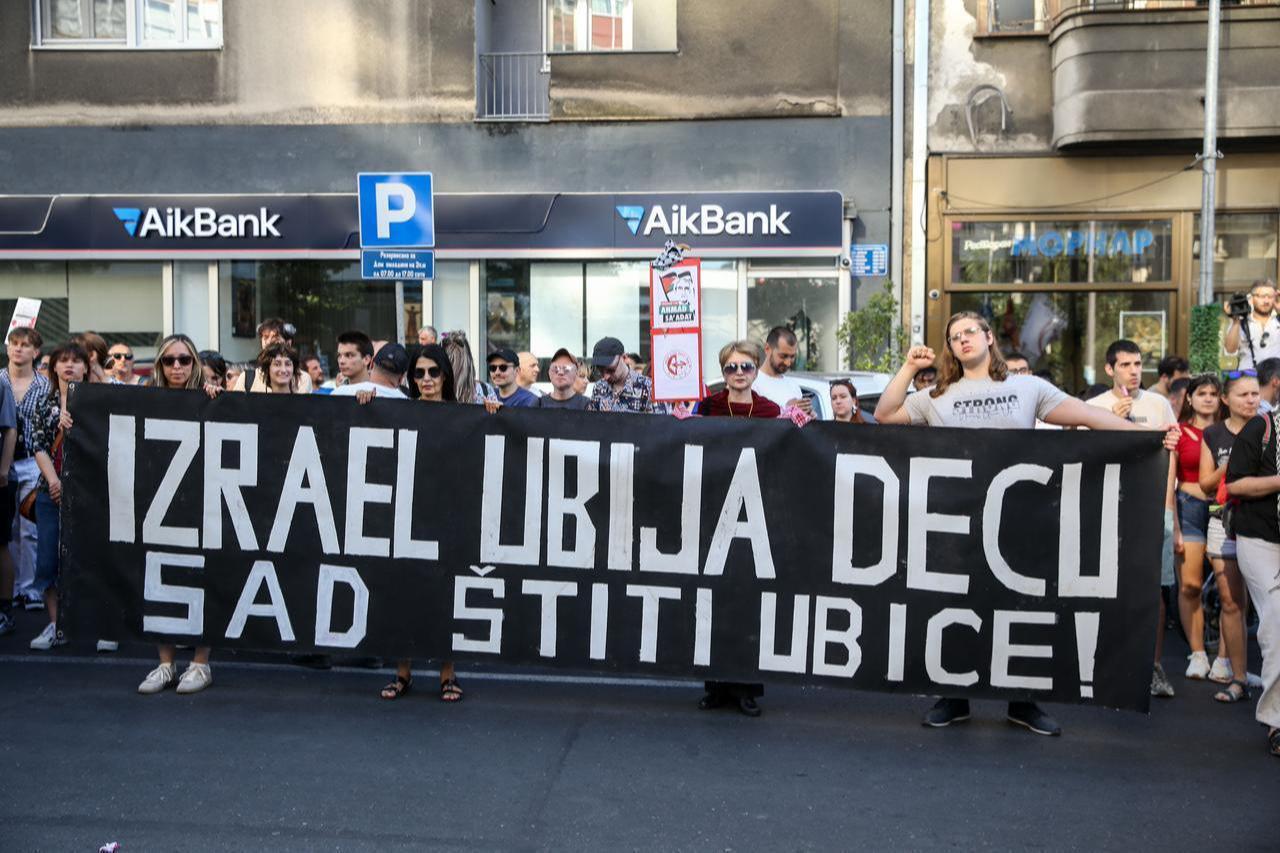

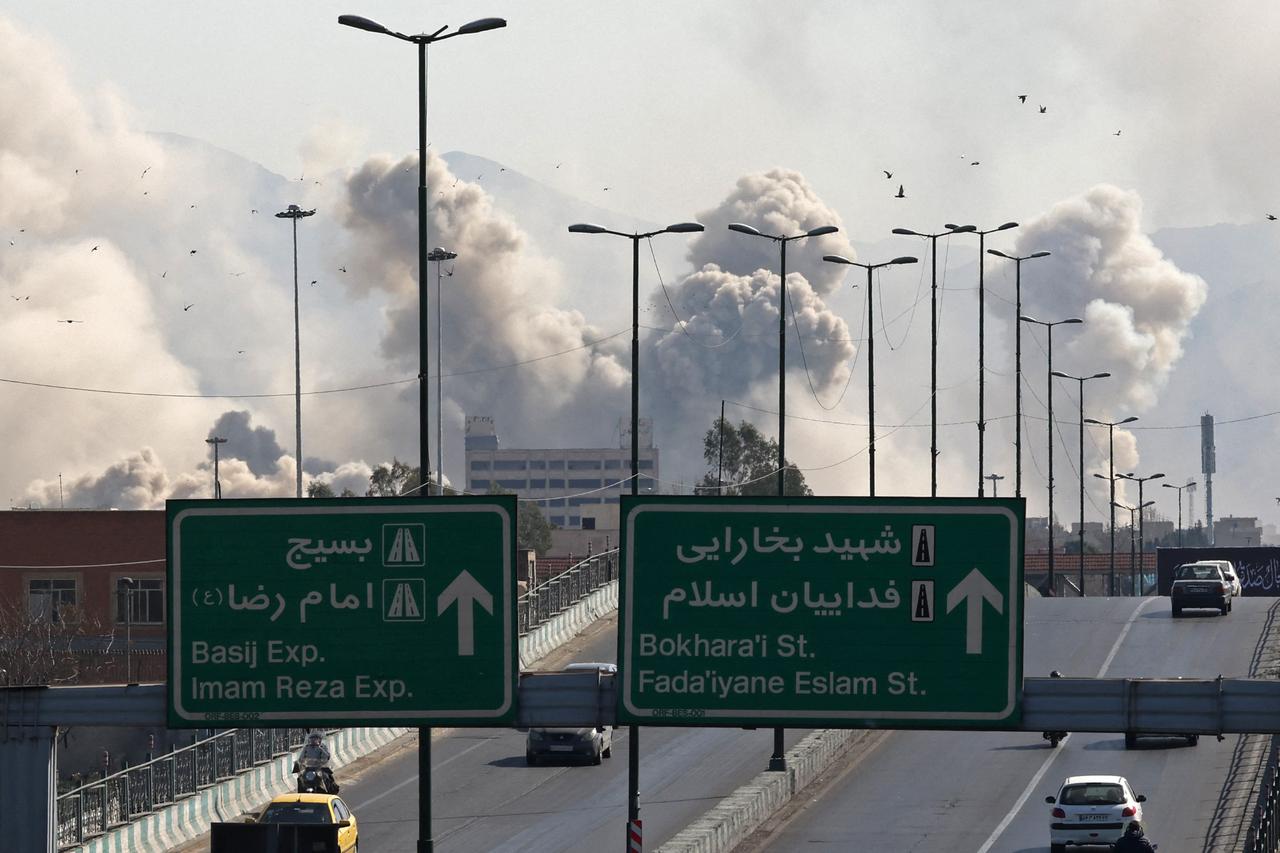
The relationship faced another test this year when the United States and Israel struck Iran. Kosovo supported the operation outright. Albania's prime minister went further, calling for Iran's Revolutionary Guard Corps to be designated as a terrorist organization.
Belgrade, by contrast, maintained neutrality. Vucic described the strikes as a violation of international law and reached for the analogy that has long shaped Serbian political memory, the NATO campaign of 1999, rhetorically placing Iran where Serbia once stood.
Vucic's government kept its channels to Tehran open, and one Serbian official folded Kosovo into the discussion surrounding attacks on American bases, as though the NATO mission that has preserved peace there for a generation were a liability rather than a stabilizing force. Yet none of this appeared to alter Israel's view of Serbia.
That is the aspect of the relationship that deserves attention. Not that Belgrade occasionally diverges from Israeli positions, but that those divergences seem to carry little political cost.
One may argue that this is simply commerce, that defense industries sell where they can and attach little significance to a buyer's wider geopolitical orientation.
Yet the durability of the relationship raises broader questions. Serbia has maintained close ties with Russia, expanded cooperation with China, and preserved channels with Iran, all while deepening military and economic cooperation with Israel.
Commerce can explain transactions. It does not always explain political indulgence. What Israel extends to Belgrade increasingly appears to be more than a series of contracts. It resembles a strategic relationship willing to accommodate contradictions that might prove more difficult elsewhere.
If this sounds like Albanian special pleading, it is worth noting that concerns about Israeli military cooperation with Serbia are no longer confined to Tirana, Pristina, or Sarajevo.
They have also surfaced within NATO and European Union member states.
Croatia's president has publicly accused Israel of helping arm Serbia and serving as the system integrator that folds those capabilities into a broader military architecture.
He questioned why Israel sold Belgrade a rocket system more offensive than anything China had previously provided. His argument was straightforward: meaningful security cooperation depends on trust, and trust becomes difficult when a partner strengthens the military capabilities of a neighboring rival.
He went further than rhetoric, suspending military cooperation with Israel and rejecting a major Israeli air defense purchase.
Croatia's government has not always shared his approach, and his views remain contested at home. Yet the concerns he articulated are concrete.
They echo arguments increasingly heard in quieter conversations across the Balkans: that the central strategic issue is not whether a small Muslim-majority country maintains ties with Israel, but whether a larger regional actor is being armed and empowered while questions surrounding genocide denial remain unresolved.
At that point, the discussion stops being exclusively Albanian, Bosnian or Croatian. It becomes a broader regional question.
Look at what is taking shape in Belgrade. Serbia already operates Chinese air defense systems, maintains longstanding ties with Russia, has declined to align fully with European policies toward Moscow and has preserved communication channels with Tehran.
On that foundation it is now adding Israeli strike technology and a drone-production facility, with Israeli industry helping integrate those capabilities into a broader military framework.
What is emerging outside Belgrade is more than a national arsenal. It is perhaps the one place in Europe where geopolitical patrons who compete almost everywhere else converge around the same client: Chinese systems, Russian influence, continued access to Tehran and increasingly sophisticated Israeli military technology. For observers across the Balkans, this raises legitimate questions about the future strategic balance of the region.
Why do many Albanians view these developments with such concern? Because our historical memory is shaped by moments when the interests of small nations were treated as negotiable.
Our wound is not 1999. It is 1878, the year the great powers gathered in Berlin and transferred Albanian-inhabited territories to Belgrade and Athens as though they were assets to be redistributed. It was the year many Albanians learned that justice in Europe often depended less on principle than on which patron occupied the room.
For a century and a half, Albanians have repeatedly been forced to defend the legitimacy of their own political existence. That experience continues to shape how strategic developments are perceived today. It is also a chapter of history familiar to Türkiye, which witnessed many of the same transformations from the other side of the negotiating table.
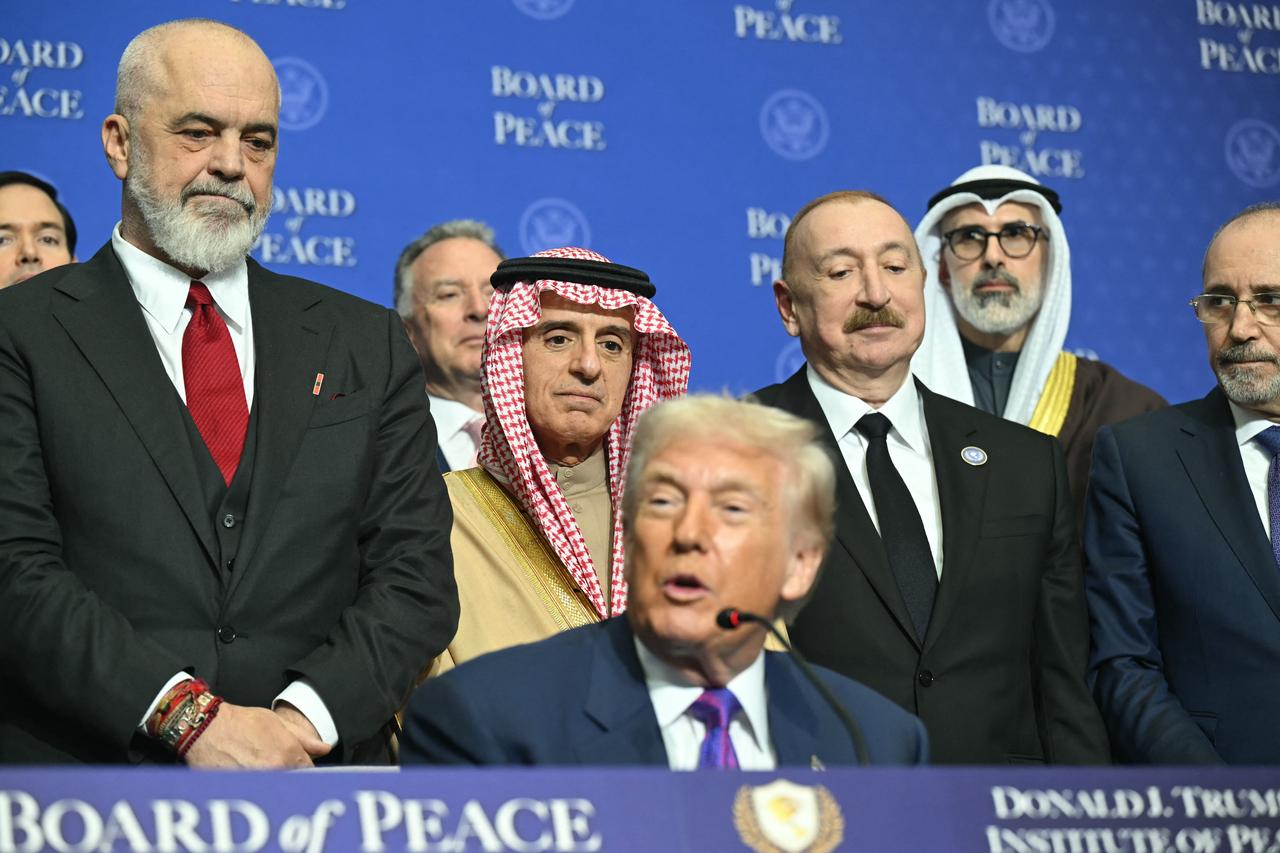
The strongest objection to this argument deserves an honest answer. Albania also purchases Israeli weapons.
Albanian companies cooperate with Elbit, and a meaningful share of the country's defense spending goes toward Israeli systems. Across the Balkans, Israel has become an important supplier as governments modernize their armed forces.
The issue, therefore, is not Israeli technology itself. Nor is it the existence of defense cooperation.
The concern lies in the particular combination that Serbia is assembling: increasingly sophisticated offensive capabilities layered onto unresolved questions of genocide denial and accompanied by a foreign policy that continues to balance among Moscow, Beijing, Tehran and the West.
The weapons alone are not the issue. The broader political and strategic framework into which they are being integrated is.
That is why Albania's engagement with Israel should be understood as a strategic calculation rather than an ideological preference.
In Tirana and Pristina, there is little ambiguity about the importance of relations with Türkiye, which remain among the most significant pillars of both countries' regional outlook and security partnerships. Engagement with Israel does not alter that reality.
Kosovo Prime Minister Albin Kurti operates within a narrower margin for maneuver.
With Kosovo's embassy already in Jerusalem and its diplomatic room more limited, he must navigate carefully, preserving essential relationships while protecting ground that Kosovo has already established.
Albanian Prime Minister Edi Rama operates with a different set of tools. He has greater flexibility to engage Israeli officials directly and to ensure that Serbia's growing influence within Israeli decision-making circles is not left entirely uncontested.
From this perspective, Albania's objective has never been to replicate Serbia's relationship with Israel. It has been to ensure that Belgrade does not enjoy an uncontested advantage in a relationship that increasingly carries strategic implications for the wider region.
Ultimately, the debate is not about whether Albania is too close to Israel. It is about how strategic relationships are evolving across the Balkans and what those changes may mean for the region's future balance.
Serbia has succeeded in cultivating strong relationships with actors who often find themselves on opposite sides of international disputes. That diplomatic flexibility may be admired by some and viewed with suspicion by others. Either way, it deserves careful attention.
Albania is not asking Türkiye to fight its battles or choose sides in regional disputes. Türkiye has long maintained relations across the Balkans while investing heavily in stability, dialogue and regional engagement.
But the full picture deserves consideration.
The discussion about Israel's role in the Balkans should not begin and end with Albania.
In 1878, maps were drawn while Albanians were absent from the room. Today, the circumstances are different. Albania, Kosovo and other regional actors possess greater agency, stronger partnerships and a clearer voice in shaping their future.
The questions raised by Serbia's expanding relationships are therefore not simply Albanian questions.
They are regional ones, and they will remain relevant long after the current debates fade.
DISCLAIMER: The views and opinions expressed in this article are those of the author and may not necessarily reflect the editorial policy of Türkiye Today.


 Set as preferred source
 Set as preferred source


 2 min read
 1 min read


