Sign in
 Newsletters


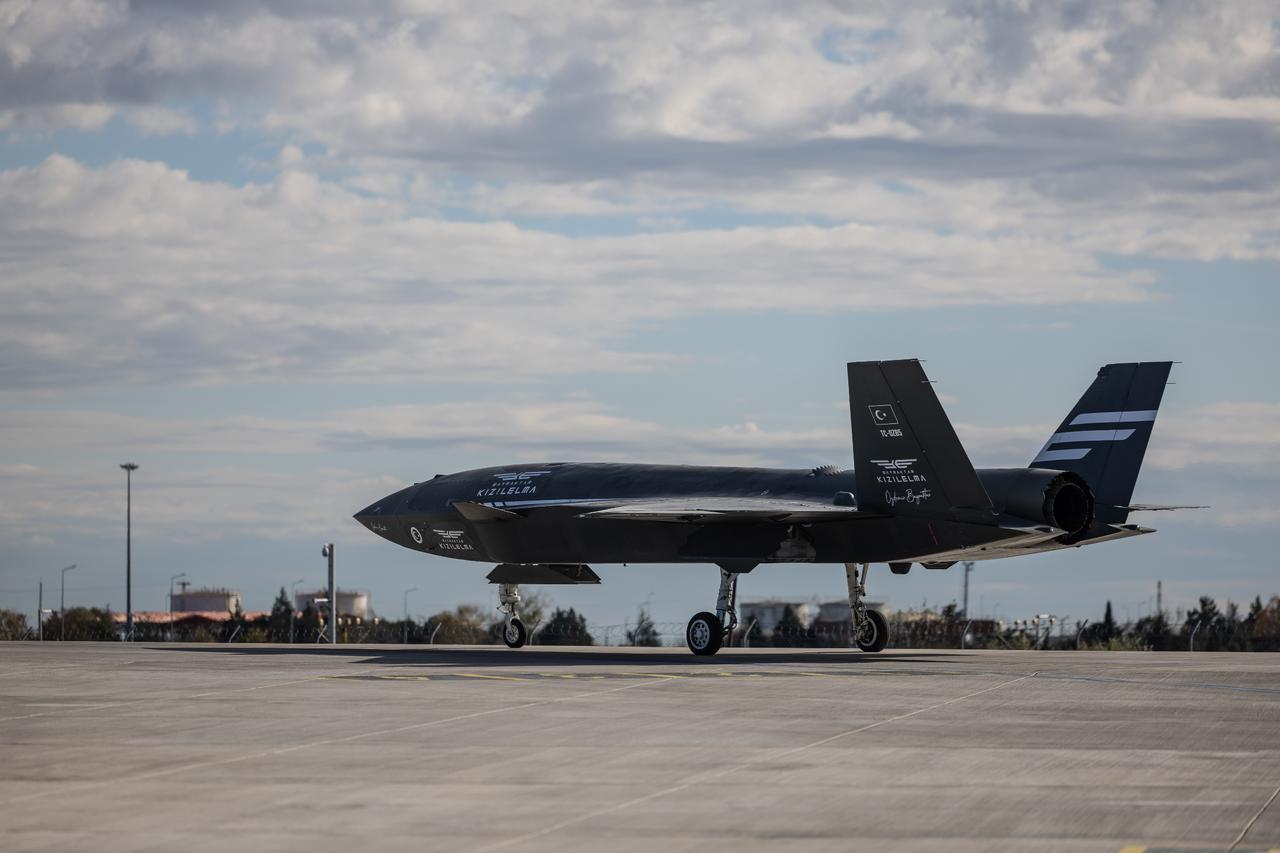


Türkiye on Thursday delivered the first three Kizilelma unmanned fighter jets to its security forces, which Baykar, the aircraft’s developer, says makes it the first country to bring such an aircraft into operational service.
The aircraft, built by the Turkish company Baykar with its own resources, were handed over on November 19, 2026, after passing acceptance tests.
Baykar said test and training flights under the program have reached 600 sorties. The company called the aircraft the biggest goal it has pursued since it began working on unmanned aerial vehicles.
President Recep Tayyip Erdogan welcomed the move in a post on the social media platform NSosyal. He called it “a historic day when a great dream became reality” and said the aircraft was added to the inventory of the Turkish Armed Forces “after years of work and great effort.” Erdogan said he believed the army would go “from victory to victory” with the jet.
Baykar released conceptual renderings of Kizilelma on July 20, 2021, and the aircraft entered the production line on March 12, 2022. Its first flight came on December 14, 2022, ahead of the company’s 2023 target and in the run-up to the 100th anniversary of the Republic of Türkiye.
On April 24, 2023, Kizilelma flew in close formation with Baykar’s Akinci combat drone. The company describes this as the first close formation flight of two unmanned aerial vehicles anywhere.
During Teknofest Istanbul, held from April 27 to May 1, 2023, it also flew in public alongside the manned Soloturk and Turkish Stars display aircraft.
The program moved into weapons trials in the following years. Kizilelma completed its first firing tests with Tolun and Teber-82 munitions on October 8, 2025. On November 17, 2025, the Toygun Electro-Optical Targeting System was integrated into the aircraft.
On November 29, 2025, in a test off the coast of Sinop, Kizilelma hit a jet-powered target aircraft with the Gokdogan beyond-visual-range air-to-air missile, developed by Tubitak Sage. The target was designated by the Murad AESA radar made by Aselsan. Baykar says this made Kizilelma the first unmanned fighter jet to strike a jet-powered aerial target with a missile of that kind.
On December 27, 2025, two Kizilelma aircraft flew in close formation using intelligent fleet autonomy, which Baykar presented as a demonstration of swarm capability. The aircraft flew an autonomous formation with Italian M-346 aircraft on May 20, 2026, a step toward concepts in which manned and unmanned aircraft operate together.
On July 13, 2026, Kizilelma scored a direct hit on a target with the Jet-230 supersonic missile. Later that month it fired Teber-82 and Tolun munitions from its internal weapons bay for the first time. Carrying weapons internally is considered one of the key elements of low observability, often called stealth.
Baykar says it has financed all its projects with its own resources since its founding. The company, which is best known for its Bayraktar TB2 armed drone, says it remained the world’s largest exporter in the unmanned aerial vehicle segment in 2025. It reported $2.2 billion in exports that year, which it described as a record, and said it has led the global combat drone market for the past three years.
Baykar says exports account for about 90% of its revenue in recent years. Using data from the Defense Industry Agency and the Turkish Exporters Assembly, the company says it ranked among Türkiye’s top ten exporters across all sectors in 2023, 2024 and 2025, and received the Champions of Export Award. It was the export leader of the defense and aviation industry in 2021, 2022, 2023 and 2024. Baykar says it alone accounted for one-third of the sector’s exports in 2023 and one-quarter in 2024.
Baykar describes itself as the world’s largest unmanned aerial vehicle company. It says it has signed export contracts with 40 countries in total, 37 of them for the Bayraktar TB2 and 16 for the Akinci to date.


 Set as preferred source
 Set as preferred source


 1 min read


 1 min read