Newsletters


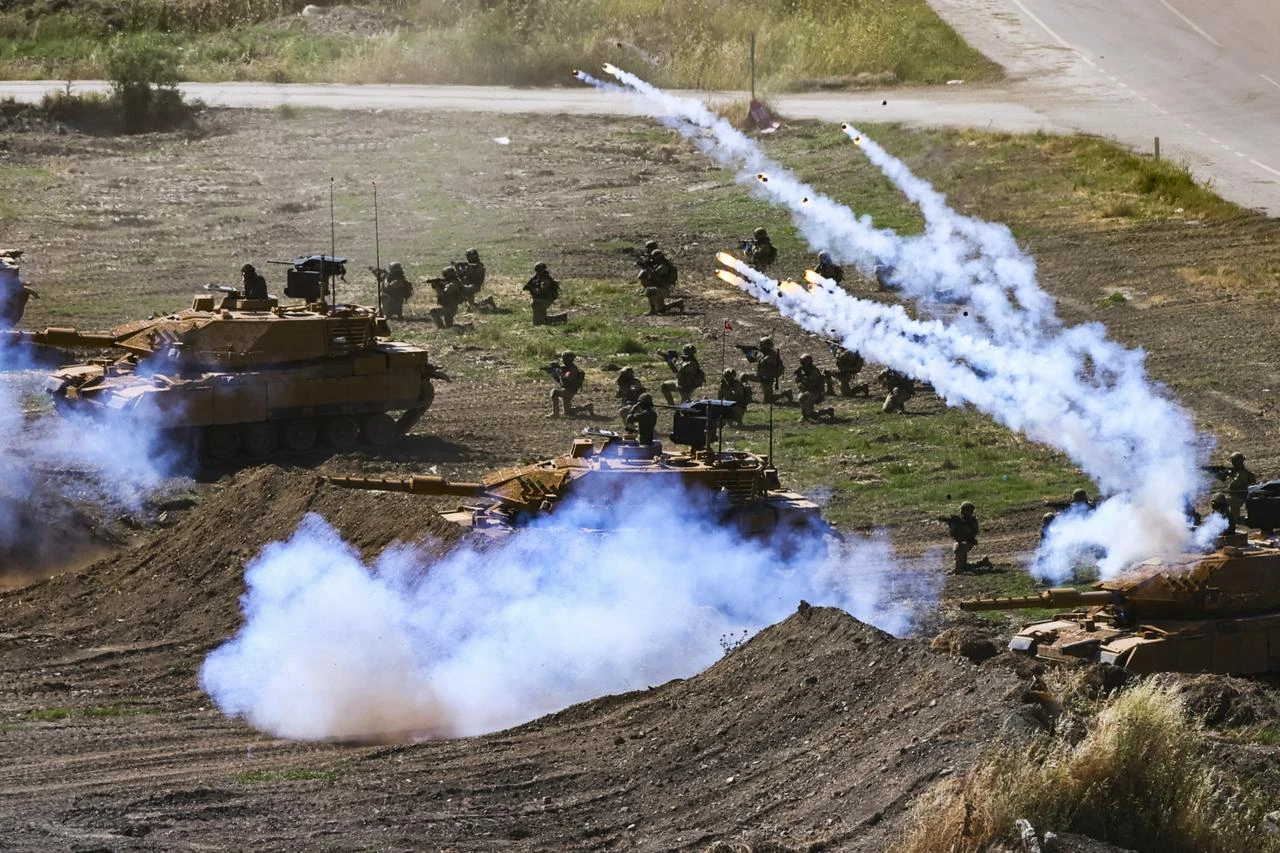


Turkish Aerospace Industries (TAI) General Manager Mehmet Demiroglu said Türkiye is making a strategic contribution to NATO's future security architecture, in remarks at a Chatham House panel in London, while separately detailing new specifications for the company's AYAZ kamikaze drone and providing updates on the KAAN fighter jet program at the Farnborough Airshow.
Speaking at an event titled "Perspectives from Ankara: The Security and Defense Implications of the NATO Summit," hosted by Chatham House, Demiroglu said production capacity, technological development and joint industrial projects are becoming key elements of NATO's collective deterrence.
He said the alliance's emerging "NATO 3.0" security paradigm reflects that security now depends not only on military strength but on a robust defense industry, sustainable manufacturing capacity, resilient supply chains, technological superiority and cooperation among allies.
"Türkiye is making a strategic contribution to NATO's future security architecture," Demiroglu said, adding that TAI contributes to this through its indigenous platforms, engineering infrastructure and production capabilities.
Demiroglu said Türkiye has evolved from a country meeting only its own defense needs into a major producer contributing to the security of allied and partner nations.
"We want to see a stronger NATO with contributions from both sides of the Atlantic," he said, adding that defense spending should be measured not only by budget size but by the specific capabilities developed to address threats.
On TAI's international partnerships, Demiroglu said the planned export of the Hurjet advanced jet trainer to Spain represents more than a commercial success, calling it a strategic step strengthening Turkish aviation technology's position within the European and NATO defense ecosystem.
He said Hurjet can be adapted to different user requirements and can conduct missions in line with NATO standards, which he said would help deepen cooperation with allied countries.
He added that cost-effective, rapidly producible systems are gaining importance alongside advanced platforms as the security environment evolves.
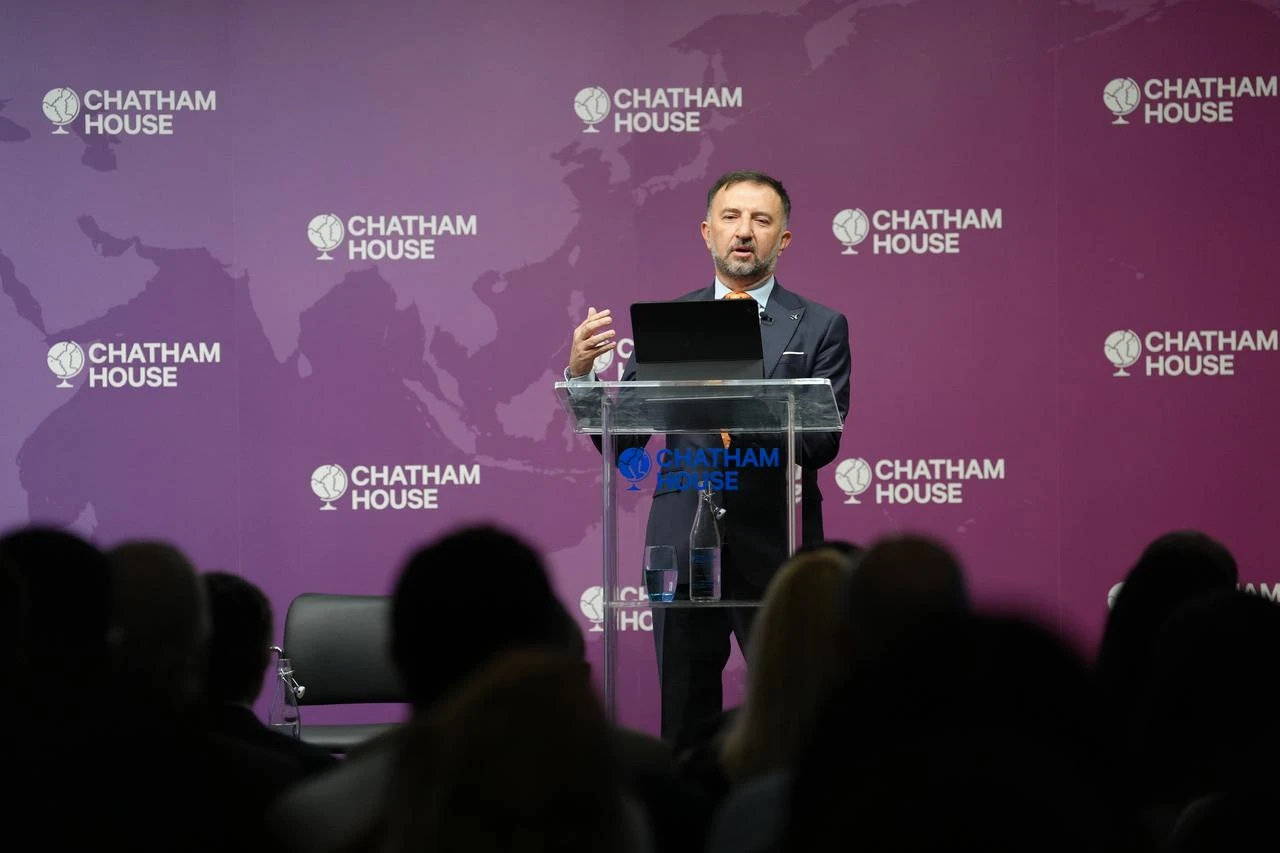

In separate interviews on Turkish broadcaster Haberturk's "Airport" program and Haber Aero, Demiroglu detailed TAI's family of jet-powered kamikaze drones, describing TAI as "a platform company" that builds multi-role systems capable of carrying different payloads rather than solely kamikaze munitions.
"TAI is a platform company. We work to integrate whatever can be integrated onto a flying platform," Demiroglu said.
He described the Super Simsek as a 200-kilogram-payload platform with a range of about 1,000 kilometers, capable of carrying roughly 10 different payload or seeker-head configurations beyond kamikaze use, including decoy warheads and sea-skimming radar-evading seekers.
He described the smaller Simsek as having a range of nearly 700 kilometers at speeds of 600-700 km/h.
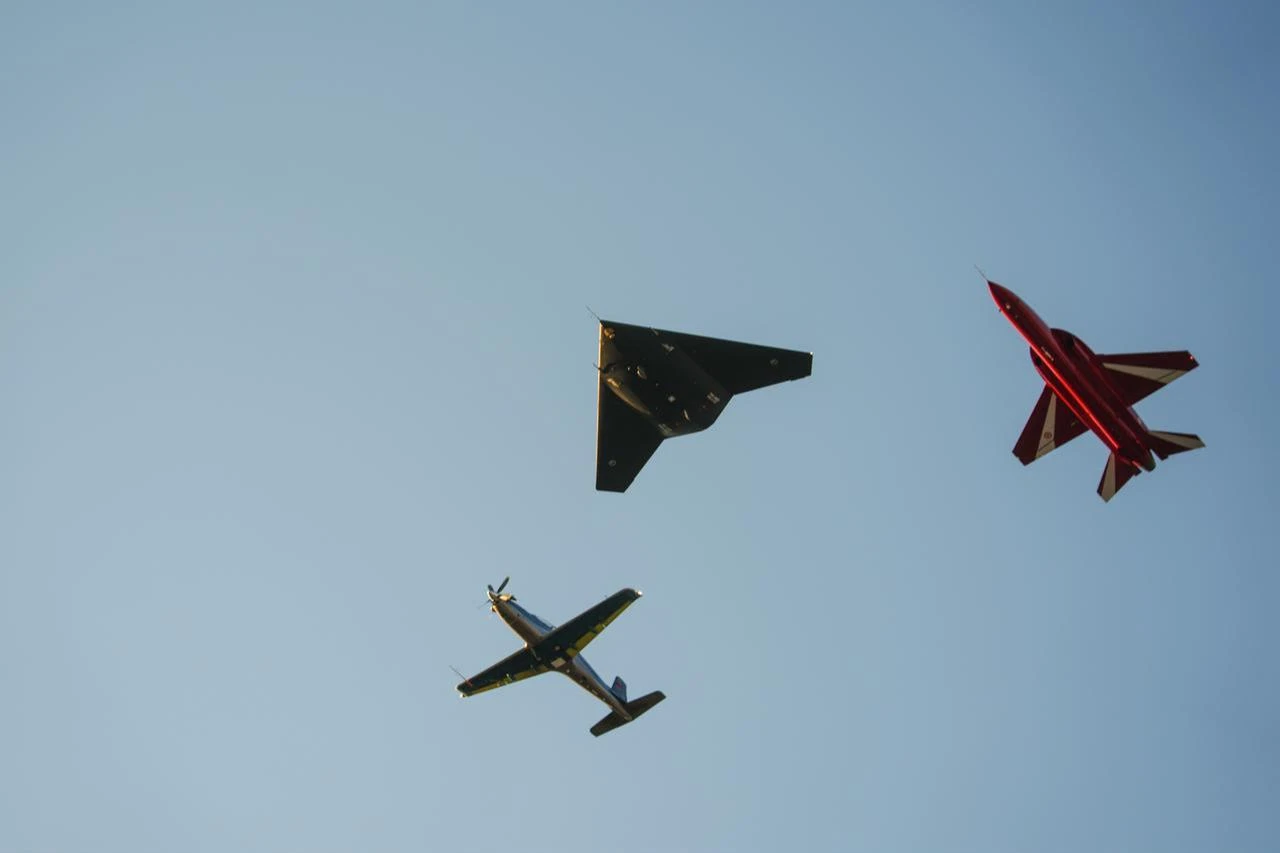
Demiroglu said the newest and smallest platform, AYAZ, has a range "of 200-plus kilometers" and, unlike Simsek and Super Simsek, is designed with low observability against radar.
According to TAI's own technical materials, the Super Simsek Tactical UAV System can reach speeds of Mach 0.85 and altitudes of 35,000 feet, and can be used to deceive and suppress air defense systems, including electronic warfare missions, radar jamming, and appearing as a larger aircraft on enemy radar. It can be air-launched from the Anka III, Aksungur, and Anka drone platforms or ground-launched via a rocket-assisted system (Simsek K), and is designed to support swarm-drone operations.
Fitted with a 35-kilogram warhead, it can also serve as a kamikaze weapon platform, using AI-assisted swarm flight capability to strike multiple targets simultaneously, and can additionally serve as a target aircraft for air-defense testing and training.
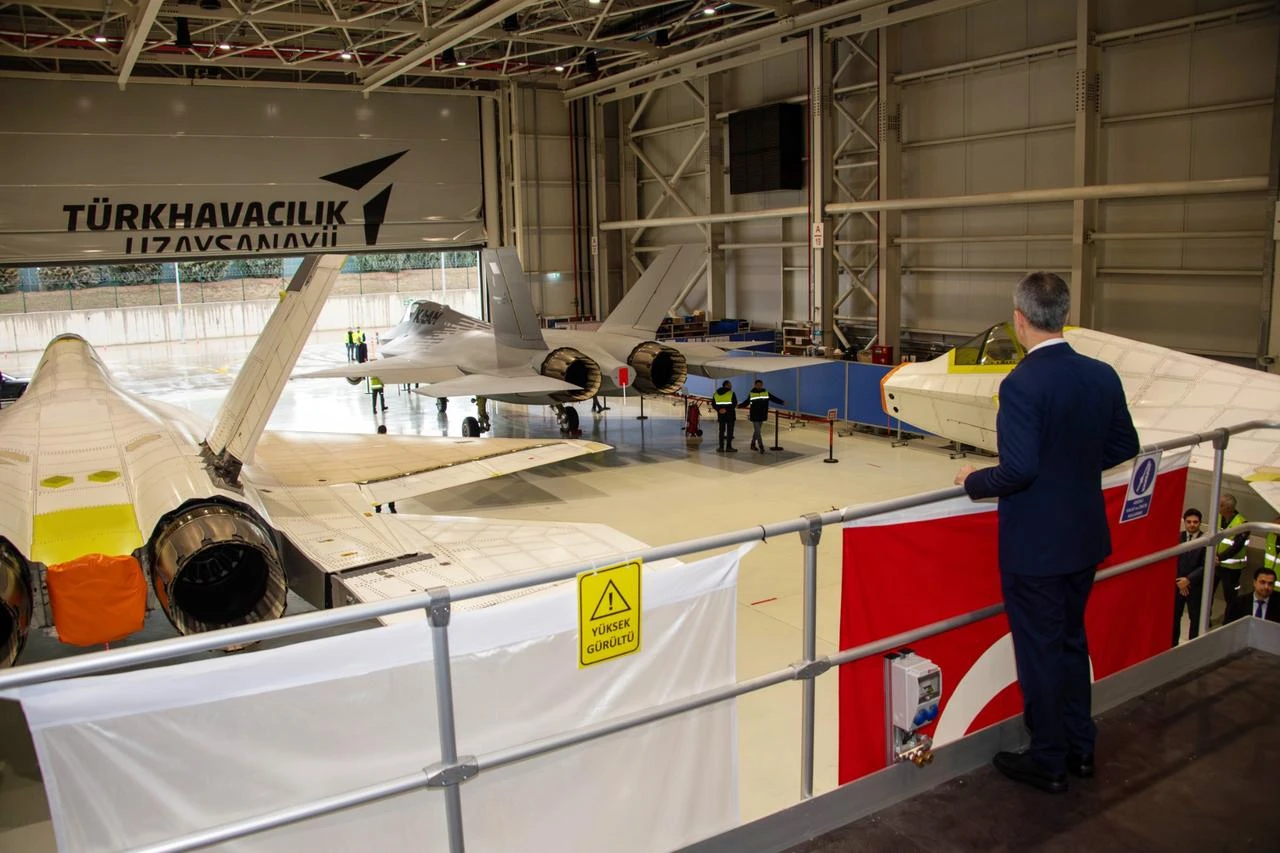
At Farnborough, Demiroglu discussed the status of KAAN's F110 engine supply from GE Aerospace, saying the program's prototype development had already been supported by 10 engines on hand, with orders placed for serial production.
"As of July 9, we consider the congressional approval process to have been effectively completed, since Congress's objection period expired without any objection or obstruction," he said.
He said TAI is working closely with GE Aerospace on deliveries aligned with the serial production schedule, which remains targeted to begin toward the end of 2028.
Demiroglu said differences between the planned Block-10 and Block-20 aircraft are not substantial, with most distinctions, roughly 90%, he said, expected to be software-related, reflecting capabilities activated progressively as testing and certification proceed.
He said current planning anticipates roughly 80 F110 engines, including spares, enough to deliver about 40 KAAN aircraft to the Turkish Air Force using these engines, while TAI's priority remains its indigenous TF35000 engine program, under development by Turkish Engine Industries (TEI).
"If I had to keep only one project at TAI, I would say KAAN. If TEI had to keep only one project, it would be TF35000," Demiroglu said.
He said the target is to begin delivering TF35000-powered KAAN aircraft around 2033, and described KAAN's advancement, from program launch in 2018 to first flight and now discussion of serial production, as outpacing comparable European efforts including the French-German-Spanish FCAS program and the U.K.-Italy-Japan GCAP program.
Demiroglu said three KAAN prototypes have been built so far, with two more planned to fly this year, and said discussions are ongoing with several countries, some at government level, some at company level, about potential international partnerships, though no new agreement is ready to be announced.
He cited Indonesia's earlier commitment to the program as an important reference point for other countries, saying it is possible KAAN could be developed jointly with three, four or even five countries within the next one to two years.


 Set as preferred source
 Set as preferred source


 2 min read
 1 min read