Newsletters


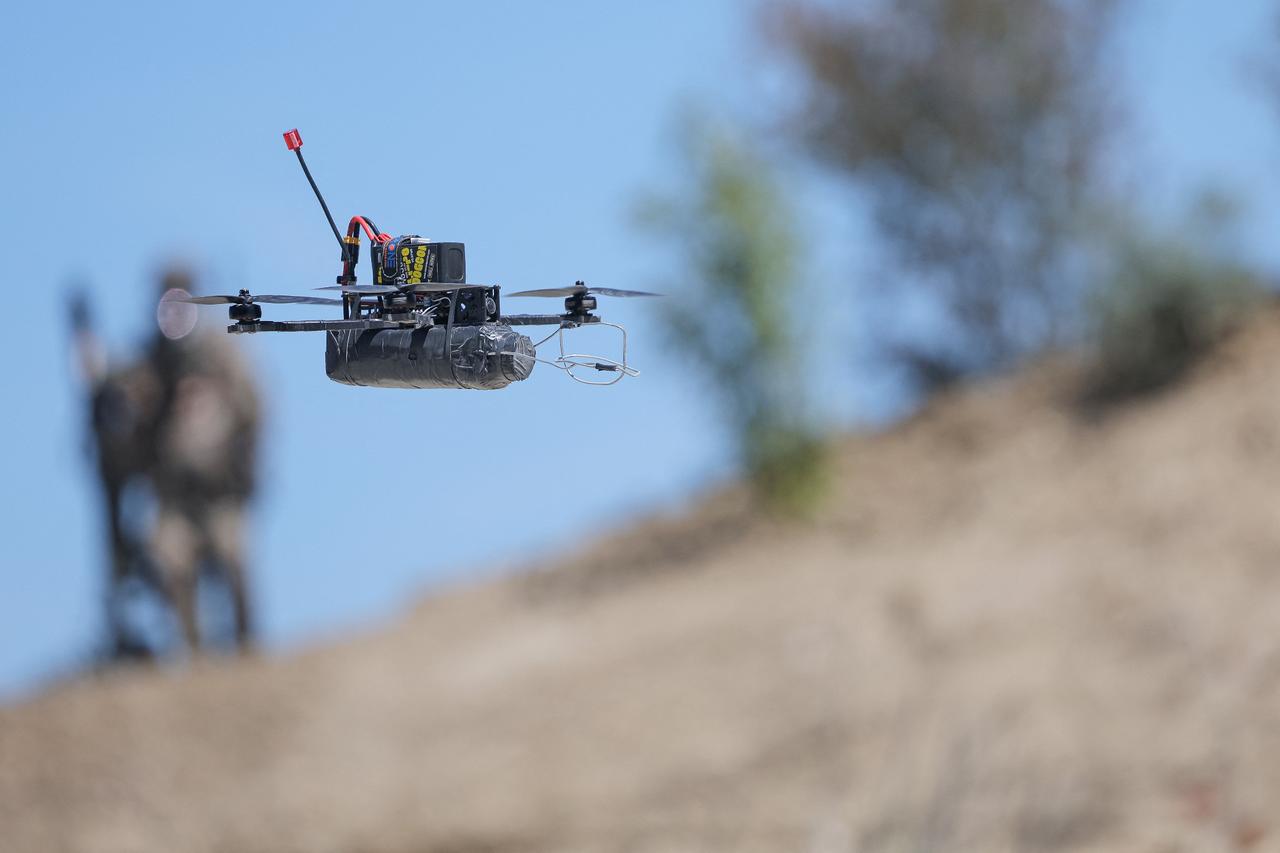


Türkiye is targeting the production of 5 million unmanned aerial vehicles (UAVs) within five years and 10 million within a decade, Chief of General Staff Gen. Selcuk Bayraktaroglu said Thursday, assessing the Denizkurdu-I/2026 exercise.
"In five years, the target is 5 million UAVs, and in ten years, 10 million UAVs are targeted to be produced. Our defense industry's production capacity is at a level capable of meeting this target," Bayraktaroglu said, speaking aboard the TCG Anadolu off Aksaz during the exercise's Distinguished Observer Day.
Bayraktaroglu said the exercise also featured live weapons fire alongside surface warfare, submarine defense, mine countermeasures and amphibious operations training, with strikes from Turkish-made ships using domestically produced munitions hitting their targets with full accuracy.
"We use manned and unmanned systems together at sea. Kalkan UAV and FPV drone demonstrations were carried out. An attack on a surface target was carried out using the MKE-produced Pirana Kamikaze Unmanned Surface Vehicle," he said.
"The importance of similar unmanned systems will increase further in the future. These systems have reshaped, and continue to reshape, the naval operations concept. In particular, vertical-takeoff-and-landing UAVs, kamikaze USVs and unmanned underwater vehicles will take their place as high-value-added capabilities that enhance the capacity of the Turkish Armed Forces and our Naval Forces in the future battlespace, in order to protect our rights and interests in the Blue Homeland," Bayraktaroglu noted.
Bayraktaroglu said he followed the exercise's activities with pride and excitement alongside force commanders, praising the training level, discipline and high degree of interoperability among the forces involved.
He said the Turkish Armed Forces (TAF) possess the capability to carry out any kind of operation with strong combat power, calling this a key factor in Türkiye's regional deterrence, with the Naval Forces serving as a central element of that deterrence.
"Our Naval Forces, whose foundations were laid by Caka Bey in 1081, have for nearly a thousand years protected our rights and interests in the 'Blue Homeland' with resolve and determination, and will continue to do so," he said.
Bayraktaroglu said maritime and airspace security is maintained through the effective use of manned and unmanned systems in accordance with international law, crediting strong cooperation with the defense industry for developing this capacity.
He said Türkiye ranks among the world's leading countries capable of simultaneously designing, building and sustaining a large number of warships using domestic capabilities.
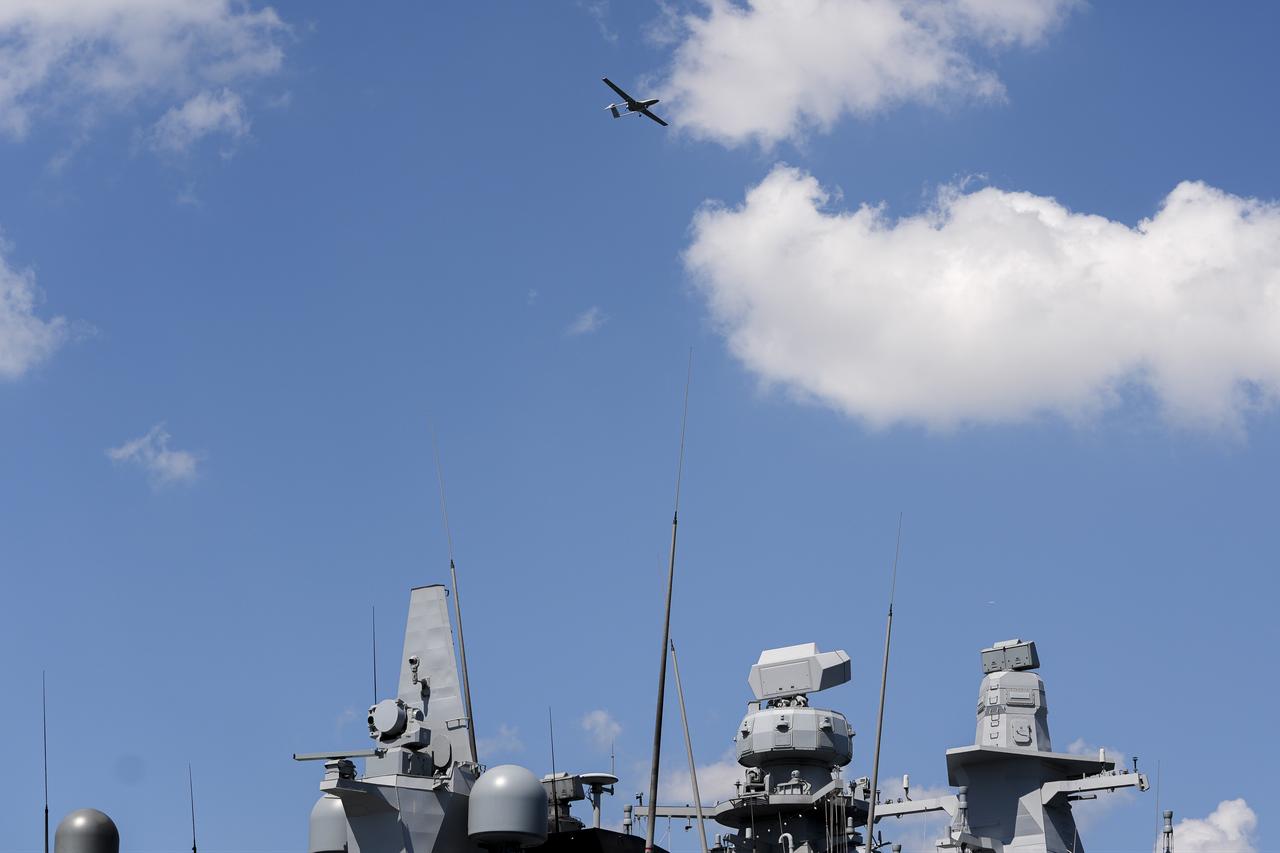

Bayraktaroglu noted that warships, aircraft carriers and submarines produced or planned under the Milgem and Milden projects are globally competitive, saying these domestically developed platforms and technologies allow the public to see the level reached by the defense industry firsthand.
He cited Teknofest Mavi Vatan (Blue Homeland) as an example of such efforts, saying, "Young people's interest in maritime and defense technologies has reinforced our confidence in the future. For this, we thank Baykar. Our Naval Forces Command has carried out 88 exercises over the past two years, 20 national and 68 international. Our naval elements, while resolutely protecting our rights and interests in the Blue Homeland, are successfully fulfilling their duties in the Black Sea, off the coast of Somalia, in Libya and Qatar, and in monitoring Senegal's maritime domain, contributing to regional and global security."
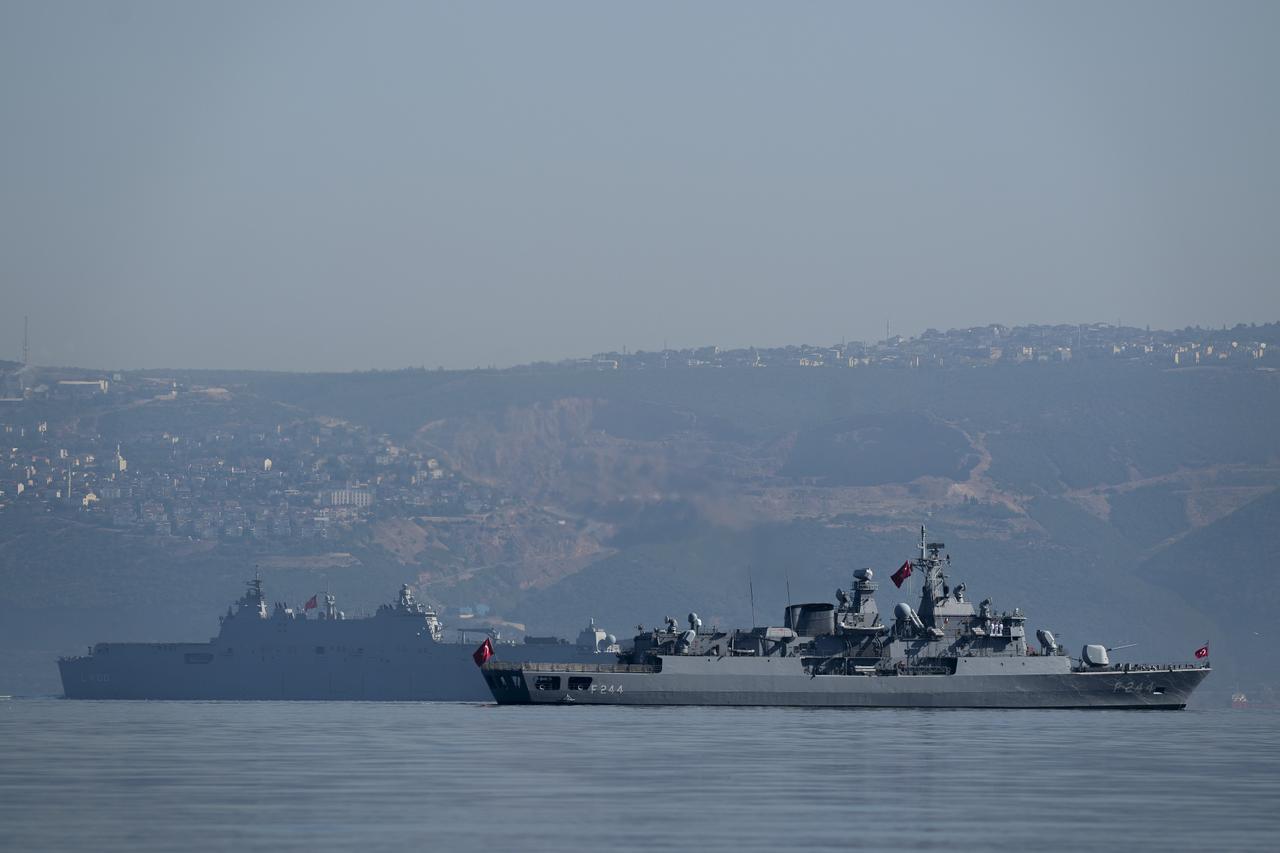
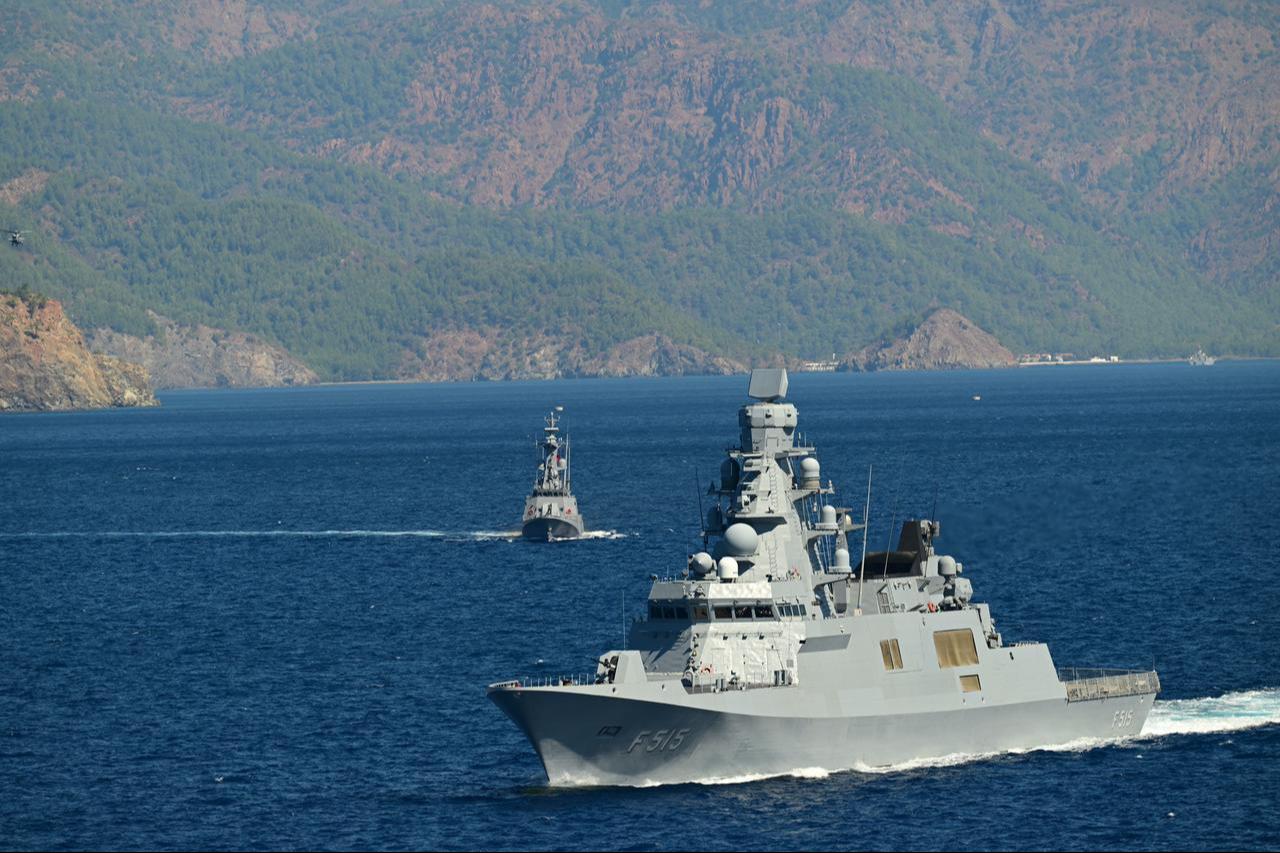
Bayraktaroglu said the Denizkurdu-I/2026 exercise runs from Sept. 20-25 across the Black Sea, Marmara Sea, Aegean Sea and Eastern Mediterranean, with the Naval Forces Command as the lead participant and the Land Forces, Air Forces and Coast Guard Command in supporting roles.
He said roughly 14,000 personnel took part, along with 100 surface vessels and 50 aircraft, with cyber capabilities and AI-supported programs used extensively throughout, alongside unmanned naval vehicles, UAVs and newly developed underwater and surface platforms deployed across various phases.
The exercise's Distinguished Observer Day, held off Marmaris-Aksaz, the second phase of the exercise in the Eastern Mediterranean, included amphibious operations with imagery transmitted from the Foca area to the TCG Anadolu.
Weapons fire included a Hellfire guided missile from an SH-70 helicopter, 20mm cannon fire from an AH-1W helicopter, and a MAM-C strike from a TB-2 Unmanned Combat Aerial Vehicle (UCAV), along with surface fire from frigates, corvettes and assault boats, cannon fire from a Super Cobra helicopter, and a MAM-T strike from an Aksungur drone.
Bayraktaroglu addressed personnel by radio during a ceremonial pass-in-review; Naval Forces Commander Adm. Ercument Tatlioglu, Air Forces Commander Gen. Rafet Dalkiran, T3 Foundation board chairman Selcuk Bayraktar, and Roketsan General Manager Murat Ikinci also observed the exercise.
Defense Ministry spokesman Rear Adm. Zeki Akturk separately confirmed the exercise's scope, saying it aimed to develop participating units' reasoning, foresight and decision-making abilities in high-threat environments and to reinforce joint interoperability among the force commands, describing it as one of the Naval Forces' largest exercises, incorporating readiness training, live weapons fire, logistics integration and high-threat-environment operations.
Bayraktaroglu said the exercise featured a strike on a surface target using the MKE-produced Pirana Kamikaze Unmanned Surface Vehicle (K-USV).
"An attack on a surface target was carried out using the MKE-produced PIRANA Kamikaze Unmanned Surface Vehicle. The importance of similar unmanned systems will increase further in the future," he said.
In the demonstration, the Kalkan vertical-takeoff unmanned aerial vehicle, produced by Baykar and recently added to the Naval Forces' inventory, detected the target and transmitted its location data to the Pirana system.
The Pirana K-USV, powered by a water-jet-driven diesel engine, can reach a maximum speed exceeding 40 knots and has a range of more than 200 nautical miles with a displacement of roughly 1,200 kilograms.
The system carries a 100-kilogram high-explosive, pre-fragmented warhead with a precision fuze, and uses jamming-resistant CRPA-supported GNSS, electro-optical cameras, and a mission computer for navigation and targeting.


 Set as preferred source
 Set as preferred source



 3 min read