Newsletters


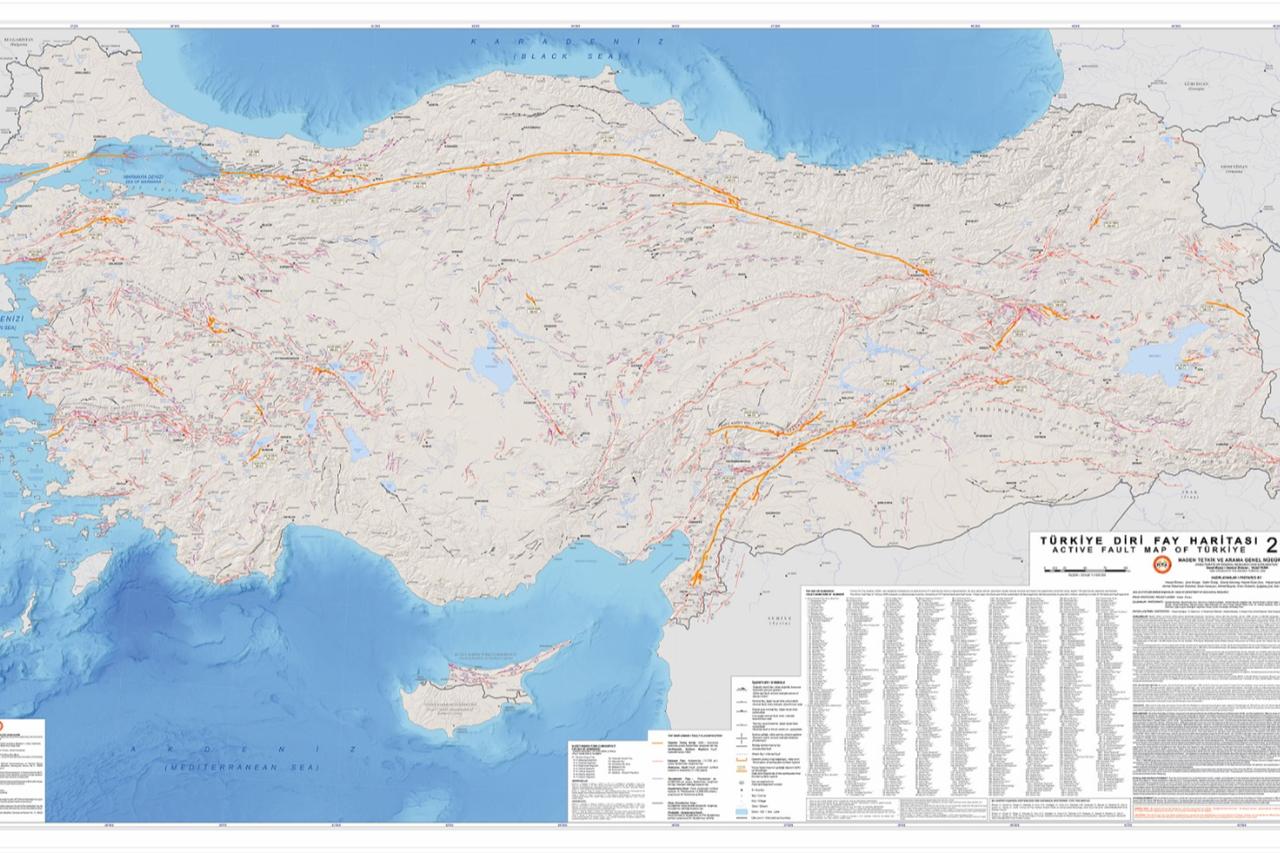


Türkiye's Mineral Research and Exploration Institute (MTA) has published a new version of the country's Active Fault Map, 13 years after the last update. The total number of identified active faults has increased from 485 to 700.
The new map, called "Türkiye Active Fault Map-2026," was introduced during MTA's Scientific Events Week and at the institute's 91st anniversary ceremony in Ankara.
MTA Director General Vedat Yanik said the update had been part of the investment program since 2022 and was completed following extensive fieldwork and academic research.
"The number of active faults, which was 485 in the 2013 edition, has risen to 700 in this map with new data," Yanik said.
"This map and the digital database we have prepared will serve as a fundamental reference for earthquake hazard analyses, critical infrastructure investments and our national disaster risk reduction policies."
Yanik said that because Türkiye is located in the Alps-Himalaya orogenic belt, it is important to keep its active tectonic structures mapped accurately and up to date. This is not just a scientific task, but a strategic need.


The map was launched during MTA Scientific Events Week-2026, a five-day event featuring 48 oral presentations and 20 poster presentations by researchers from the institute.
Yanik said the event will bring together results from ongoing MTA projects and share them with academics, the public, and industry representatives.
Since its founding in 1935, MTA has played a key role in major mineral and geological discoveries in Türkiye. These include the country's first oil discovery in Batman, rare earth element deposits in Eskisehir-Beylikova, and copper resources in Elazig-Maden, Sinop-Boyabat, and Kahramanmaras.


 Set as preferred source
 Set as preferred source


 1 min read
 1 min read