Newsletters


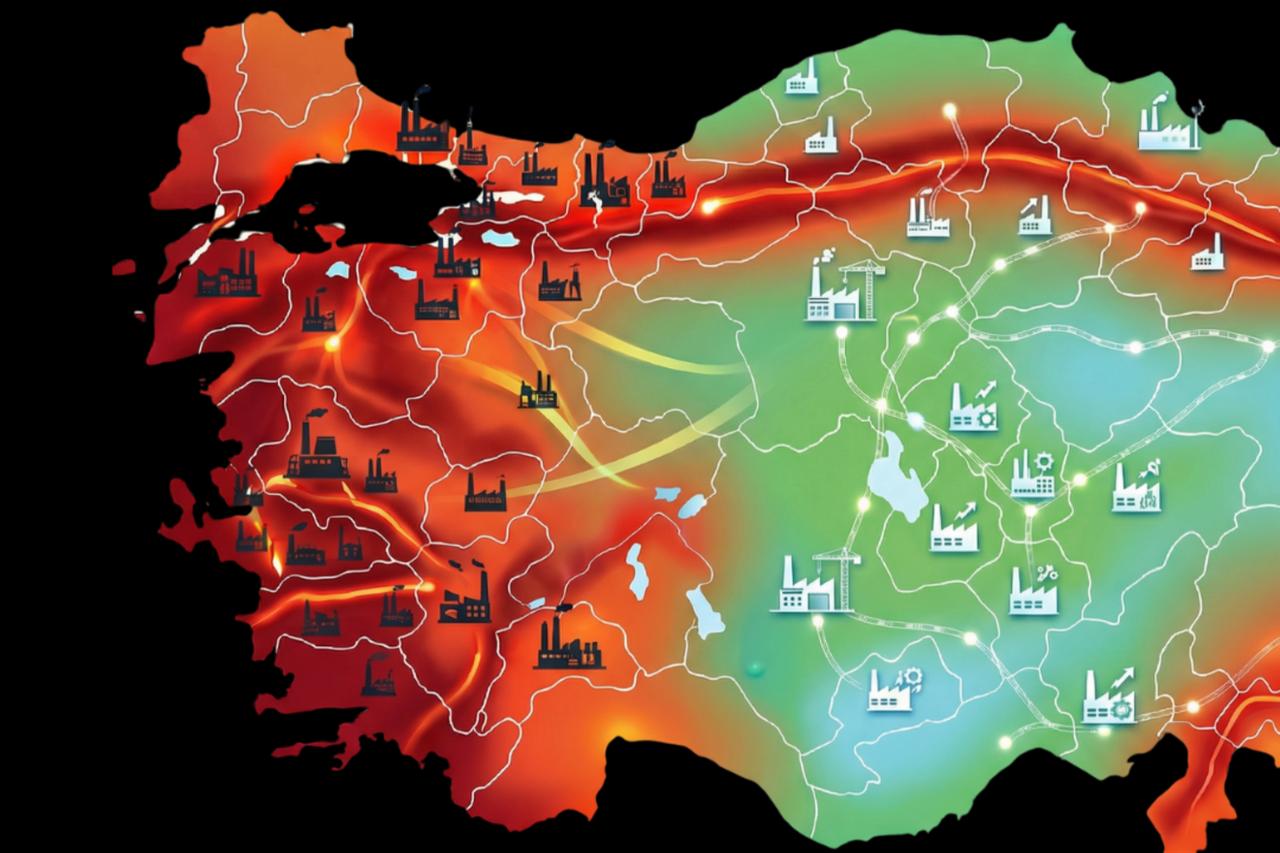


Türkiye has launched a national strategy to reduce heavy industrial concentration in Istanbul and the wider Marmara region.
The government aims to protect production, logistics, and energy infrastructure from earthquake risk while creating new industrial hubs across central and southern Anatolia.
The Ministry of Industry and Technology is leading the program. Minister Fatih Kacir told lawmakers that 166 organized industrial zone projects are now active in 64 provinces.
He said the objective is to spread industry beyond Marmara, support balanced regional development, and increase local employment.
The ministry has also prepared a National Industrial Areas Master Plan, as reported by Türkiye daily.
The plan focuses on relocating industrial activity away from metropolitan centers and high disaster risk zones toward safer provinces in Anatolia.
Authorities have launched a risk assessment of critical industrial and infrastructure sites in Marmara.
The study covers Istanbul, Tekirdag, Bursa, Balikesir, Canakkale, Yalova, Kocaeli, and Sakarya. It includes 77 organized industrial zones as well as major factories, transport corridors, and energy infrastructure.
Based on the findings, the ministry will prepare a site selection guide to direct future industrial planning.
Bogazici University Kandilli Observatory and the Earthquake Research Institute are conducting the technical work with government institutions.
A separate development program led by the Orta Anadolu Kalkinma Ajansi focuses on Kayseri, Sivas, and Yozgat.
The project aims to expand production capacity, reinforce industrial structures, and integrate these provinces into national logistics networks.
The provinces expected to host new or relocated industrial zones include:
These provinces fall into lower earthquake risk categories.
Officials say the relocation plan also aims to ease pressure on Istanbul and the Marmara while safeguarding national production against disaster disruption.
Government geological data highlights the scale of the risk.
The General Directorate of Mineral Research and Exploration reports that 45 provinces and 110 districts sit on active fault lines. The North Anatolian Fault stretches 1200 kilometers and passes through the centers of 24 cities. Segments of this fault can generate earthquakes of magnitude 7 or higher.
The West Anatolian Fault system covers major cities including Izmir, Aydin, Manisa, Mugla, and Denizli. Several of these provinces host heavy industrial facilities.
Lower-risk provinces include Sinop, Giresun, Trabzon, Rize, Artvin, Kirklareli, Ankara, Edirne, Nevsehir, Nigde, Aksaray, Konya and Karaman.
These provinces now form the geographic focus of Türkiye’s future industrial planning.
Officials say the project is moving from planning to implementation. Risk analysis results will determine which facilities require priority relocation. The government aims to secure production continuity, reduce disaster exposure, and build a more balanced national industrial structure.
No timeline has yet been announced for full relocation, but planning studies and risk mapping are now underway.


 Set as preferred source
 Set as preferred source



 2 min read