Newsletters


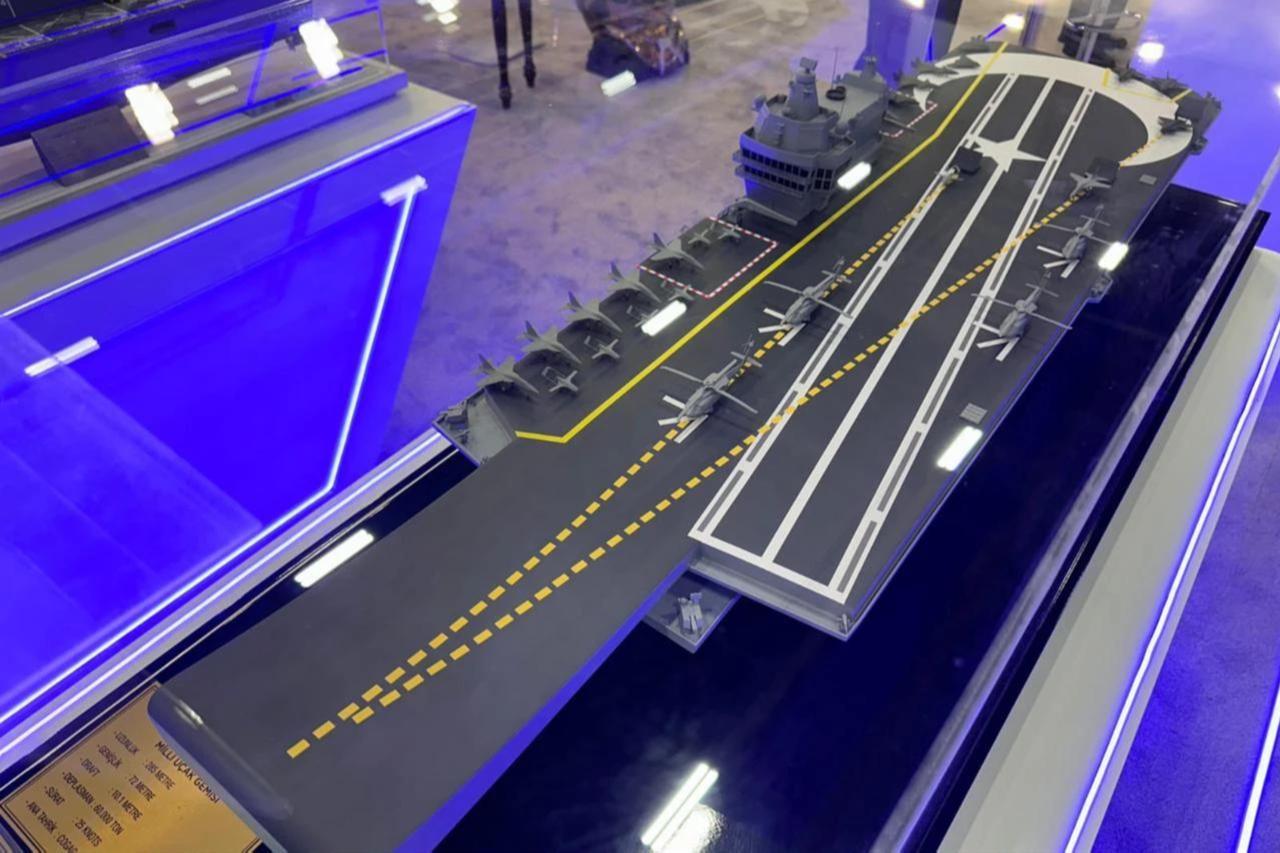


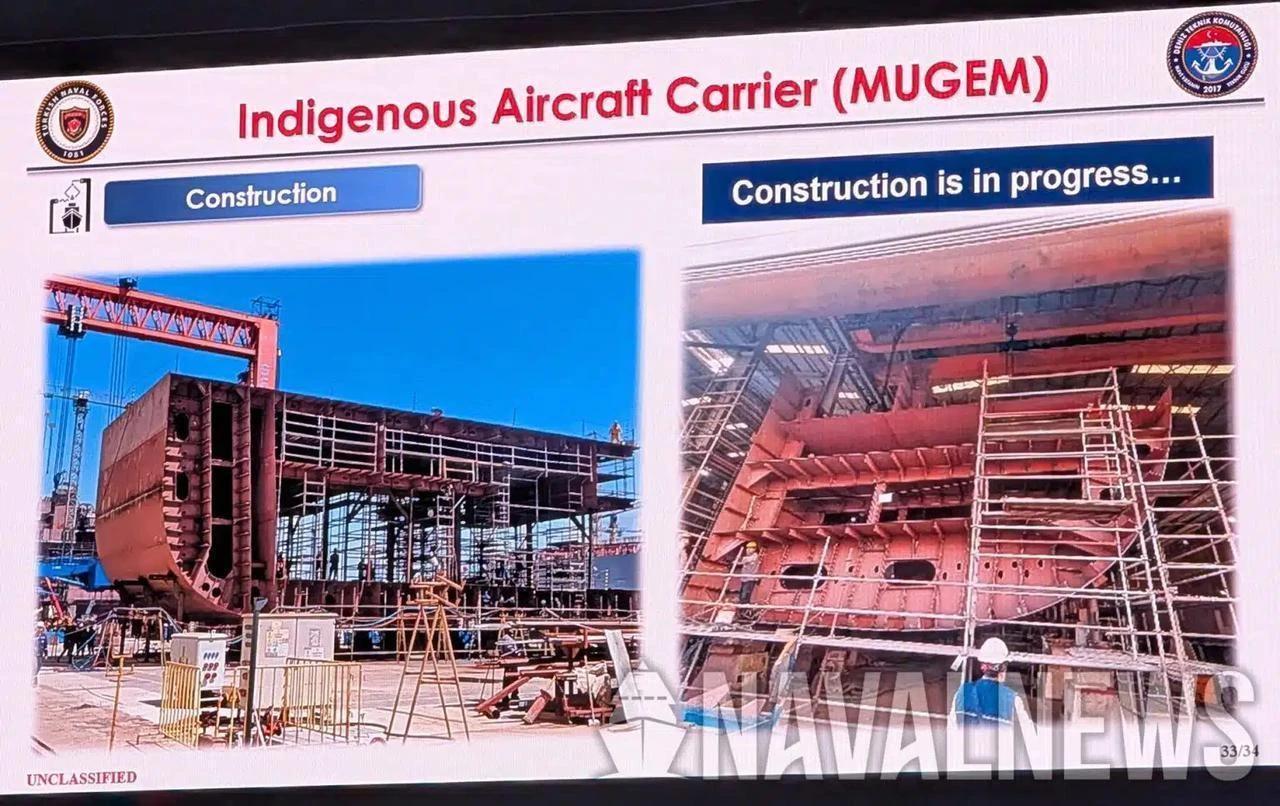
Türkiye's National Aircraft Carrier (MUGEM) will launch on Sept. 27, 2027, Naval Forces Commander Adm. Ercument Tatlioglu said, as Industry and Technology Minister Mehmet Fatih Kacir separately outlined Türkiye's broader naval ambitions during a visit to Teknofest Blue Homeland.
"Next year, on Sept. 27, 2027, our national aircraft carrier will meet the sea," Tatlioglu said in an interview with CNN Turk at Teknofest Blue Homeland, held at Golcuk Shipyard Command.


Tatlioglu said the vessel's construction process is progressing well and that it will not be limited to aircraft operations, with unmanned aerial, naval and underwater vehicles to be used jointly from the platform.
Tatlioglu said the carrier will operate unmanned aerial vehicles including the Kizilelma, and highlighted the Naval Forces' broader unmanned capabilities, noting the service currently operates five types of unmanned surface vehicles (USVs) and two types of kamikaze unmanned naval vehicles (K-USVs), along with three different types of unmanned underwater vehicles (UUVs).
Tatlioglu said the carrier's combination of capabilities would make it a world first.
"It will be an aircraft carrier that can both fly unmanned aircraft and deploy unmanned naval vehicles and unmanned underwater vehicles from within it, and we will become the first country in the world to operate such an aircraft carrier," Tatlioglu said.
He said the carrier will be able to hold 52 Kizilelma unmanned combat aircraft (UCA).
Tatlioglu said operational work will begin once the ship is launched, and that preparations related to Kizilelma and other systems will take time but should progress more quickly once the vessel enters the water next year.
Speaking separately during his own visit to Teknofest Blue Homeland, Kacir described the TF-2000 air defense destroyer as a "steel dome floating on the seas" that will help protect the fleet with integrated air defense systems.
"We are developing and producing our own national aircraft carrier, and we are working, Allah willing, to launch it by the end of 2027. All of this represents capabilities that only a handful of countries in the world possess. Türkiye is no longer competing in green waters. Türkiye is no longer content with merely guarding its coastlines. Türkiye now holds an intercontinental, global ambition," Kacir said.
Kacir said Türkiye has built up capabilities across multiple naval domains, citing the TCG Anadolu as the world's first ship built as a UCAV carrier, along with the Ada-class corvettes TCG Heybeliada, TCG Buyukada, TCG Burgazada and TCG Kinaliada, and Türkiye's first domestic frigate, TCG Istanbul, with sister ships TCG Izmir and TCG Izmit to follow.
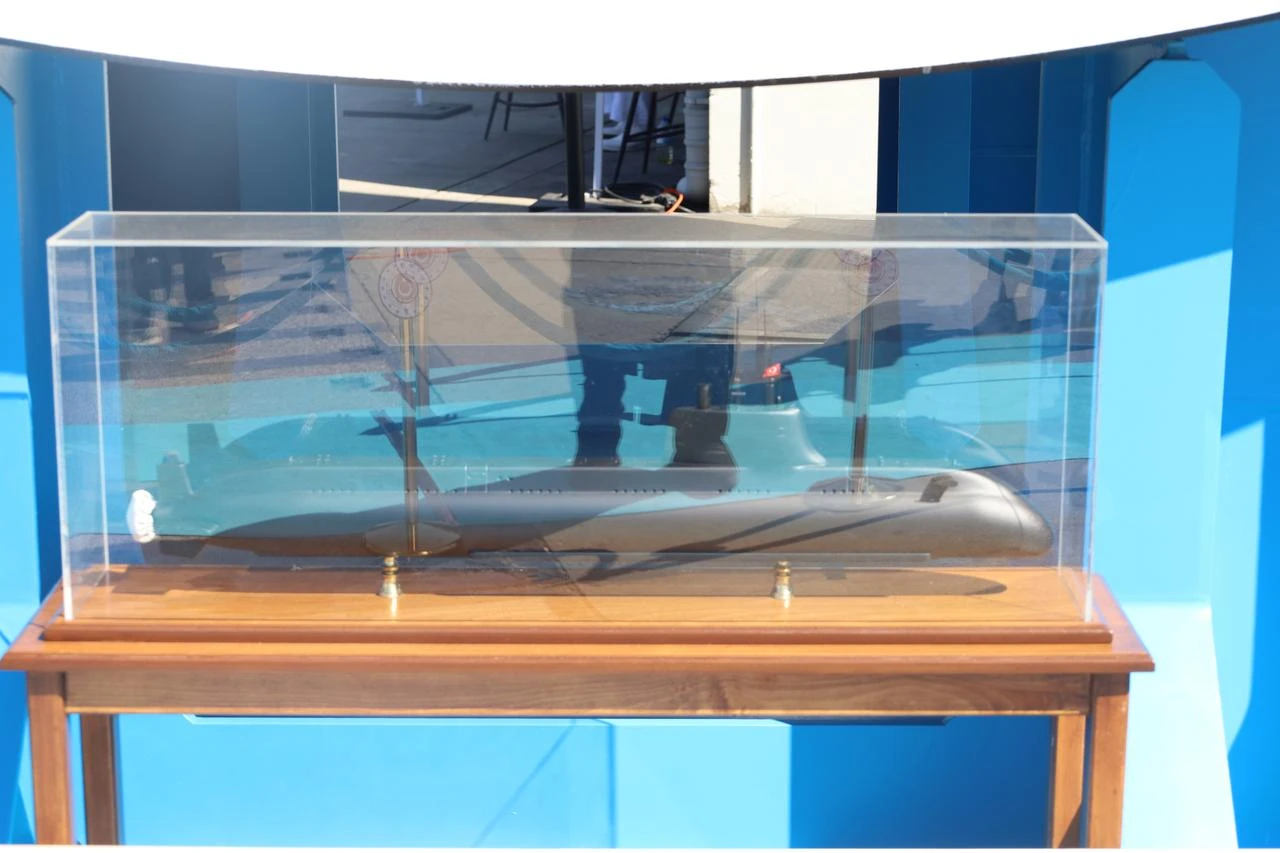
He also pointed to the Reis-class submarines, including the Piri Reis and Murat Reis, with the Hizir Reis expected soon, describing them as submarines with air-independent propulsion (AIP) systems capable of long submerged patrols and difficult detection by adversary forces.
Kacir cited the Atmaca anti-ship missile, the Akya heavy-class torpedo, and the Malaman smart naval mine, developed by Türkiye's Scientific and Technological Research Council (TUBITAK), as further examples of domestic weapons systems delivered to the Turkish Naval Forces.
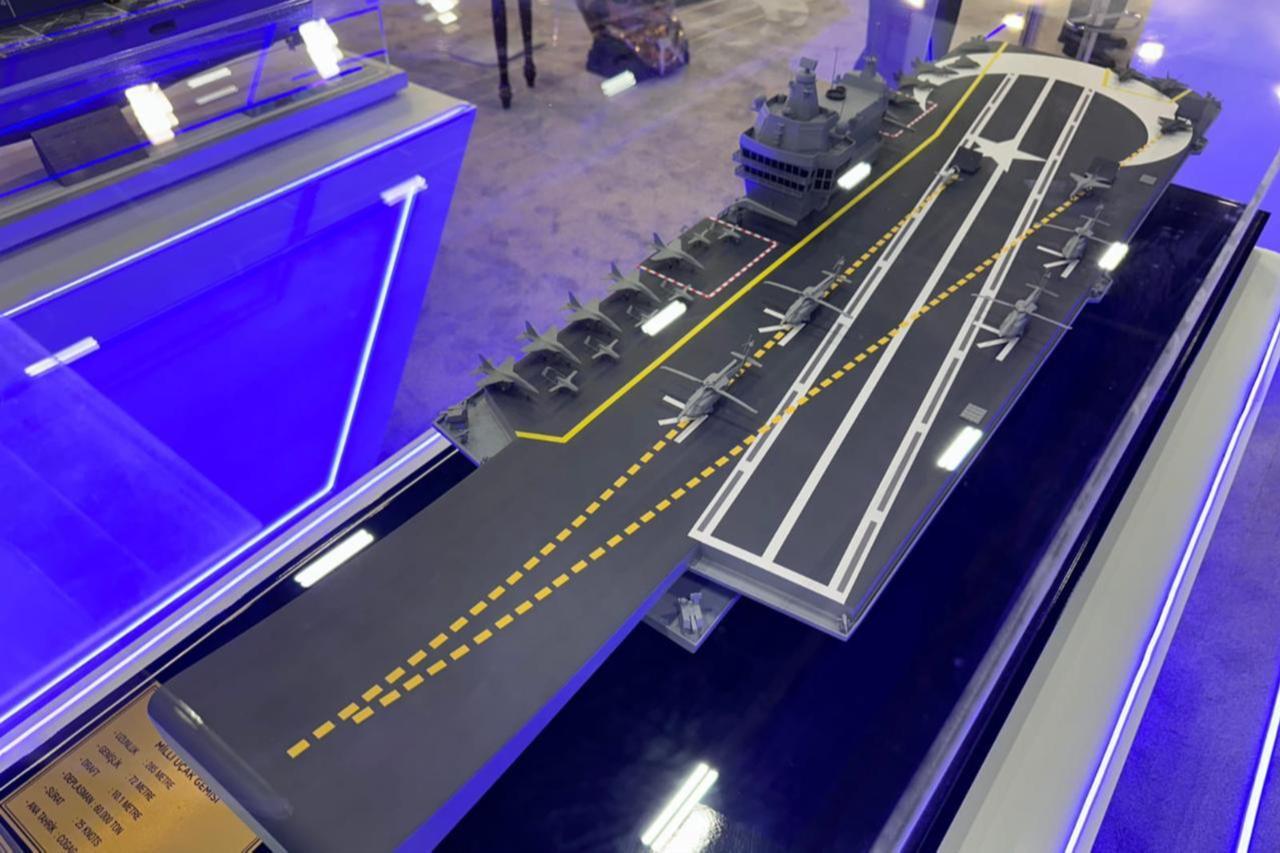
According to earlier disclosures reported by the naval publication Naval News, the aircraft carrier, initially referred to as the MUGEM class, is expected to have a length of 285 meters, a maximum beam of 72 meters, a draft of 10.1 meters, and a displacement of 60,000 tons.
Performance figures cited in the report showed a maximum speed of more than 26 knots, a cruising speed of 14 knots, and a range of 10,000 nautical miles at 14 knots, with accommodation capacity listed at up to 2,500 personnel.
The report said the carrier's air wing will consist of four types of domestically developed air vehicles: a naval variant of the Hurjet jet trainer, the Kizilelma unmanned combat aircraft, the Anka-3 flying wing UCAV, and the TB-3 UCAV.
The vessel will use a Short Take-Off But Arrested Recovery (STOBAR) method with a ski-jump ramp set at a 12-degree angle, according to the report.
By comparison, the report noted, the U.S. Navy's USS Gerald R. Ford measures approximately 337 meters in length with a full-load displacement of around 100,000 tons, while the U.K.'s Queen Elizabeth-class carriers measure approximately 294 meters and roughly 80,000 tons, and France's Charles de Gaulle is 261 meters long with a displacement of approximately 42,500 tons.


 Set as preferred source
 Set as preferred source


 2 min read
 1 min read