Newsletters


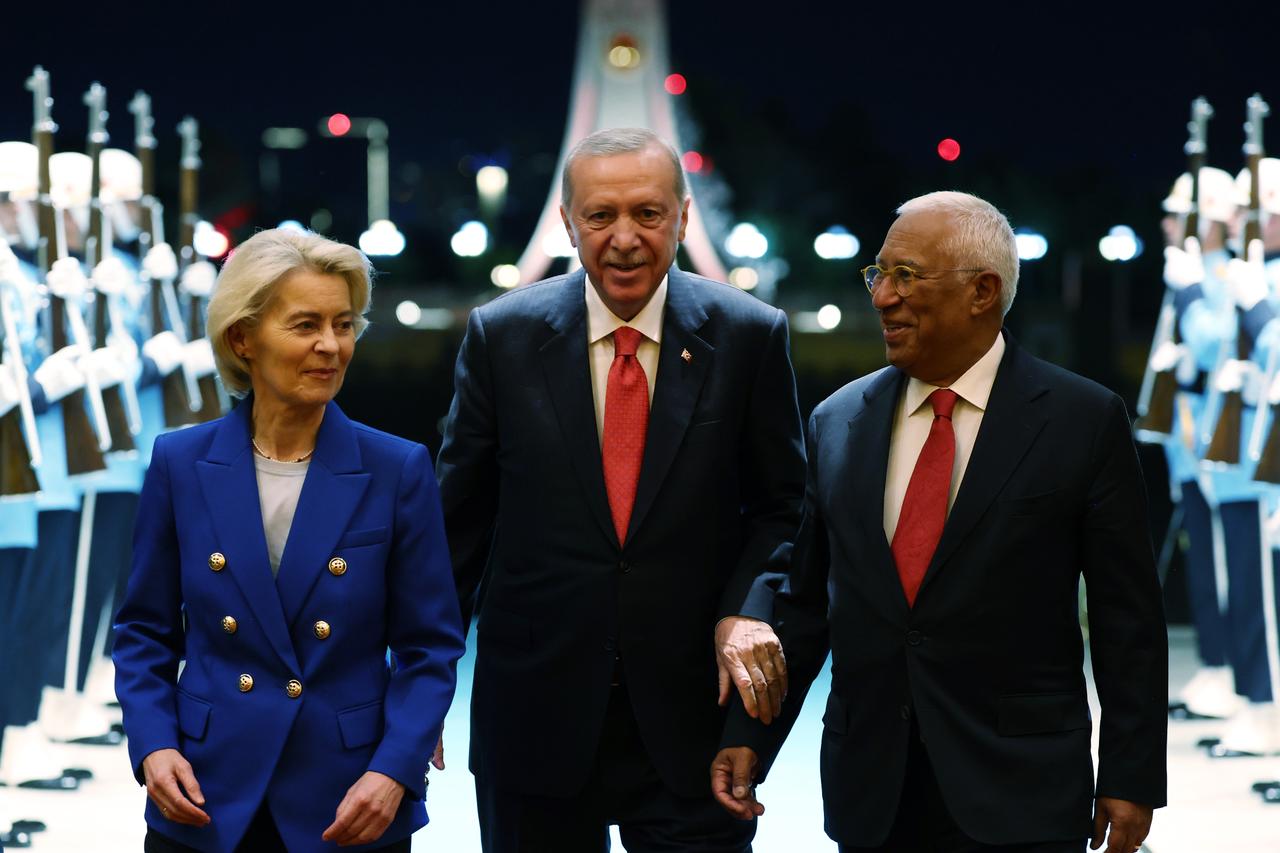


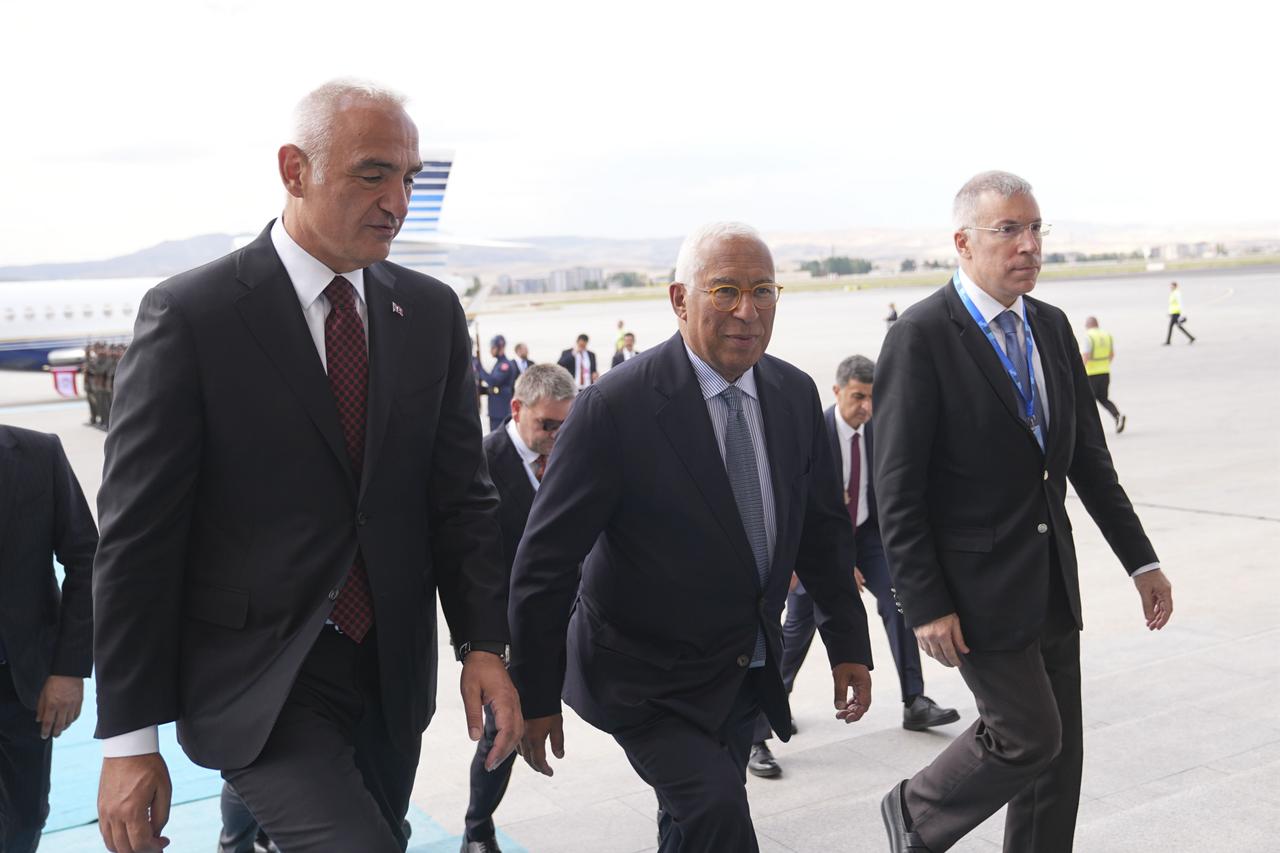
President Recep Tayyip Erdogan used the closing day of the 36th NATO summit to confront European Union leaders directly over Türkiye's decades-long membership impasse, meeting EU Council President Antonio Costa and Commission President Ursula von der Leyen over a working dinner and vowing to deliver an unambiguous message: that more than half a century of waiting had become intolerable.
"Türkiye's 53-year wait is a cruelty," Erdogan told reporters at a post-summit news conference Wednesday. "We will tell them to free Türkiye from this cruelty."
He expressed cautious hope that European leaders would finally "crack open the door," adding that he had already raised the issue with the German chancellor earlier the same day and would continue pressing it with von der Leyen and other leaders throughout the summit.
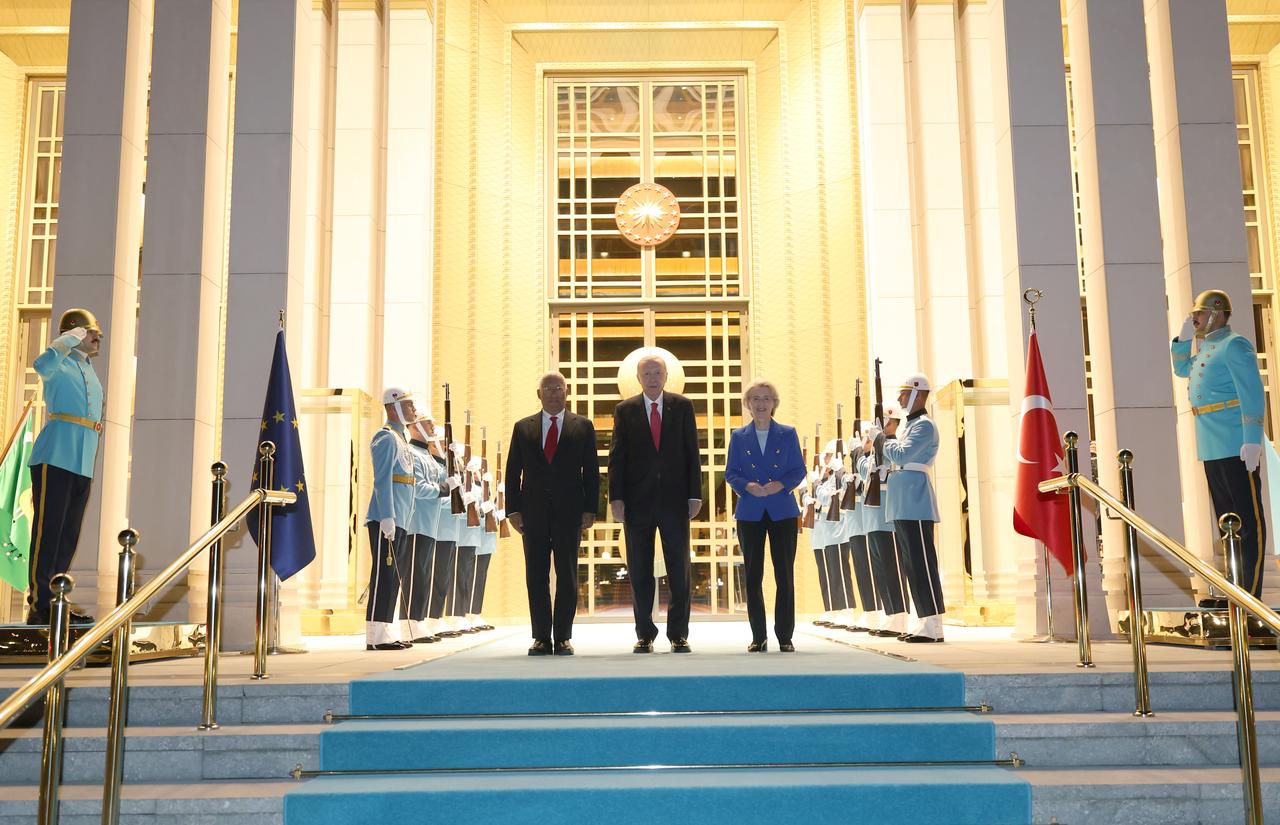
The dinner with Costa and von der Leyen, held at the Presidential Complex in Ankara, was closed to the press.
The bluntness of Erdogan's remarks is a nod to an impasse that has outlasted multiple EU enlargement cycles and shows few signs of resolution.
Türkiye applied for membership in the European Economic Community in 1987, was formally recognized as a candidate country at the 1999 Helsinki summit, and opened accession negotiations in 2005.
Those talks have been effectively frozen since 2018, with Brussels citing deteriorating standards on democratic governance, judicial independence, freedom of expression, and the unresolved dispute over Cyprus, an EU member state that Ankara does not recognize.
The European Parliament reinforced that position as recently as this spring, adopting a report that concluded Türkiye's accession process could not resume under current circumstances.
The rapporteur, Nacho Sanchez Amor, argued that Ankara's drift toward a more authoritarian model was pushing it further from, not closer to, membership.
A high-level EU delegation that visited Ankara last week, ahead of the summit, struck a markedly different tone, emphasizing security cooperation, migration management, and energy as the practical pillars of a relationship that has long since moved beyond formal accession mechanics.

That gap, between Türkiye's formal candidate status and the EU's reluctance to reopen substantive negotiations, has grown more politically charged as Europe's security environment deteriorates.
Türkiye's role as a NATO member controlling the Bosphorus and Dardanelles straits, its management of migration flows into Europe under the 2016 EU-Türkiye agreement, and its active diplomatic presence in conflicts from Ukraine to the Middle East have made it indispensable to European planners even as Brussels holds the accession process at arm's length.
Analysts have noted the tension in the EU's position: deepening cooperation with Ankara on defense, energy, and migration while declining to offer the political acknowledgment that Türkiye's government says is long overdue.
Erdogan's decision to raise the membership question emphatically at a NATO summit, with EU principals present on his own soil, appeared calibrated to press that contradiction into the open.
Whether the summit dinners produce any concrete movement remains unclear. Erdogan was careful to frame his expectations modestly, expressing hope rather than confidence.
"I hope they will at least crack the door," he said. The European Commission has in recent months described Türkiye as an "undisputed economic and political partner," language that signals a pragmatic recalibration without any commitment to reviving the accession track.
Meanwhile, the European Parliament's position, that democratic criteria are non-negotiable and not subject to strategic override, sets a firm ceiling on how far any such recalibration can go within EU institutional politics.
The 36th NATO summit is the first hosted in Türkiye since the 2004 Istanbul gathering, and only the second the country has ever held.


 Set as preferred source
 Set as preferred source


 1 min read
 1 min read