Newsletters


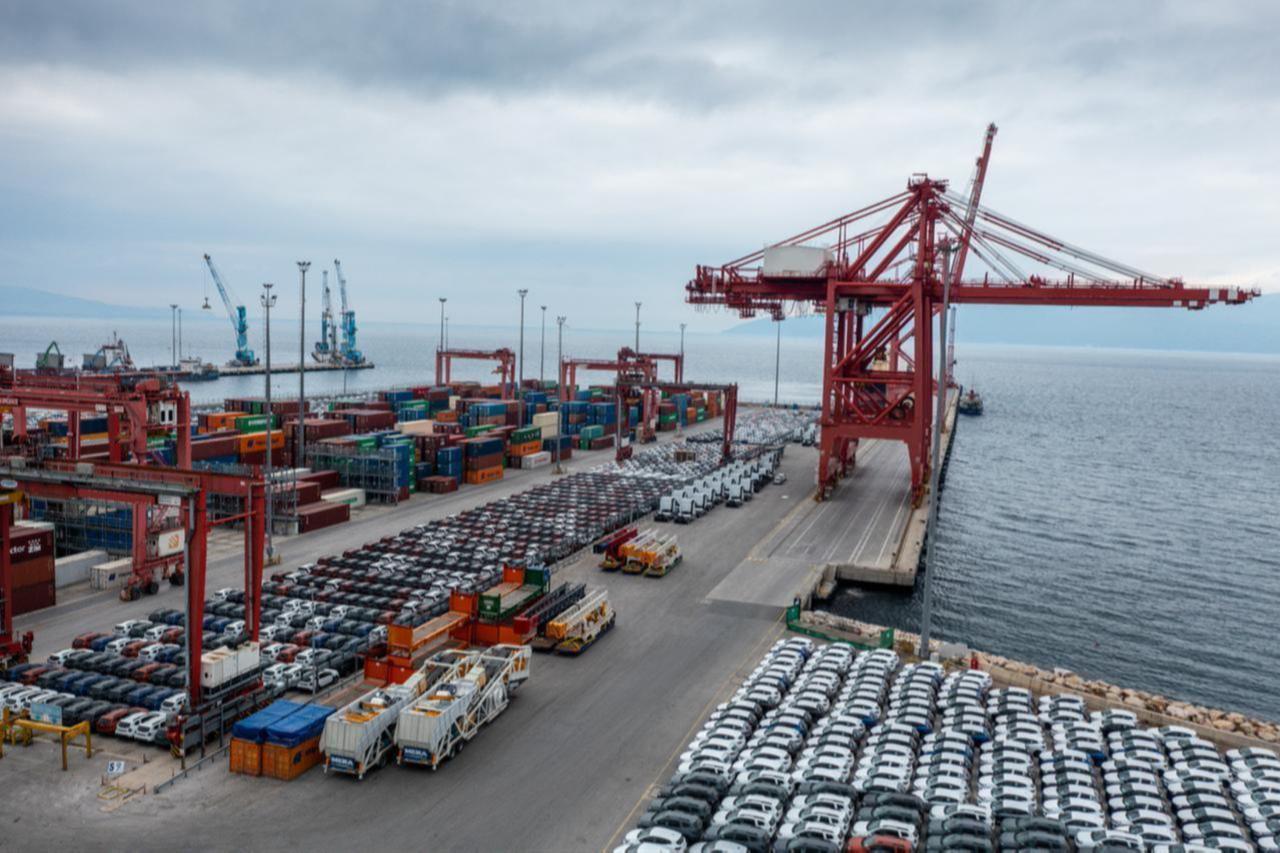


Since 1996, the Customs Union has been the backbone of the trade relationship between Türkiye and the European Union. On paper, the trade-off is simple: Turkish industrial goods flow into Europe tax-free, and in exchange, Türkiye adopts Europe’s playbook on technical rules and regulations. It was a deal designed for a different era, yet it hasn’t been modernized in nearly 30 years. As the EU has accelerated its pursuit of far-reaching free trade agreements with third countries, that stagnation has become a source of growing unease in Ankara and among Turkish manufacturers, not least because Türkiye is expected to mirror the Union’s trade policy without having any formal or decisive role in shaping it.
This structural imbalance carries concrete consequences. It leaves Turkish exporters exposed to preference erosion in the European market, while opening the domestic market to intensified competition from third-country goods that benefit from EU trade agreements and can, under the Customs Union’s free-circulation regime and applicable conditions, enter Türkiye at reduced or zero tariffs. Proving the concerns over competitiveness, reports show that after the 2020 Vietnam-EU FTA, the trade volume between the parties surged over 46%, as Turkish analysts point out the stagnation in Türkiye-EU trade relations.
In a different case, after the Algeria-EU FTA finalized, Türkiye’s 2009 increase in customs duties on iron and steel products led to a sharp collapse in direct imports from Algeria while EU imports continued to rise under zero-duty access, culminating in near-zero Turkish imports from Algeria by 2012-2014 despite record EU import levels. This disparity signals the potential emergence of trade deflection, whereby Algerian-origin iron and steel products may have been routed through the EU and subsequently re-exported to Türkiye in order to circumvent higher Turkish tariffs.
Together with the former cases, the recently concluded EU-India agreement and the EU-Mercosur package, now moving through signature and ratification, have sharpened these anxieties, particularly in overlapping sectors such as textiles and certain agricultural and processed food products. According to India’s trade ministry, the agreement provides for the EU to eliminate tariffs on 99.5% of goods imported from India over seven years, including full duty-free treatment for Indian exports of marine products, leather and textiles, chemicals, rubber, base metals, and gems and jewellery. As von der Leyen calls the deal “mother of all”, India will ramp up its stance in the European market, possibly slashing Turkish producers’ revenues with cheaper products. India also received a pledge on flexibilities on the carbon tax if it is granted to other third countries, easing its way to bypass the Carbon Border Adjustment Mechanism (CBAM), as Türkiye struggles to comply with it.
With the given scope, the vulnerability is not theoretical. Eurostat, the European Commission’s statistical office, reported that Türkiye was the EU’s third-largest non-EU supplier of clothing in 2019, with exports of about €9 billion ($10.73 billion). That position underscores how much is at stake as India, armed with new tariff preferences, is poised to expand its foothold in the same market, and as a long-standing asymmetry in the Customs Union continues to shape the competitive landscape. Even where bilateral trade records a modest growth, it is important to note that the trade imbalance between Türkiye and the EU is projected to widen to approximately €20 billion by 2025, driven primarily by an accelerated flow of imports.
As global value chains face mounting uncertainty, regional and geopolitical conflicts intensify, and economic growth remains subdued, particularly across Europe, a renewed, modernized, and expanded Customs Union would offer tangible economic gains for both parties, irrespective of the broader political misalignment and mutual distrust. For the European Union, modernization would translate into expanded and more predictable market access, most notably in services and public procurement, areas currently excluded from the existing framework.
It would also facilitate deeper near-shoring and supply-chain integration with a large, geographically proximate production base, strengthening the resilience of European manufacturing and reducing strategic dependencies on distant markets. In addition, the reduction of technical barriers, improved regulatory cooperation, and more effective dispute-settlement and safeguard mechanisms would lower trade costs for EU firms, enhance investment certainty, and reinforce the EU’s competitiveness at a time when external economic headwinds continue to constrain growth.
Against this backdrop, the parties should set aside political differences and engage in more concrete and intensified economic cooperation, grounded in pragmatism and a shared interest in safeguarding growth, competitiveness, and supply-chain resilience.


 Set as preferred source
 Set as preferred source


 2 min read