Newsletters


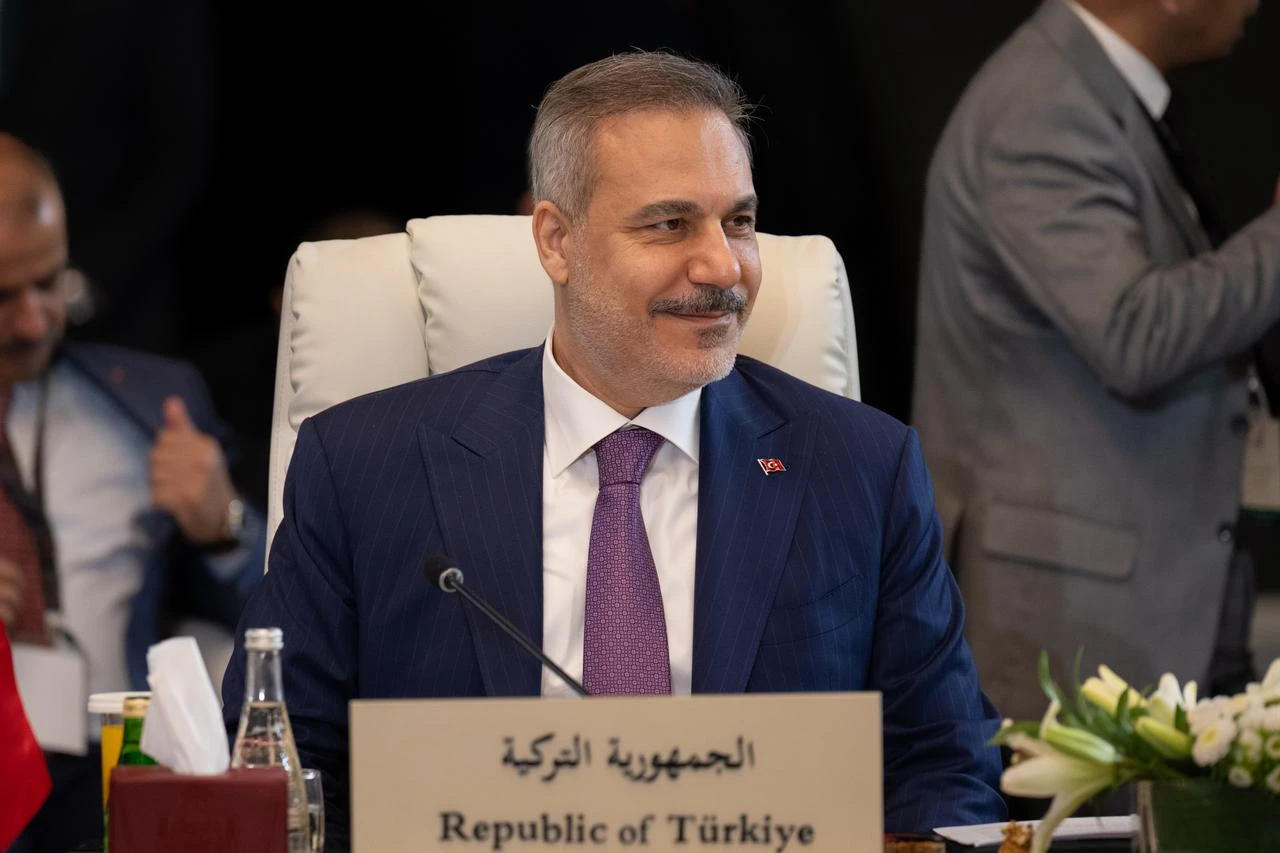


Foreign Minister Hakan Fidan said Thursday he hopes negotiations between Iran and the United States conclude with "good news" and lead to a swift ceasefire and the reopening of the Strait of Hormuz.
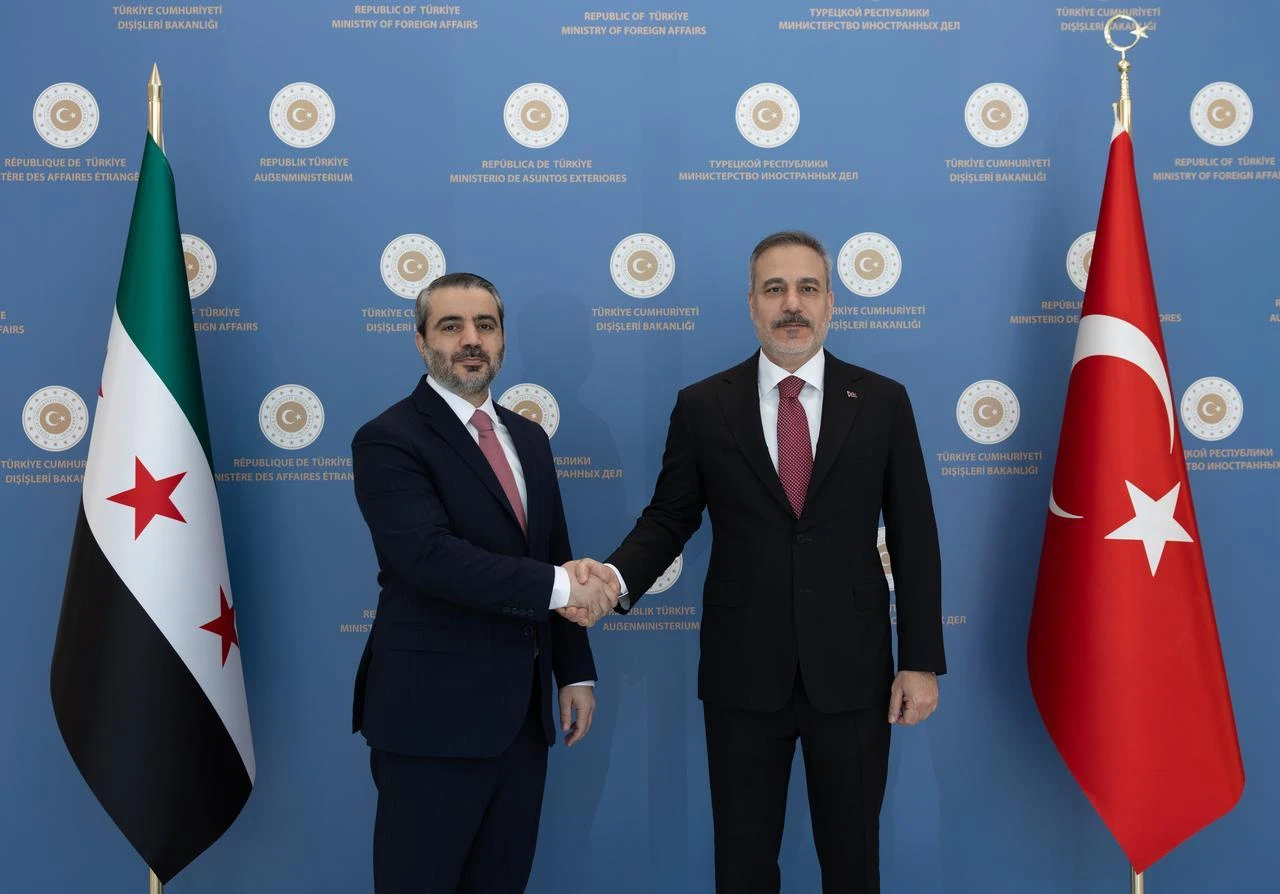
He made these remarks during a joint news conference with Syrian Foreign Minister Asaad Hassan al-Shaibani in Ankara.
The top Turkish diplomat addressed Turkish-Syrian relations, the Gaza and Lebanon conflicts, tensions over Jerusalem's holy sites, and the wider regional fallout from the Iran-U.S. standoff.
"Allah willing, the negotiations between Iran and America will conclude with good news today," Fidan said.
"We hope the ceasefire will be restored as soon as possible and that the Strait of Hormuz will be reopened; we will continue our contributions on this matter. At this point, we continue to support the talks," he added.
Fidan said the unresolved Gulf conflict is diverting international attention from Gaza.
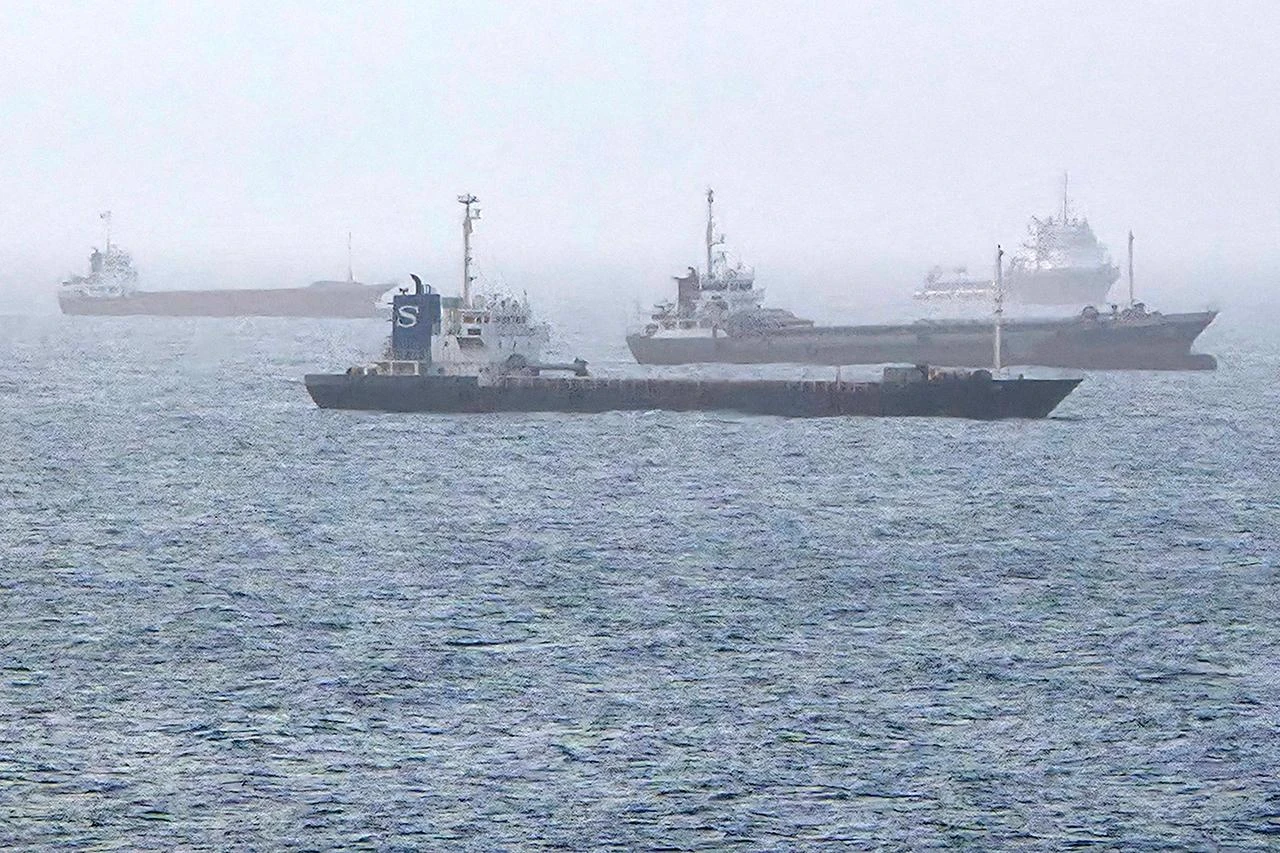
"One disadvantage we currently face regarding the ongoing process in Gaza is, of course, the continuing conflict in the Gulf and the situation affecting global shipping in the Strait of Hormuz," he said.
"The fact that negotiations between Iran and America have not yet reached a conclusion is, frankly, also preventing the attention of both regional countries and the international community from focusing on Gaza at this point. But as I have said, as Türkiye, we continue to keep our attention on that issue at the highest possible level across all platforms," Fidan added.
He described the technical complexity of the Hormuz issue and Oman's role in the talks by stating, "The matter involves some complications related to the strait; there are many technical details. Of course, Oman also has a role to play. When you picture the map, Iran is at one end, and Oman is at the other, but in the middle, we are talking about a passage with international waters open to international navigation. It is not that narrow a place, but in the end, it is a place that can be affected."
He said a roughly two-month transition period is under discussion, explaining, "In other words, a 60-day process is being discussed. If worked on well within that 60-day process, a lasting agreement can be reached between the parties. We know that on other matters outside the strait, particularly on the nuclear issue, certain agreements in principle have been reached."

Fidan said the ministers also discussed Palestine and Lebanon at length.
"We also comprehensively discussed the situation in Palestine and Lebanon," he said.
"As you know, Lebanon is their border neighbor; everything that happens there closely concerns them, and it concerns us as well," Fidan noted.
He said Israel's continued strikes contradict its own announced roadmap for Gaza.
"The roadmap for the second phase of the peace plan, which was agreed upon, was announced by U.S. President Donald Trump," Fidan said.
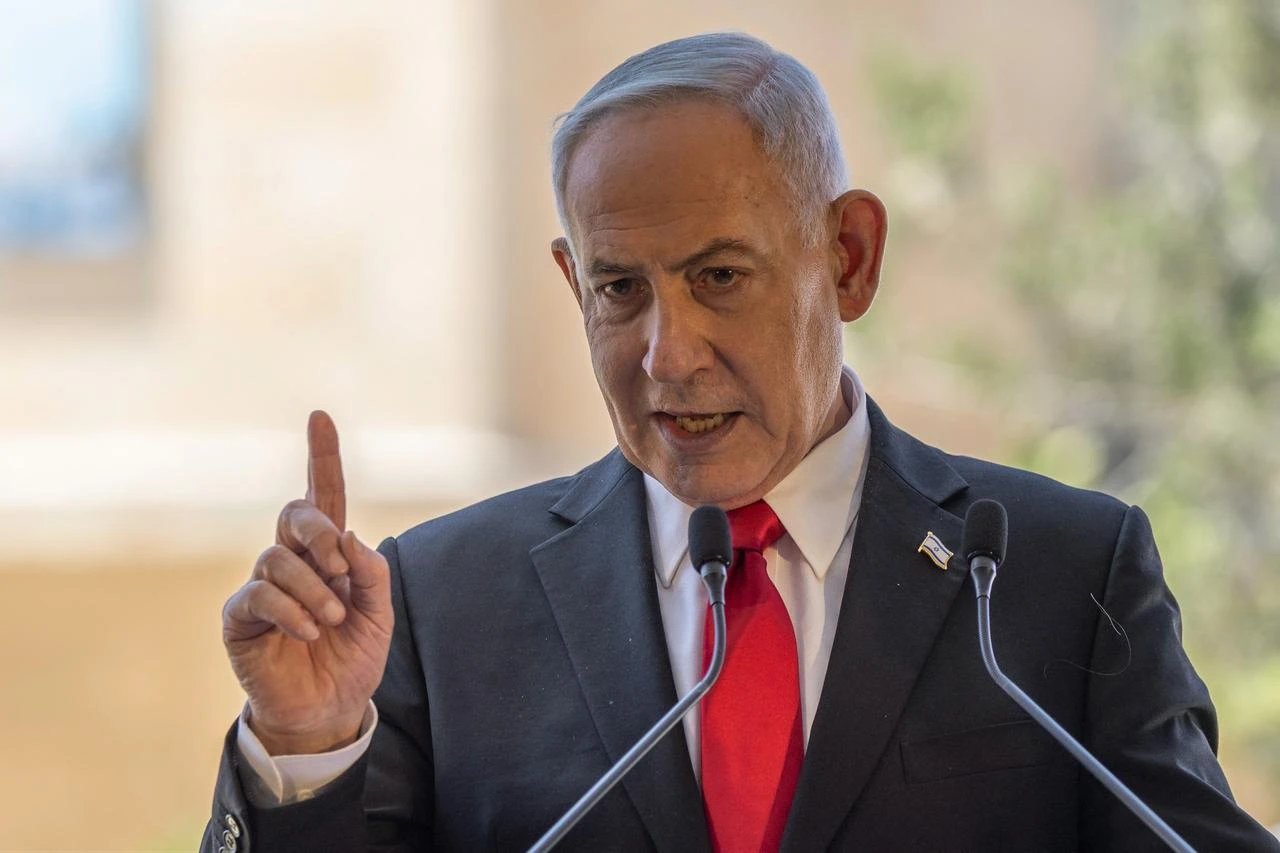
"Israel's continuation of its attacks despite this has once again demonstrated that (Israeli Prime Minister Benjamin) Netanyahu does not want peace. The Israeli government aims to sabotage peace efforts and separate Palestinians from Gaza; this goal has not changed. It is trying, if possible, to turn Gaza into a place without Palestinians, a place where they cannot live," he added.
"But Netanyahu will not succeed in this policy; the people of Gaza will continue to live in Gaza and build their future there," he said.
"Indeed, there are courageous Palestinians who continue to hold on to their homeland in the face of occupying Israel, and an international community that increasingly understands the facts. At this point, there is no option other than making the ceasefire in Gaza permanent, moving to the second phase of the peace plan and beginning the reconstruction process. On the other hand, we also see that the Netanyahu government has intensified acts of terror in the West Bank and Jerusalem as well," the top Turkish diplomat noted.
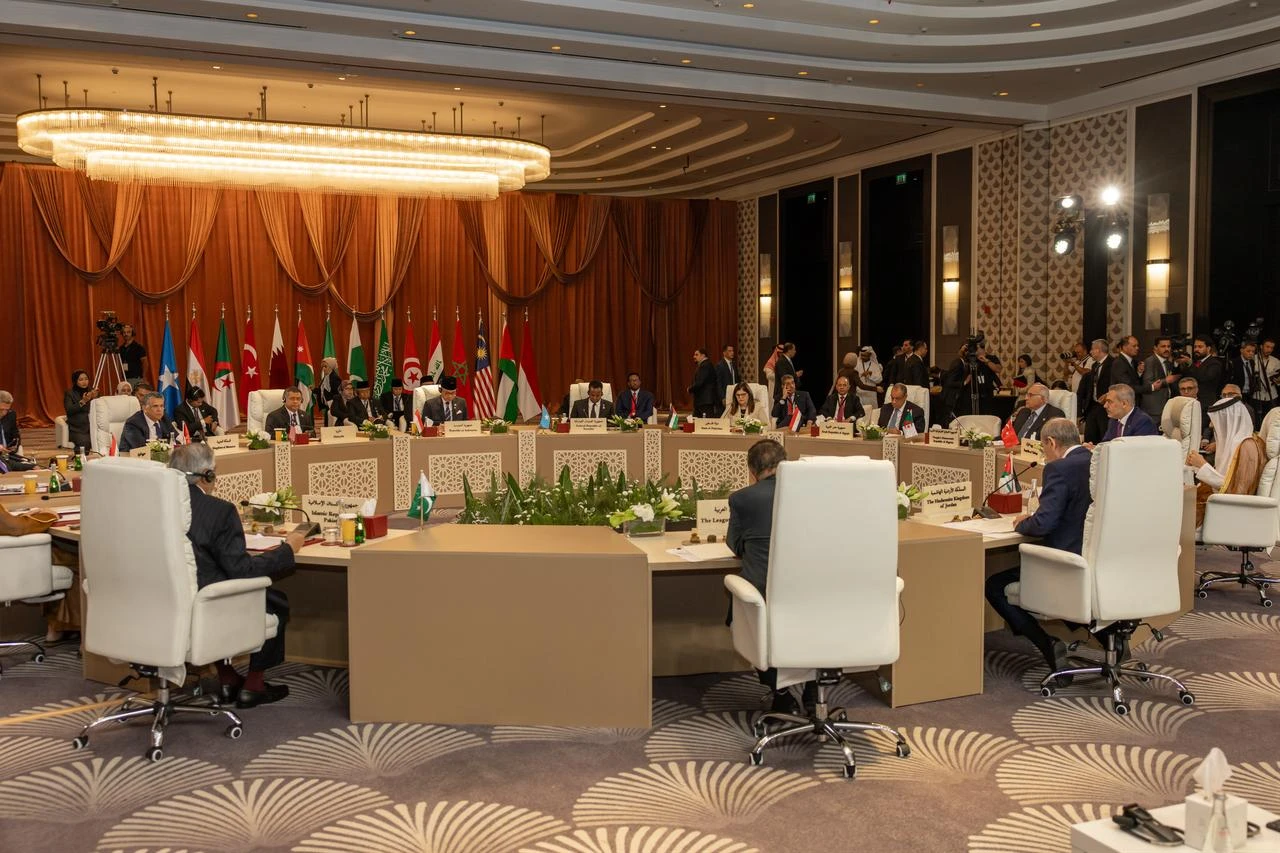
Fidan referenced a meeting held Wednesday in Amman with nearly 20 countries from the Muslim world on measures related to Al-Aqsa Mosque. "Yesterday, as you know, we held an important meeting in Amman," he said.
"There, with the participation of nearly 20 countries from the Islamic world, we discussed measures that could be taken collectively against Israel's aggressive actions targeting Al-Aqsa Mosque. At the same time, we expressed our strong reaction to the violation of the historic status quo of holy sites belonging to Muslims in Jerusalem, and we emphasized our support for Jordan, which serves as the legal custodian of these sites," Fidan noted.
He also cited Lebanon's wartime toll.
"On the other hand, one of the challenges facing our region is Lebanon," Fidan said.
"In Lebanon, where Israel has pursued its aggressive and expansionist ambitions, thousands of innocent people have been killed, and more than a million civilians have been displaced from their homes. Establishing an environment of security and stability in Lebanon is critically important for the peace of our region," the top Turkish diplomat said.
"In this context, we also welcome the steps taken toward normalizing relations between Lebanon and Syria and exploring areas of cooperation; my brother and I discussed this matter in detail as well," he said.
"In this new era, thank Allah, Syria is becoming a country that is a source of solutions rather than problems. It genuinely makes us proud that Syria is now taking its place at the cooperation tables we have established together with our brothers in the region. In the coming period, my brother and I will continue working together to advance both our bilateral relations and regional peace and security," Fidan stated.
Fidan said Ankara and Damascus maintain frequent contact through institutionalized joint working groups.
"There are visits, and at the same time we have institutionalized joint working groups and mechanisms," he said.
"By meeting very frequently and staying in contact, we exchange information and coordinate on the functioning of the mechanisms we have established. In our work, we see that Syria is becoming increasingly stable, and we are witnessing, moment by moment, that cooperation between our countries is deepening. This situation, thank Allah, gives us great hope for the future of our region and our countries," Fidan noted.
He said the improved situation in Syria reflects a shared regional approach, saying, "The positive picture in Syria is the result of our joint efforts, which we have carried out together with an understanding of regional ownership."
"As we have emphasized from time to time before, it is not possible for us to view the prosperity and stability of Türkiye and Syria as separate from one another. Between us there is not only a border of just over 900 kilometers (560 miles); there is a shared history, a shared cultur,e and a shared future. When Damascus, Aleppo, and Hama become richer and safer, we immediately feel it in Gaziantep, in Mersin, and in Istanbul. Likewise, destabilizing activities occurring in any corner of Syria also constitute a threat to Türkiye," Fidan stated.
"With this understanding, we will further deepen the cooperation and coordination we are carrying out in the fields of counterterrorism, defense, and security," he said.
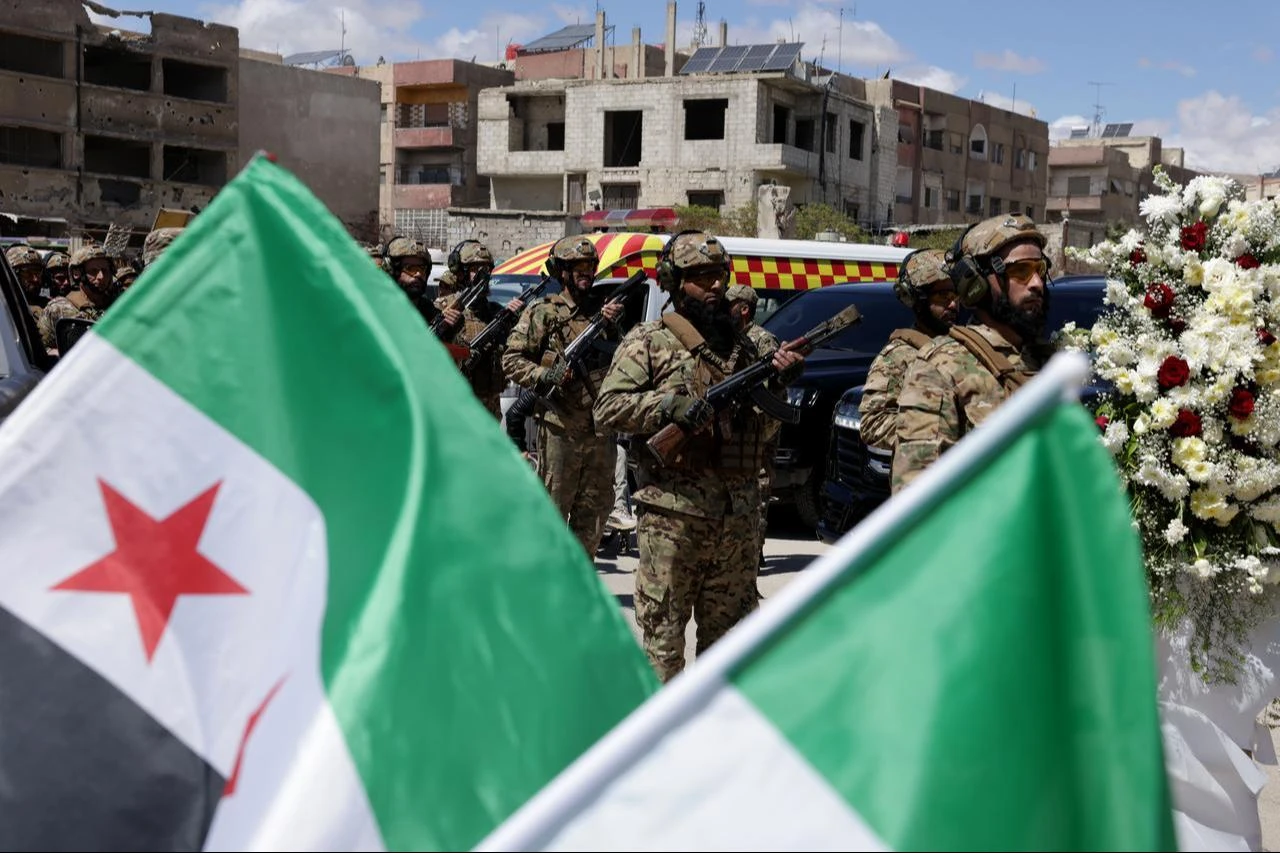
"The uninterrupted completion of the integration process underway in Syria continues to hold importance and priority for our country. The integration of all armed elements and so-called structures under a central and legitimate national framework is essential for Syria's unity and our region's stability," the top Turkish diplomat noted.
Fidan said Türkiye is expanding economic cooperation with Syria to match the needs of what he called a new era.
"We are also developing our economic relations with Syria in line with the needs of the new era," he said.
"Among our current priorities are facilitating customs procedures, increasing the capacity of border crossings, activating banking channels and making our transportation infrastructures compatible with one another, with the aim of increasing our bilateral trade volume; our teams are working on these. Our public institutions and our private sector are also working to contribute to Syria's reconstruction, the development of its energy infrastructure, and the rehabilitation of its transportation system," Türkiye's top diplomat noted.
He pointed to a four-country transport initiative as an example, saying, "We believe regional projects will also play an important role in this regard. To give a concrete example in this context, the road and rail connectivity initiative we have launched between Türkiye, Syria, Jordan, and Saudi Arabia is extremely important in this respect. We have begun work to implement this strategic initiative as soon as possible, and we will continue as a result of the decision taken by our leaders."
Fidan said several bilateral projects are moving forward quickly, including plans for a Turkish school in Damascus.
"Many concrete projects in our bilateral relations are progressing rapidly," he said.
"They have completed the permit process for opening a Turkish school in Damascus; we thank them for this. We aim for this school to be ready in time for the new academic year. Work has also accelerated on establishing the Türkiye-Syria Joint University," Fidan added.
He said health cooperation is especially active.
"The health sector is one of the areas where we are working most intensively with Syria," Fidan said.
"In addition to numerous hospital projects, we are working to build Syria's health infrastructure. As you know, the memorandum of understanding in this area was signed during our health minister's visit to Syria in June. At the same time, we are also trying to contribute to Syria's integration into the global financial system. Allowing the Central Bank of Syria to open a Turkish lira account with our Central Bank has been a very important step in this regard. In the coming period, we will continue to implement new projects with the goal of carrying Türkiye-Syria relations further forward."
Turning to regional issues, Fidan repeated his hope for progress in the U.S.-Iran talks before addressing Syria's security.
"In today's meeting, we also naturally had the opportunity to address regional issues," he said.
"We are of course, pleased with the statements indicating that negotiations between America and Iran could resume. We hope the ceasefire will be restored, and the Strait of Hormuz will be reopened as soon as possible; we will continue our contributions on this matter. At this point, we continue to support the talks," Fidan noted.
"On this occasion, we would like to underline one point: Syria has emerged, throughout the war, as a country that has contributed to preserving stability in our region; this needs to be particularly noted," Fidan said.
"Therefore, preserving Syria's security and peace is the shared responsibility of all of us as countries in the region. On the other hand, Israel's attacks targeting Syria's sovereignty and territorial integrity are among the most serious threats to the country's stability. The international community must demonstrate a stronger response to Israel's occupying mentality. It must apply the necessary pressure for compliance with the 1974 Disengagement of Forces Agreement and for respect for Syria's sovereignty," the top Turkish diplomat said.
Fidan said Türkiye's foreign ministry and intelligence service are jointly working to advance the Gaza peace plan.
"As you know, our work on implementing the Gaza peace plan continues very intensively," he said.
"Our Ministry of Foreign Affairs and our National Intelligence Organization are working together on this. Both the talks held with the parties and the strategic initiatives that need to be prepared require serious effort. Thank Allah, up to now, in our capacity as mediator, our valued colleagues have, through intensive effort, accomplished many things that needed to be done and seemed almost impossible," Fidan noted.
He credited President Recep Tayyip Erdogan with a "critical leadership role" and said Türkiye had long anticipated resistance from Israel, saying, "But in playing this role, we have always known the following: no matter how impossible some matters may seem to resolve or to be accepted, especially on the Palestinian side, as this is advanced, we always knew and always emphasized, that Israel would always try to avoid it, that it has not changed the actual goal in its mind, and that therefore the international community and relevant actors need to remain vigilant on this matter."
"Now, at the point we have reached, we see that Israel is dragging its feet, especially on the transition to the second phase," he said.
"Because they do not want to see, under any circumstances, a situation that would push them, as a result of a certain process, to withdraw from Palestine, to withdraw from Gaza, and for Gaza to once again be governed by the people of Gaza. Yet the peace plan was a plan that fully envisioned this happening once certain conditions were met," Fidan added.
Fidan said the issue was discussed in detail Wednesday both in the broader Amman meeting and in a separate session with what he called the "regional quartet" of Pakistan, Türkiye, Egypt, and Saudi Arabia.
"There is a series of diplomatic steps that need to be taken by September; we have decided on them," he said.
"Allah willing, we will take them. In September, there may perhaps again be a broad, leader-level meeting on this matter. The steps taken over the past year toward implementing the peace plan, the violations that have occurred, and what the international community and the actors supporting this agreement can do about them need to be discussed in great detail," Fidan noted.
Fidan closed by framing Türkiye's regional diplomacy around what he called a "regional ownership" approach.
"Therefore, if both sides show sincere will on this matter, a lasting agreement can be reached," he said.
"But first, this issue related to the strait needs to be resolved; we continue our contributions on that matter as well. As you can see, dear colleagues, in fact, all the problems in the region have become interconnected with one another," Fidan noted.
"As Türkiye, while carrying out our diplomacy, we also see the connections between these problems and, together with our regional allies and friends, implement a mechanism of regional ownership to genuinely take ownership of our problems," he said.
"Of course, in doing so, we will show the necessary solidarity with the international community, our international allies, and international organizations. But, as you know, up to now the solution to the problem has always been expected to come from outside. Now the region, more consciously than before, is addressing its problems with an approach of regional ownership," Fidan stated.
He said he believes the approach will ultimately stabilize the region, noting, "I sincerely believe that the steps to be taken, both in the near term and in the future, will bring more stability and peace to the region, will lift a burden off the international community, and will, on the contrary, contribute to the stability of the international community"
"Because our region has an incredible capacity, human capacity, civilizational capacity, geography, resources; I am not even mentioning energy resources. When all of this comes to life within an environment of peace, instability will disappear. Of course, we also see that there are actors who are enemies of stability, enemies of peace, and who wish to realize their expansionist ambitions, with Israel foremost among them. We are keeping our eyes wide open there as well," he concluded.


 Set as preferred source
 Set as preferred source


 2 min read