Newsletters




Türkiye’s agricultural troubles are often framed as a supply problem, a pricing problem, or a seed dependency problem. Yet the deeper issue lies elsewhere. The country’s farm sector is caught in a structural mismatch between technology, costs, and organization.
Turkish agriculture operates with 21st-century tools. Costs are aligned with global, dollar-denominated markets. But production culture and land organization remain closer to the 19th century.
Addressing this crisis requires more than slogans about domestically produced seeds or temporary subsidies. It calls for a mental shift: recognizing agriculture not as a sentimental rural activity, but as a modern industry requiring scale, data, and institutional trust.
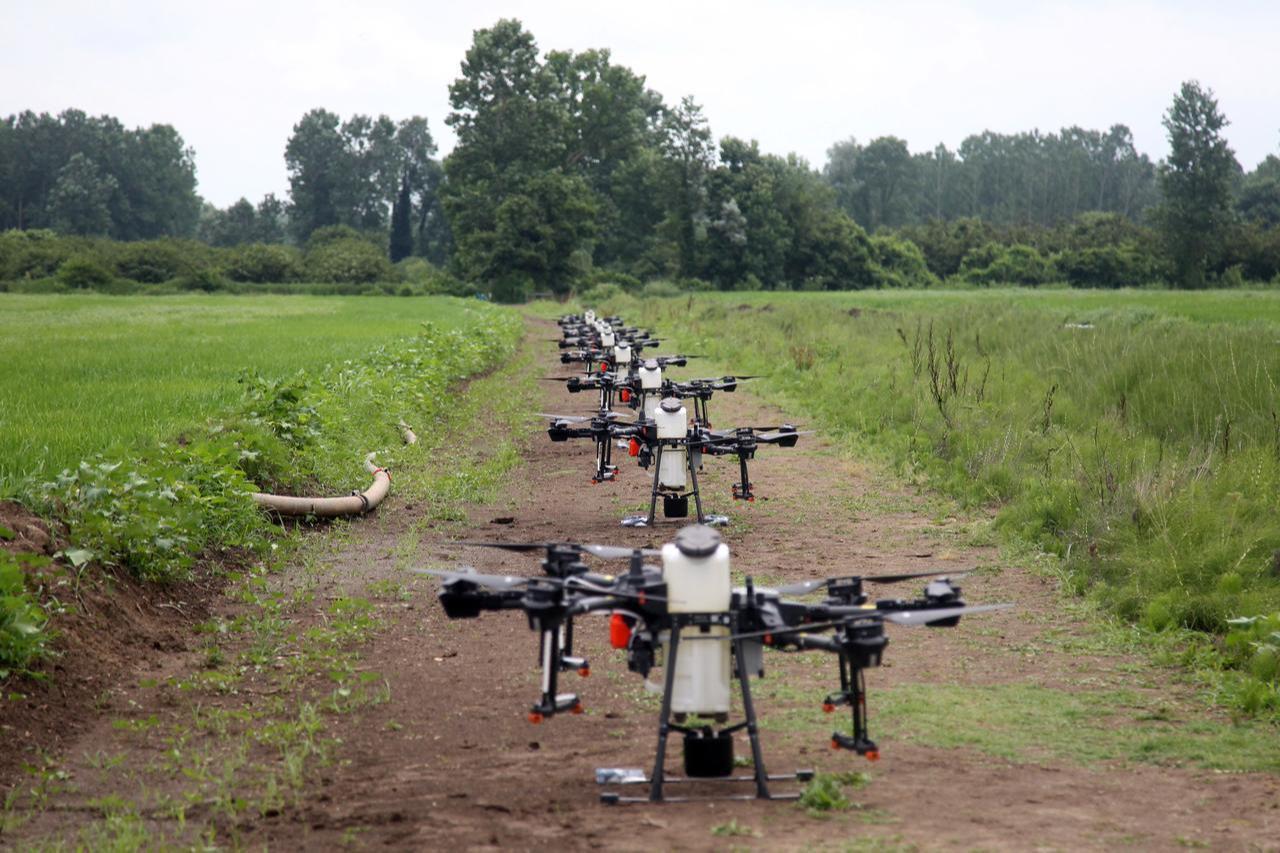

On the industrial side, Türkiye competes at a global scale. The country imports wheat, processes it into flour, pasta, and biscuits, and exports those products with added value. It is also a leading exporter of refined sunflower oil. In other words, the factory segment of the food chain is fully integrated into global markets.
Input costs, however, are also fully globalized. Fertilizer prices depend on natural gas markets. Diesel fuel, pesticides, and high-yield seeds are largely priced in dollars. Only land rents and some labor costs remain denominated in Turkish lira. Farmers therefore operate in a global cost structure without possessing comparable bargaining power.
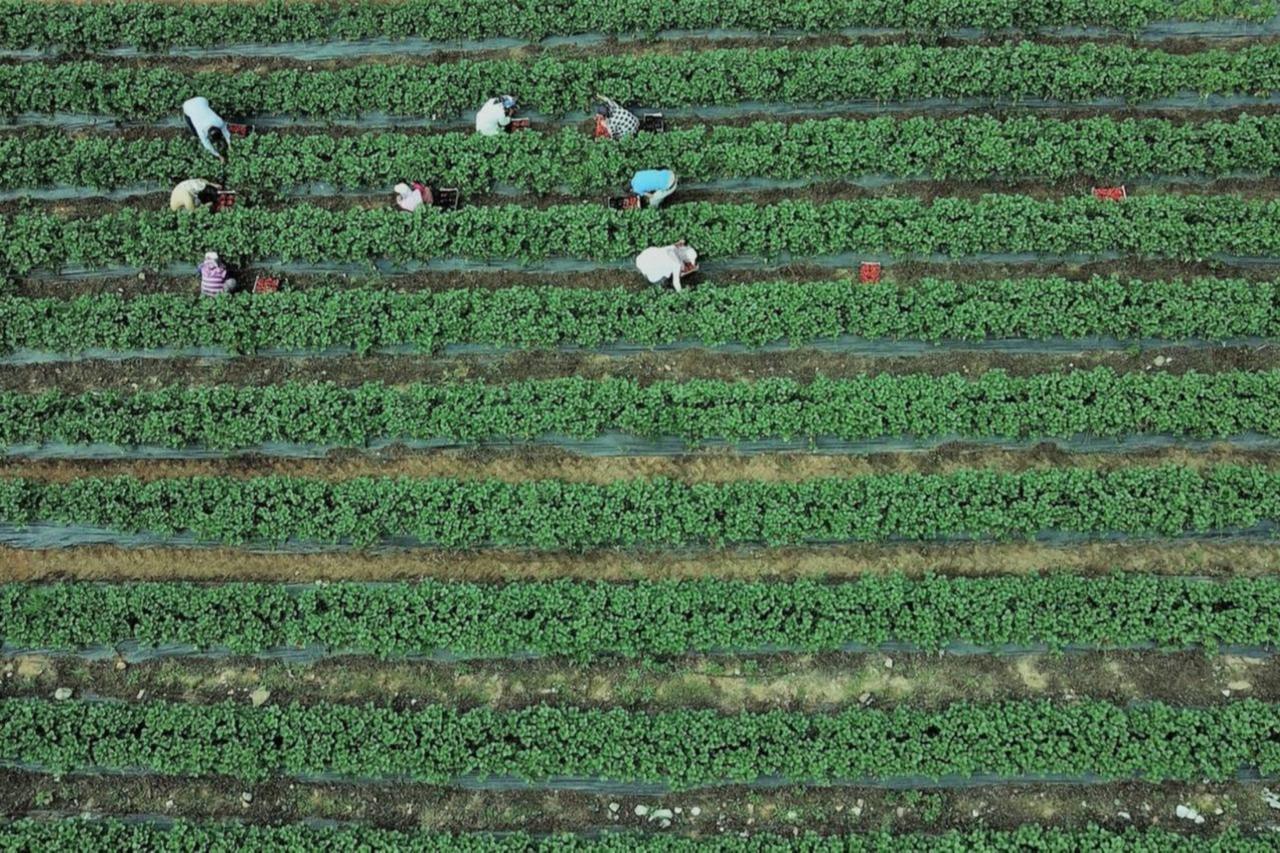
Production itself remains fragmented. The average farmer age stands at 59. Land is divided through inheritance into small, scattered plots.
A producer working on fragmented parcels with traditional methods is effectively competing against large-scale, mechanized farms in countries like Canada, where lentils are bred for industrial harvesting and high yield.
Beyond economics, Türkiye’s agricultural sector faces an epistemological crisis: the quality and reliability of information. Effective agricultural policy depends on accurate data, and on production volumes, land usage, crop patterns, and farmer income.
What Michel Foucault described it as “governmentality”, the idea that a state must be able to measure in order to manage. In Türkiye’s agricultural sector, that principle remains weakly institutionalized.
The Farmer Registration System, known as CKS, exists on paper as a central database. In practice, its reliability is contested. Some farmers lack the capacity to use it effectively; others may overstate production areas to qualify for subsidies. Oversight mechanisms remain limited.
When farmers provide inaccurate declarations or when the state lacks adequate monitoring mechanisms, policy decisions are built on unstable foundations. Production decisions are guided by last year’s prices rather than forward-looking demand projections.
The outcome resembles the classic “cobweb theory” dynamic: when prices rise for a specific crop one year, farmers rush to plant it the next. Excess supply then collapses prices, leaving products unsold. Without credible data, volatility becomes self-reinforcing. Planning cannot function where measurement fails.
Türkiye’s inheritance system has unintentionally transformed farmland into ever-smaller parcels. Each generation divides land further, reducing plot size below economically viable thresholds. What was once a family asset becomes too small to sustain modern investment.
Unlike the traditional “tragedy of the commons,” where shared property is overused, Türkiye faces the reverse problem: hyper-fragmentation. Individual plots are so small that farmers cannot justify investing in advanced irrigation systems, modern machinery, or storage facilities. Economies of scale never materialize.
In this context, large retail chains, effectively monopsonistic buyers, dictate prices. Small producers negotiate individually, lacking collective leverage.
Cooperatives offer an alternative model. In many European countries, agricultural cooperatives create branded products and share profits among members. Türkiye has examples such as Torku, which demonstrates how collective organization can generate social capital and market strength.
Yet these remain exceptions. The core deficit is not only financial capital, but trust capital. Without confidence among producers, collective bargaining and branding efforts struggle to scale.
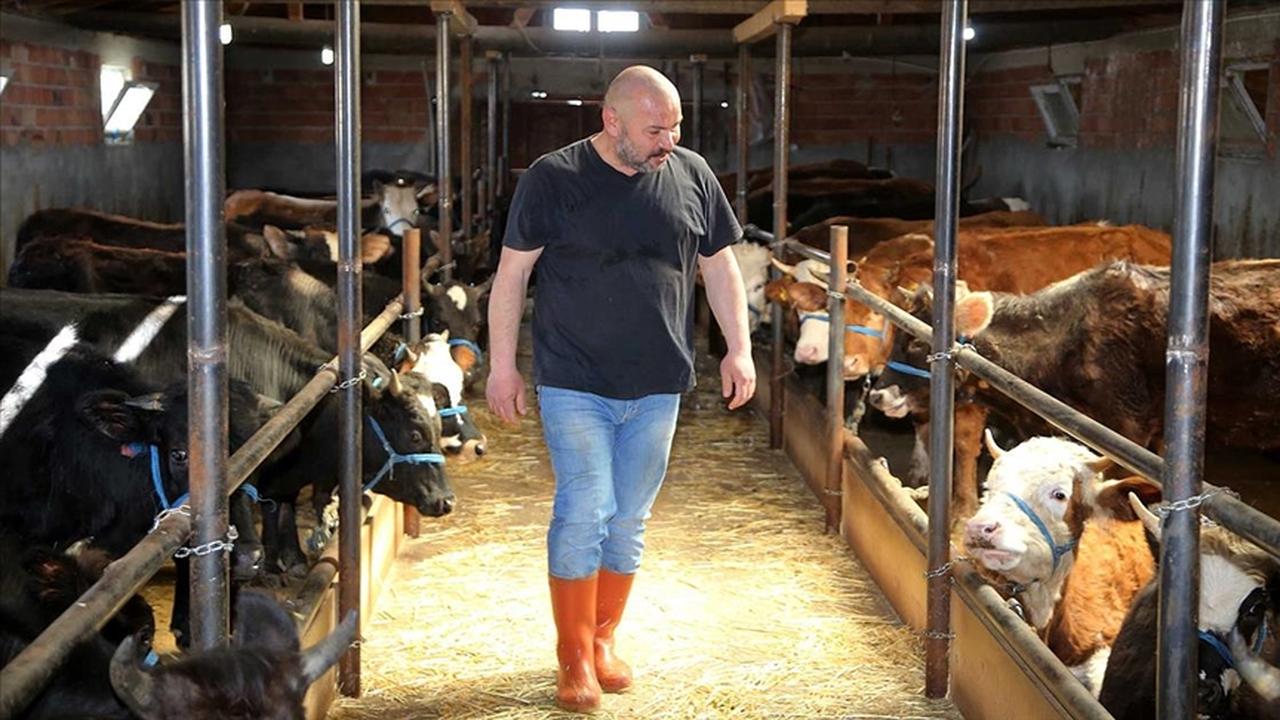
According to 2024 data, Türkiye ranks as the world’s second-largest importer of live animals. This dependency reflects chronic inefficiencies rather than temporary shortages.
Each year, around half a million calves are lost due to disease and inadequate care, which is a figure close to the country’s annual import volumes. Average slaughter weights hover around 290 kilograms, significantly below the 450-kilogram-plus benchmarks common in Europe and the United States. Productivity gaps compound cost pressures.
Price controls in the dairy sector create another distortion. When the government suppresses milk prices to contain food inflation, farmers struggle to cover feed costs. Many respond by sending breeding cows to slaughter. This reduces the future calf population, tightening meat supply the following year and driving prices upward. The state then resorts to further imports to stabilize the market.
This cyclical pattern of price suppression, herd reduction, supply shock, import intervention perpetuates structural dependency. Rather than resolving imbalances, each short-term correction deepens long-term vulnerability.
The recurring crises in Türkiye’s agricultural sector are not isolated anomalies. They stem from a structural mismatch between advanced industrial processing, globalized input costs, and pre-modern production organization.
Without reliable data, long-term planning remains fragile. Without scale, investment remains limited. Without trust, collective action remains rare. These weaknesses are interconnected and mutually reinforcing.
The rare success stories of young professionals trading global corporate careers for their ancestral lands in rural Türkiye offer a glimpse into the real solution. This new generation of educated landowners values data as much as diesel, merging modern equipment with their ability to follow local and global agricultural trends. By delegating the traditional labor to seasoned hands while focusing on strategic management, they make some of the examples of Turkish agricultural imports to the world.


 Set as preferred source
 Set as preferred source


 6 min read