Newsletters




A magnitude 4.7 earthquake struck the Elbistan district of Kahramanmaras province, rattling residents across southeastern Türkiye but causing no reported casualties or damage, authorities said.
The tremor hit at 8:17 p.m. local time at a depth of seven kilometers, approximately five kilometers north of Elbistan, according to the Disaster and Emergency Management Authority (AFAD). The shaking was felt as far as Sivas and the northern districts of Adana.
A leading seismologist said the quake was directly connected to the same fault system that ruptured during the catastrophic February 2023 earthquake sequence, one of the deadliest natural disasters in Türkiye's modern history.
Kahramanmaras Governor Mukerrem Unluer said in a post on the social media platform X that AFAD and all relevant agencies had dispatched field teams to conduct ground surveys immediately after the quake. Unluer said initial assessments found no adverse conditions and extended his well-wishes to affected residents.
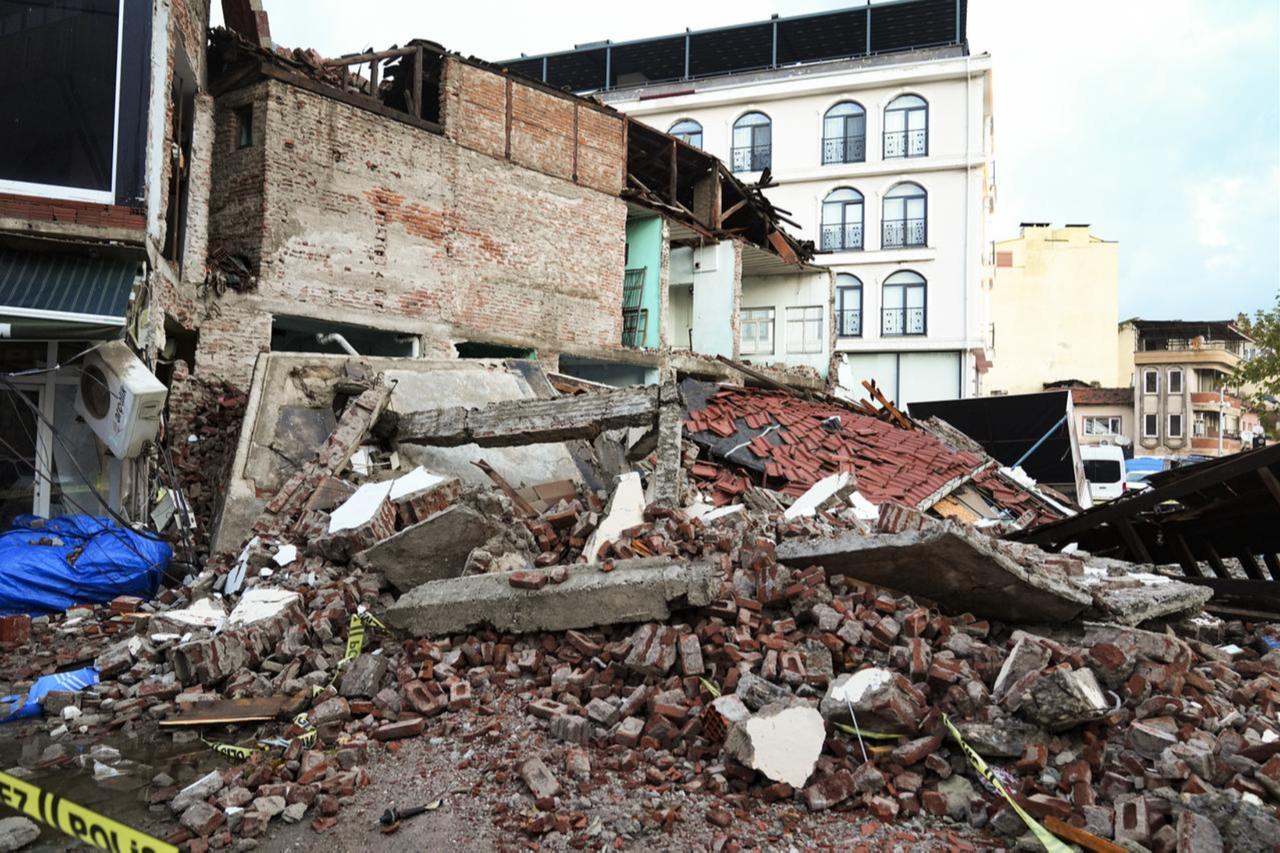
AFAD confirmed it was actively monitoring developments in the aftermath of the tremor. Initial reports indicated no injuries, fatalities or structural damage.
Prof. Hasan Sozbilir, director of the Earthquake Research and Application Center at Dokuz Eylul University and a member of AFAD's Earthquake Science Board, said the earthquake was an aftershock of the second mainshock in the February 6, 2023, sequence.
"This earthquake is associated with the Cardak Fault, which ruptured during the second mainshock that occurred nine hours after the first on February 6, 2023," Sozbilir said. "By its characteristics, it can be evaluated as an aftershock of that second mainshock."
The February 2023 disaster began with a magnitude 7.8 earthquake near Pazarcik at 4:17 a.m., which ruptured the East Anatolian Fault over roughly 350 kilometers. About nine hours later, a magnitude 7.6 quake struck near Elbistan, rupturing the Cardak-Surgu Fault along approximately 160 kilometers. Together, the twin earthquakes killed more than 50,000 people, injured over 100,000 and left millions homeless across 11 provinces in Türkiye and northern Syria.
Sozbilir noted that the total number of aftershocks since the 2023 disaster has now reached 100,000, underscoring the prolonged seismic activity along the ruptured fault systems.
He warned that earthquakes of similar magnitude should be expected to continue for some time across a wide belt of provinces including Kahramanmaras, Adiyaman, Elazig, Malatya, Gaziantep and Hatay.
However, Sozbilir said tremors of this size are not expected to cause loss of life or property damage, and urged residents not to panic. He stressed the importance of maintaining earthquake preparedness and following established disaster protocols when shaking occurs.


 Set as preferred source
 Set as preferred source


 1 min read

 1 min read