Newsletters





On June 12, a small regulatory decision in Washington by the U.S. Department of Commerce served as a strategic warning to every country building its digital future atop American frontier AI.
Anthropic said the U.S. government had ordered it to suspend access to its Fable 5 and Mythos 5 models for all foreign nationals, including foreign-national employees inside the United States.
Anthropic couldn't comply selectively. It cannot, in real time, determine which of them holds American passports. So it did the only thing it could do: it switched both models off for everyone.
Export controls have always governed what you can ship. Now they govern what you can think with. The Commerce Department's directive was the first time U.S. export-control powers were used to restrict foreign nationals' remote access to an AI model—not the export of hardware, not the transfer of code, but the act of querying a mind.
In the earlier phase of AI, when the U.S. restricted China’s access to advanced chips in 2022, the war was about chips, a physical product. The next phase is about who may use the cognitive infrastructure built on those chips.
For Türkiye and other middle powers, AI sovereignty is now about whether your institutions can continue to think, code, defend, analyze, and operate when a foreign jurisdiction changes the rules overnight.
The story also has an interesting political layer. The Anthropic episode quickly shifted from a debate over technical risk to a story about trust, culture, and power inside Washington.
The contested claim that CEO Dario Amodei was unreachable at a wellness retreat did not matter because it was necessarily true. It mattered because it worked as political language. A model-risk discussion into a cultural indictment of Silicon Valley elites.
In American politics, parts of the MAGA-aligned tech and security world see “AI safety” not as a neutral discipline, but as a language used by unelected Silicon Valley technology institutions to claim authority over the state.
For other nation-states, it does not really matter if restrictions are enforced by Silicon Valley elites or elected representatives of the American government. When elephants fight, the grass gets trampled.

What is the lesson for Türkiye or for other middle powers? Should we build a “local and national” version of Claude or GPT, a foundational model? Should we enforce all AI models to run on local data centers? This is where Türkiye’s new AI Action Plan becomes more interesting than it looked at first glance.
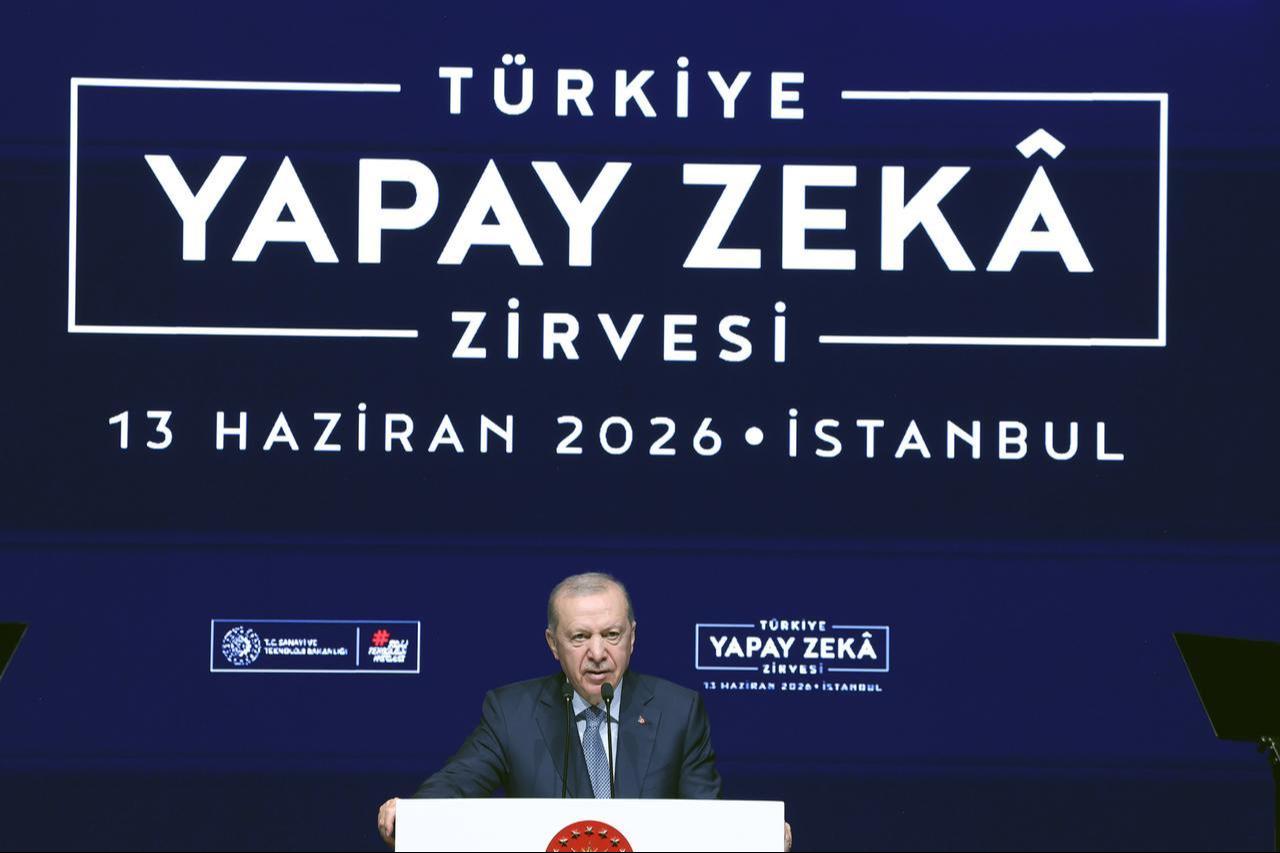
On June 13, President Recep Tayyip Erdogan announced the 2026-2030 AI Action Plan at the Türkiye Artificial Intelligence Summit in Istanbul. The most important feature of the plan is what it does not say.
It does not mainly promise a “local and national GPT model.” That would be the wrong benchmark. Türkiye does not have the scale of the United States or China. No middle power has the capital, talent density, or institutional ecosystem to compete at every layer of the frontier model stack. That is why, for the middle powers, the more realistic goal is portfolio and cognitive independence.
Portfolio independence means using the best American frontier models where they create value, while ensuring that critical systems do not depend on a single provider, a single model family, or a single foreign legal regime.
A bank using AI for fraud detection, a port using AI for logistics optimization, a public agency using AI for document processing, or a defense-adjacent supplier using AI for software analysis should know what happens if its preferred model becomes inaccessible for a week.
Thus, a middle power should not ask only “which model is best?” It should also ask: Which jurisdiction controls the off switch?
On Feb. 9, Pakistan Prime Minister Shehbaz Sharif announced his AI strategy in Islamabad. I contributed to the plan, along with 30 experts from around the world, at a workshop before the announcement.
Most experts were from Muslim-majority countries, some in diaspora and some at home. One of the pillars we discussed was the cognitive sovereignty—not whose model or compute you use, but whether your language and values are sufficiently represented in the applications you run.
Around 90 countries have AI strategies or action plans in place. Most of them are long wish-lists. What will really matter for middle powers like Türkiye and Pakistan is whether they can develop coalitions where they can complement each other.
For instance, Pakistan has human capital. Türkiye has organizational capacity and industrial depth. Extend this to Saudi Arabia, which has financial capital and energy abundance.
None of these countries can build every layer alone. Together, they can create value- or issue-based alliances that improve bargaining power with frontier AI providers and infrastructure suppliers.
That is why the debate should move beyond the false choice between dependence and technological autarky. Middle powers like Türkiye cannot replicate the entire frontier AI stack, nor can they afford to build their economies around a single provider or jurisdiction.
Their comparative advantage lies elsewhere: building resilient AI architectures, diversifying suppliers, investing in domestic applications, and forming coalitions with countries that bring complementary strengths instead.
Sovereignty used to mean controlling your territory. In the age of AI, it means making sure no one else controls your off-switch.


 Set as preferred source
 Set as preferred source


 1 min read
 1 min read