Newsletters


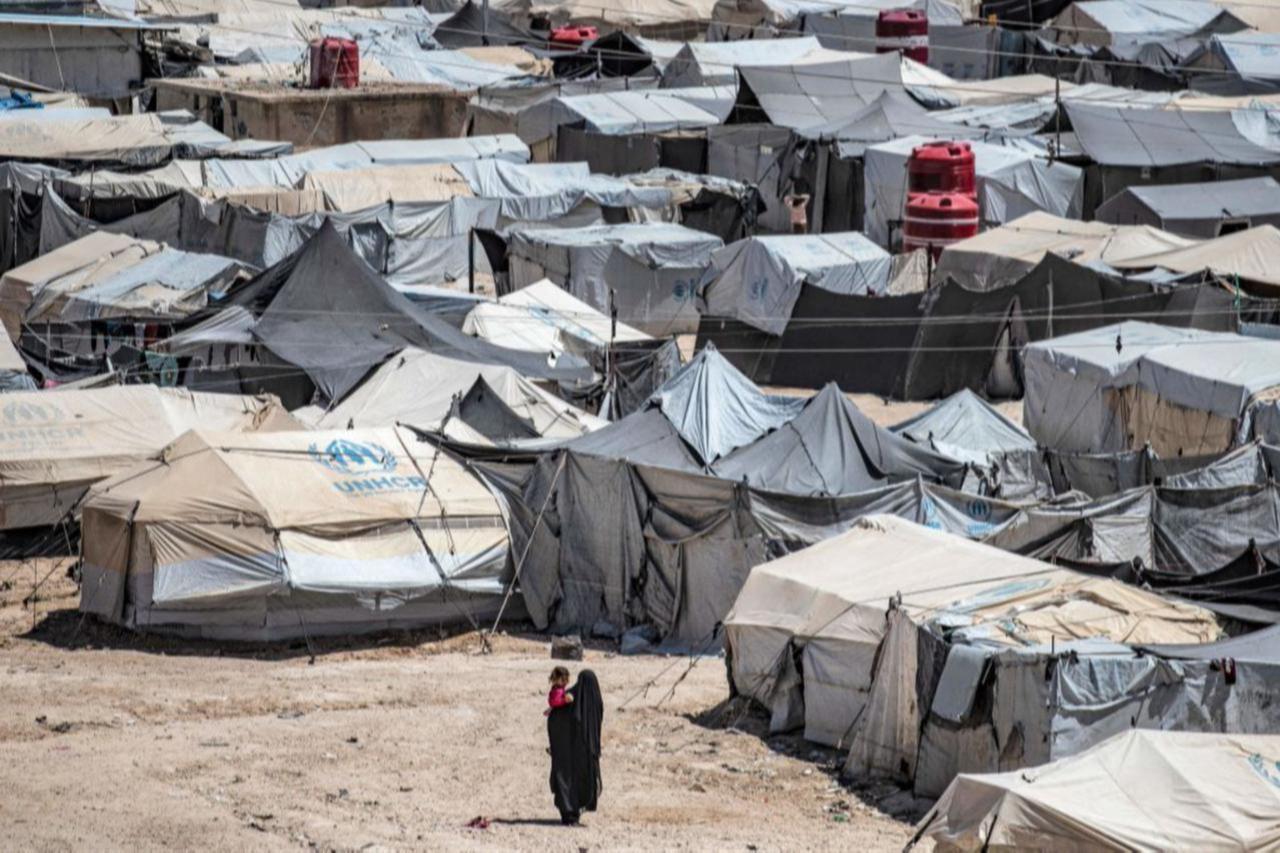


Recent developments in Bangladesh and India suggest that the threat posed by the Daesh is evolving in ways that deserve greater regional attention.
A Bangladeshi militant faction's public declaration of allegiance to the leadership of the terrorist group, coupled with the arrest of an alleged Daesh-linked operative in India's Gujarat state, may appear at first glance to be isolated security incidents.
Taken together, however, they point to a broader and more troubling reality: extremist networks continue to adapt, expand, and exploit vulnerabilities across South Asia despite years of counterterrorism operations.
The timing of these developments is noteworthy. Although the incidents occurred in different national contexts, both illustrate the continuing ability of Daesh-linked actors to establish ideological footholds, cultivate networks, and project influence beyond traditional conflict zones.
They also demonstrate that terrorist organizations do not need to control territory to remain relevant. The ability to recruit, inspire, and connect individuals across borders can be just as significant as physical presence on the ground.
The emergence of Daesh-linked activity in two of the world's most populous countries underscores the transnational nature of contemporary terrorism. Geography is no longer the primary constraint it once was.
Recruitment, ideological dissemination, fundraising, and operational coordination increasingly occur through digital ecosystems that transcend borders.
A militant organization no longer needs a centralized command structure or territorial sanctuary to project influence. It only needs access to online platforms, sympathetic networks, and vulnerable audiences.
For much of the past decade, discussions of Daesh in South Asia have focused primarily on Afghanistan and the activities of Daesh's Khorasan Province (ISKP).
While ISKP remains headquartered in Afghanistan, its ambitions have never been limited to Afghan territory. The organization's propaganda has consistently framed South Asia as a broader theater of operations encompassing Pakistan, India, Bangladesh, and beyond.
The recent incidents in Bangladesh and India highlight how extremist movements increasingly rely on decentralized networks rather than hierarchical structures.
Public pledges of allegiance, encrypted communication platforms, online recruitment campaigns, and self-radicalized cells allow organizations to maintain relevance even when their operational capabilities are under pressure.
In many cases, symbolic demonstrations of loyalty serve a strategic purpose by creating the perception of momentum and expansion even when groups face significant operational constraints.
This trend presents a growing challenge for regional governments. Traditional counterterrorism strategies were largely designed to combat centralized organizations with identifiable leadership structures, training facilities, and territorial bases.
Today's extremist networks are considerably more fluid. They operate simultaneously in physical and virtual spaces, making detection and disruption far more complex.
The spread of Daesh-linked influence into Bangladesh and India should therefore be understood not merely as a national security issue for those countries but as evidence of a wider regional phenomenon.
Developments in one part of South Asia increasingly have implications for neighbouring states. Terrorist ecosystems do not function in isolation; facilitators, financiers, propagandists, recruiters, and ideological influencers often operate across multiple jurisdictions, creating pathways through which extremist organisations can regenerate even after suffering tactical setbacks.
Any discussion of terrorism trends in South Asia inevitably returns to Afghanistan. Since the withdrawal of international forces and the Taliban's return to power, concerns have persisted regarding the presence of multiple militant organizations within Afghan territory.
While Taliban authorities maintain that Afghan soil is not being used against other countries, international monitoring reports have repeatedly highlighted the continued presence of various extremist groups.
The issue is not limited to whether attacks are launched directly from Afghanistan. Equally important is whether the broader security environment allows opportunities for recruitment, networking, facilitation, training, and ideological mobilization.
History demonstrates that terrorist ecosystems rarely remain confined within national borders. Militant organizations benefit from interconnected networks that span multiple countries. Safe havens, logistical routes, financial channels, and online propaganda operations often function across borders, creating a security challenge that no state can address alone.
The appearance of Daesh-linked developments in Bangladesh and India should therefore be viewed within this broader context.
Even when incidents occur far from Afghanistan, the ideological and organizational ecosystems that sustain extremist movements frequently extend across the region.
Recent developments also lend greater weight to concerns long expressed by regional states that instability and extremist infrastructure in one theater can eventually generate consequences far beyond its immediate borders.
The spread of Daesh-linked activity should not obscure the fact that significant counterterrorism successes have occurred in recent years.
Governments across the region have invested substantial resources in disrupting extremist networks, targeting recruitment channels, and improving intelligence cooperation.
Pakistan, in particular, has sought to position itself as an active participant in international counterterrorism efforts. The capture and transfer of Daesh operative Sharifullah to U.S. authorities following investigations connected to the Abbey Gate attack was widely cited as an example of effective international cooperation.
Similarly, operations targeting senior ISKP figures and facilitators, including individuals linked to the group's media and propaganda infrastructure, have disrupted channels used for recruitment, communication, and ideological dissemination.
These efforts demonstrate that sustained counterterrorism pressure can significantly weaken terrorist organizations. Actions against key operatives and facilitators have fractured portions of ISKP's operational, technical, and administrative networks, limiting the group's ability to coordinate activities and project influence through traditional means.
Yet weakening a terrorist organization is not the same as eliminating it. As security pressure increases, extremist groups adapt. Faced with sustained counterterrorism pressure, extremist groups have shifted toward decentralized recruitment, online radicalization, encrypted communication platforms, and symbolic demonstrations of allegiance.
Public pledges, propaganda videos, and digital campaigns allow organizations to maintain visibility and attract supporters even when their operational capabilities have been degraded.
This adaptation helps explain why recent developments in Bangladesh and India are significant. They suggest that while Daesh may no longer possess the territorial reach that once defined its power in the Middle East, it retains the ability to inspire, influence, and connect actors across multiple countries.
The developments in Bangladesh and India should serve as a reminder that terrorism in South Asia is no longer a challenge confined to any single country.
Extremist organizations exploit political divisions, governance gaps, digital platforms, and cross-border networks. Their success depends in part on the inability of states to coordinate responses to a shared threat.
The question facing South Asia is not whether Daesh can recreate the territorial caliphate it once established in the Middle East. The more immediate concern is whether the region is adequately prepared for a decentralized model of extremism that relies less on territory and more on ideology, connectivity, and transnational influence.
Addressing this challenge will require deeper intelligence cooperation, stronger mechanisms for disrupting online radicalization, more effective information sharing, and a recognition that terrorism remains a regional problem rather than a collection of separate national concerns.
The developments in Bangladesh and India should not be dismissed as isolated security incidents. They are warning signs of a broader transformation in the extremist threat facing South Asia.
Daesh and its affiliates may no longer dominate territory, but they continue to demonstrate an ability to cultivate networks, inspire supporters, and project influence across borders.
The spread of Daesh-linked activity across South Asia should therefore be understood not as a series of disconnected events but as part of a larger regional security challenge one that demands sustained attention long after the headlines fade.


 Set as preferred source
 Set as preferred source


 1 min read


 1 min read