

 Newsletters





Nov. 24, 2025, may be remembered as a watershed moment equivalent to the Manhattan Project on Sept. 17, 1942, or the Apollo Program on May 25, 1961. In Washington, under the shadow of the Pentagon and in the company of the elite of Silicon Valley, the “Genesis Mission” was signed as the official declaration of the United States’ existential strategy for the remainder of the 21st century, an endeavor to transform “Pax Americana” into a digital “Pax Cognitiva” that transcends a technology investment package or an R&D project.
As emphasized in the White House’s statements, the Trump administration considers “the United States’ global dominance in the field of artificial intelligence (AI)” to be a matter of vital importance. For this reason, the American state aims to place AI in the hands of the market under the iron fist of the state. It is the construction of a new military-industrial-algorithmic order that seeks to pull AI out of the relatively autonomous realm of the market and unite state intelligence, defense priorities and technological capital within a single cognitive power architecture.
Going beyond a scientific breakthrough in the quest for supremacy, the intensifying U.S.-China competition within the context of AI strategy, freeing it from economic and commercial concerns and elevating it directly to the level of national security and strategic infrastructure construction. It accelerates civil-military integration and transforms into a modern high-tech “Star Wars” concept aimed at absolute supremacy.
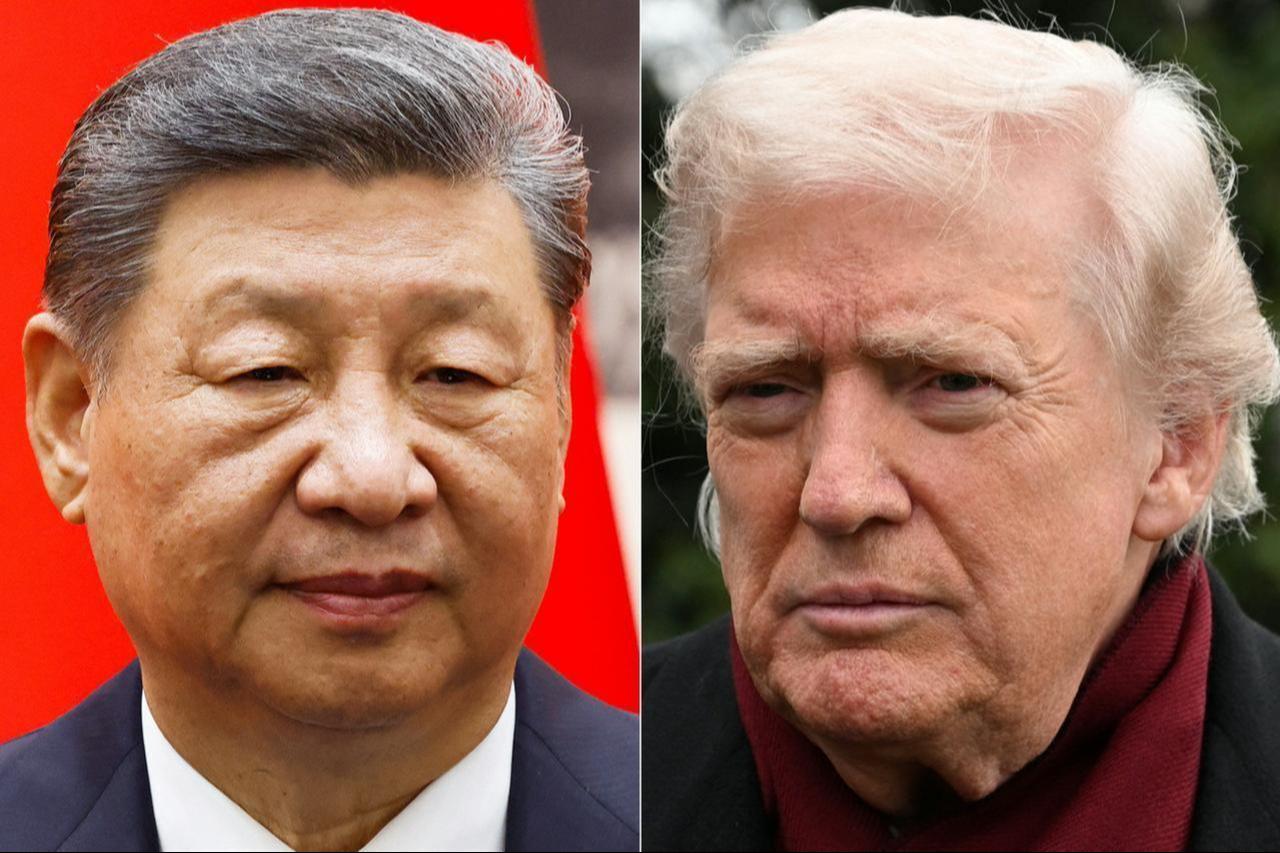

The Genesis Mission essentially aims to revolutionize scientific research processes through AI and dramatically increase the efficiency and impact of federal research and development activities over the next decade. However, when examining the initiative’s organizational structure and focus areas, a profound national security objective lies beyond mere scientific discovery. In this regard, the initiative has been entrusted to the US Department of Energy (DoE).
Innovation has been taken from traditional commercial centres such as Silicon Valley and moved to the heart of the strategic federal infrastructure, where the country’s nuclear weapons stockpiles are managed, advanced physics research is conducted, and the most powerful supercomputers are located. The executive order tasks the Secretary of Energy with bringing together “the nation’s brightest minds, most powerful computers, and vast scientific data resources” in a collaborative research ecosystem, utilising the capacity of national laboratories.
The mission centers on the vast, closed-loop capabilities of the Department of Energy’s (DoE) 17 national laboratories. The foundation of the initiative is the massive structure known as the American Science and Security Platform (ASSP), which brings together the world’s largest scientific datasets accumulated by the federal government over decades, the expertise of 40,000 federal scientists, and the most powerful supercomputers. This platform is a closed-loop discovery engine where AI agents formulate hypotheses, design experiments, manage robotic laboratories, and autonomously analyse results. To accelerate these efforts, the DoE announced an initial investment of $320 million to advance the Genesis Mission’s AI capabilities. These funds have been allocated to the construction of critical components such as the American Science Cloud (AmSC) and the Transformational AI Model Consortium (ModCon).
The project’s similarity to Manhattan or Apollo is also evident in the aggressive timetable for the defined objectives. The executive order tasks the Department of Energy (DoE) with identifying 20 critical national security and science-focused challenges within 60 days, ranging from biotechnology to nuclear fusion, critical materials to quantum computing. More significantly, ASSP has been given only 270 days to achieve “initial operational capability” in at least one national challenge area. This rush is a response to the stagnation of scientific productivity despite increases in federal research and development budgets since the 1990s.
The Genesis Mission aims to automate the scientific method using AI, reducing what would normally take decades (such as drug discovery, new material production, or clean energy solutions) to a matter of months. In this context, this structure, led by Energy Secretary Chris Wright and White House Office of Science and Technology Policy (OSTP) Director Michael Kratsios, is “militarizing” scientific discovery as a state strategy and placing it at the heart of national security.
The mission’s most strategically important directive, from a structural perspective, is for the DoE to create a “closed-loop artificial intelligence experimentation platform” that integrates national supercomputers and unique federal data assets. This platform will produce fundamental scientific models and enhance robotic laboratories by integrating national supercomputers and unique federal data assets. The necessity for a closed-loop architecture is a result of efforts to preserve U.S. dominance in the field of AI. Given the rise of open-source models in the AI world and the global dissemination of technological knowledge, the federal government needs to protect sensitive national security data of vital importance, such as nuclear fusion or biodefense. The closed-loop platform forms the basis of a strategy aimed at preventing competitors such as China from “free-riding” on American innovation by isolating this data from access by foreign actors.
The initiative’s primary focus areas clearly demonstrate the goal of dual-use technological dominance alongside scientific progress. These areas are defined as biotechnology, critical materials, nuclear fission and fusion energy, space research, quantum information science, semiconductors, and microelectronics. These technology areas form the basis of future global power and serve not only civil applications but also directly military and intelligence domains.
For example, biotechnology is critical for both drug discovery and biodefence capabilities. The focus on semiconductors and microelectronics creates direct synergy with the CHIPS and Science Act, which came into force in 2022 and allocates $52.7 billion to domestic chip production. The U.S. not only manufactures hardware with Genesis but also guarantees the development of strategic software that will support the most critical national security applications of this hardware.
 1 min read

The technological rivalry between the United States and China has evolved from a classic commercial competition into an existential “algorithmic geopolitical” war with the announcement of the Genesis Mission. In this new era, AI is positioned as a force multiplier, accelerating all functions of the state. Just as the Manhattan Project transformed theoretical knowledge in nuclear physics into a destructive military advantage, Genesis aims to convert the U.S.’ vast federal data assets and supercomputer capacity into a closed discovery engine that its rivals can never access.
China’s “Military-Civil Fusion” (MCF) strategy, which directly incorporates civilian technological gains into the “People’s Liberation Army” (PLA), has made maintaining supremacy in the field of AI a national security imperative in Washington. The shockwaves caused by China-centric models such as DeepSeek V3, which emerged at the end of 2024 and offered similar performance at a much lower cost compared to American models, demonstrated the inadequacy of the U.S.’ processing power-based strategy. In response to these developments, Genesis is building artificial intelligence as a “state weapon” by separating it from the dynamics of the commercial market and placing it directly under the control of national laboratories through the American Science and Security Platform.
At the heart of this strategic move lies a scientific isolation that renders China’s access to high-quality scientific data and closed-loop systems equipped with state-of-the-art chips impossible. Through partnerships with giants such as Nvidia and AMD, the US directly allocates the most advanced GPU architectures to national laboratories while completely isolating the ASSP platform from the outside world. This structure blends the motivation of the Apollo Programme, which united the entire nation around a single goal, with the Manhattan Project’s pursuit of secrecy and absolute dominance.
The leadership of the Department of Energy carries critical significance in this era, where AI’s energy demand has reached enormous proportions. For AI dominance also means energy hegemony. The electricity demand of U.S. data centres is expected to increase dramatically in the coming years. According to a DoE-supported report by the Lawrence Berkeley National Laboratory, data centers accounted for approximately 4.4% of the country’s total electricity consumption in 2024, and this is expected to rise to 6%-12% by 2028. This growing energy need is one of the main reasons behind Genesis’ focus on advanced energy solutions such as nuclear fusion and small modular reactors. By solving the energy bottleneck with AI and using this energy to train AI models, the U.S. aims to trap its rival China in an “energy-algorithm spiral” both financially and technologically.
The geopolitical impact of the Genesis Mission will also fundamentally alter relations with allies. The Trump administration’s policy of promoting the export of the “American AI Technology Stack” indicates that the scientific models obtained through Genesis will be used as diplomatic leverage. The U.S. is creating a new “technological security umbrella” by offering its allies “sovereign AI” solutions that guarantee the security and accuracy of the American state, rather than China’s cheap models. This situation is forcing the global system into a bipolar algorithmic order; on one side, China’s centralized and data-driven authoritarian AI architecture, and on the other, the U.S.’ high-security, science-based, “democratic” but sovereign AI architecture built through Genesis. In this context, Nov. 24, 2025, marks a turning point, as liberal democracies abandon scientific transparency in favour of a “strategic closed-loop” model to preserve their technological superiority.

The Genesis Mission is the institutional and technological transformation test that will determine the United States’ global status in the mid-21st century. The year 2026, which could be a year of reckoning when the return on AI investments is questioned, may see projects that fail to demonstrate concrete returns on investment quickly shelved. The Genesis Mission has responded to this pressure with a promise of concrete operational capacity within 270 days. In this process, AI will evolve beyond being a chatbot to reach the level of “Agentic AI” that manages autonomous laboratories, stabilizes nuclear reactor designs, and analyzes biological threats in real time. This will be a leap comparable to the Manhattan Project’s success in controlling nuclear fission. In the near future, a research paradigm where scientists work with AI agents capable of running thousands of autonomous experiments simultaneously, rather than test tubes, will prevail.
Over the next five-year period, the greatest change triggered by the Genesis Mission will be the rise of “sovereign AI”. Countries will move towards establishing their own closed-loop systems, modelled on Genesis, rather than entrusting their data and strategic decisions to U.S.-based commercial cloud providers. The U.S. strategy at this point is to keep Genesis’ core capabilities (ASSP) to itself while exporting derivatives of this platform to its allies, thereby establishing a global “algorithmic standard."
It is a reproduction of the global prestige created by the Apollo Program, this time in the form of technological dependency and security partnership. If the mission is able to deliver on its promised breakthroughs in nuclear fusion and quantum computing by 2030, it will give the U.S. a significant advantage in its capacity to transform the physical world. The revolution in the defense industry enabled by artificial intelligence-assisted materials science could shift the balance of power in Washington’s favor by propelling the U.S. military equipment production rate beyond China’s mass production capacity.
Ultimately, the Genesis Mission, signed on Nov. 24, 2025, was one of the first steps taken toward the idea that science is a national strategic asset, rather than a universal public good. The Manhattan Project ended the war with nuclear weapons, the Apollo Program paved the way to space, and the Genesis Mission aims to win the future by mechanizing the very process of thinking and discovery. In this new era, power will lie in the hands of the “algorithmic rulers” who learn the fastest, process comprehensive data securely, and can sustain this process with uninterrupted energy.
The U.S. has begun its race in this field with Genesis, transforming the artificial intelligence competition into a marathon with no finish line, where only the most resilient and technologically equipped states can survive. Hopefully, the competition ignited by the Genesis Mission will succeed in becoming the engine of prosperity and discovery in the modern world, rather than defining the technological boundaries of global polarisation.


 Set as preferred source
 Set as preferred source



 1 min read



